
Loading, please wait...
LOT 1842
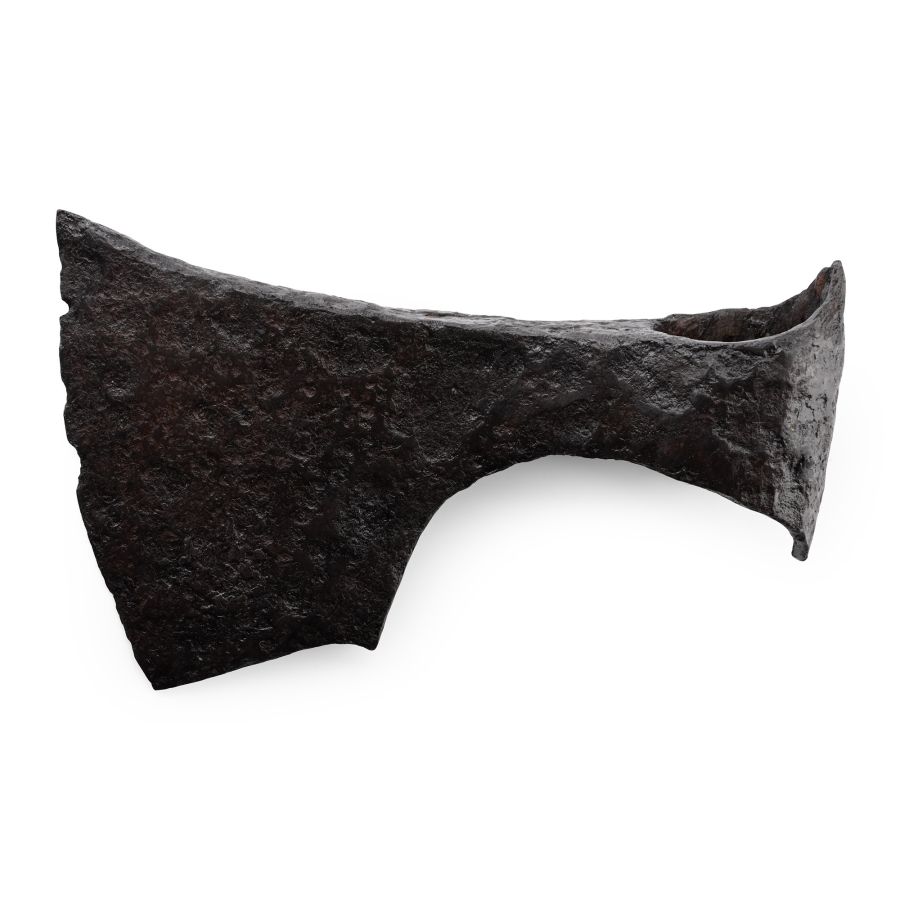
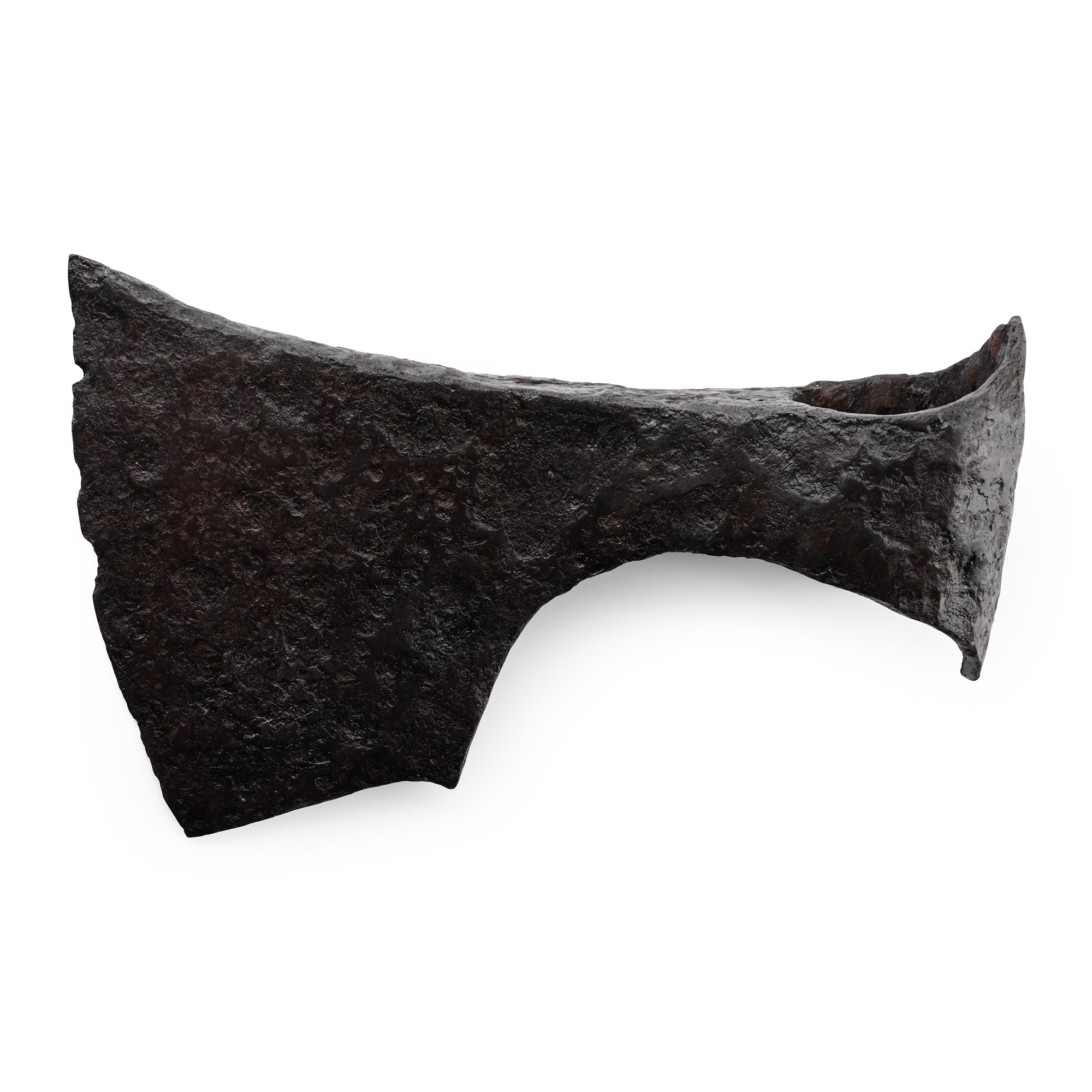
Viking Iron Bearded Axehead
9TH-11TH CENTURY A.D.
6 1/2 in. (600 grams, 16.5 cm).
With a slender blade, chin to the lower edge with a spur to the rear, round socket with rectangular flanges; traces of the original wooden shaft inside the socket. [No Reserve]
ProvenanceFrom the private collection of a London gentleman, from his grandfather's collection formed before the early 1970s.
LiteratureCf. Arbman, H., Birka I: Die Gräber, Uppsala, 1940, pl.14 (3); Sedov, B.B., Finno-Ugri i Balti v Epokhi Srednevekovija, Moscow, 1987, pl.CXXIV, item 4, for type.
CONDITIONTimeLine Auctions follows a vetting process to ensure the authenticity and legality of all items, reinforcing our commitment to integrity and responsible trading. Each antiquity, antique, and coin lot undergoes thorough examination by a vetting committee of at least ten external specialists, professional trade association members, scientists, and archaeologists: Our Vetting Process
AUCTIONS:
TimeLine is a leading auction house specialising in antiquities, ancient art, collectables, natural history, coins, medals, and books. Our auctions offer museums, collectors, historians, and enthusiasts the opportunity to acquire unique and historically significant pieces.
-
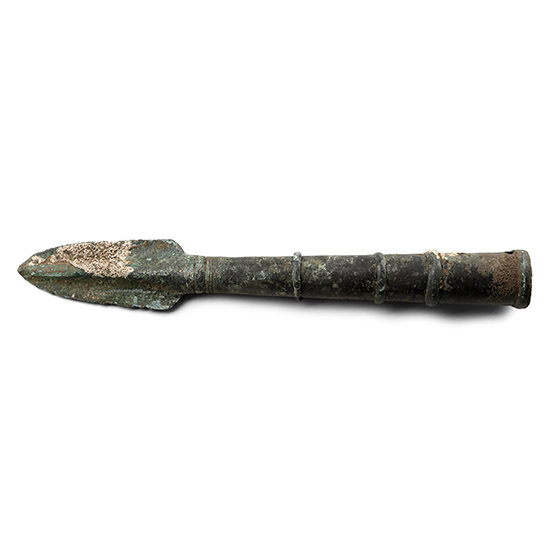
Luristan Bronze Socketted Spearhead
9th-7th century B.C.Sold for (Inc. bp): £117
Comprising a tapering tubular socket with raised ribs, a triangular blade with a raised midrib; ferrel collars to the shaft. 80 grams, 18.6 cm
Ex Abelita family collection, 1980s-2000s.
These kinds of spearheads were realised by casting in a mould. They were of different lengths and used by Luristan, Hamadan, early Median and Achaemenid warriors. The bronze rings were destined to reinforce the structure of the bronze shaft, because the blow, with this spear, was usually delivered by grasping the spear with two hands. -
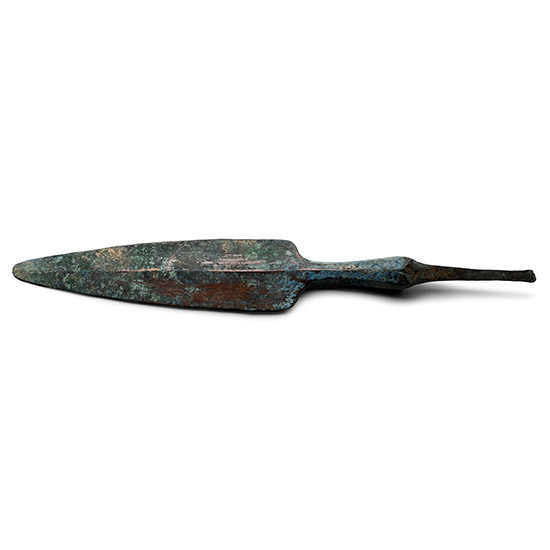
Western Asiatic Bronze Tanged Spearhead
12th-11th century B.C.Sold for (Inc. bp): £195
Comprising a triangular blade with a facetted, flaring neck and a rectangular-section tang. 288 grams, 30 cm
Ex Abelita family collection, 1980s-2000s.
The weapon belongs to the type 1 of the spear-head classification of Khorasani, mainly originating from Marlik or Amlash areas. Similar pieces have been dated by Stutzinger to 1200-1100 B.C. -
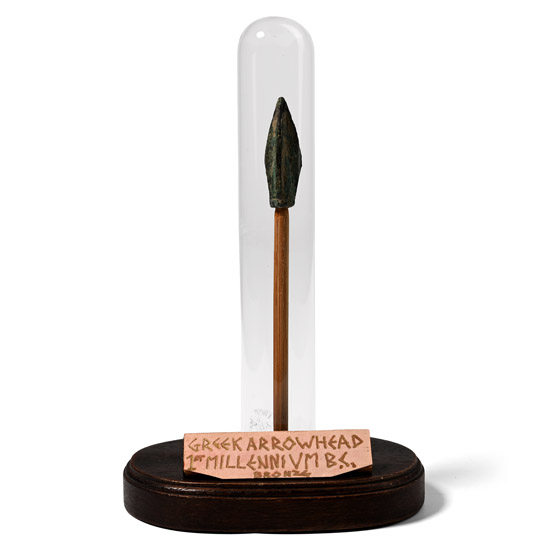
Greek Bronze Arrowhead
Circa 5th-3rd century B.C.Sold for (Inc. bp): £390
A triangular bronze arrowhead on a display stand with a glass cover. 113 grams total, 16.6 cm including stand
Purchased on the European art market. Property of a Norfolk, UK, collector.
