
Loading, please wait...
LOT 1179
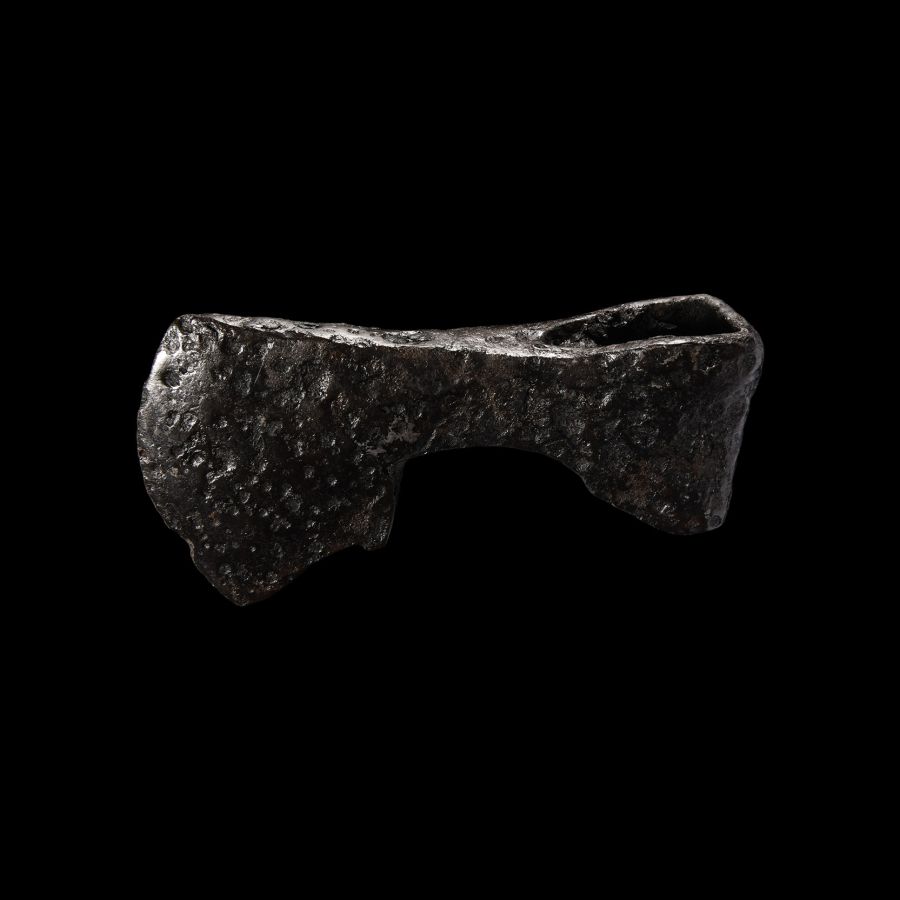
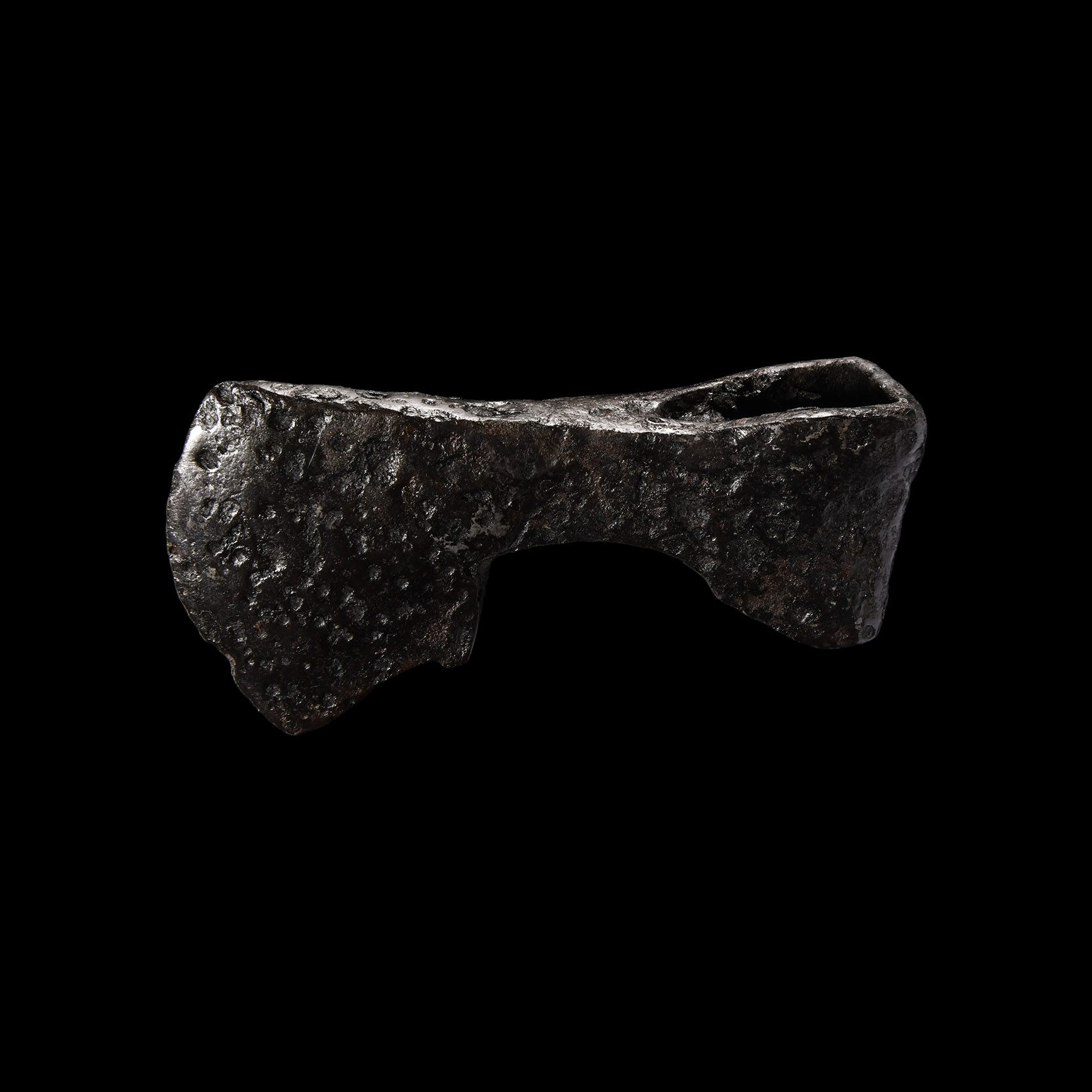
Viking Iron Bearded Axehead
10TH-12TH CENTURY A.D.
5 3/4 in. (563 grams, 14.6 cm).
Featuring a sub-triangular socket, rectangular butt and bearded head with convex cutting edge. [No Reserve]
ProvenanceFrom the private collection of a London gentleman, from his grandfather's collection formed before the early 1970s.
CONDITIONTimeLine Auctions follows a vetting process to ensure the authenticity and legality of all items, reinforcing our commitment to integrity and responsible trading. Each antiquity, antique, and coin lot undergoes thorough examination by a vetting committee of at least ten external specialists, professional trade association members, scientists, and archaeologists: Our Vetting Process
AUCTIONS:
TimeLine is a leading auction house specialising in antiquities, ancient art, collectables, natural history, coins, medals, and books. Our auctions offer museums, collectors, historians, and enthusiasts the opportunity to acquire unique and historically significant pieces.
-
.jpg)
Viking Iron Axehead with Silver Inlaid Interlaced Dragons
7th-9th century A.D.Sold for (Inc. bp): £6,240
To both lateral faces, the upper face of the blade and the rear of the socket decorated with an interlaced design; slender body with bearded lower edge and curved blade, lateral spurs and rectangular panel to the butt. 282 grams, 14 cm
Private collection formed in Europe in the 1980s. Westminster collection, central London, UK. Accompanied by a copy of a four page report written by Saxon and Viking specialist Stephen Pollington. This lot has been checked against the Interpol Database of stolen works of art and is accompanied by search certificate number no.11878-206842.
The style of the design inlaid to the axe is interesting since it evidently owes a great deal to the kinds of Insular Style ornament found in manuscripts of the 8th century in the British Isles. The elegant curves of the narrow tendrils are strongly reminiscent of the zoomorphic elements found in the Lindisfarne Gospels, St Gall Codex and the Book of Kells (Salin, 1935, pp.342-3; Moss, 2018) and the inlaid designs show the characteristic parallel curves found for example on some of the initials in those documents. The tight knot serpentine bodies recalls the similar dense knot found in the Kells manuscript (Salin's figure 731). However, the details of the layout and execution show that the piece is unlikely to have originated in the British Isles. -
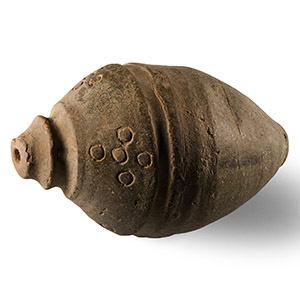
Byzantine 'Greek Fire' Ceramic Fire Bomb or Hand Grenade
Circa 11th-14th century A.D.Sold for (Inc. bp): £286
With a piriform body and domed mouth, stepped rings to the foot, engraved decoration on the shoulders with crosses and grapes; intended to be filled with explosive liquid and wick, used as a hand grenade. 573 grams, 15 cm
Acquired 1990s. From the H.N. collection, Milton Keynes, Bedfordshire, UK. Accompanied by an academic paper by military specialist Dr Raffaele D'Amato, dated 15 July 2019 and titled 'Eastern Roman Empire - Greek Fire Bomb or Hand Grenade (μεσαίον kακάβιον) 9th-11th century AD'.
Apart from the use of siphons or manual flame-throwers called cheirosiphona, special Roman soldiers employed terracotta grenades, in the form of small jars, abundantly evidenced in archaeological excavations. Such were the γανωτα, vessels (sometimes also in bronze) used for Greek fire. They were called μεσαία kακαβιά or κυτροκακάβια where the former had a bulbous shape and the latter a more cylindrical form. -
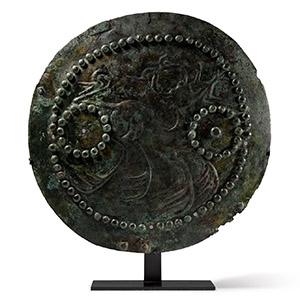
Etrusco-Italic Breastplate with Mythical Animal
5th century B.C.Sold for (Inc. bp): £4,680
Displaying a repoussé horned animal advancing right, two roundels composed of bulbous rivets flanking the animal and encircling the central design; accompanied by a custom-made display stand. 626 grams total, 28.5 cm high including stand
Collection of Jacques and Henriette Schumann, formed between 1950 and 1970. The Schumanns inherited part of their collection from Henriette’s parents, Alice and Fernand Halphen, andjacques’ maternal grandfather, Albert Lehmann. Collection of Jacques and Henriette Schumann, Christie's, Paris, 30th September 2003, lot 85. Accompanied by a copy of a French cultural passport no.107322. This lot has been checked against the Interpol Database of stolen works of art and is accompanied by search certificate number no.11877-207824.
This type of armour, composed from a bronze breast and back plate with hinged shoulder straps, all the parts backed with iron, was used by Etruscans, Hernici, Aequi and Volsci, the feared enemies of early Rome. In particular our item has many parallels with the disc-cuirass (cardiophylax) found in the Necropolis of Alfadena.
