
Loading, please wait...
LOT 0260
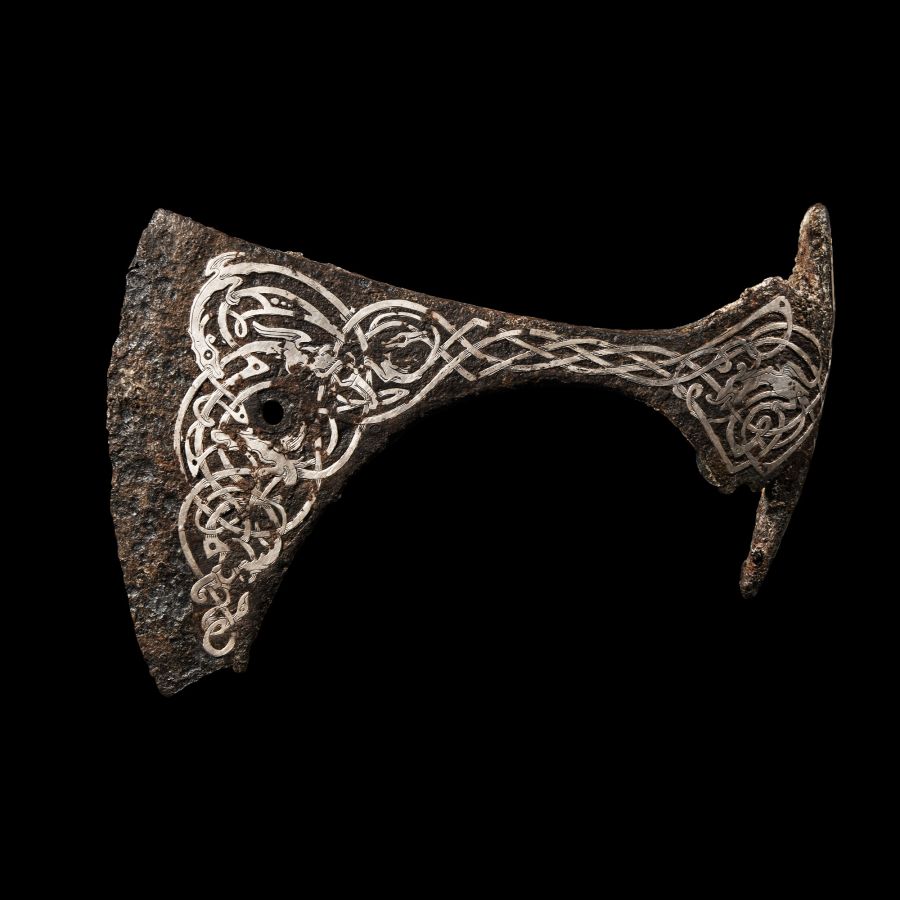
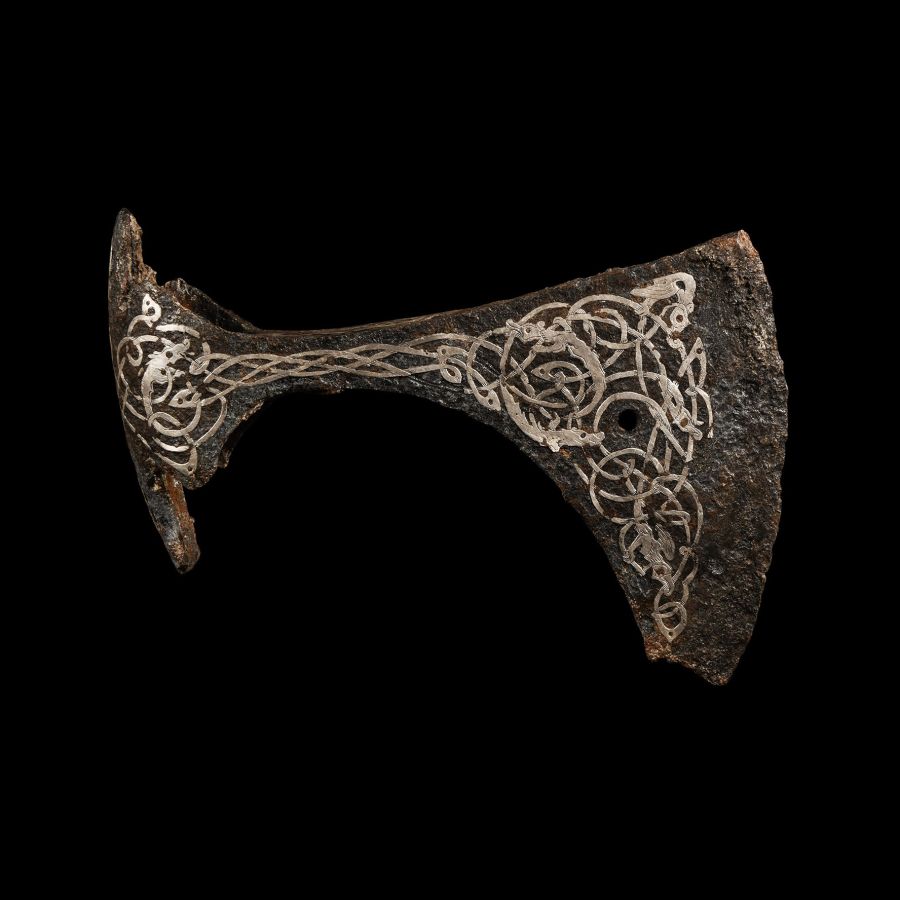
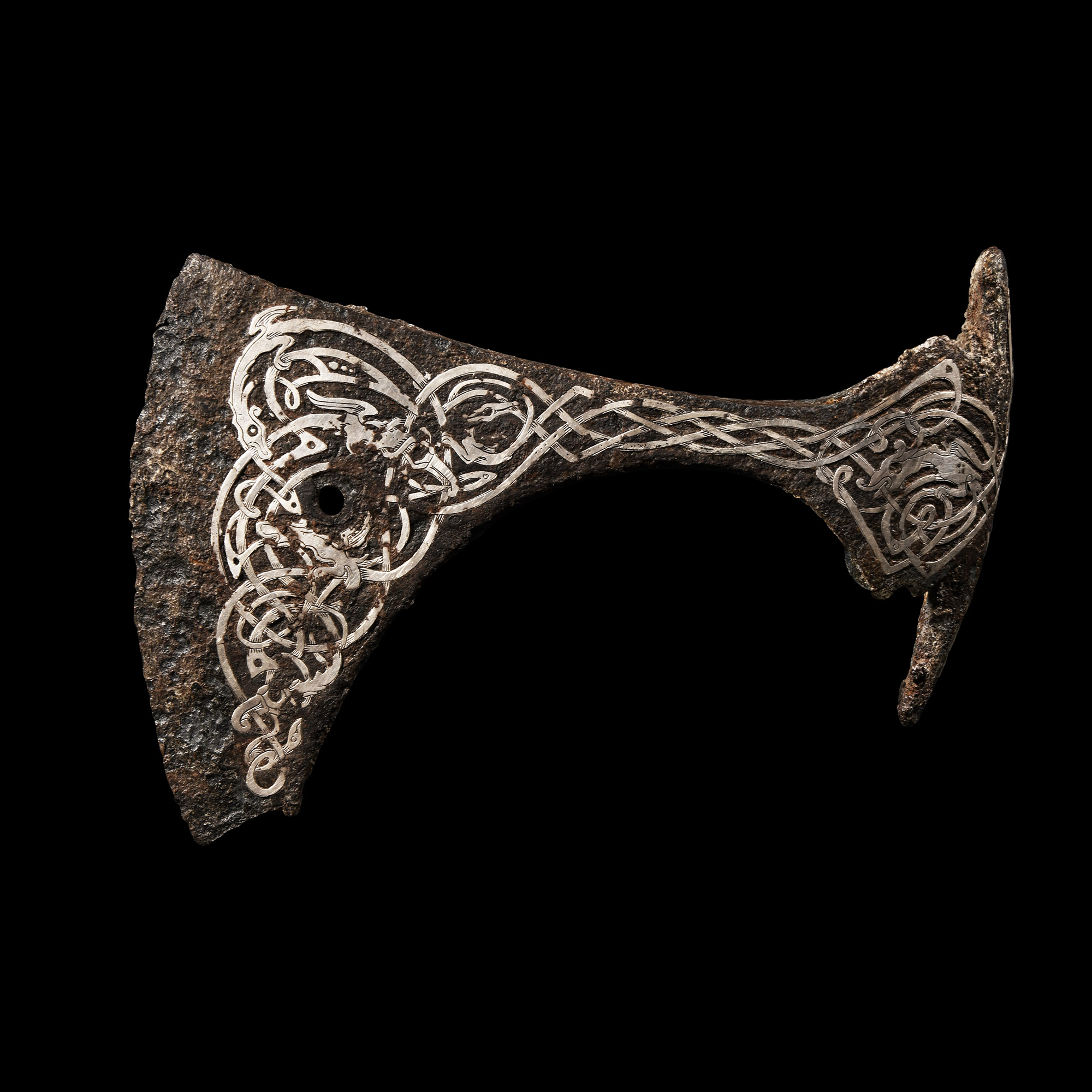
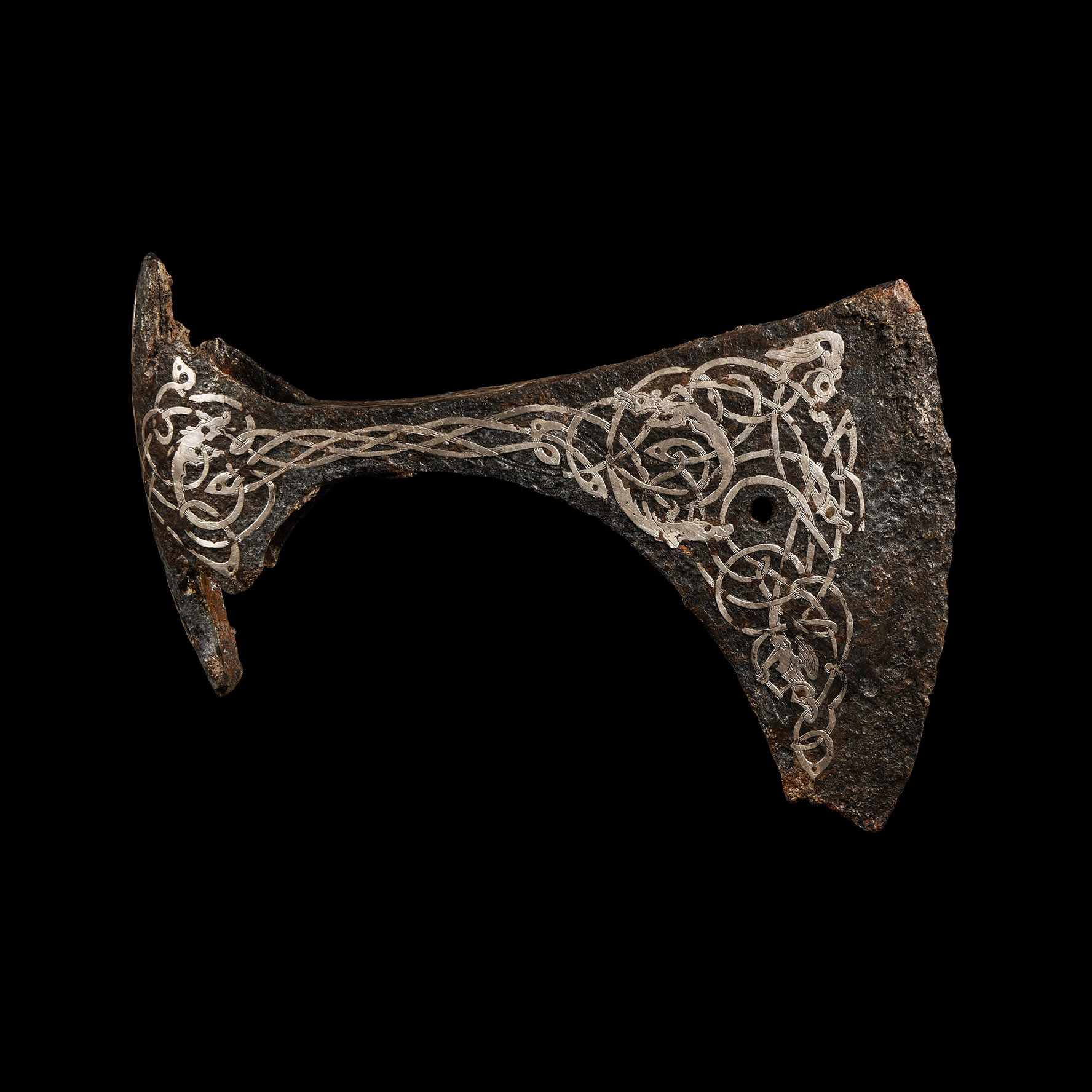
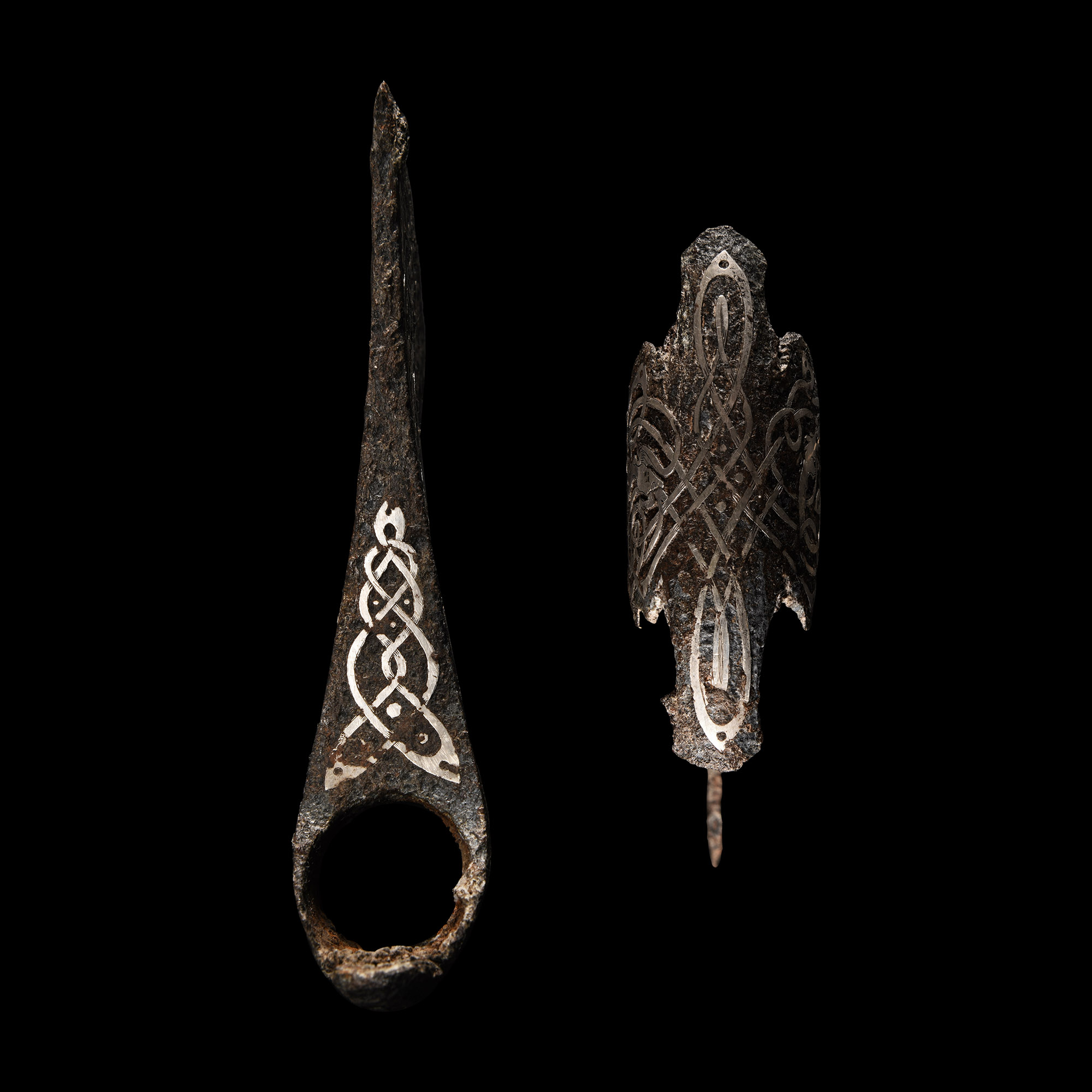
Viking Iron Axehead with Silver Inlaid Interlaced Dragons
7TH-9TH CENTURY A.D.
5 1/2 in. (282 grams, 14 cm).
To both lateral faces, the upper face of the blade and the rear of the socket decorated with an interlaced design; slender body with bearded lower edge and curved blade, lateral spurs and rectangular panel to the butt. [No Reserve]
ProvenancePrivate collection formed in Europe in the 1980s.
Westminster collection, central London, UK.
Accompanied by a copy of a four page report written by Saxon and Viking specialist Stephen Pollington.
This lot has been checked against the Interpol Database of stolen works of art and is accompanied by search certificate number no.11878-206842.
See Sedov, B.B., Finno-Ugri i Balti v Epokhi Srednevekovija, Moscow, 1987, pl.V (20), for type; Salin, B., Die Altgermanische Thierornamentik, Stockholm, 1935.
FootnotesThe style of the design inlaid to the axe is interesting since it evidently owes a great deal to the kinds of Insular Style ornament found in manuscripts of the 8th century in the British Isles. The elegant curves of the narrow tendrils are strongly reminiscent of the zoomorphic elements found in the Lindisfarne Gospels, St Gall Codex and the Book of Kells (Salin, 1935, pp.342-3; Moss, 2018) and the inlaid designs show the characteristic parallel curves found for example on some of the initials in those documents. The tight knot serpentine bodies recalls the similar dense knot found in the Kells manuscript (Salin's figure 731). However, the details of the layout and execution show that the piece is unlikely to have originated in the British Isles.
CONDITIONTimeLine Auctions follows a vetting process to ensure the authenticity and legality of all items, reinforcing our commitment to integrity and responsible trading. Each antiquity, antique, and coin lot undergoes thorough examination by a vetting committee of at least ten external specialists, professional trade association members, scientists, and archaeologists: Our Vetting Process
AUCTIONS:
TimeLine is a leading auction house specialising in antiquities, ancient art, collectables, natural history, coins, medals, and books. Our auctions offer museums, collectors, historians, and enthusiasts the opportunity to acquire unique and historically significant pieces.
LOT 0260
Viking Iron Axehead with Silver Inlaid Interlaced Dragons
Sold for (Inc. bp): £6,240
-
Western Asiatic Bronze Dagger
2nd millennium B.C.Estimate: £200 - 300 (‡+bp*)
Opening Bid: £100
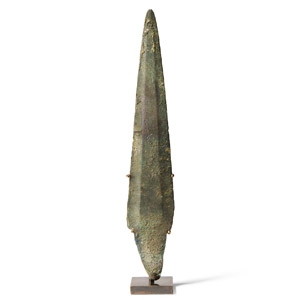
With narrow pointed blade and wide raised flange down centre, straight sides, well marked shoulders with wide tang, one upper hole for rivet. 149 grams total, 21 cm high including stand
From the possessions of a member of a German princely family, gathered in the late 19th century, until the 1930s. with Auction House CUSP, Vienna, Auction Antique Art from Asia and from the Eastern Mediterranean, 16 June 2012, lot 75 [Part].
The type was technically more advanced than previous types of blades in the Near East due to its shape and its slightly convex sides widening out near the point, which combined the advantages of the leaf-shaped and straight-sided forms. -
North-West Persian Bronze Dagger with Horns
Circa 1st millennium B.C.Estimate: £300 - 400 (+bp*)
Opening Bid: £150
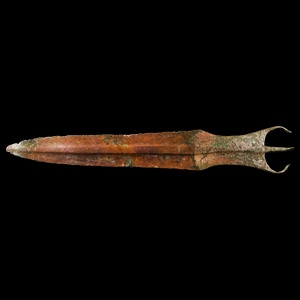
With curved 'horns' projecting on either side at top of waisted grip, blade with flat mid-rib. 249 grams, 41.5 cm
Acquired 1980-2015. Ex Abelita family collection.
The Luristani people produced a quantity of fine metalwork, which according to Dr Khorasani, could be due to a settled period which arose as a result of the defeat of the Elamites by the Babylonians, leaving the Luristani people in relative peace for a period of time after 1200 B.C. According to Khorasani 'A culture of innovation and experimentation flourished, and the repertoire of the Luristan smiths expanded in the period between 1150-1050 BC.' -
Viking Age Silver and Latten Inlaid Seax War Knife
10th century A.D.Sold for (Inc. bp): £624
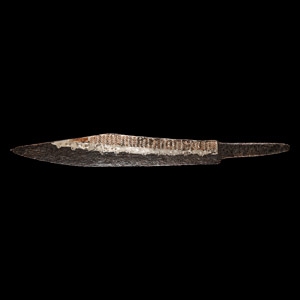
An iron single-edged angle-backed knife with tapering tang; silver and latten inlay to both faces. 166 grams, 27.5 cm
Private collection formed in Europe in the 1980s. Westminster collection, central London, UK.
