
Loading, please wait...

LOT 1721
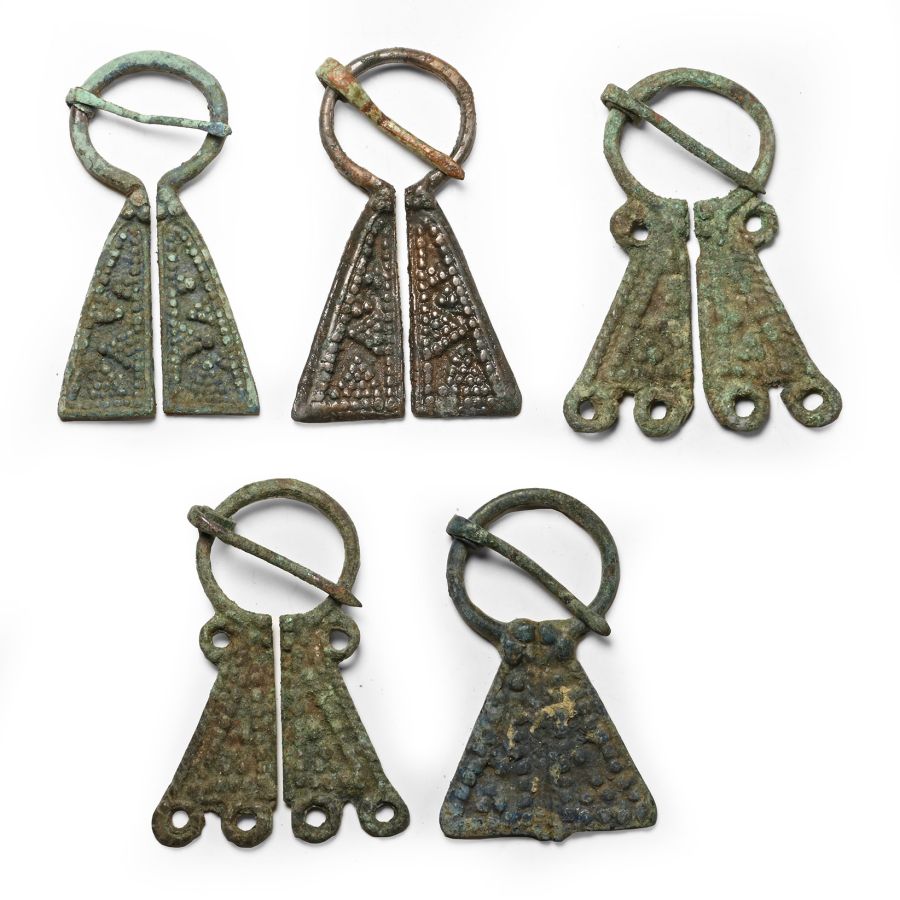
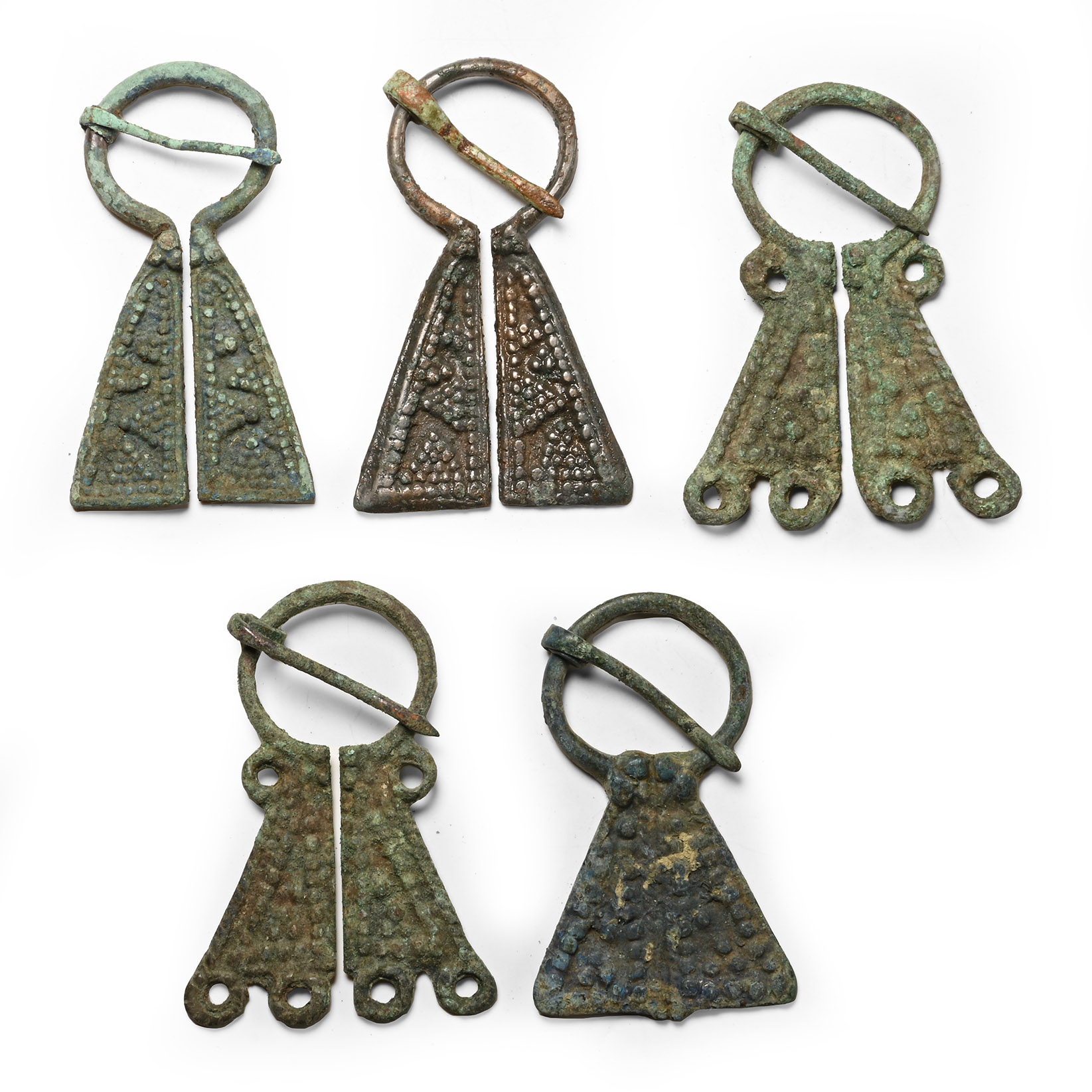
Viking Inspired Bronze Omega Penannular Brooch Collection
12TH-14TH CENTURY A.D.
2 1/8- 2 1/4 in. (72.7 grams total, 55-59 mm).
A group of flat-section Mordvinian type brooches. [5, No Reserve]
ProvenanceAcquired on the European art market since the early 2000s.
From the private Northern Ireland collection of R.M.
See Sedov, B.B., Finno-Ugri i Balti v Epokhi Srednevekovija, Moscow, 1987, pl.XLIV, item 11.
FootnotesThis type of brooch belongs to the typologies of the omega brooches. It was probably used by Ugro-Finnic people to fasten the shirt at the neck or to attach other lighter garments. These brooches evolved to become very elaborate, with dangling springs from the edges, and were often worn in pairs, particularly on female garments. In this late Viking period their coins demonstrated Russian and Eastern Roman influences in their art and jewellery.
CONDITIONTimeLine Auctions follows a vetting process to ensure the authenticity and legality of all items, reinforcing our commitment to integrity and responsible trading. Each antiquity, antique, and coin lot undergoes thorough examination by a vetting committee of at least ten external specialists, professional trade association members, scientists, and archaeologists: Our Vetting Process
AUCTIONS:
TimeLine is a leading auction house specialising in antiquities, ancient art, collectables, natural history, coins, medals, and books. Our auctions offer museums, collectors, historians, and enthusiasts the opportunity to acquire unique and historically significant pieces.
LOT 1721
Viking Inspired Bronze Omega Penannular Brooch Collection
Sold for (Inc. bp): £247
-
Merovingian Gold Hoop Earring with Garnets
5th-6th century A.D.Estimate: £1,500 - 2,000 (‡+bp*)
Opening Bid: £750
With a thick penannular loop and polyhedral finial set with twelve garnet cloisons. 6.36 grams, 34 mm
Acquired in the mid 1980s-1990s. Private collection, Switzerland, thence by descent. Private collection, since the late 1990s. -
Viking Period Carved Stone Frieze Fragment
9th-11th century A.D. or laterSold for (Inc. bp): £286
Rectangular soapstone block with incised design of loop tendril with segmented ornament, interlaced with a place three-loop motif; felt pad to underside. 734 grams, 11.6 cm
From a collection acquired on the UK art market from various auction houses and collections mostly before 2000. From an important Cambridgeshire estate; thence by descent. -
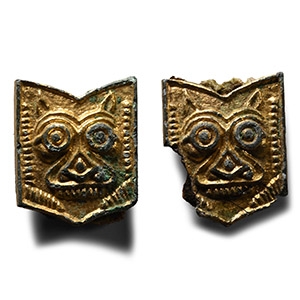
Viking Age Silver-Gilt Belt Mount Pair
Circa 9th-11th century A.D.Sold for (Inc. bp): £117
Each a heater-shaped plaque with indented upper edge, domed obverse with stylised animal-mask detailing in a beaded border; mounting pins to reverse, remains of leather; Avar workmanship. 5.37 grams total, 20-21 mm
Private collection formed in Europe in the 1980s. Westminster collection, central London, UK.
