
Loading, please wait...
LOT 1472
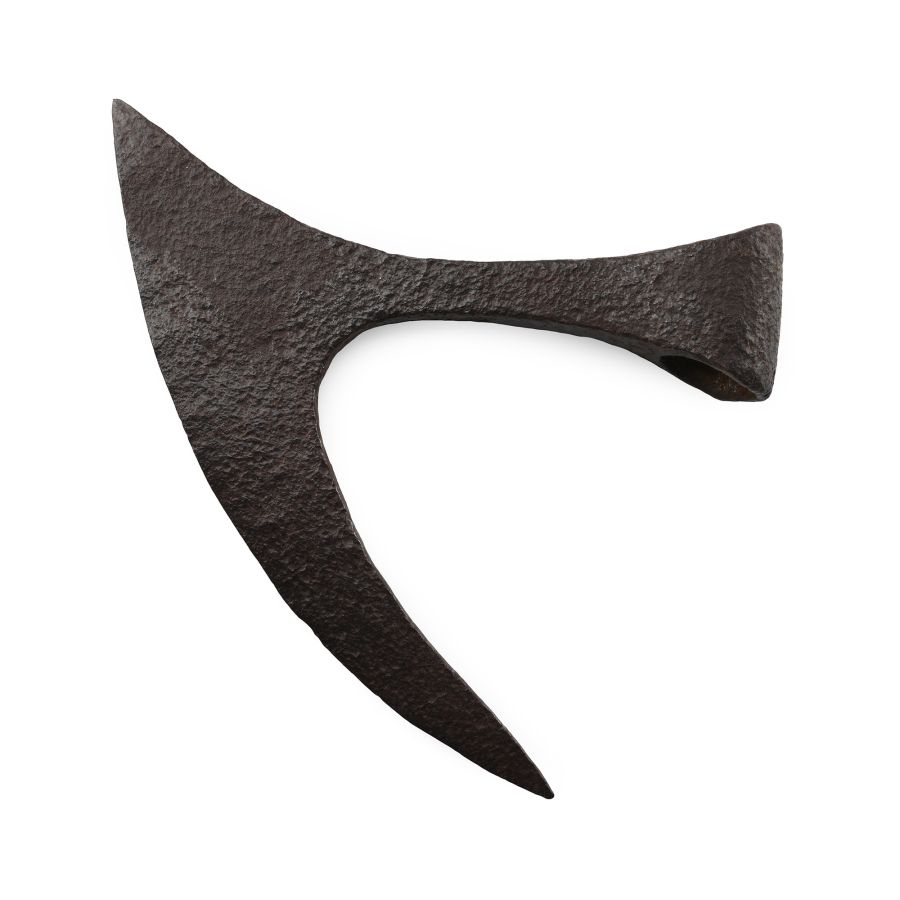
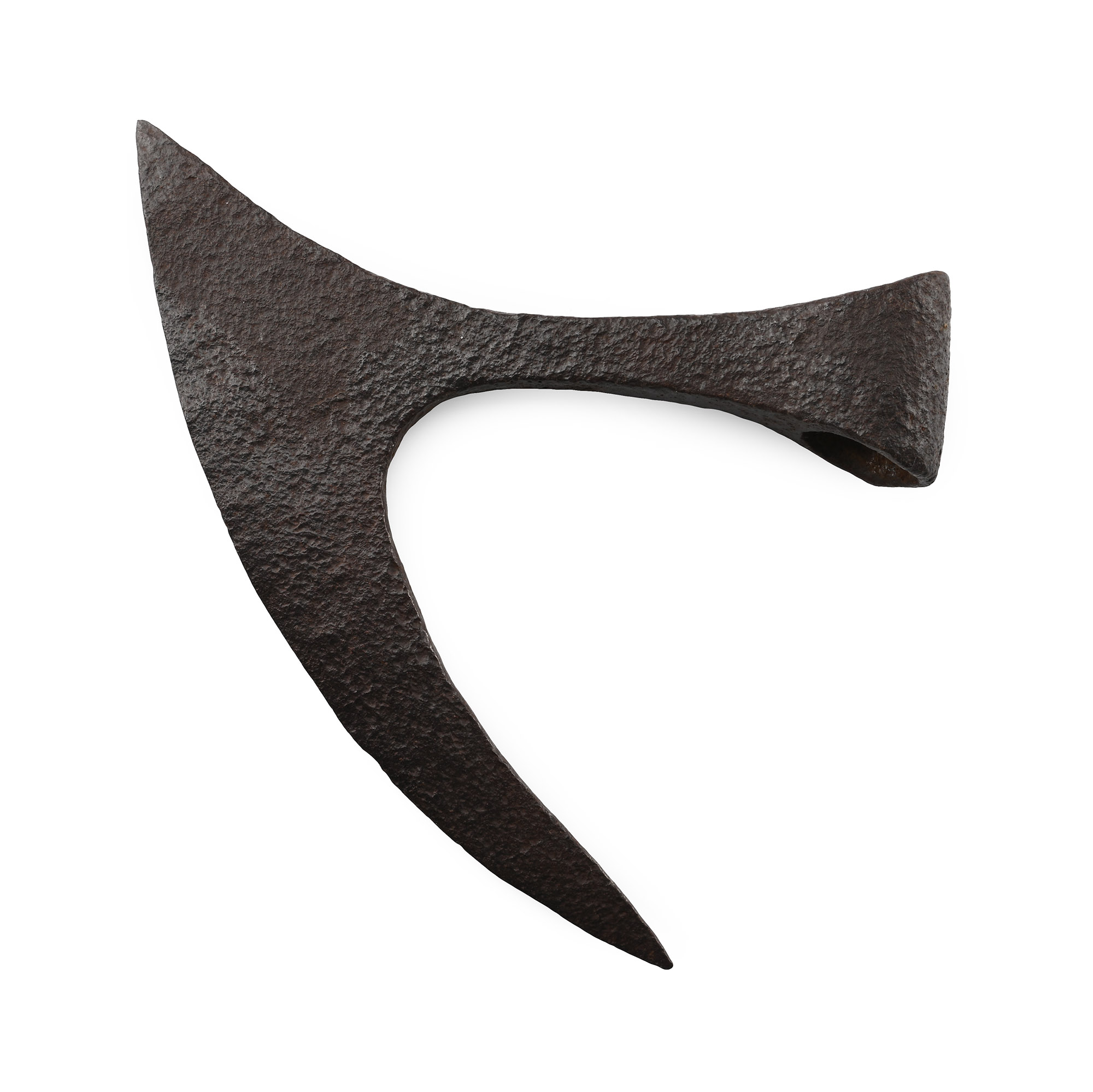
Viking Hooked Iron Axehead
CIRCA 9TH-11TH CENTURY A.D.
8 in. (366 grams, 20.1 cm).
With broad curved blade and pointed chin, tapering neck, deep socket. [No Reserve]
ProvenanceEx North American private collection, 1970s.
LiteratureCf. Sedov, B.B., Finno-Ugri i Balti v Epokhi Srednevekovija, Moscow, 1987, pl.CXXIV, items 3-4.
CONDITIONTimeLine Auctions follows a vetting process to ensure the authenticity and legality of all items, reinforcing our commitment to integrity and responsible trading. Each antiquity, antique, and coin lot undergoes thorough examination by a vetting committee of at least ten external specialists, professional trade association members, scientists, and archaeologists: Our Vetting Process
AUCTIONS:
TimeLine is a leading auction house specialising in antiquities, ancient art, collectables, natural history, coins, medals, and books. Our auctions offer museums, collectors, historians, and enthusiasts the opportunity to acquire unique and historically significant pieces.
-
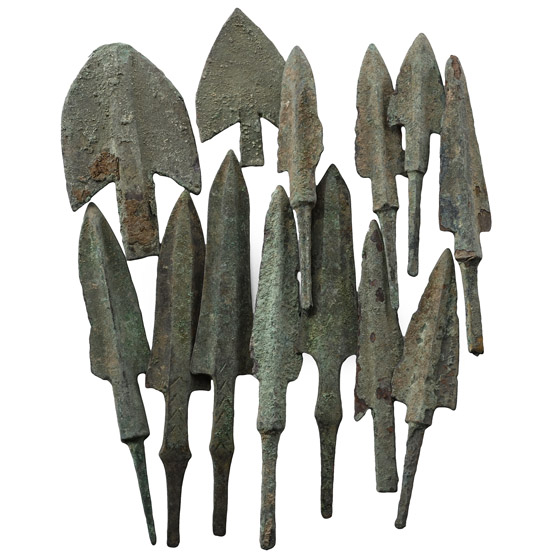
Western Asiatic Bronze Arrowhead Collection
13th-9th century B.C.Sold for (Inc. bp): £117
Comprising tanged arrowheads, having large, elongated triangular blades and raised midrib, sharp central groove, rectangular section stem with handle for the shaft, others with barbed shoulders and convex or squared sides. 248 grams total, 5-11.8 cm
Ex London, UK, collection, 1990s.
These arrowheads seem to belong to the type V, subcategory types A and C, according to the classification of Khorasani and Negahban. In the four categories of triangular bronze arrowheads from Luristan, Marlik and Northern Iran, individuated by Negahban, subtypes A and C of type V are larger arrowheads with barbed shoulders and triangular heads. These types of arrowheads were commonly used in Anatolia and Mesopotamia from the 2nd millennium B.C., but apparently their employment began earlier in this area, where types like these occur alongside the non-barbed, predominantly ribbed and tanged types. -
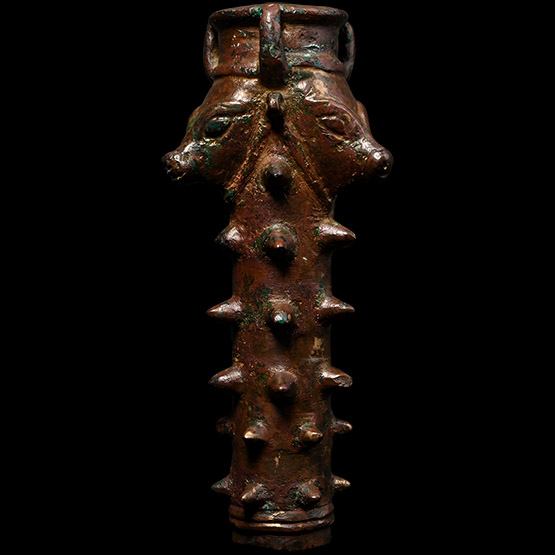
Elamite Sar-e-Gorz Spiked Bronze Macehead
Late 2nd-early 1st millennium B.C.Sold for (Inc. bp): £2,340
With three adjoining bull heads in high-relief to the top, with three ears and three horns serving all three heads; the horns curving towards the rim of the closed top; the shaft adorned with vertical rows of pointed spikes; hollow socket tube with ring collar at the base; mounted on a collector base. 443 grams total, 18 cm including stand
London, UK gallery, 1971-early 2000s. Private collection, London. Accompanied by an academic report by Dr Raffaele D’Amato. This lot has been checked against the Interpol Database of stolen works of art and is accompanied by search certificate number no.11997-22061. -
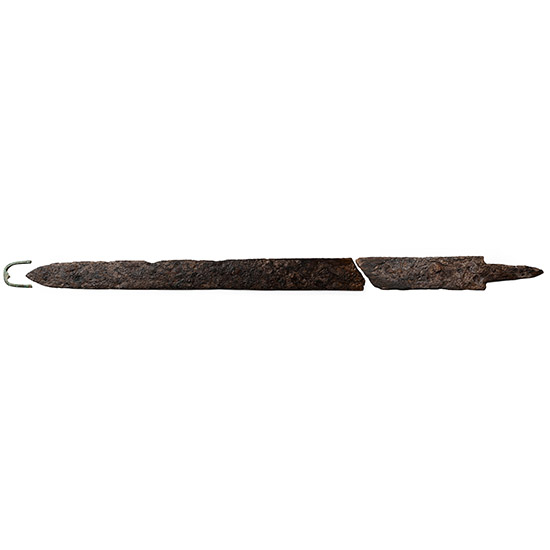
Saxon Sacrificed Iron Spatha with Bronze Chape
5th-6th century A.D.Sold for (Inc. bp): £1,300
Double-edged long sword (spatha) of type Osterburken-Kemathen; the blade with squared shoulders, broken into two parts for sacrificial reasons, tapering towards the point; sturdy tang partially preserved; wooden traces of the scabbard and hilt still visible; accompanied by a bronze outer rim of a scabbard; restored. 630 grams total, 78 cm long
From the private collection of a London gentleman, from his grandfather's collection formed before the early 1970s.
The deliberate fragmentation of a sword, often into three pieces, was a symbolic act of ‘killing’ the weapon, which was then placed as a grave good or offered in a ceremonial context. This was a Germanic custom already visible in the Vandal Przeworsk culture around the 3rd or 4th century A.D., which continued in Northern European areas until the 5th and the 6th centuries A.D.
