
Loading, please wait...
LOT 0352
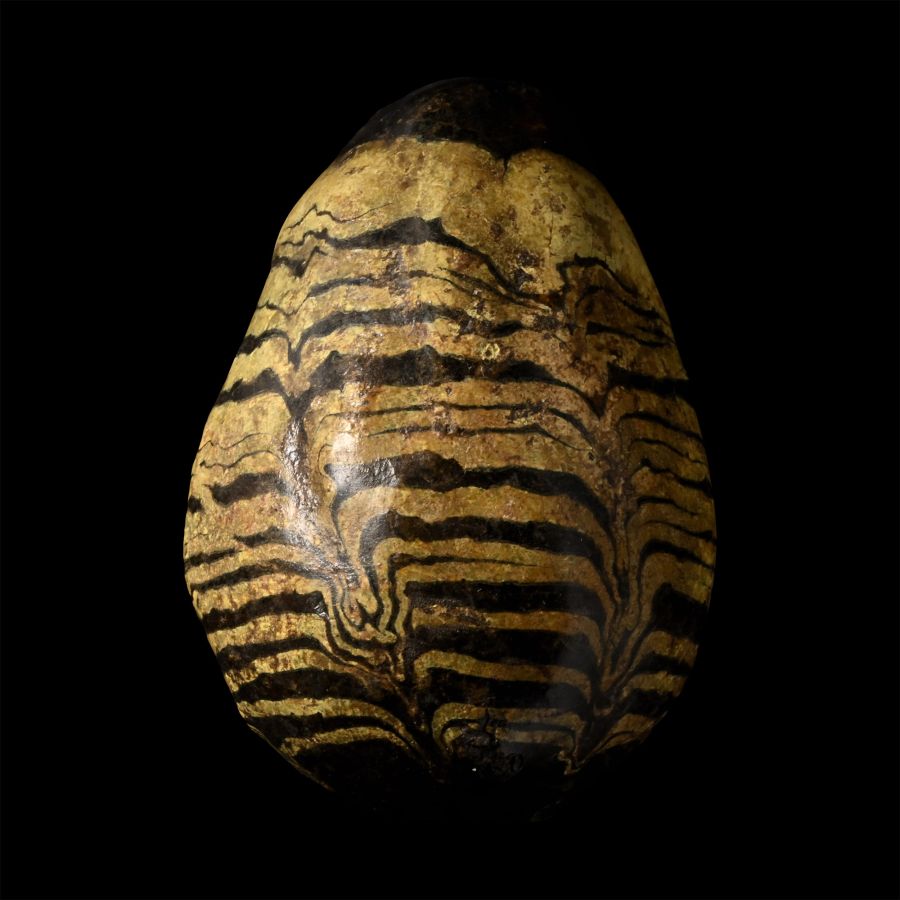
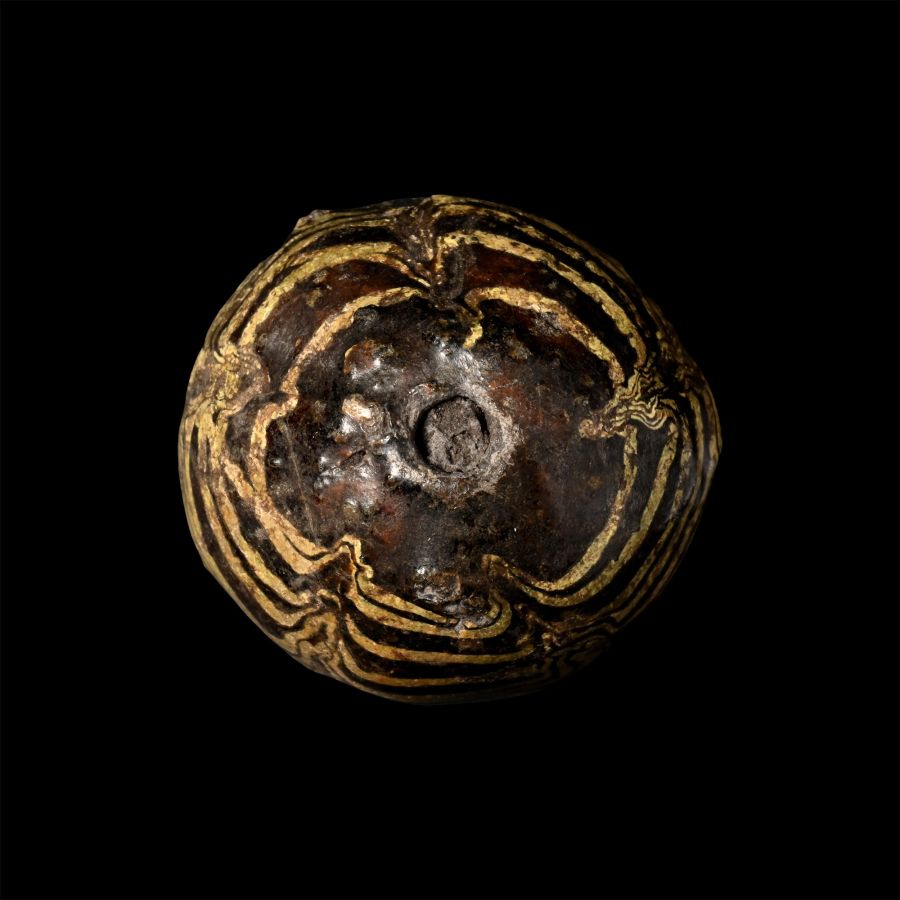
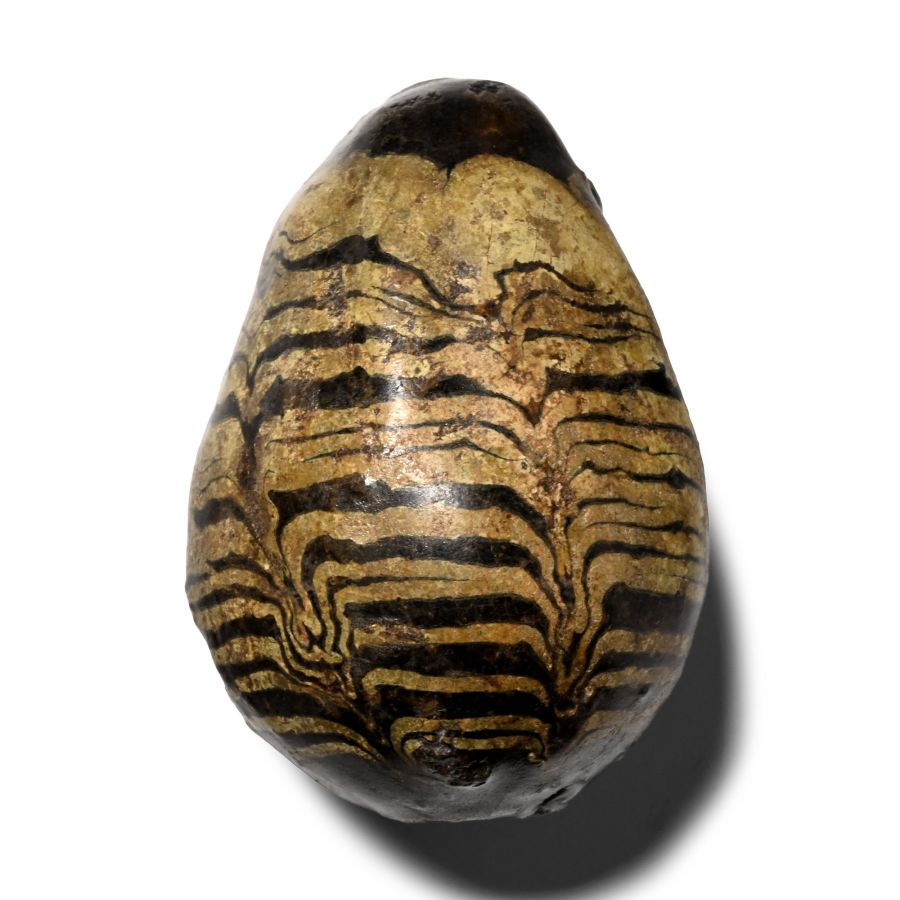
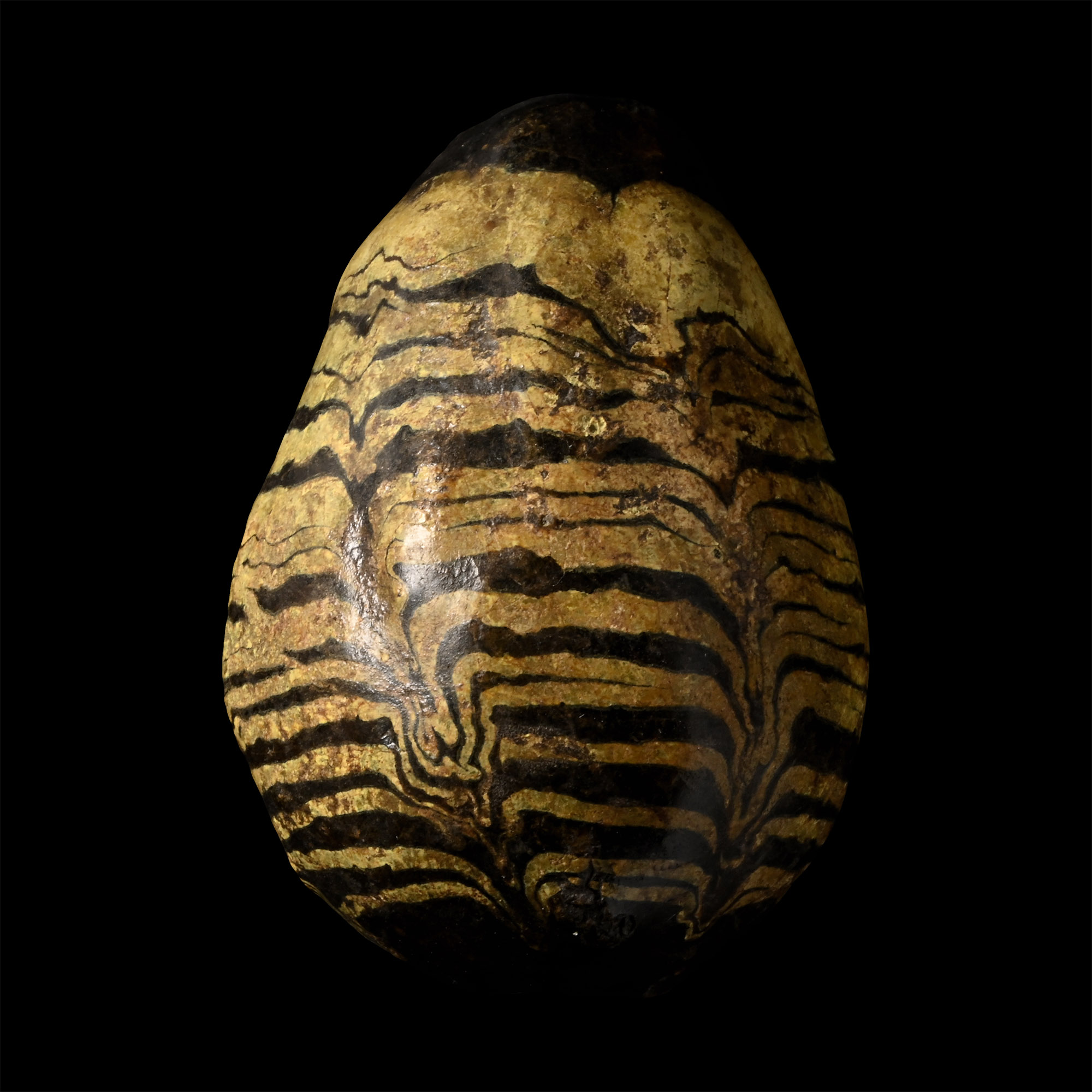
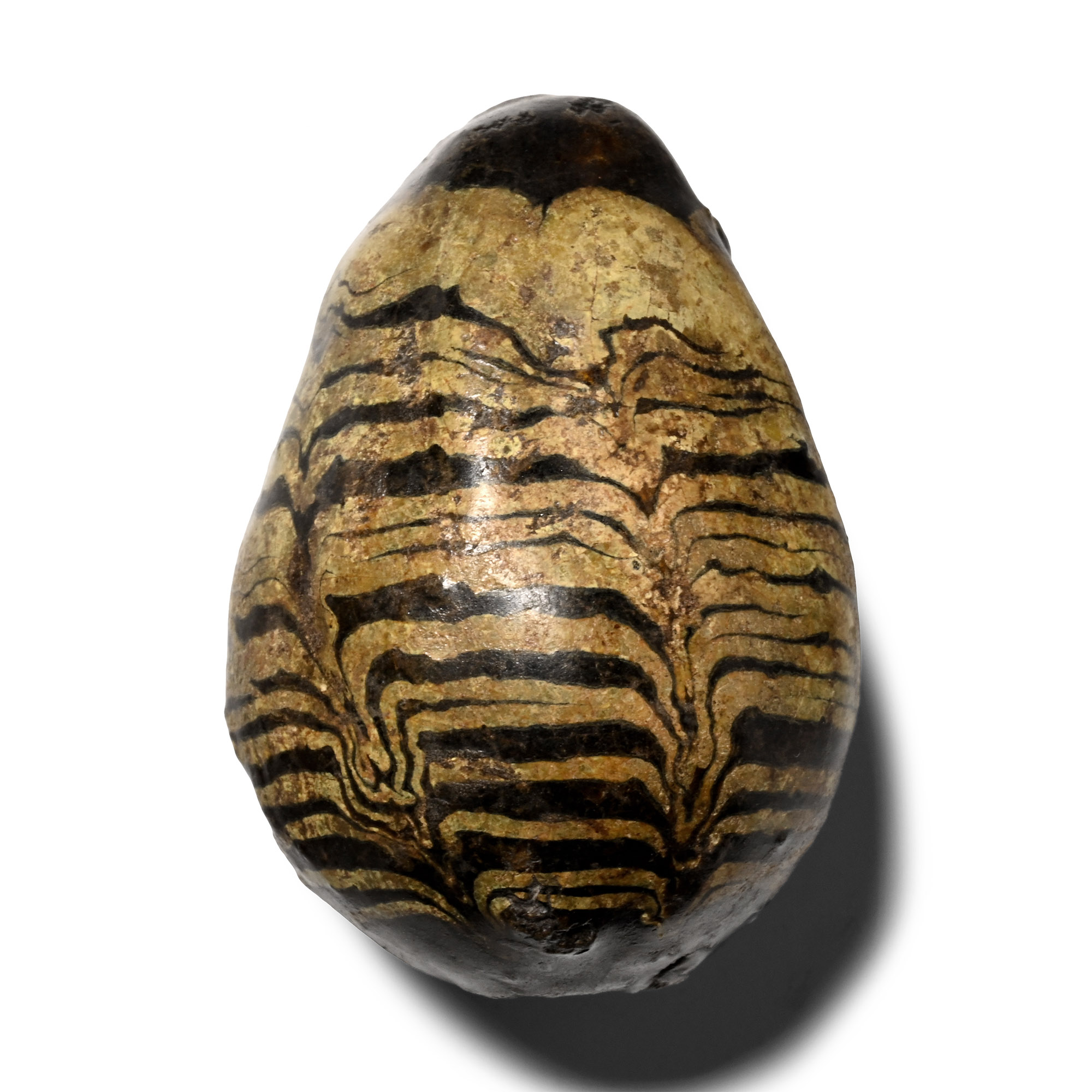
Viking Glazed 'Resurrection Egg'
CIRCA 9TH-10TH CENTURY A.D.
1 5/8 in. (30.4 grams, 41 mm).
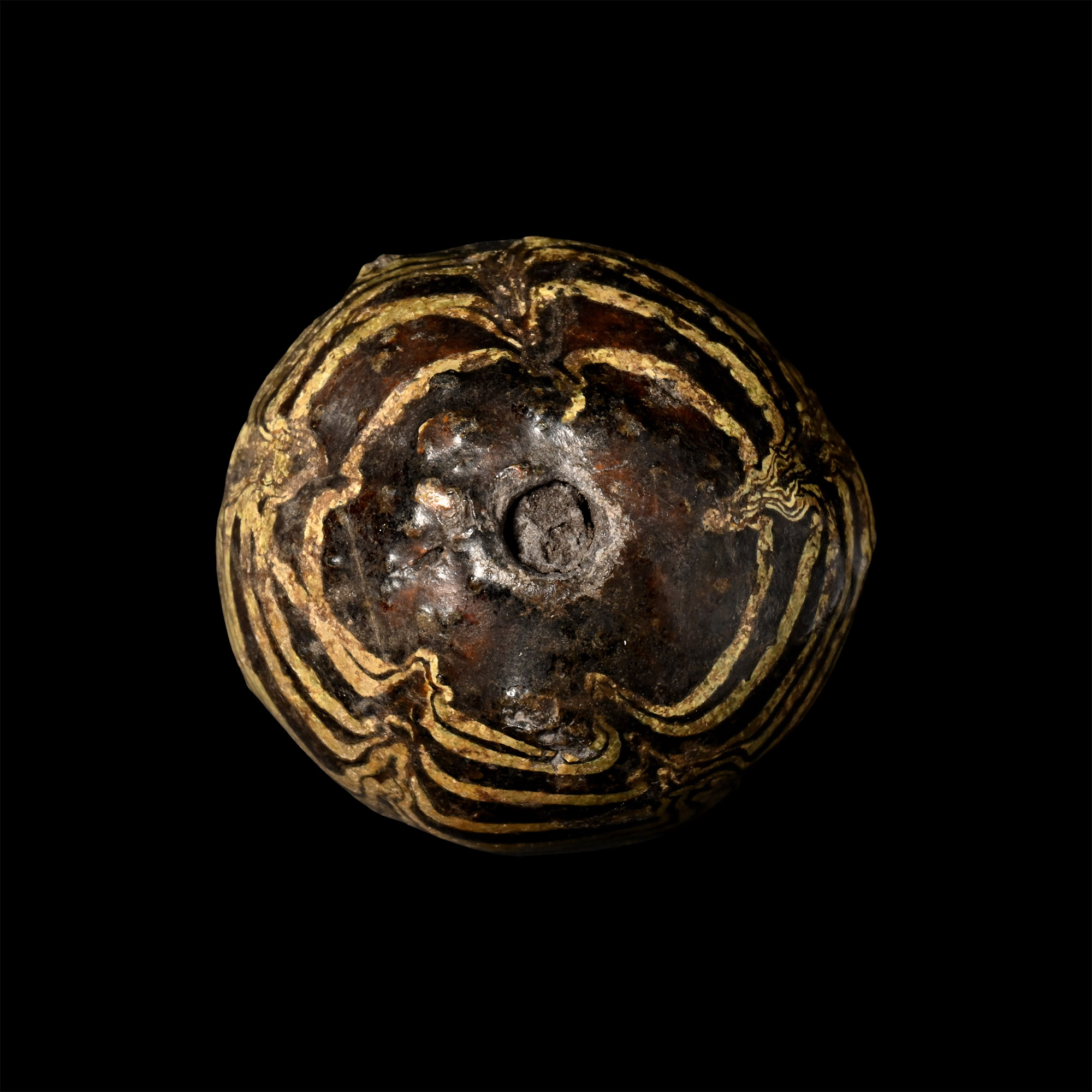
A glazed hollow ceramic egg with a hole to the underside and a smaller pellet inside; regular, dragged yellow lines to the outer face.
ProvenanceFrom the private collection of a London gentleman, from his grandfather's collection formed before the early 1970s.
LiteratureSee Fornvännen Journal Of Swedish Antiquarian Research, 2025/1 Korta meddelanden, Glazed ceramic resurrection eggs found in Sweden and their Slavic origins, by Rune Edberg, Christina Larsson and Torbjörn Brorsson.
FootnotesThese eggs are usually assigned to Kievan Rus workmanship, but in fact, they were found in a wider geographical area. They are thought to represent an early form of a popular Orthodox tradition of painted eggs, or 'pysanka', popular during the Easter holiday as a symbol of resurrection. However, the symbolism may be pre-Christian, with a connection to an idea of a Cosmic Egg, from which the world was created.
CONDITIONTimeLine Auctions follows a vetting process to ensure the authenticity and legality of all items, reinforcing our commitment to integrity and responsible trading. Each antiquity, antique, and coin lot undergoes thorough examination by a vetting committee of at least ten external specialists, professional trade association members, scientists, and archaeologists: Our Vetting Process
AUCTIONS:
TimeLine is a leading auction house specialising in antiquities, ancient art, collectables, natural history, coins, medals, and books. Our auctions offer museums, collectors, historians, and enthusiasts the opportunity to acquire unique and historically significant pieces.
-

Viking Age Bronze Ring with Cabochon
Circa 9th-12th century A.D.Sold for (Inc. bp): £85
Comprising a twisted hoop and a lozenge-shaped bezel plaque with four claws holding a blue glass cabochon. 1.79 grams, 23.79 mm overall, 17.81 mm internal diameter (approximate size British M, USA 6, Europe 12.46, Japan 12)
From the private collection of a European gentleman (1942-2024), formed since the 1970s. -
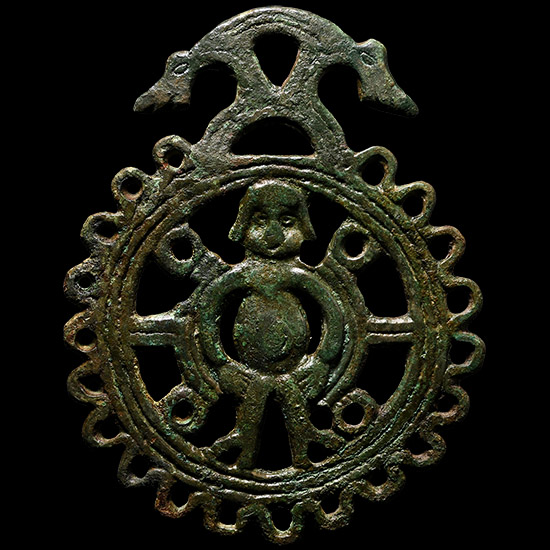
Pre-Viking Bronze Openwork Pendant with Bound Figure and Dragons
Circa 6th-10th century A.D.Sold for (Inc. bp): £416
Openwork Zierscheibe with triple-band ring surrounding a facing female figure with flexed arms, annulets and arcs flanking her body, annulets to the outer rim of the enclosing ring, suspension loop above flanked by addorsed beasts. 83.77 grams, 10.7 cm
From the private collection of a London gentleman, from his grandfather's collection formed before the early 1970s.
These openwork discs are often found at the waist and may have formed an ornamental lid to a belt-pouch. -
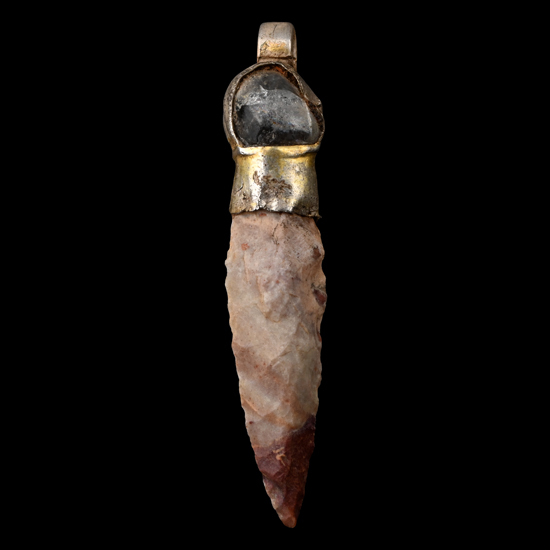
Viking Silver-Gilt Elfshot Pendant with Stone Arrowhead
9th-11th century A.D. and earlierSold for (Inc. bp): £845
Comprising a silver sleeve with a knapped flint arrowhead, a circular cell set with a clear glass cabochon above. 3.46 grams, 44.84 mm
From the private collection of a London gentleman, from his grandfather's collection formed before the early 1970s.
This amulet was believed to offer protection against 'Elfshot'. The attack of elves was believed responsible for mysterious suffering in men and livestock: sudden shooting pains localised to a particular area of the body, such as in rheumatism, arthritis, or muscle stitches or cramps. Elves were thought to shoot darts or arrows where such pains had no obvious external cause. Belief in elfshot persisted into the 20th century in rural areas, and as proof, country folk would sometimes find small arrowheads (the remains of Neolithic or Mesolithic flints, or naturally-occurring spear-shaped stones) that were believed to be the magical weapons that caused the afflictions. Belief in elfshot began in the Pagan Germanic period.
