
Loading, please wait...
LOT 0364
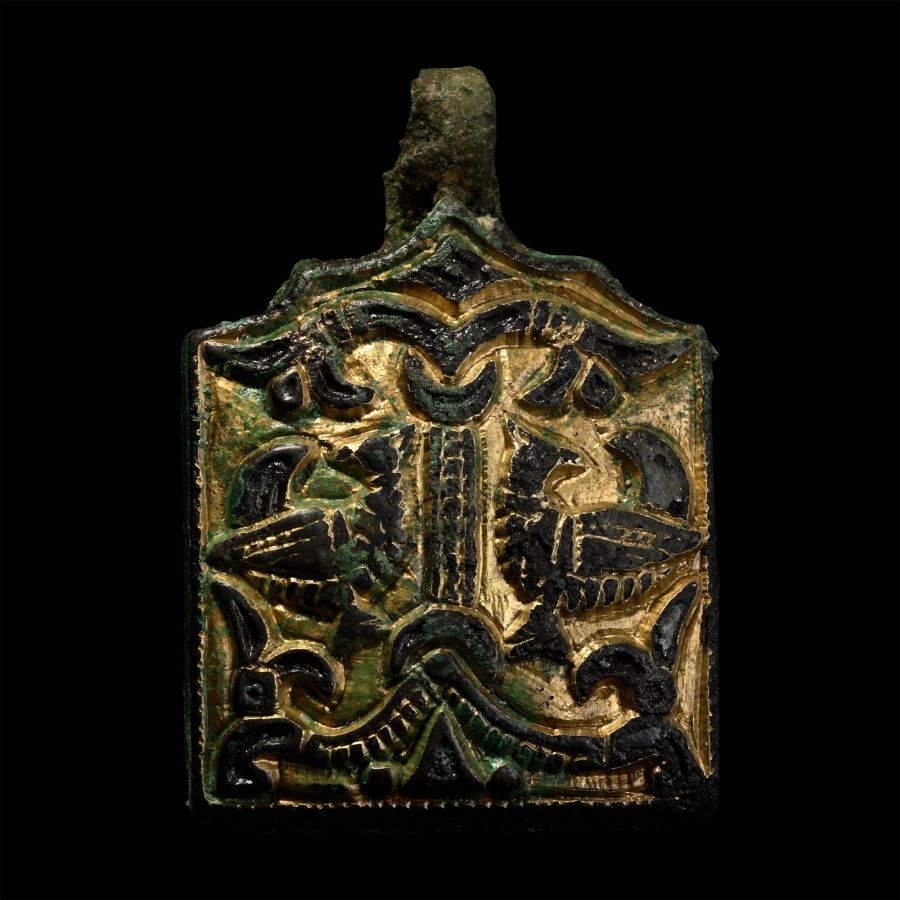
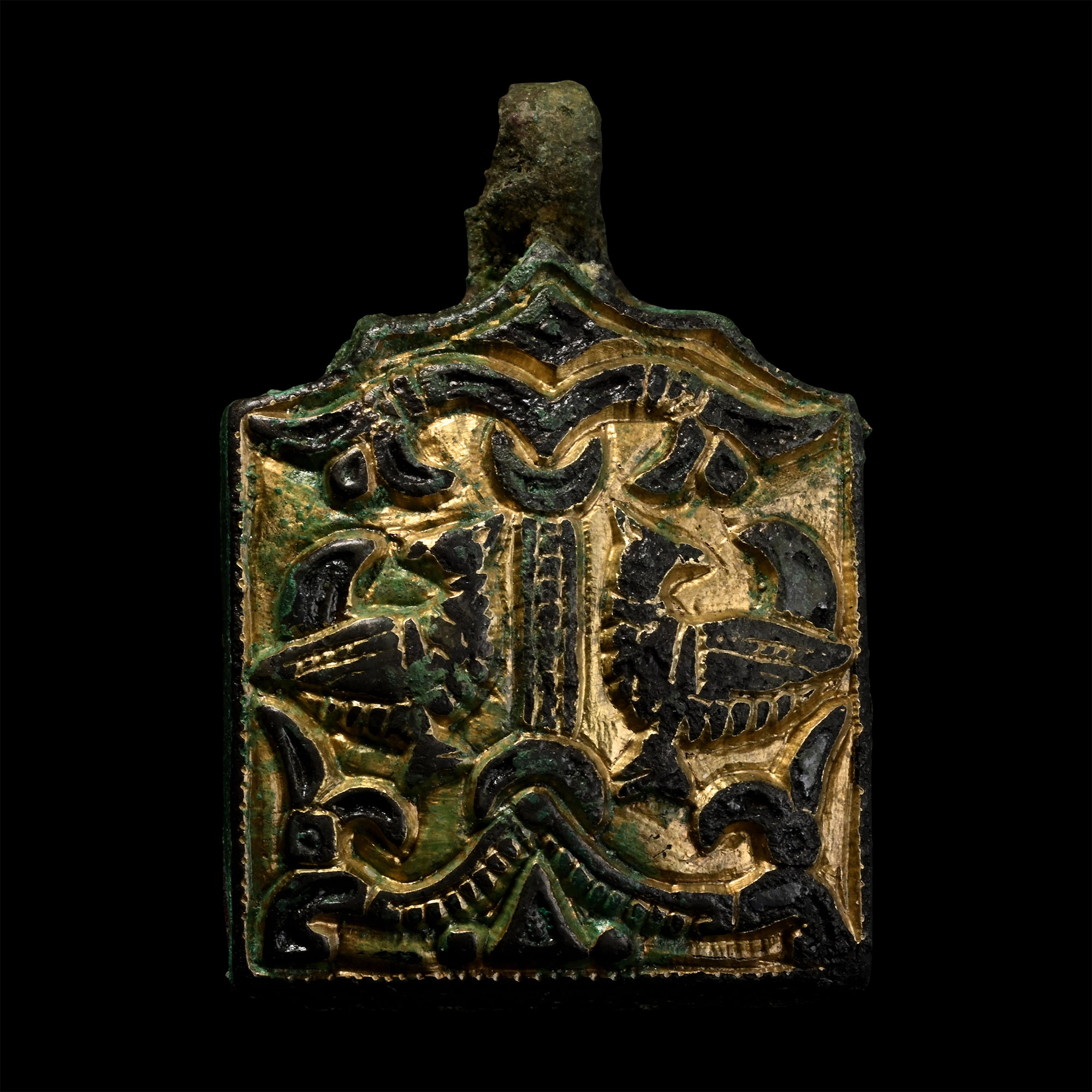
Viking Gilt Bronze Horse Harness Pendant with Birds
CIRCA 10TH CENTURY A.D.
1 3/4in. (19.42 grams, 44.78 mm).
Square in plan with hollow body, repoussé motif of a tree with flanking birds at the sides and serpents below; integral suspension loop. [No Reserve]
ProvenanceFrom the private collection of a London gentleman, from his grandfather's collection formed before the early 1970s.
LiteratureCf. Arbman, H., Birka I: Die Gräber, Uppsala, 1940, plate 96 (4), for similar pendants and mounts.
CONDITIONTimeLine Auctions follows a vetting process to ensure the authenticity and legality of all items, reinforcing our commitment to integrity and responsible trading. Each antiquity, antique, and coin lot undergoes thorough examination by a vetting committee of at least ten external specialists, professional trade association members, scientists, and archaeologists: Our Vetting Process
AUCTIONS:
TimeLine is a leading auction house specialising in antiquities, ancient art, collectables, natural history, coins, medals, and books. Our auctions offer museums, collectors, historians, and enthusiasts the opportunity to acquire unique and historically significant pieces.
-
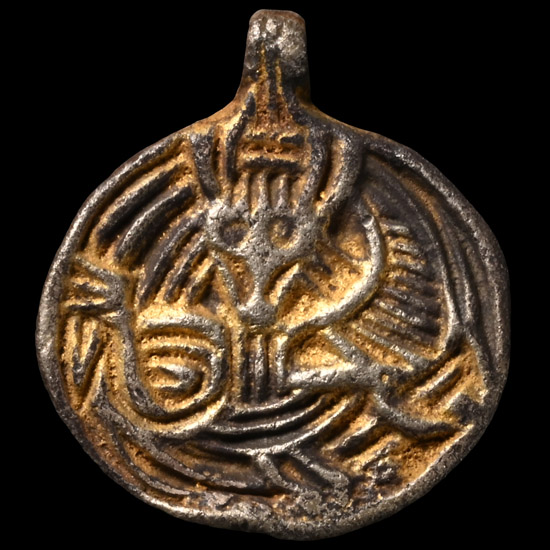
Viking Age Scandinavian Silver-Gilt Pendant with Mask
Circa 9th-11th century A.D.Sold for (Inc. bp): £975
With integral loop, border enclosing a low-relief image of a male facing mask between two birds embraced at the necks; Kipplingeberg type. 3.81 grams, 23 mm
Private collection formed in Europe in the 1980s. Westminster collection, central London, UK. -
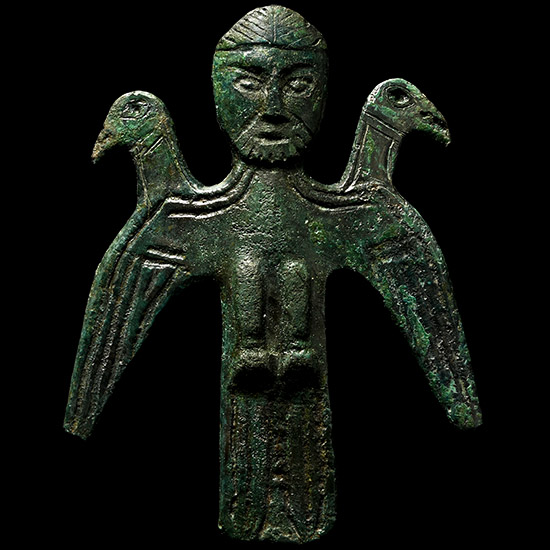
Pre-Viking Age Bronze Shaman Pendant
Circa 6th-8th century A.D.Sold for (Inc. bp): £2,340
Flat in section with spread wings and talons to the lower body, feather detailing to tail and wings; male mask above, flanked by profile bird-heads at the pinions; loop to reverse; Samoyed type. 18.58 grams, 66.13 mm
From the private collection of a London gentleman, from his grandfather's collection formed before the early 1970s. This lot has been checked against the Interpol Database of stolen works of art and is accompanied by search certificate number no.13290-253202.
The pendant likely represents the soul of the shaman in bird form on a spirit journey. -
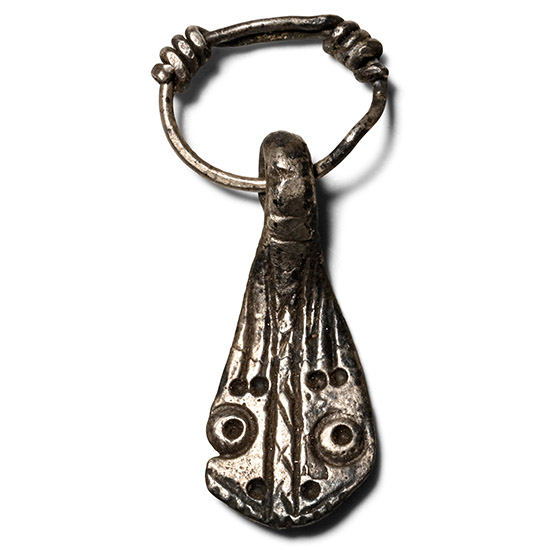
Viking Age Silver Duck Foot Pendant
Circa 9th-11th century A.D.Sold for (Inc. bp): £169
Silver ovoid pendant with incised duck-foot detailing, mounted on a wire suspension ring. 1.63 grams, 31 mm
Ex German art market, 2000s. Acquired from an EU collector living in London. From the collection of a Surrey, UK, gentleman.
