
Loading, please wait...
LOT 1447
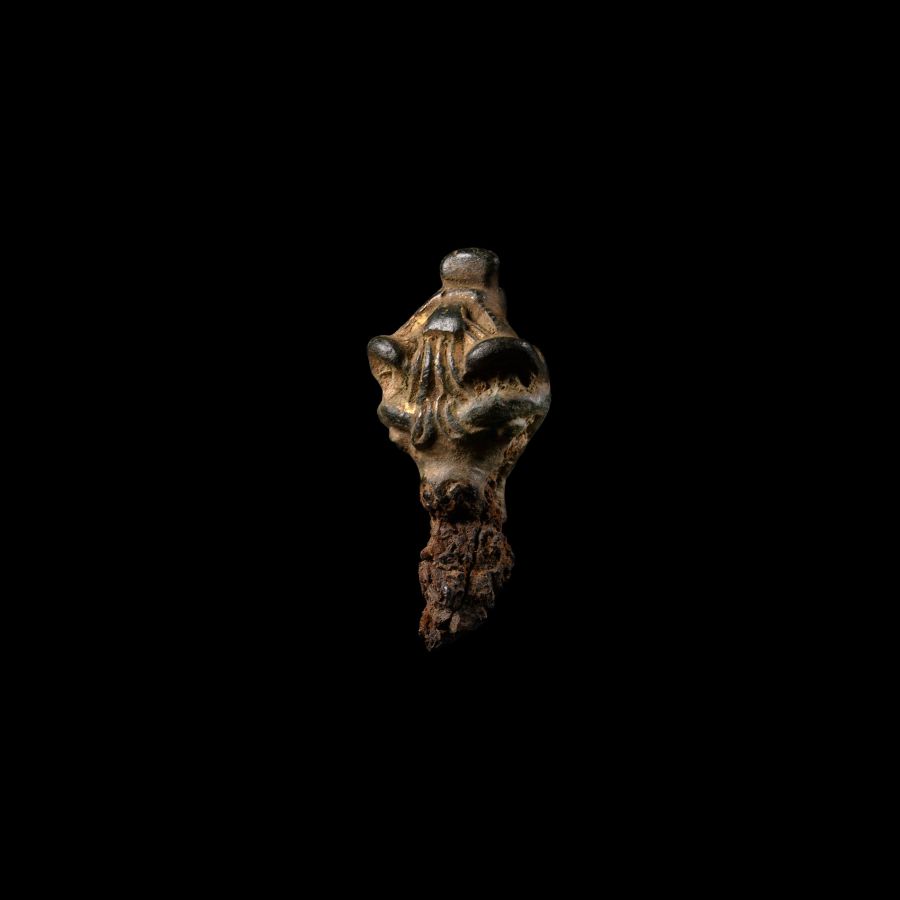
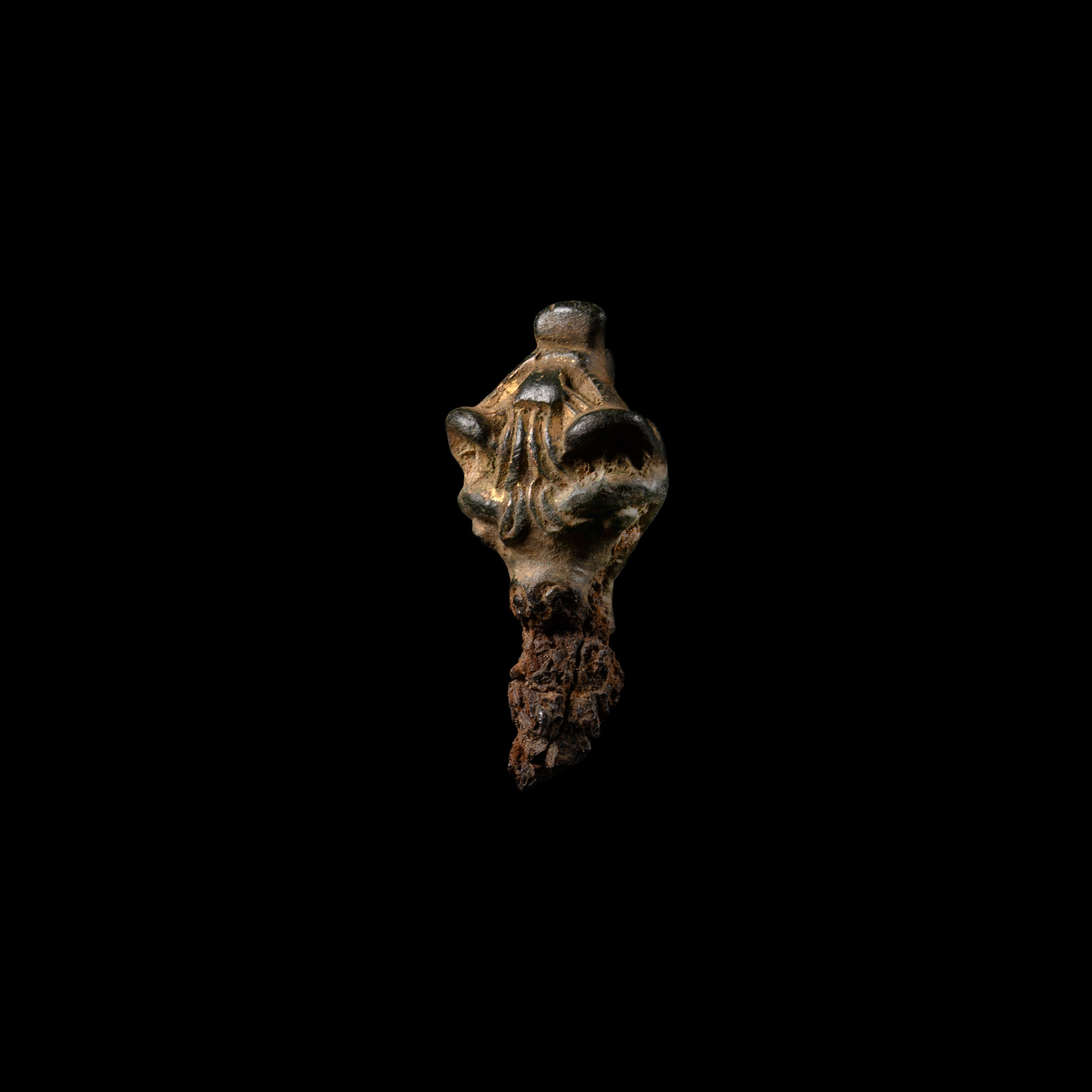
Viking Gilt Bronze Beast Head Finial
9TH-11TH CENTURY A.D.
1 1/4 in. (9.7 grams, 33 mm).
Or a brooch, with remains of attachment mechanism to reverse; trace remains of gilding. [No Reserve]
ProvenanceFrom the collection of a North American gentleman, formed in the 1990s.
CONDITIONTimeLine Auctions follows a vetting process to ensure the authenticity and legality of all items, reinforcing our commitment to integrity and responsible trading. Each antiquity, antique, and coin lot undergoes thorough examination by a vetting committee of at least ten external specialists, professional trade association members, scientists, and archaeologists: Our Vetting Process
AUCTIONS:
TimeLine is a leading auction house specialising in antiquities, ancient art, collectables, natural history, coins, medals, and books. Our auctions offer museums, collectors, historians, and enthusiasts the opportunity to acquire unique and historically significant pieces.
-
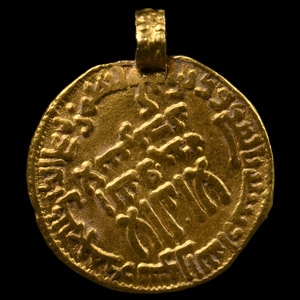
Viking Age Gold Plunder Dinar Coin Pendant
8th-9th century A.D.Sold for (Inc. bp): £598
Formed using an Abbasid Caliphate dinar coin with ridged suspension loop attached. 4.43 grams, 22 mm
Acquired in the late 1970s and 1980s. Ex property of a London gentleman.
Such Islamic coins were traded across the Viking world and have been discovered as grave goods or in hoards (as coins and as jewellery items) in Scandinavia and the Baltic area. -
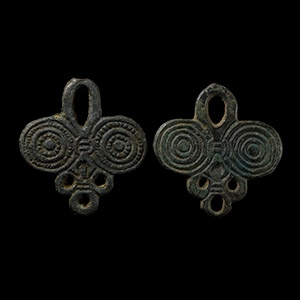
Viking Age Bronze Pendant Pair
9th-11th century A.D.Sold for (Inc. bp): £59
Of openwork form, each displaying the same zoomorphic design with large eyes. 36.5 grams total, 46 mm each
From the collection of a North American gentleman, formed in the 1990s. -
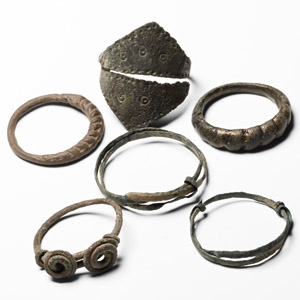
Viking Age Bronze Ring Collection
8th-11th century A.D.Sold for (Inc. bp): £104
Two featuring faux-twisted bezels; bezel formed with overlapping arms and coiled discoid plaques; coiled hoops with coiled arms; bezel formed as opposed triangular plaques decorated with punched ornament. 12.9 grams total, 22-26 mm
Acquired on the UK art market. Property of a Ruislip, UK, gentleman, by inheritance.
