
Loading, please wait...
LOT 1553
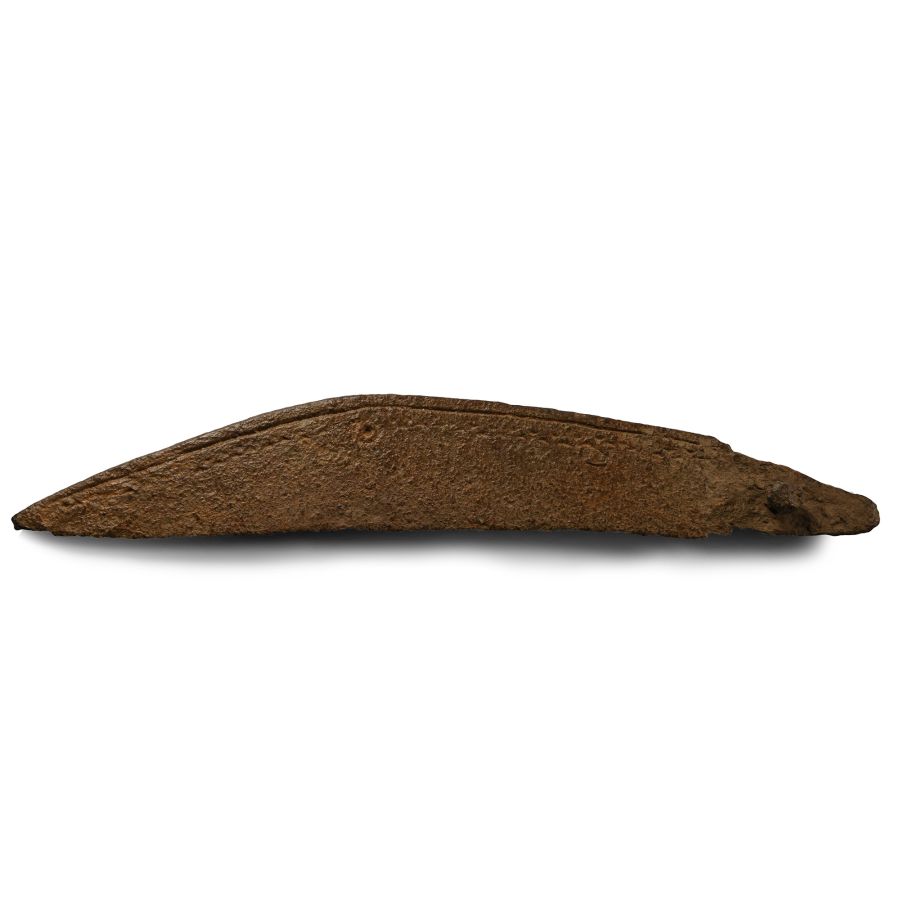
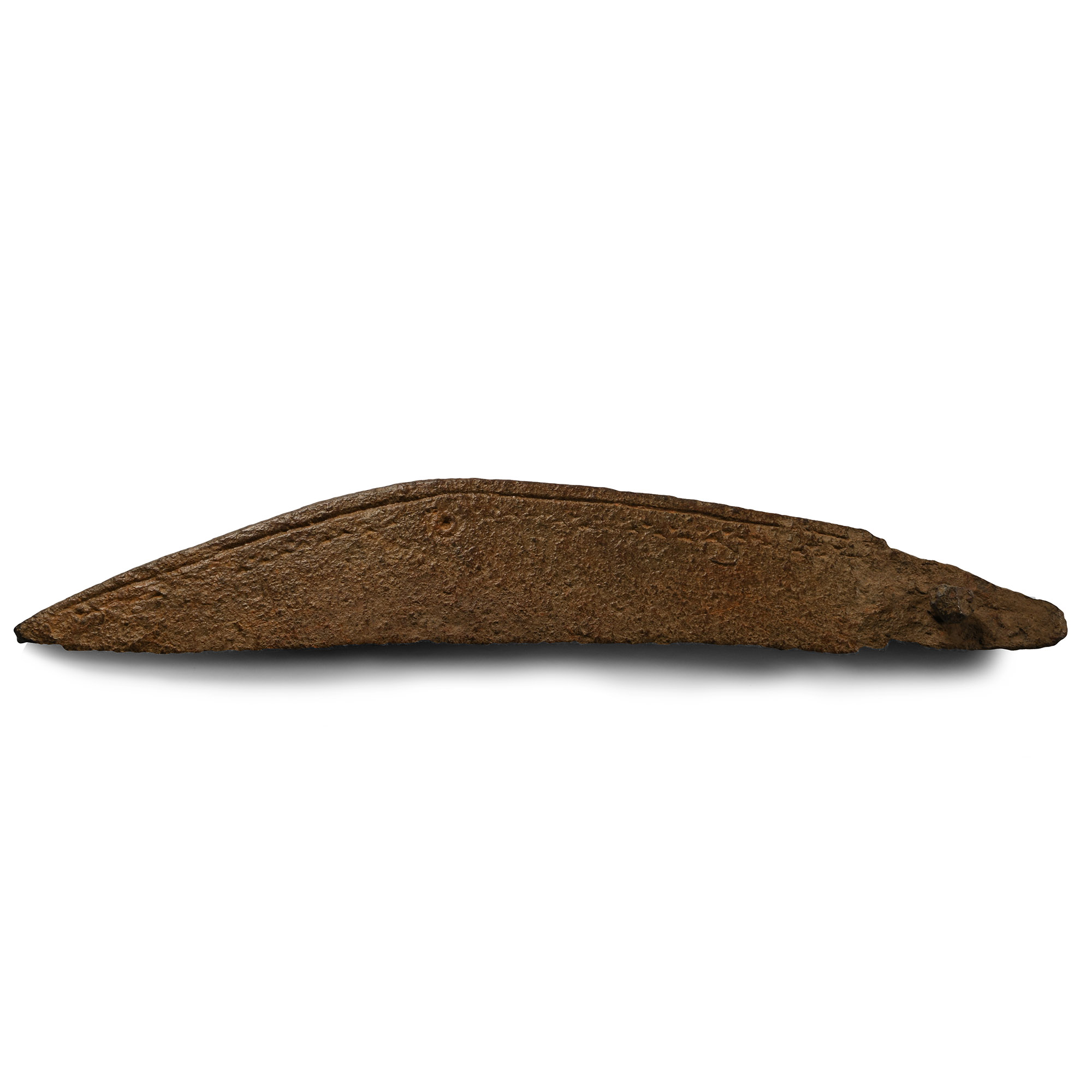
Viking Decorated Iron Broken-Backed Knife 'Seax' Blade
CIRCA 9TH-11TH CENTURY A.D.
6 1/2 in. (51 grams, 16.7 cm).
With scooped forward edge, straight single edge, punched detailing and rope-work to back; transverse mounting pin. [No Reserve]
ProvenanceFound North-West of York, Yorkshire, UK.
Acquired circa 2005.
This lot is accompanied by an illustrated lot declaration signed by the Head of the Antiquities Department, Dr Raffaele D’Amato.
TimeLine Auctions follows a vetting process to ensure the authenticity and legality of all items, reinforcing our commitment to integrity and responsible trading. Each antiquity, antique, and coin lot undergoes thorough examination by a vetting committee of at least ten external specialists, professional trade association members, scientists, and archaeologists: Our Vetting Process
AUCTIONS:
TimeLine is a leading auction house specialising in antiquities, ancient art, collectables, natural history, coins, medals, and books. Our auctions offer museums, collectors, historians, and enthusiasts the opportunity to acquire unique and historically significant pieces.
-
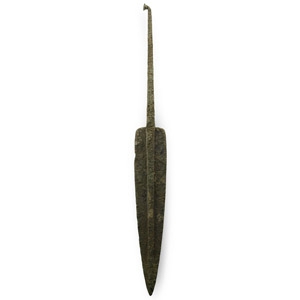
Marlik Bronze Spearhead
14th-10th century B.C.Sold for (Inc. bp): £195
Elongated tapering triangular blade, with broad midrib and squared shoulders slightly rounded at the corners, rectangular sectioned tang with a bent button end. 387 grams, 49 cm
Acquired 1980-2015. Ex Abelita family collection. This lot is accompanied by an illustrated lot declaration signed by the Head of the Antiquities Department, Dr Raffaele D’Amato.
The spearhead belongs to the sub-type A of the spearhead classification of Khorasani. Similar specimens, now in the National Museum of Iran, Teheran, were excavated in the Royal Cemetery of Marlik and found in tomb 5 trench 8 of that Necropolis. -
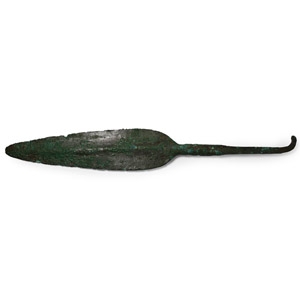
Large Marlik Bronze Spearhead
Early 1st millennium B.C.Sold for (Inc. bp): £52
With a leaf-shaped blade and raised midrib extending to a rectangular section tang with a right angle turn. 528 grams, 41.5 cm
Acquired 1980-2015. Ex Abelita family collection. This lot is accompanied by an illustrated lot declaration signed by the Head of the Antiquities Department, Dr Raffaele D’Amato. -
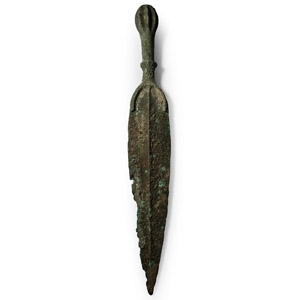
North-Western Persian Bronze Short Sword with Spherical Pommel
Late 2nd-early 1st millennium B.CSold for (Inc. bp): £247
The hilt with flanged pommel, round grip with horizontal flange, crescentic guard, long foliate blade with rectangular-section mid-rib. 910 grams, 47.5 cm
Acquired 1980-2015. Ex Abelita family collection. This lot is accompanied by an illustrated lot declaration signed by the Head of the Antiquities Department, Dr Raffaele D’Amato.
Moorey studied pommelled swords and attributed their production to north-western Iran, dating them to the end of the 2nd millennium B.C. Dimensions of these swords varied from circa 49 cm (Khorasani, 2006, p.395) to 74 cm (sword in the Ashmolean Museum). While the blade belongs to the usual typology, like the penannular guard, the fashion of the pommel is unusual.
