
Loading, please wait...
LOT 1741
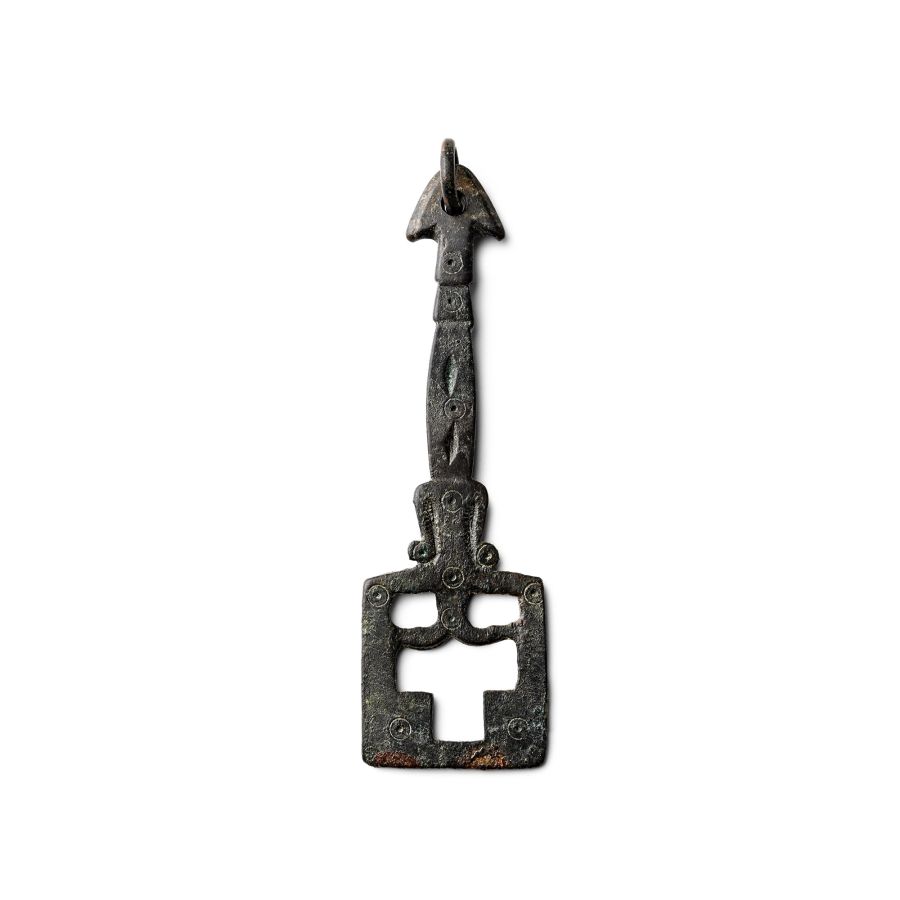
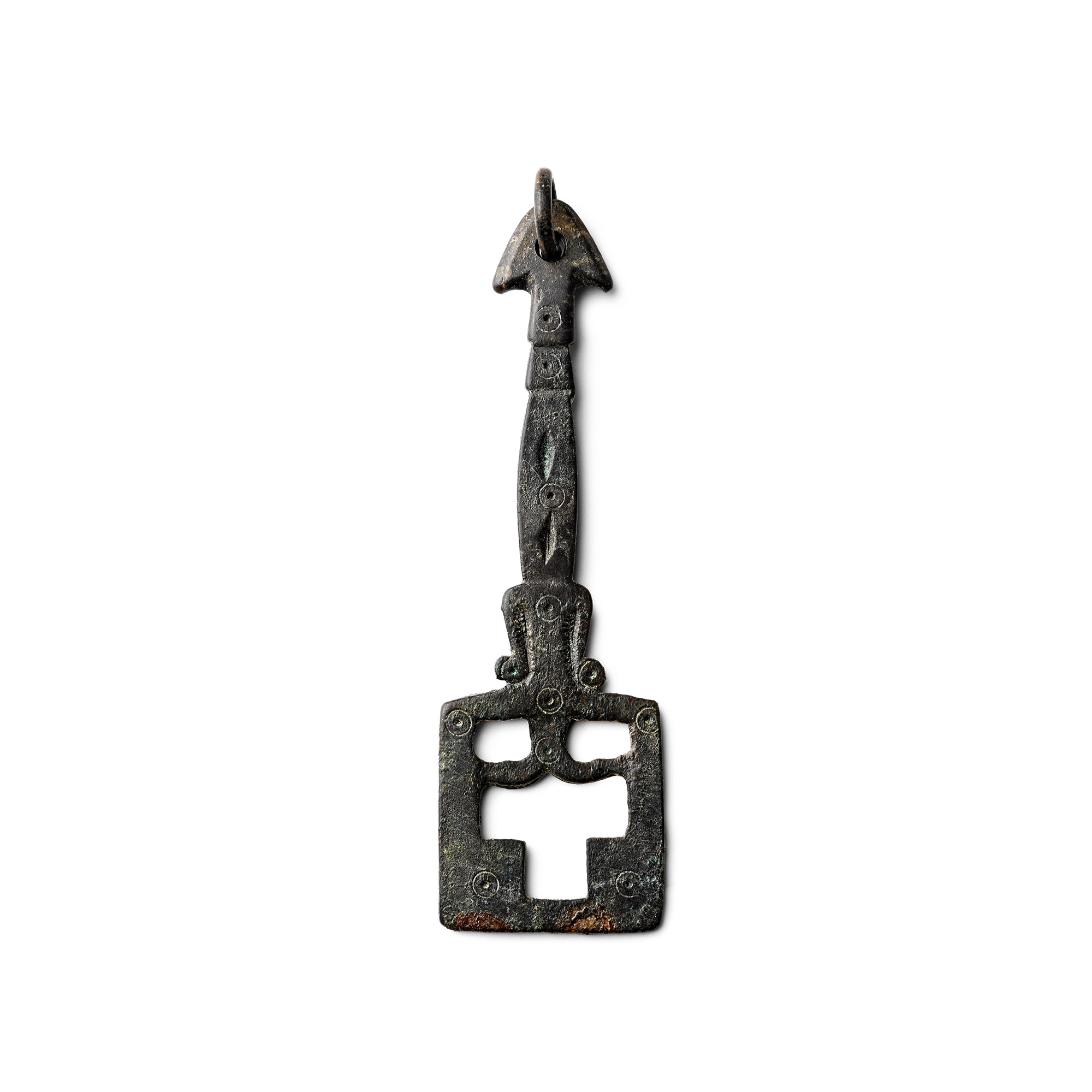
Viking Decorated Bronze Latch Key
8TH CENTURY A.D.
3 1/2 in. (19 grams, 90 mm).
A bifacial latch-lifter with square openwork head, flat-section shank with a barbed finial, pierced to accept a suspension ring; three piercings to the head, two B-shaped, and a larger T-shape, scrolled centre bar; scrolled lappets above the junction with the shank, and two scaphoid depressions to each face and ring-and-dot decoration throughout.
ProvenanceFrom a private UK collection formed since the 1980s.
Ex property of a UK gallery, early 2000s.
Cf. Lehtosalo-Hilander, P-L., Luistari I The Graves, Helsinki, 1982, pl.105, item 24.4118; and Hammond, B., British Artefacts vol.3 - Late Saxon, Late Viking & Norman, Greenlight Publishing, 2013, item, 1.13-g, for type.
CONDITIONTimeLine Auctions follows a vetting process to ensure the authenticity and legality of all items, reinforcing our commitment to integrity and responsible trading. Each antiquity, antique, and coin lot undergoes thorough examination by a vetting committee of at least ten external specialists, professional trade association members, scientists, and archaeologists: Our Vetting Process
AUCTIONS:
TimeLine is a leading auction house specialising in antiquities, ancient art, collectables, natural history, coins, medals, and books. Our auctions offer museums, collectors, historians, and enthusiasts the opportunity to acquire unique and historically significant pieces.
LOT 1741
Viking Decorated Bronze Latch Key
Estimate £600 - 800€700 - 930 (for guidance only)$810 - 1,080 (for guidance only)
-
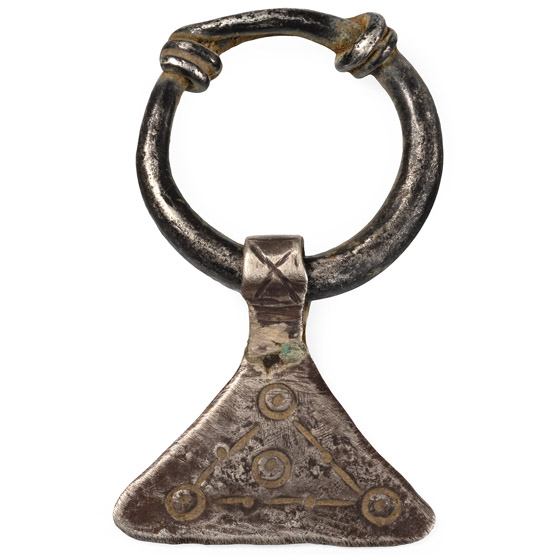
Viking Age Silver Axe Pendant
9th-11th century A.D.Sold for (Inc. bp): £260
Hoop with coiled wire closure; free-running axehead pendant decorated with incised triangle motif, ring-and-dot at each angle and to centre. 9.47 grams, 45 mm
Ex German art market, 2000s. Acquired from an EU collector living in London. From the collection of a Surrey, UK, gentleman. -
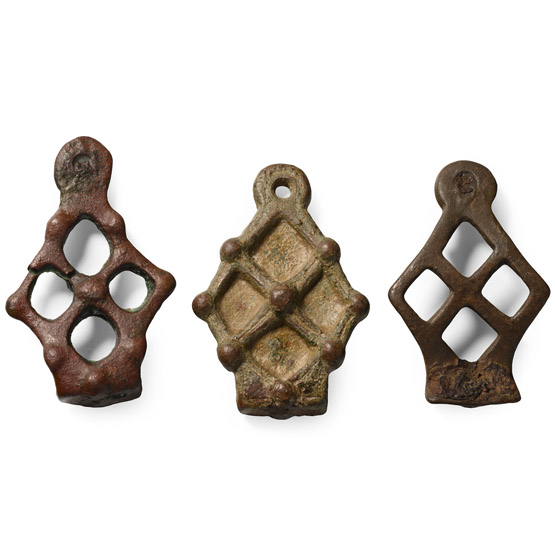
Anglo-Scandinavian Viking Bronze Stirrup Apex Mount Collection
11th century A.D.Sold for (Inc. bp): £78
Each of Williams's Class A Type 12 with lattice ornament to the body and bosses at the nodes; two openwork and one solid fill; narow base adnd ledge at the bottom. 48.2 grams total, 44-47 mm
Found Norfolk, UK. -
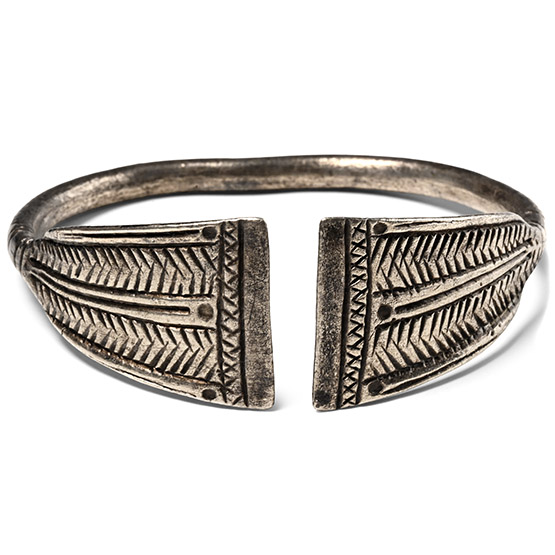
Viking Age Silver Bracelet
10th-14th century A.D.Sold for (Inc. bp): £2,470
With round-section shank and two large curved flange finials, each with herringbone detailing. 22.8 grams, 61 mm
UK private collection before 2000. Acquired on the UK art market. Private collection, London, UK.
