
Loading, please wait...
LOT 1460
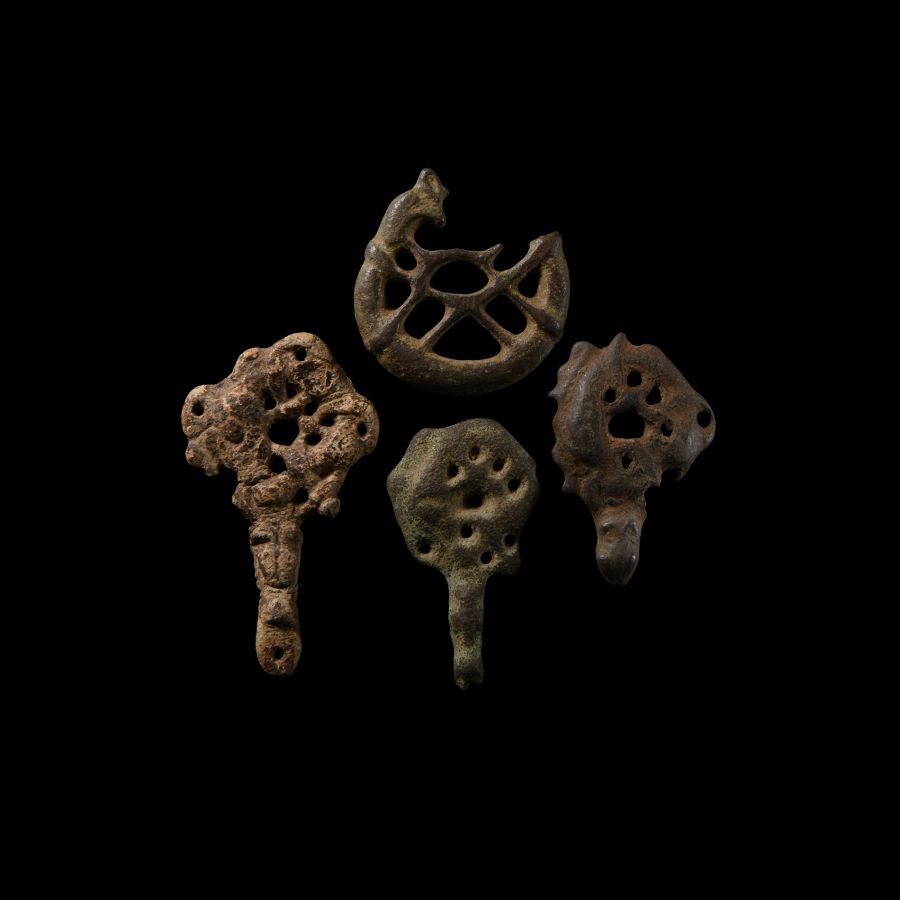
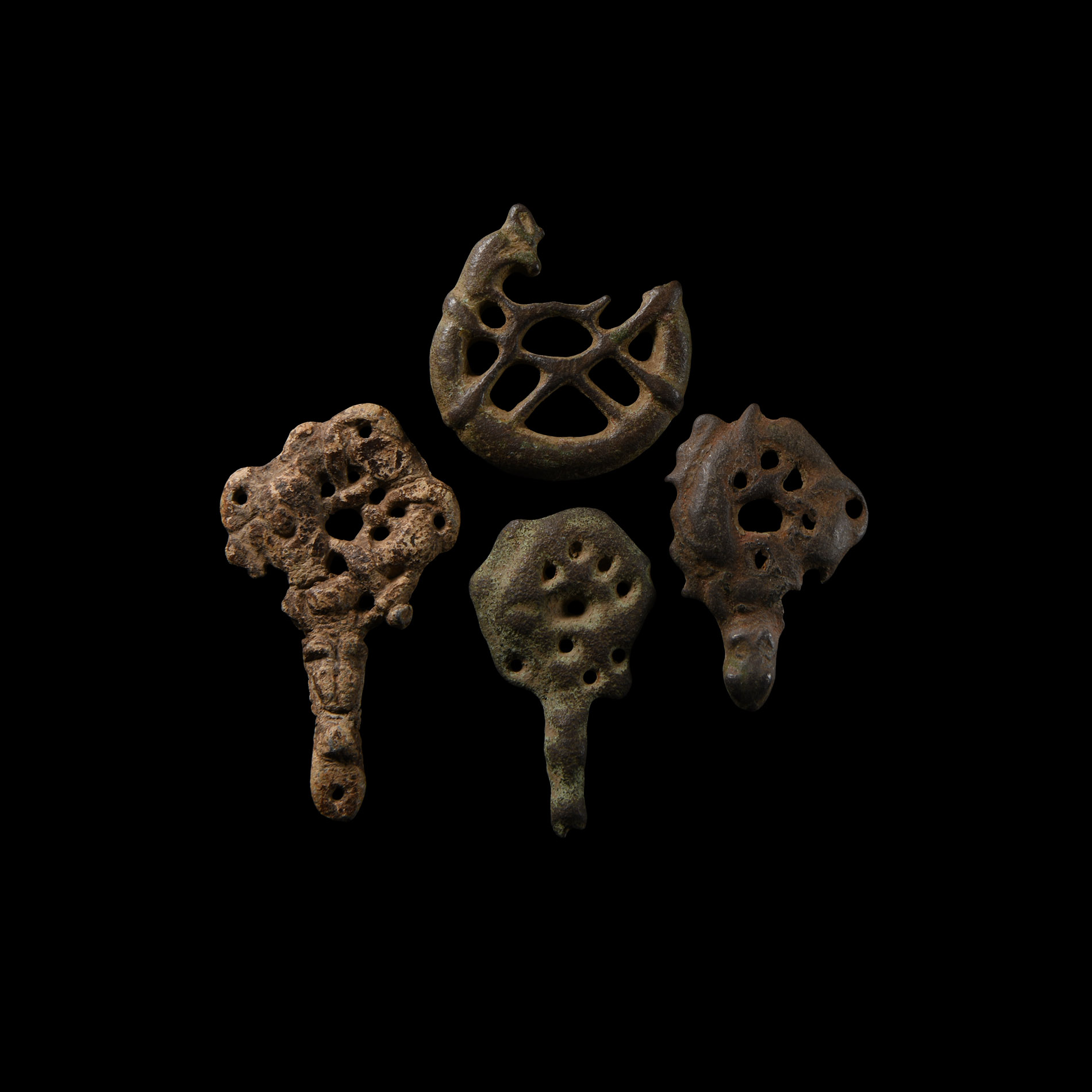
Viking Bronze Urnes Style Mount Collection
11TH CENTURY A.D.
1 1/8 - 1 3/4 in. (41.7 grams total, 29-46 mm).
Comprising: one C-shaped mount with tendril detailing; two irregular pierced pendants with beast-head suspension lug; one lead master for making pendant moulds. [4, No Reserve]
ProvenanceFrom the collection of a North American gentleman, formed in the 1990s.
LiteratureCf. similar form of mounts in the British Museum, London, under accession number 1984,0302.1; Lincoln Museum, DT 174 AE 108; Hemel Hempstead (St Albans’ Museum Service (Verulamium Museum), SABMS, 81.281; for their use see Beatson, P., 'Wickelbander' in Varangian Voice, 37, November, 1995, pp.9-17, fig.8.
FootnotesThe comparatively recent finds from Lincoln, Hemel Hempstead and Grantham have considerably augmented the number of objects found in England decorated in the Urnes style, the last art style of the Vikings, and indicate that English metalworkers could produce objects of high quality. The employment of these mounts was probably linked with the fastening of puttees around the calves, the so-called wickelbander. Evidence for similar mounts as fastening pieces comes from Leyre (Danemark) and Novgorod (Ryurik Gorodische), and many other localities.
CONDITIONTimeLine Auctions follows a vetting process to ensure the authenticity and legality of all items, reinforcing our commitment to integrity and responsible trading. Each antiquity, antique, and coin lot undergoes thorough examination by a vetting committee of at least ten external specialists, professional trade association members, scientists, and archaeologists: Our Vetting Process
AUCTIONS:
TimeLine is a leading auction house specialising in antiquities, ancient art, collectables, natural history, coins, medals, and books. Our auctions offer museums, collectors, historians, and enthusiasts the opportunity to acquire unique and historically significant pieces.
-
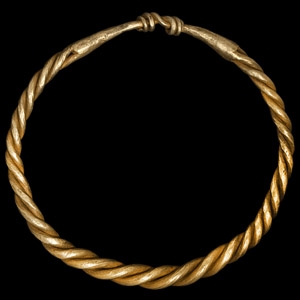
Viking Age Gold Twisted Bracelet
9th-11th century A.D. or laterSold for (Inc. bp): £6,500
Comprising a tapering hoop with braided rods to the central section, plain finials coiled around the shank forming collars. 64.4 grams, 88 mm wide
From the collection of a North American gentleman, formed in the 1990s. This lot has been checked against the Interpol Database of stolen works of art and is accompanied by search certificate number no.11882-200711. -
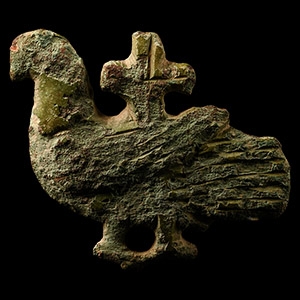
Viking Bronze Bird Brooch with Cross
Circa 8th-9th century A.D.Sold for (Inc. bp): £130
Weetch Type 30b; possibly in the form of a dove, a symbol of the Holy Spirit, standing in profile left, a Christian cross projecting from its back, some stylised detailing to the feathers; remains of pin lug and catchplate to reverse. 6.7 grams, 33 mm
Found Berkshire, UK. Accompanied by a copy of the British Museum's Portable Antiquities Scheme (PAS) report no.BERK-5DED86. -
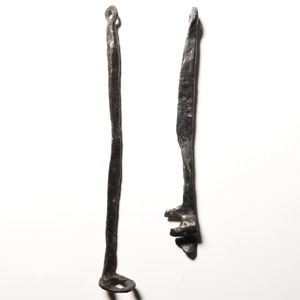
Viking Age Iron Key Pair
Circa 9th-11th century A.D.Sold for (Inc. bp): £20
Comprising: one with perpendicular discoid foot and cruciform void; one with cranked foot and three lateral wards. 55 grams total, 14.5-16.5 cm
Ex DRG Coins and Antiquities 2009-2011. Ex private Merseyside, UK, collection.
