
Loading, please wait...
LOT 2081
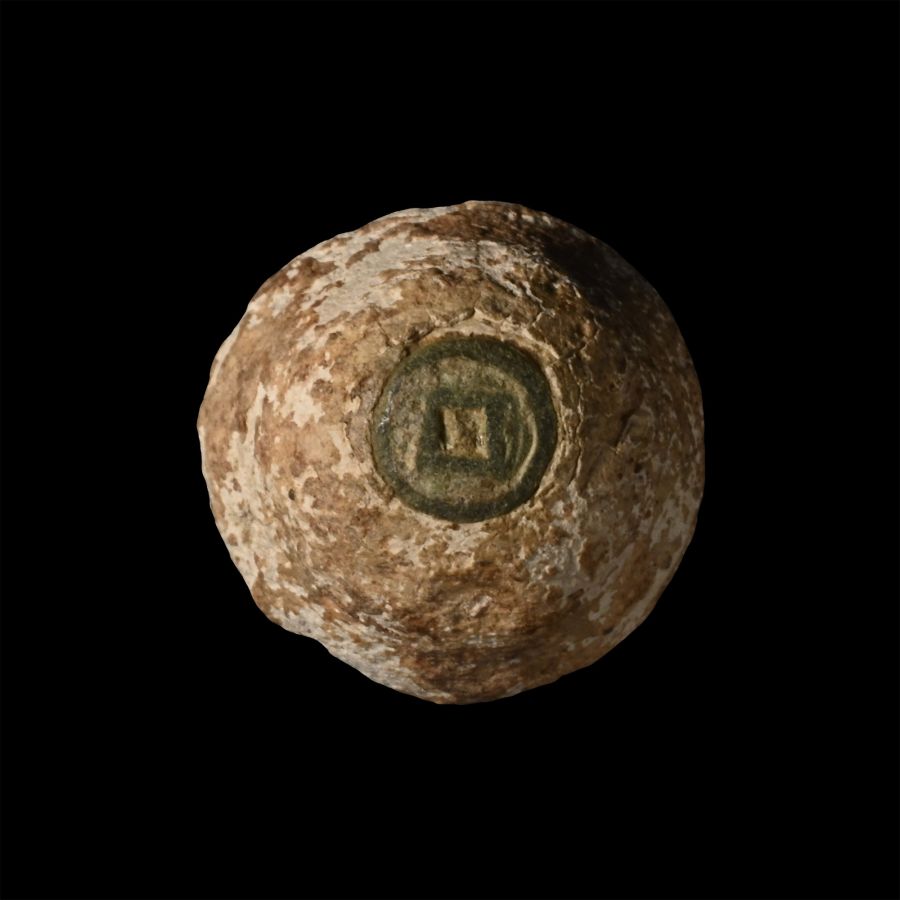
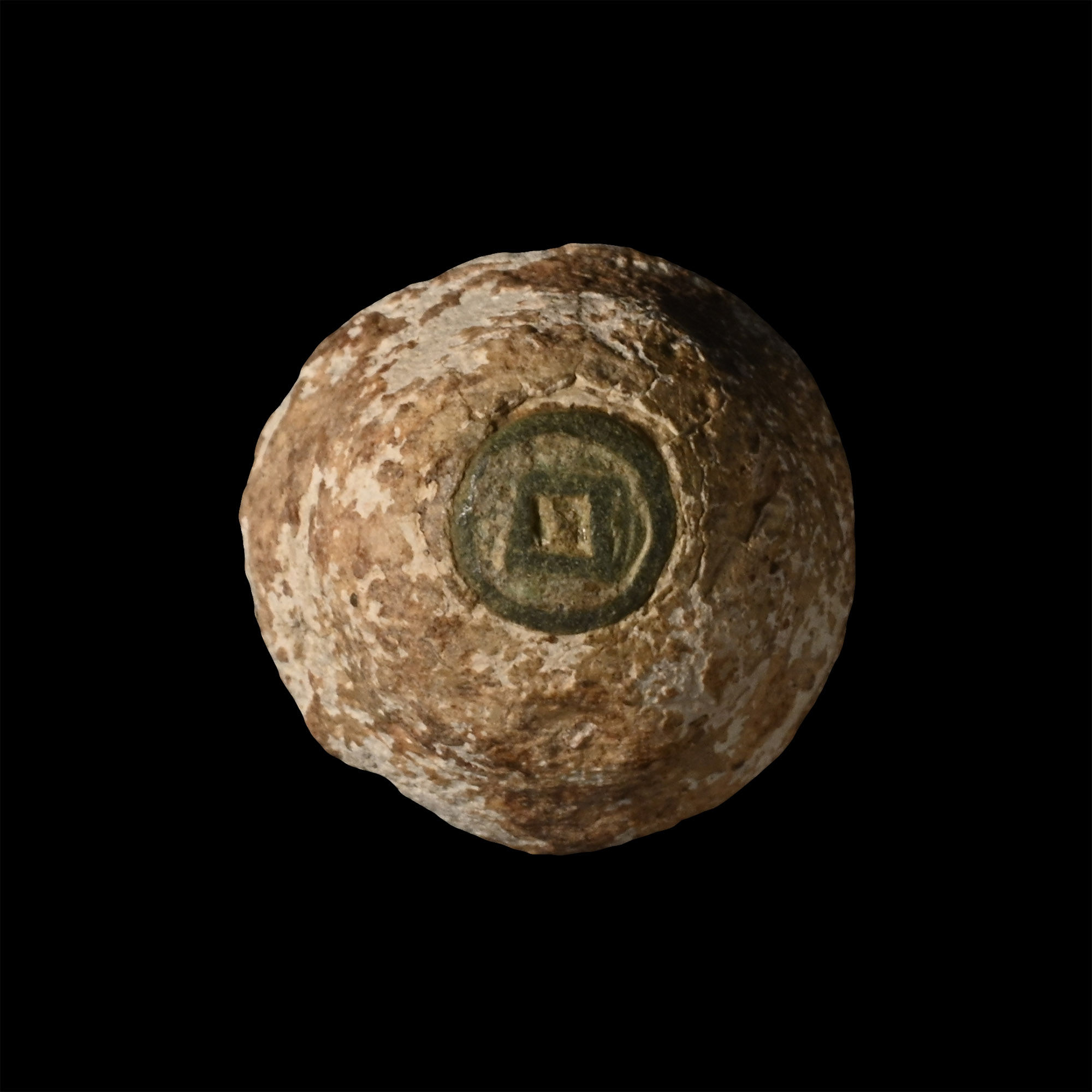
Viking Bronze Inlaid Lead Hnefatafl Gaming Piece
850-1066 A.D.
5/8 in. (22.3 grams, 17 mm).
A conical gaming piece or trade weight with an inlaid bronze disc at the top. [No Reserve]
ProvenanceFound Wolcot near Folkingham, Lincolnshire, UK, on Tuesday, 1st April 2008.
Property of a Scottish private collector.
Accompanied by a copy of the British Museum's Portable Antiquities Scheme (PAS) report no.LIN-88E805.
Cf. Pollington, S., Mead Hall – Feasting in Anglo-Saxon England, Hockwold-cum-Wilton, 2003, p.136, 220; cf. Hammond, B., British Artefacts vol.2 - Middle Saxon & Viking, Witham, 2010, item 1.14-j, for type.
FootnotesThis piece would have been used in the board game Hnefatafl. Trade weights and gaming pieces in Anglo-Scandinavian culture were often formed by taking a small and finely-made pre-existing item and embedding it into a lead matrix. The effect of this practice has been to preserve smaller pieces which would otherwise not have survived.
CONDITIONTimeLine Auctions follows a vetting process to ensure the authenticity and legality of all items, reinforcing our commitment to integrity and responsible trading. Each antiquity, antique, and coin lot undergoes thorough examination by a vetting committee of at least ten external specialists, professional trade association members, scientists, and archaeologists: Our Vetting Process
AUCTIONS:
TimeLine is a leading auction house specialising in antiquities, ancient art, collectables, natural history, coins, medals, and books. Our auctions offer museums, collectors, historians, and enthusiasts the opportunity to acquire unique and historically significant pieces.
-
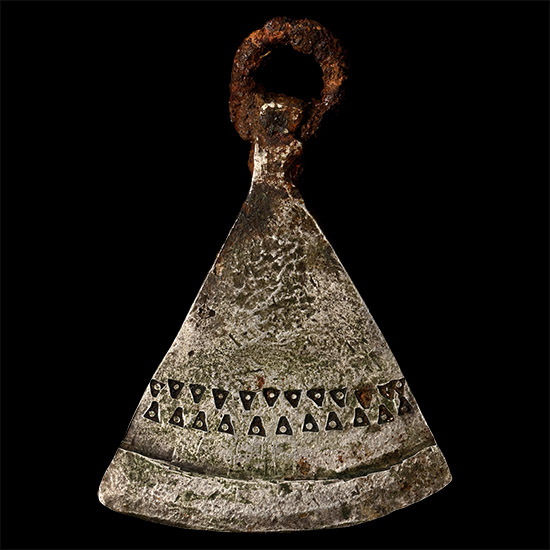
Viking Silver Stamped Broad Axe Pendant
Circa 9th-11th century A.D.Sold for (Inc. bp): £208
Wire hoop; free-running triangular pendant decorated with two bands of stamped opposed pellet-in-triangle motifs to each face. 10.71 grams, 52.11 mm
From the private collection of a London gentleman, from his grandfather's collection formed before the early 1970s. -
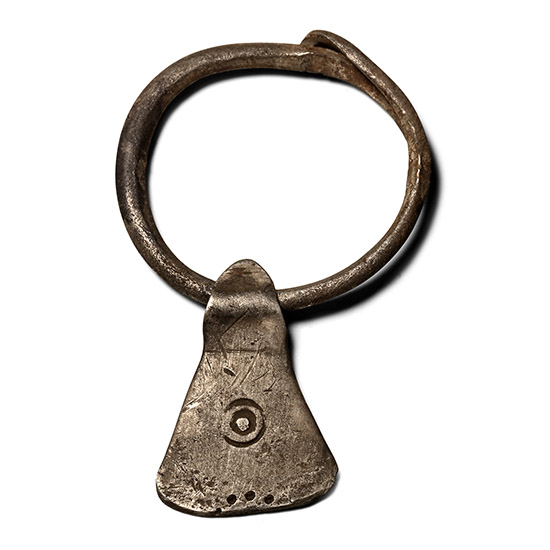
Viking Age Silver Axehead Pendant
Circa 9th-11th century A.D.Sold for (Inc. bp): £130
Comprising an axe-shaped pendant with a flaring blade and a punched annulet-in-ring motif, a large suspension loop. 5.78 grams, 49 mm
Ex German art market, 2000s. Acquired from an EU collector living in London. From the collection of a Surrey, UK, gentleman. -
.jpg)
Scandinavian Viking Age Silver Inlaid Iron Hilt Guard
Circa 10th-11th century A.D.Sold for (Inc. bp): £546
Hollow-formed with a deep curved profile; rectangular slot in the upper face for the tang; bands of applied silver ropework ornament on a sheet-silver field. 70 grams, 72 mm
Private collection formed in Europe in the 1980s. Westminster collection, central London, UK.
The guard is too narrow to have been used on a sword, but it may have been part of the hilt furniture of a high-status seax or knife. The form is approximately consistent with Petersen's Type Z of late-10th century date.
