
Loading, please wait...
LOT 1196
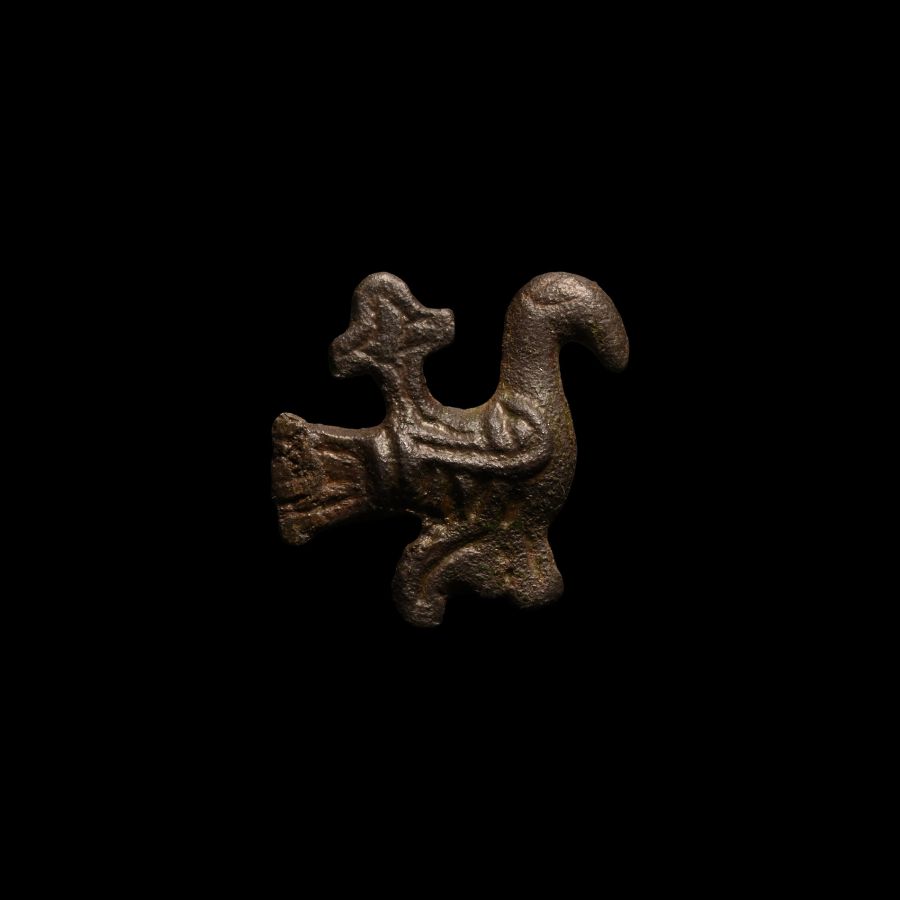
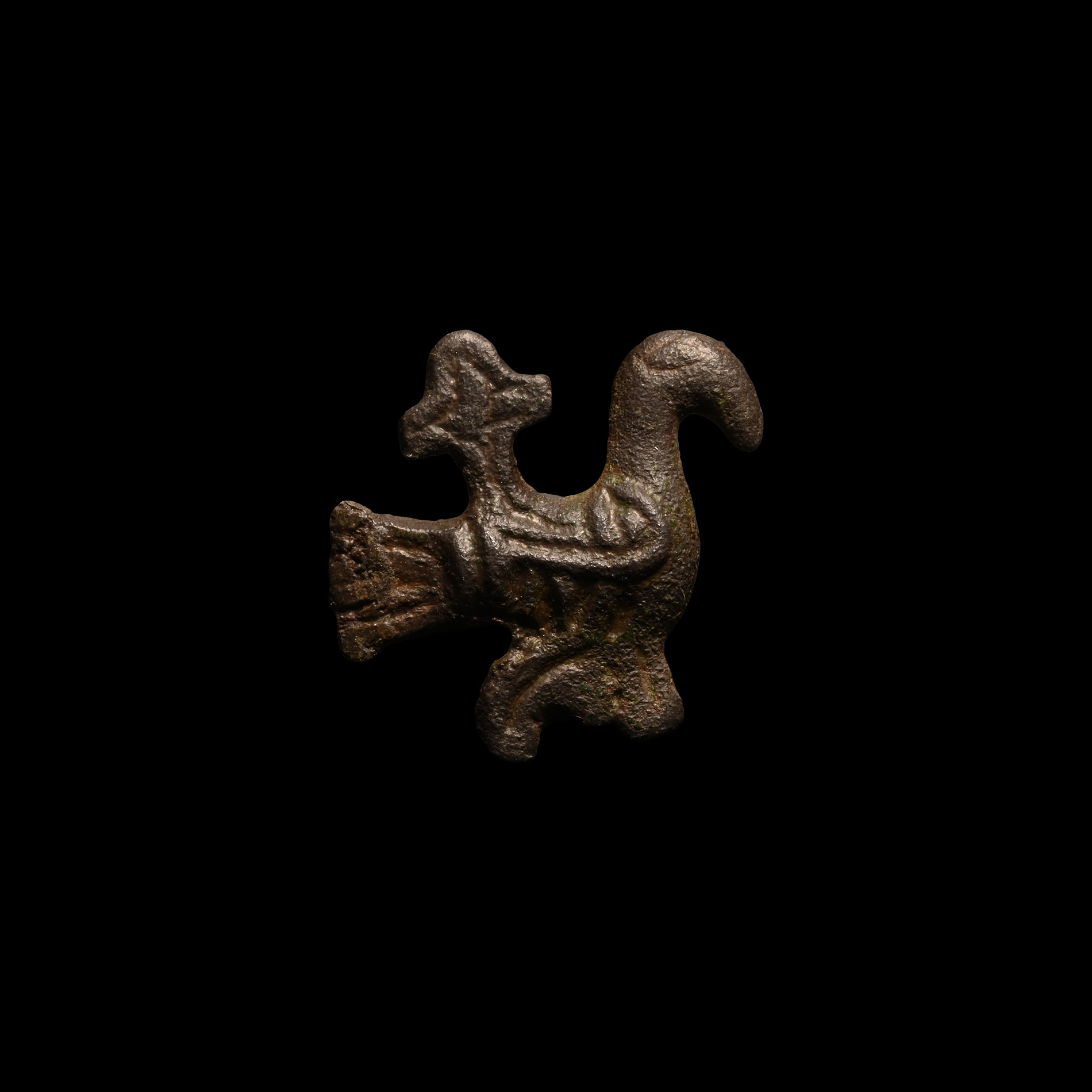
Viking Bronze Bird Brooch with Cross
10TH CENTURY A.D.
1 1/4 in. (10.06 grams, 31 mm).
The bird in profile with equal-arm cross on its back, linear detail to the wing and tail, lentoid eye, loop below the chest; loop to the reverse. [No Reserve]
ProvenanceFound near Winteringham, Humberside, UK.
LiteratureCf. Hammond, B., British Artefacts vol.2 - Middle Saxon & Viking, Witham, 2010, item 1.1.3-a.
CONDITIONTimeLine Auctions follows a vetting process to ensure the authenticity and legality of all items, reinforcing our commitment to integrity and responsible trading. Each antiquity, antique, and coin lot undergoes thorough examination by a vetting committee of at least ten external specialists, professional trade association members, scientists, and archaeologists: Our Vetting Process
AUCTIONS:
TimeLine is a leading auction house specialising in antiquities, ancient art, collectables, natural history, coins, medals, and books. Our auctions offer museums, collectors, historians, and enthusiasts the opportunity to acquire unique and historically significant pieces.
-
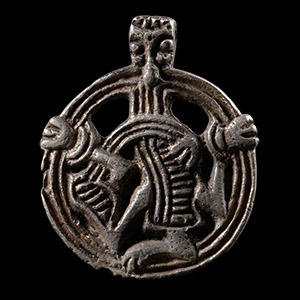
Viking Age Silver Pendant with Gripping Beast
Late 10th-early 11th century A.D.Sold for (Inc. bp): £975
Of Riddarholmen type (also widespread in the historical Rus region), with integral loop; the openwork plaque with banded border and four panels, internal stylised zoomorph with hatched panel to the hip, gripping three-fingered hands to the body and border, two detailed feet, clearly visible facing mask below the loop with pellet eyes. 13.3 grams, 40 mm
From the collection of a North American gentleman, formed in the 1990s. -
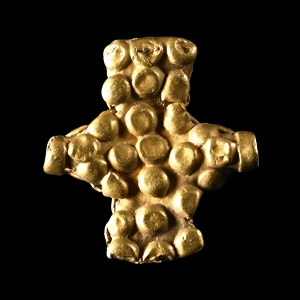
Viking Age Gold Axe-Shaped Bead
Circa 9th-11th century A.D. or earlierSold for (Inc. bp): £59
Sheet-gold bead with applied granules to both flat faces. 0.34 grams, 10.34 mm
From a late Japanese specialist collector, 1970-2000s. -
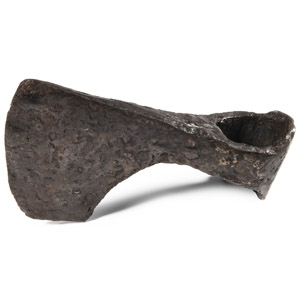
Viking Age Baltic Iron Bearded Axehead
9th-11th century A.D.Sold for (Inc. bp): £117
Hand-forged with triangular-section narrow blade widening to a broad bevelled edge with square chin, socket with rounded extensions to the rear. 782 grams, 17 cm
From the private collection of a London gentleman, from his grandfather's collection formed before the early 1970s.
The more commonly used weapons of the Finno-Ugrian people were axes, commonly found in all Finnic areas, as well as spears. Iron axeheads of this typology show a sub-trapezoidal asymmetrical blade, often perforated through the centre.
