
Loading, please wait...
LOT 1172
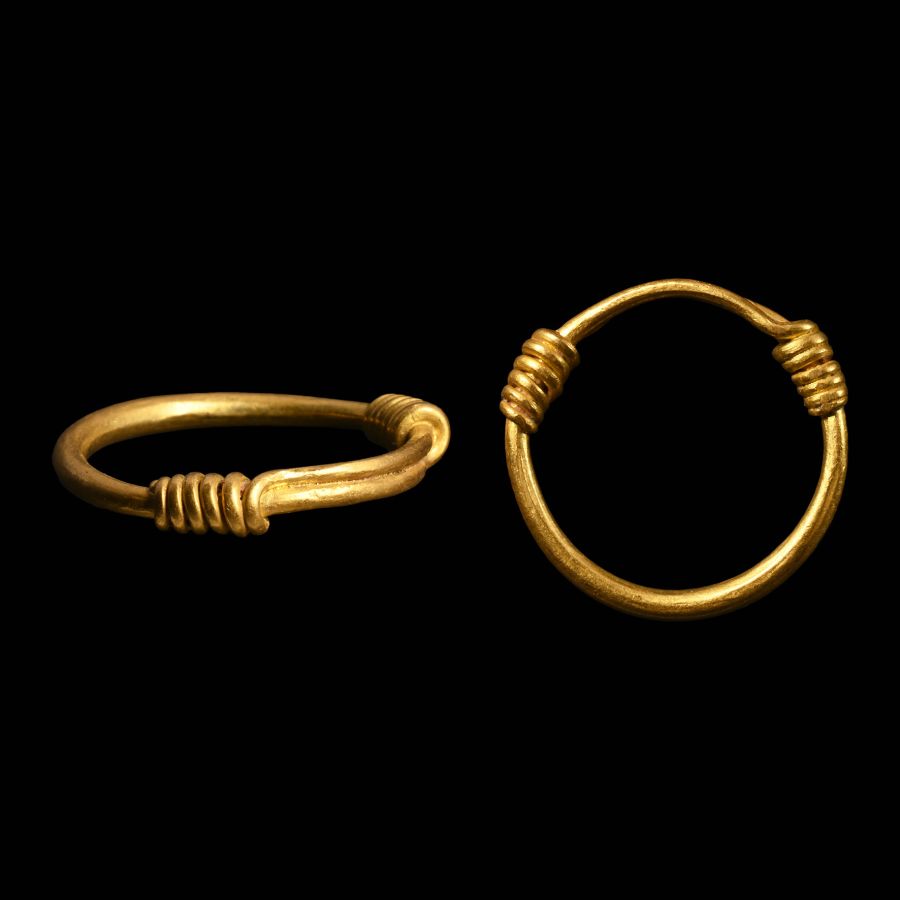
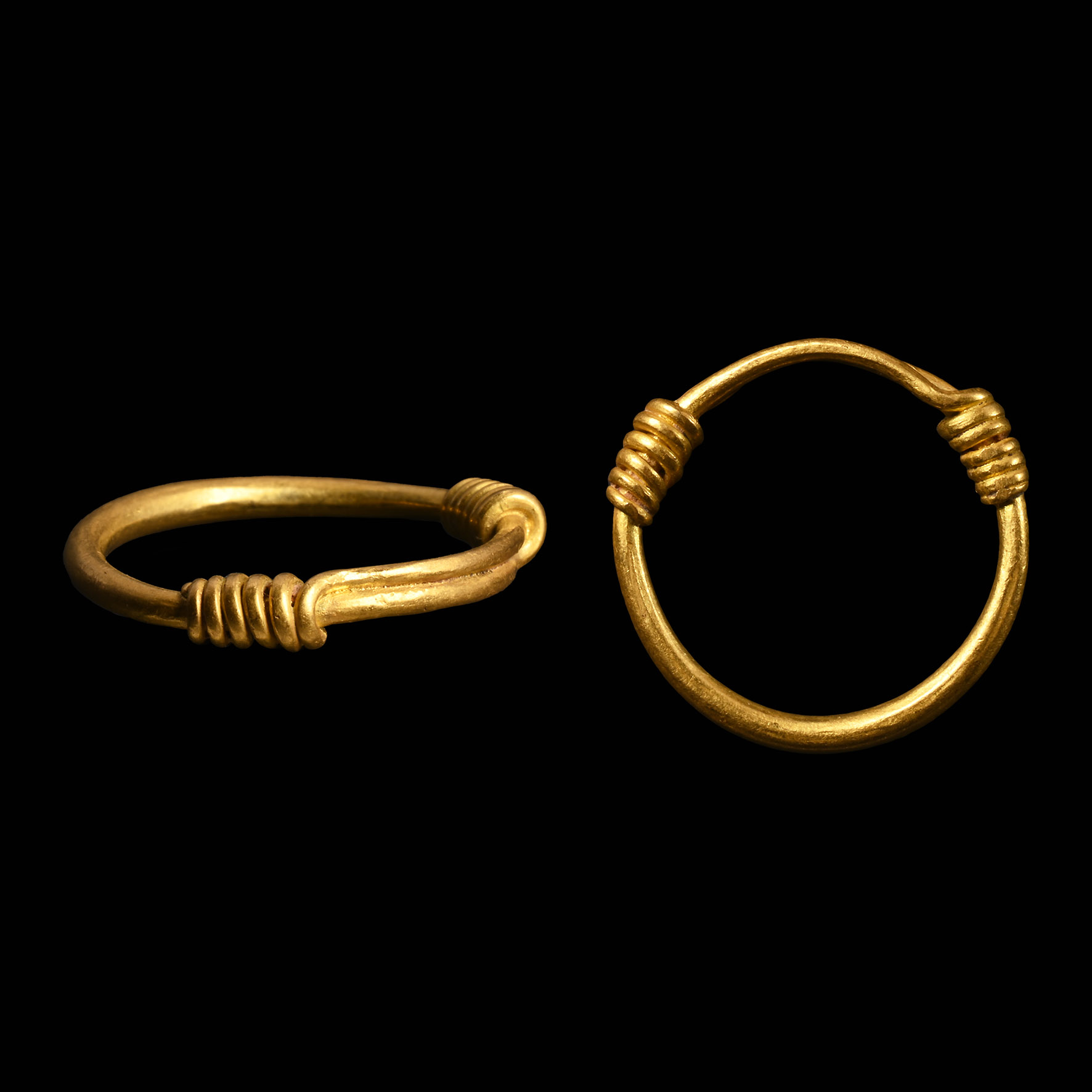
Viking Age Viking Age Gold Coiled Wire Ring
8TH-10TH CENTURY A.D. OR EARLIER
3/4 in. (2.35 grams, 19.03 mm overall, 15.90 mm internal diameter (approximate size British H, USA 3 3/4, Europe 6.18, Japan 6)).
The single wire formed into a loop with the ends wound about the shank.
ProvenanceAcquired 1980-2015.
Ex Abelita family collection.
Cf. Arbman, H., Birka I: Die Gräber, Uppsala, 1940, pl.112(8).
CONDITIONTimeLine Auctions follows a vetting process to ensure the authenticity and legality of all items, reinforcing our commitment to integrity and responsible trading. Each antiquity, antique, and coin lot undergoes thorough examination by a vetting committee of at least ten external specialists, professional trade association members, scientists, and archaeologists: Our Vetting Process
AUCTIONS:
TimeLine is a leading auction house specialising in antiquities, ancient art, collectables, natural history, coins, medals, and books. Our auctions offer museums, collectors, historians, and enthusiasts the opportunity to acquire unique and historically significant pieces.
-
Viking Age Bronze Strap Junction
9th-11th century A.D.Sold for (Inc. bp): £33
Composed of a ring with two free-running bars with openwork designs to the front face and bars to reverse; section of fabric remaining. 35.3 grams, 57 mm
From the collection of a North American gentleman, formed in the 1990s. -
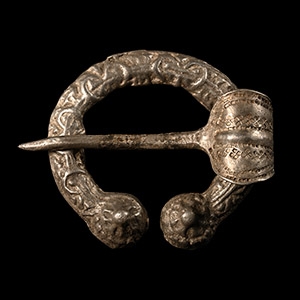
Viking Age Decorated Silver Penannular Brooch
12th century A.D.Estimate: £500 - 700 (‡+bp*)
Opening Bid: £250
Featuring domed terminals with apex granules and dense interlace and pellet decoration in relief, punched decoration to the free-running pin head. 14.4 grams, 46 mm
From the collection of a North American gentleman, formed in the 1990s.
Penannular brooches with facetted terminals were part of the famous Kostivere hoard, found in Estonia, deposited in around 1220-1230 during the wars of Estonians against the Germans and Danes. The annular brooches with animal ornament in Urnes style were considered by the archaeologists definitely Scandinavian, more specifically from Gotland. -
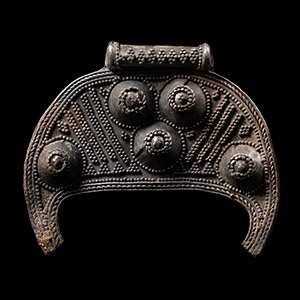
Large Viking Age Silver Filigree Lunate Pendant
9th-11th century A.D.Sold for (Inc. bp): £845
Decorated with filigree wire borders and a granulated field, truncated conical bosses also adorned with granules, granules forming lozenges to the tubular suspension loop. 7.22 grams, 45 mm
From the collection of a North American gentleman, formed in the 1990s.
