
Loading, please wait...
LOT 1261
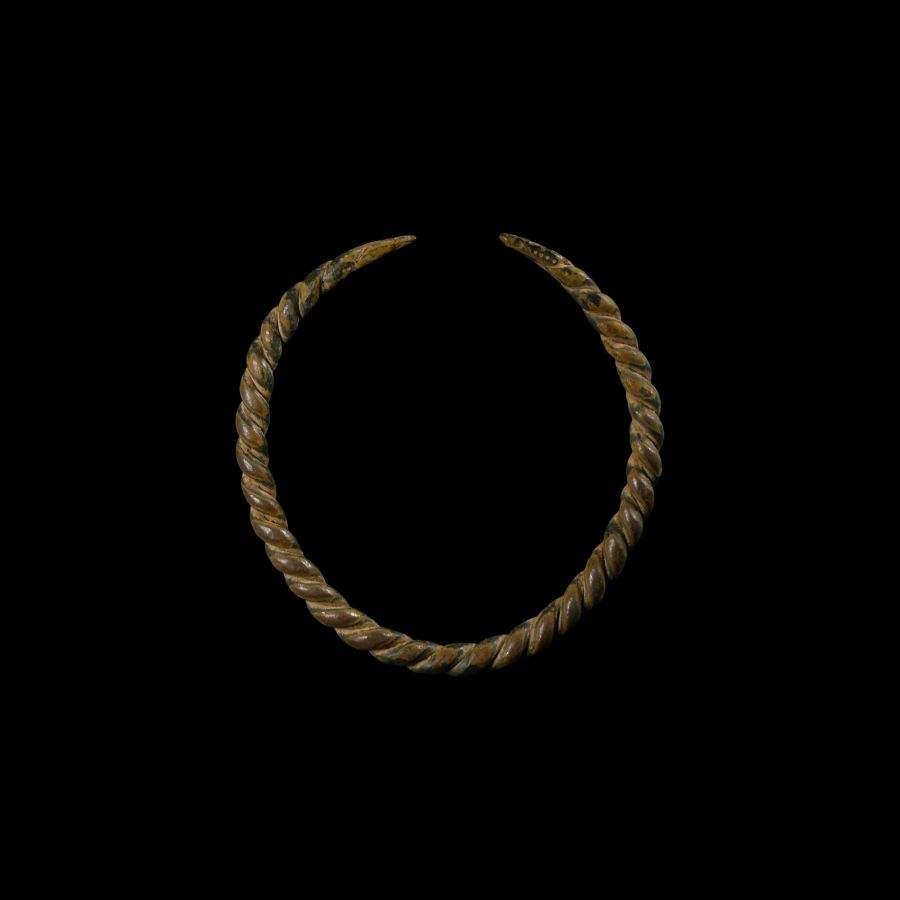
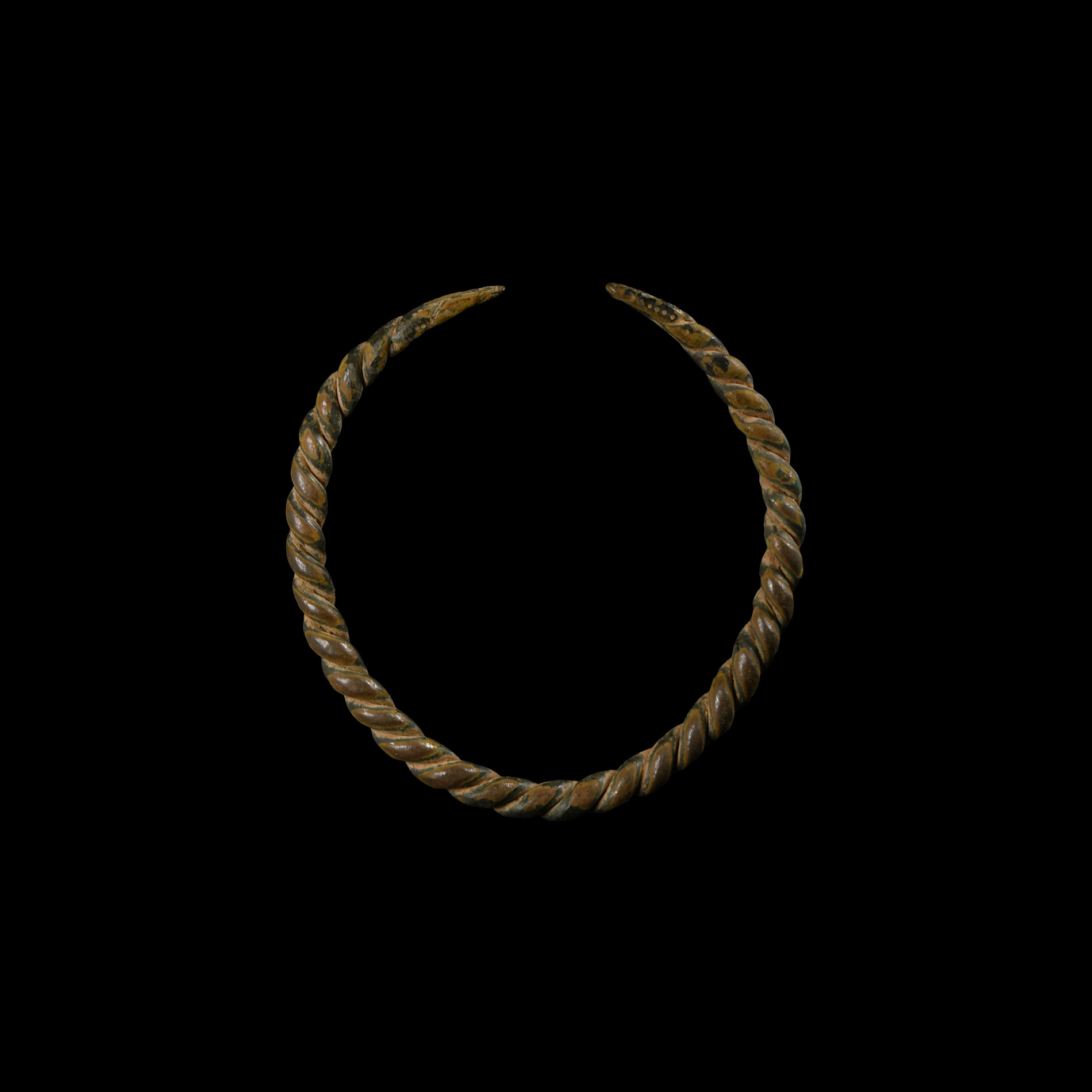
Viking Age Twisted Bracelet
CIRCA 8TH-10TH CENTURY A.D.
25/8 in. (23 grams, 66 mm).
A penannular bronze bracelet with a decoratively twisted round-section body tapering towards the terminals. [No Reserve]
ProvenanceEarly 1990s London collection.
Acquired on the UK art market.
From a private collection, Lancashire, UK.
TimeLine Auctions follows a vetting process to ensure the authenticity and legality of all items, reinforcing our commitment to integrity and responsible trading. Each antiquity, antique, and coin lot undergoes thorough examination by a vetting committee of at least ten external specialists, professional trade association members, scientists, and archaeologists: Our Vetting Process
AUCTIONS:
TimeLine is a leading auction house specialising in antiquities, ancient art, collectables, natural history, coins, medals, and books. Our auctions offer museums, collectors, historians, and enthusiasts the opportunity to acquire unique and historically significant pieces.
-
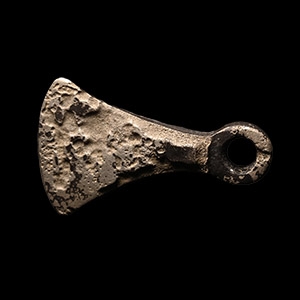
Viking Age Silver Axe Pendant
9th-11th century A.D.Sold for (Inc. bp): £143
A silver miniature axehead with integral suspension loop. 2.27 grams, 21 mm
Acquired in the late 1990s-2000. Property of an East London gentleman. -
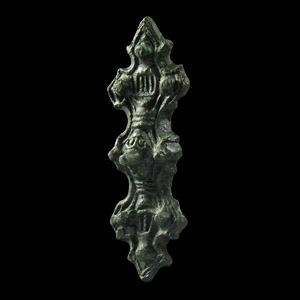
Scandinavian Viking Equal-Arm Brooch
9th century A.D.Sold for (Inc. bp): £64
A bronze equal-arm brooch of Aargård Type III A, with central segmented boss, symmetrical flanges with low-relief geometric ornament and trefoil finial, raised studs to the panels of the trefoils and the central boss, pin to the reverse with lugs and separate rivetted catch (ancient repair?), single link from a copper-alloy suspension chain attached beside the pin-lug. 32.7 grams, 73 mm
Fine condition.
Acquired before 1960. From the family collection of a UK gentleman, by descent in the early 1970s. -
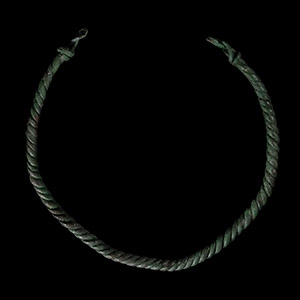
Viking Age Twisted Torc with Looped Terminals
Circa 8th-10th century A.D.Sold for (Inc. bp): £182
A copper-alloy torc with a tapering round-section body composed of decoratively twisted bars, terminals forming loops and coiled collars. 63 grams, 13 cm wide
Early 1990s London collection. Acquired on the UK art market. From a private collection, Lancashire, UK.
