
Loading, please wait...
LOT 1054
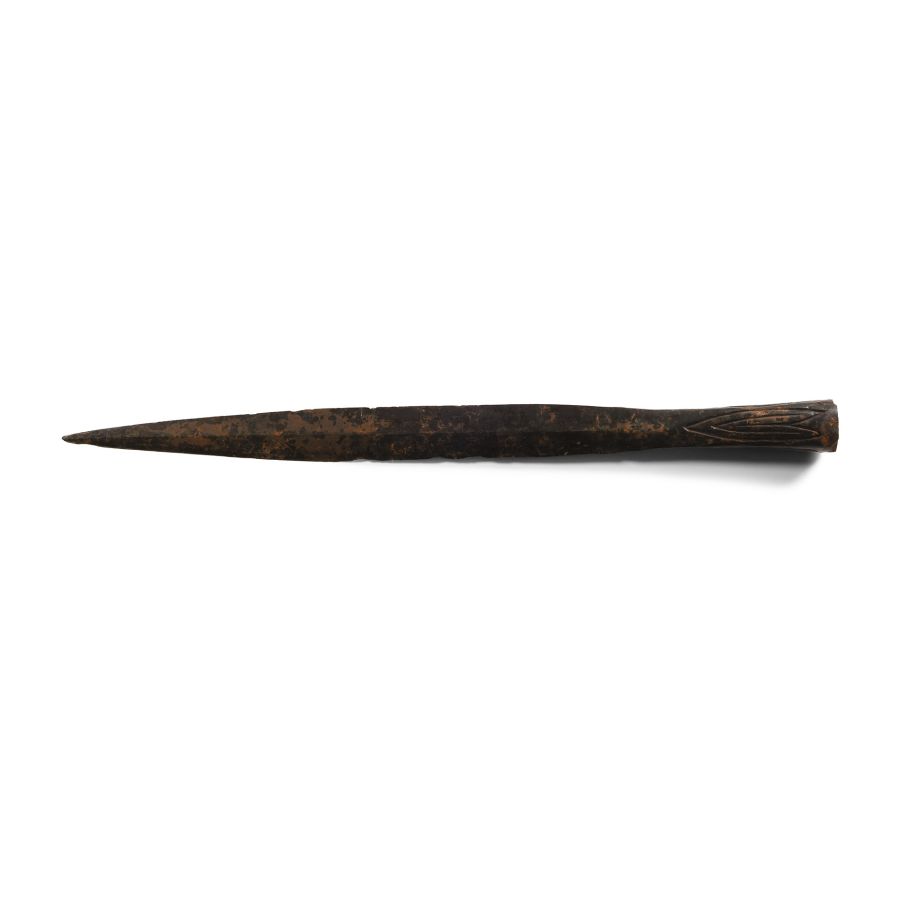
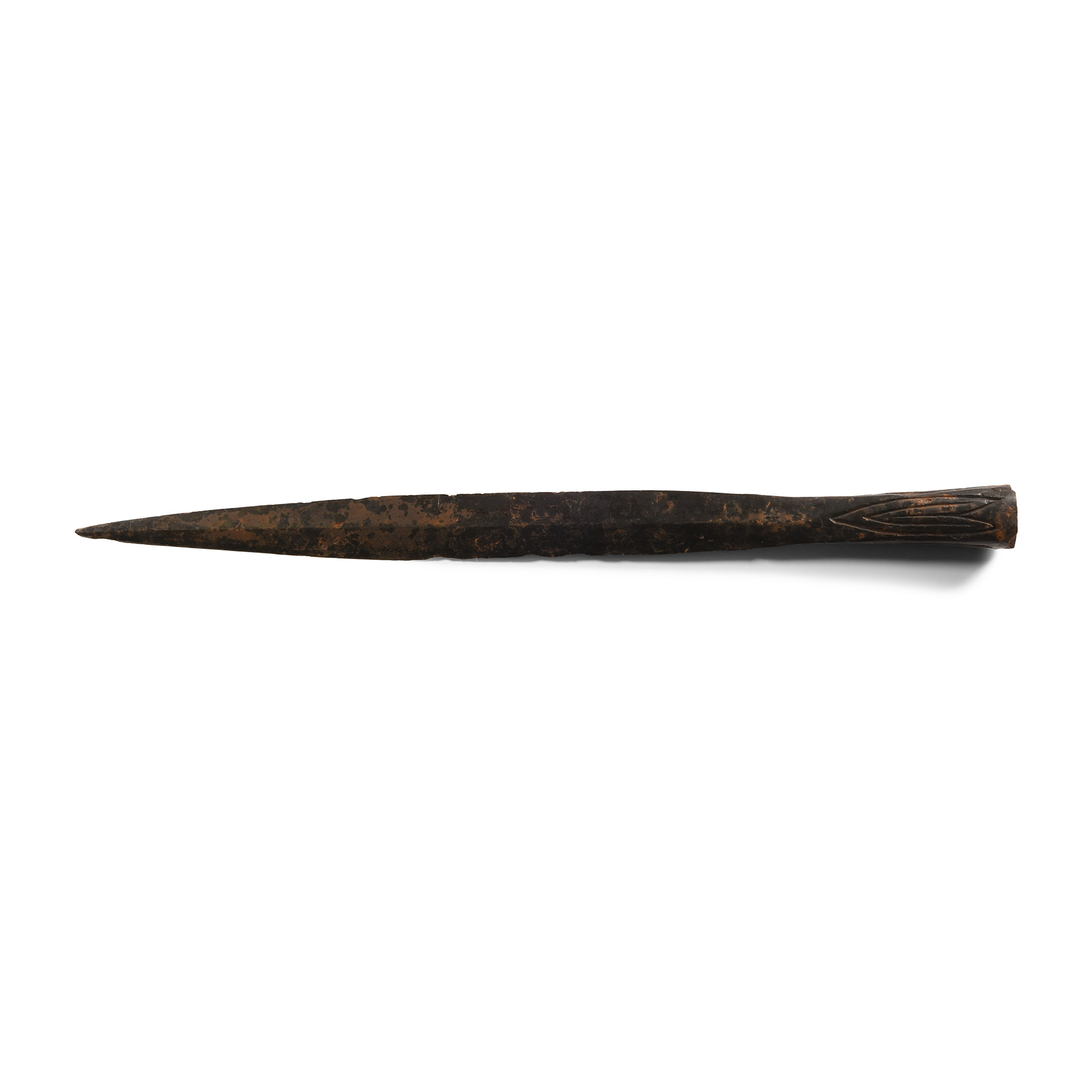
Viking Age Socketted Iron Spearhead
9TH-10TH CENTURY A.D.
11 1/4 in. (126 grams, 28.5 cm).
Type E with leaf-shaped blade with curved edges, socket tending towards a square internal cross-section and decorated with chiselled longitudinal grooves.
ProvenanceEx private collection of Mr M.B., Mainz, Germany, since the 1980s.
Acquired from the above, 2004.
Cf. Hjardar, K. and Vike, V., Vikings at war, Oxford-Philadelphia, 2016, pp.175-180.
FootnotesThe spearheads of type E, of which this type is, belongs to the first group of Viking spearheads, i.e. the Frankish spearheads, which appeared between 750 and 950 A.D. These account for one third of the spears found in Viking sites; most of them are pattern forged with herringbone design.
CONDITIONTimeLine Auctions follows a vetting process to ensure the authenticity and legality of all items, reinforcing our commitment to integrity and responsible trading. Each antiquity, antique, and coin lot undergoes thorough examination by a vetting committee of at least ten external specialists, professional trade association members, scientists, and archaeologists: Our Vetting Process
AUCTIONS:
TimeLine is a leading auction house specialising in antiquities, ancient art, collectables, natural history, coins, medals, and books. Our auctions offer museums, collectors, historians, and enthusiasts the opportunity to acquire unique and historically significant pieces.
-
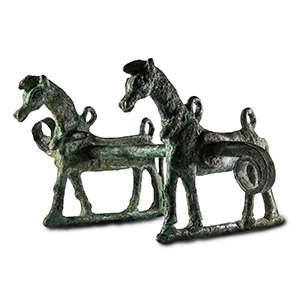
Luristan Bronze Horse Bit with Horses
11th-8th century B.C.Sold for (Inc. bp): £4,160
The cheekpieces formed as stylised horses with small ears, elongated heads and long tails, a circular opening to the body for the bar to pass through, two loops to the body and two spurs to the reverse. 654 grams, 21 cm wide
Ex Paris collection. French gallery, Paris, 1990-2000s. This lot has been checked against the Interpol Database of stolen works of art and is accompanied by search certificate no.11975-210127
In Luristan, horses were usually buried with a bronze horse-bit in their mouths, as shown by finds from Sarkishti, where the horses’ teeth were stained green. -
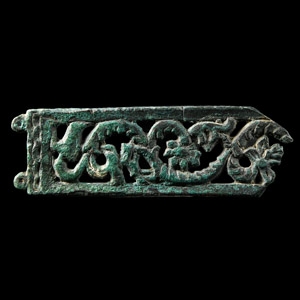
Eastern Roman Tinned Bronze Composite Belt Mount
8th century A.D.Estimate: £100 - 140 (‡+bp*)
Opening Bid: £50
Displaying openwork floriate decoration within a tongue-shaped frame; two pierced attachment lugs to the rear. 27.9 grams, 93 mm
From the collection of a North American gentleman, formed in the 1990s.
The belt is of composite type, decorated with scrollwork in Byzantine style. Many authors discuss the possibility that these belts were produced in the Eastern Roman capital or that they were made in the workshops of the Avar Khaganate, maybe with Roman matrices for producing sheet ornaments. -
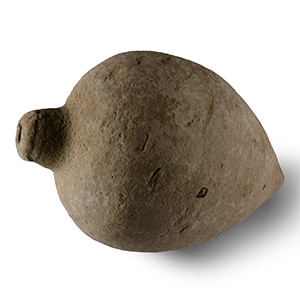
Byzantine 'Greek Fire' Ceramic Fire Bomb or Hand Grenade
9th-11th century A.D.Sold for (Inc. bp): £156
Piriform body with domed filler-hole; intended to be filled with explosive liquid and wick, used as a hand grenade. 434 grams, 12.4 cm
Acquired 1980-2015. Ex Abelita family collection. Accompanied by an academic paper by military specialist Dr Raffaele D'Amato, dated 15 July 2019 and titled 'Eastern Roman Empire - Greek Fire Bomb or Hand Grenade (μεσαίον kακάβιον) 9th-11th century AD'.
Apart from the use of siphons or manual flame-throwers called cheirosiphona, special corps of Roman soldiers employed terracotta grenades, in the form of small jars, abundantly evidenced in archaeological excavations. Such were the γανωτα, vessels (sometimes also of bronze) used for Greek fire. They were called μεσαία kακαβιά or κυτροκακάβια where the former had a bulbous shape and the latter a more cylindrical form.
