
Loading, please wait...
LOT 0263
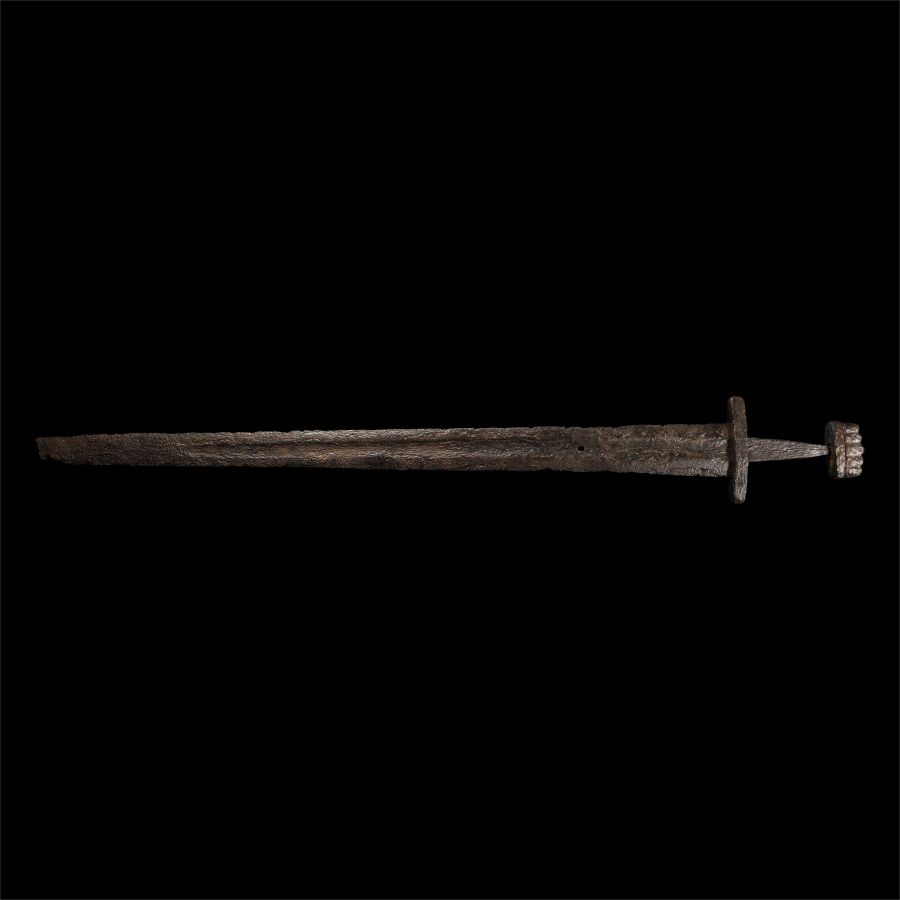
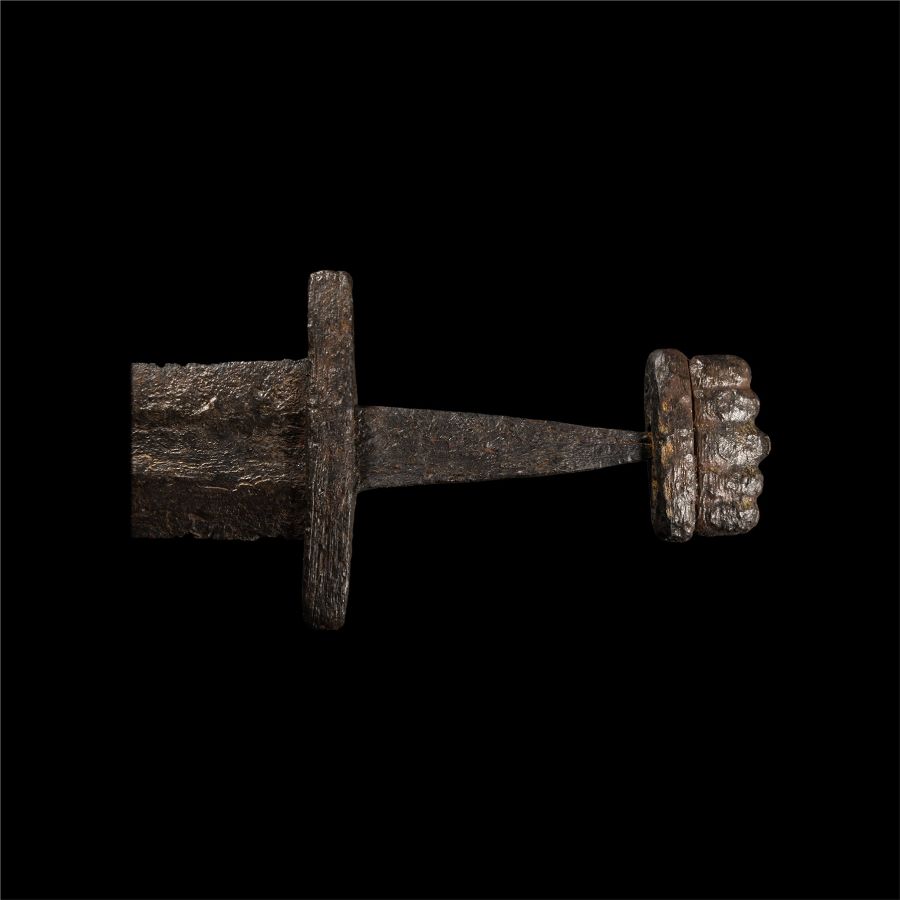
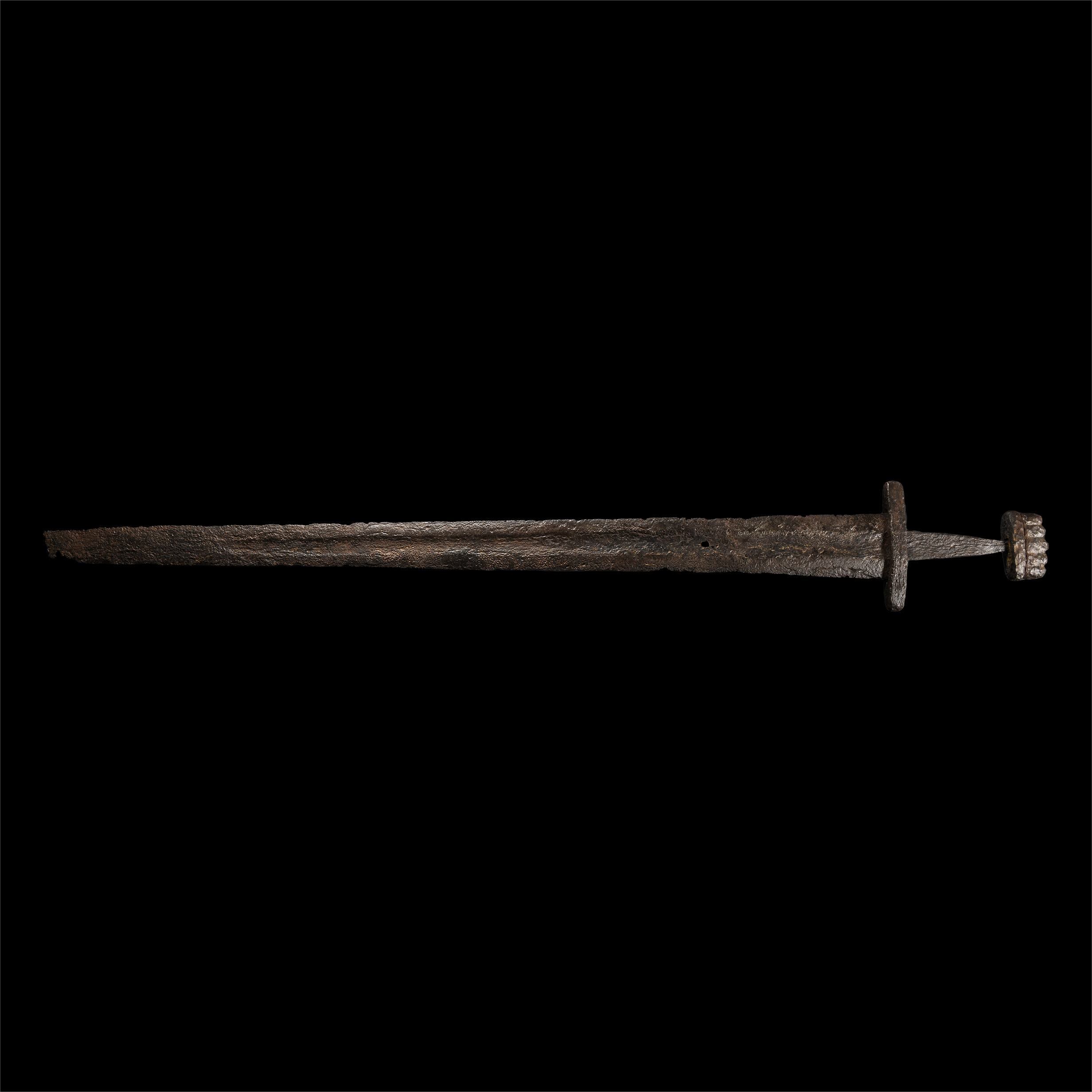
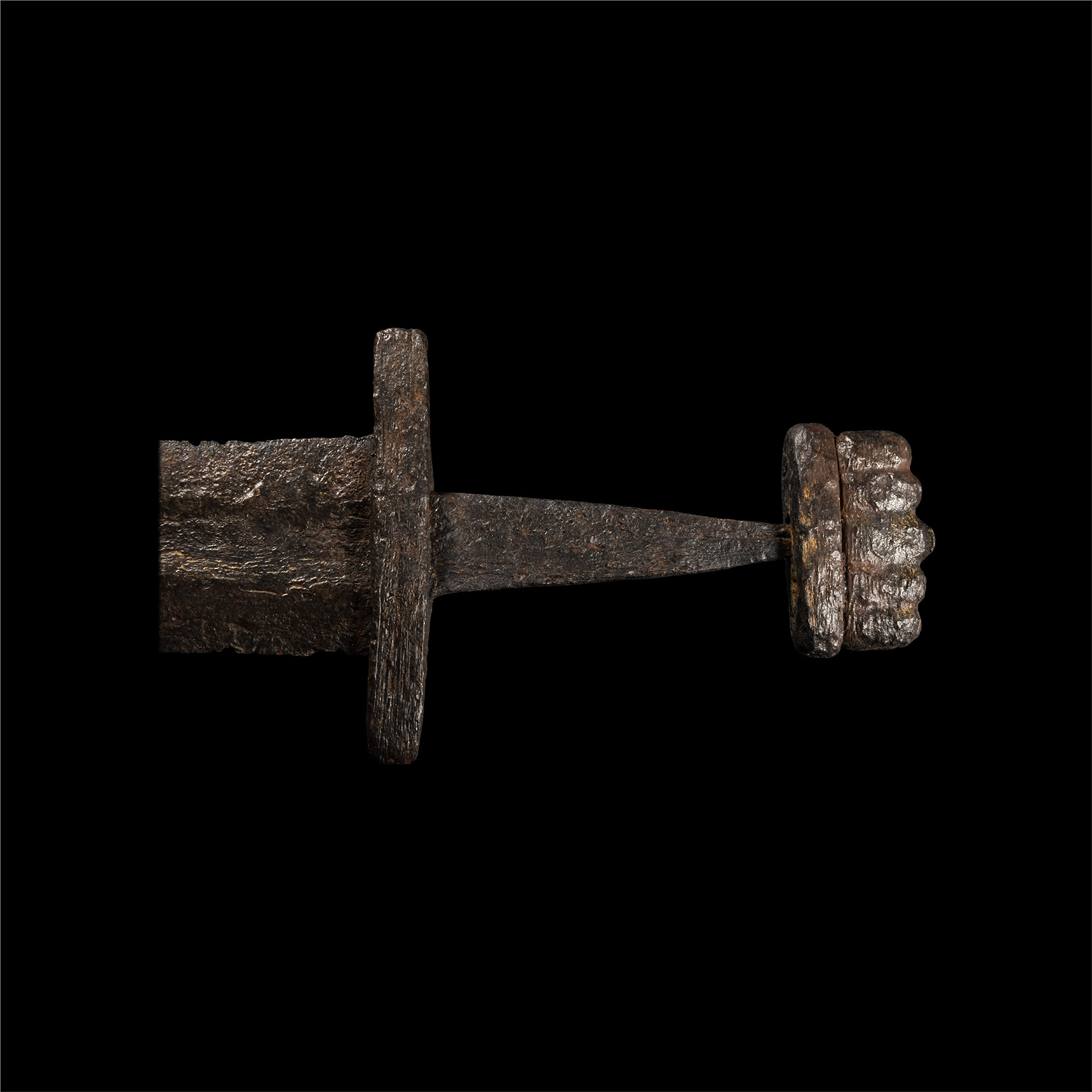
Viking Age Single-Handed Sword with Five-Lobed Pommel
9TH-10TH CENTURY A.D.
32 in. (703 grams, 81.2 cm).
Of Petersen Type K with double-edged tapering blade, shallow fullers; boat-shaped lower and upper guard with five-lobed pommel showing traces of silver inlay. [No Reserve]
ProvenanceOtto Kruetz collection, Germany 1980s.
Belgium collection.
UK collection, 2000s.
Property of an East Sussex, UK, teacher.
Accompanied by an academic report by Dr Raffaele D'Amato.
See Petersen, J., De Norske Vikingsverd, Oslo, 1919; Peirce, I., Swords of the Viking Age, Suffolk, 2002.
FootnotesIt is the decoration and the structure of the sword that suggests classifying it as Petersen Type K, with a similar structure to the famous sword from Ballinderry Bog (Peirce, 2002, pp.63ff.). Other examples of the type are the 9th century sword of Kilmainham, in Dublin, the Ostby farm sword from Oslo, a sword in the Musée de l’Armée, Paris, and the Kilde farm sword from Oslo, the fullers of which are very similar to our model (Peirce, 2002, pp.66-73).
CONDITIONTimeLine Auctions follows a vetting process to ensure the authenticity and legality of all items, reinforcing our commitment to integrity and responsible trading. Each antiquity, antique, and coin lot undergoes thorough examination by a vetting committee of at least ten external specialists, professional trade association members, scientists, and archaeologists: Our Vetting Process
AUCTIONS:
TimeLine is a leading auction house specialising in antiquities, ancient art, collectables, natural history, coins, medals, and books. Our auctions offer museums, collectors, historians, and enthusiasts the opportunity to acquire unique and historically significant pieces.
LOT 0263
Viking Age Single-Handed Sword with Five-Lobed Pommel
Sold for (Inc. bp): £4,160
-
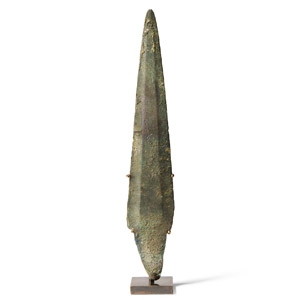
Western Asiatic Bronze Dagger
2nd millennium B.C.Estimate: £200 - 300 (‡+bp*)
Opening Bid: £100
With narrow pointed blade and wide raised flange down centre, straight sides, well marked shoulders with wide tang, one upper hole for rivet. 149 grams total, 21 cm high including stand
From the possessions of a member of a German princely family, gathered in the late 19th century, until the 1930s. with Auction House CUSP, Vienna, Auction Antique Art from Asia and from the Eastern Mediterranean, 16 June 2012, lot 75 [Part].
The type was technically more advanced than previous types of blades in the Near East due to its shape and its slightly convex sides widening out near the point, which combined the advantages of the leaf-shaped and straight-sided forms. -
.jpg)
Belgian Simonis 12 Shot Pinfire Revolver
1877-1890 A.D.Estimate: £900 - 1,300 (+bp*)
Opening Bid: £472
Single and double action twelve shot 9mm calibre revolver with 13cm (5¼") round barrel with extractor rod mounted at right and hinged loading gate with Liege proof marks and marked 'CAL 9mm' to right frame with serial number 2676; fitted with plain wood scale grips and lanyard ring (usually fitted to revolvers intended for military use); action working well. 975 grams, 25 cm
Acquired from Bolk Antique Arms, Netherlands, 2016. The Kusmirek Collection, UK. Accompanied by Bolk invoice and details.
Sold as an exempt item under Section 58 (2) of the Firearms Act, 1968, to be held as a curiosity or ornament. No license required but buyer must be over 18 years of age. Overseas bidders should note that, due to UK regulations governing export of all firearms, overseas buyers will need to make arrangements for shipping this lot out of the UK directly, by air freight, with a specialist company or agent. -
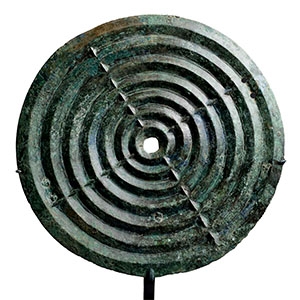
Villanovan Bronze Breast Plate
Circa 7th century B.C.Sold for (Inc. bp): £2,990
Featuring a central circular void and a series of concentric triangular-section ridges and incorporating an X or cross motif; accompanied by a custom-made display stand. 1.36 kg total, 32.6 cm high including stand
with H. Cahn, Basel. Subsequently Tajan auction, 8 February 2008, lot 251.
