
Loading, please wait...
LOT 1375
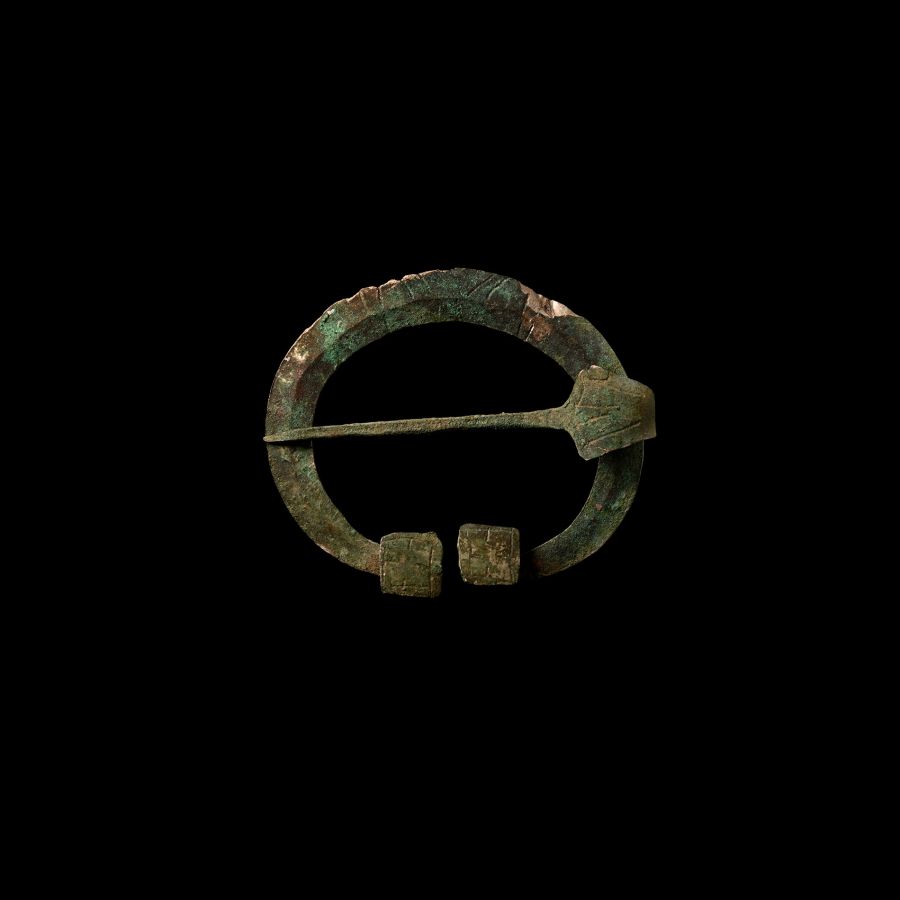
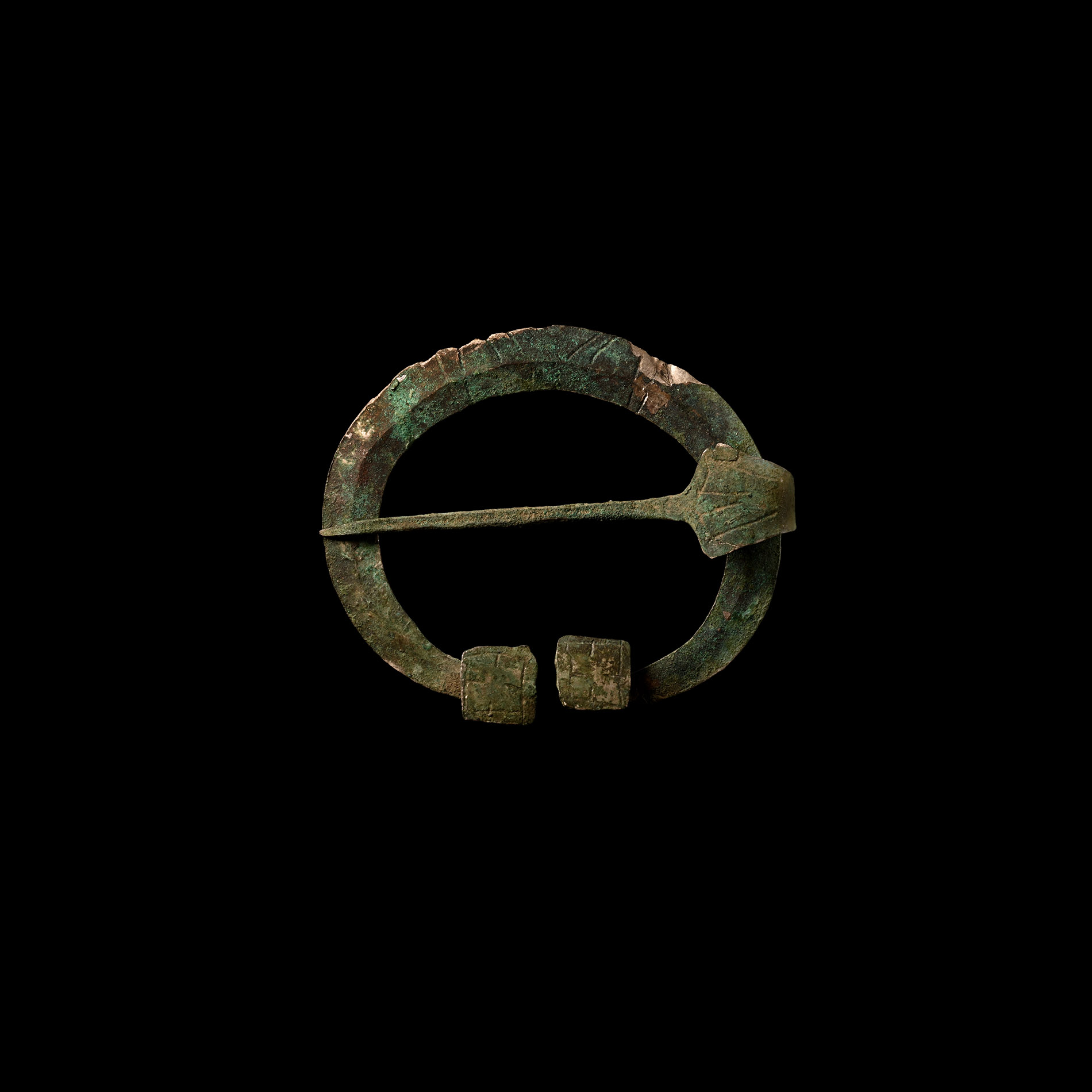
Viking Age Silver Penannular Brooch
9TH-11TH CENTURY A.D.
2 in. (6.9 grams, 51 mm).
With projecting square-headed and decorated terminals, free-running pin also decorated on the head, upper face of the body gently carinated. [No Reserve]
ProvenanceFrom the collection of a North American gentleman, formed in the 1990s.
CONDITIONTimeLine Auctions follows a vetting process to ensure the authenticity and legality of all items, reinforcing our commitment to integrity and responsible trading. Each antiquity, antique, and coin lot undergoes thorough examination by a vetting committee of at least ten external specialists, professional trade association members, scientists, and archaeologists: Our Vetting Process
AUCTIONS:
TimeLine is a leading auction house specialising in antiquities, ancient art, collectables, natural history, coins, medals, and books. Our auctions offer museums, collectors, historians, and enthusiasts the opportunity to acquire unique and historically significant pieces.
-
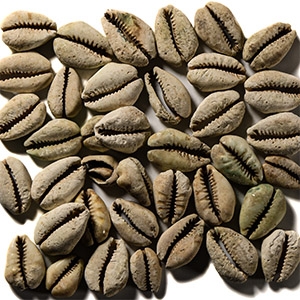
Viking Age Cowrie Shell Pendant Collection
Circa 9th-11th century A.D.Sold for (Inc. bp): £46
Comprising a group of natural shells with domes cut away to form pendants or beads. 48 grams total, 13-21 mm
UK gallery, early 2000s. -
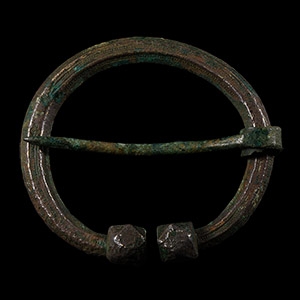
Large Viking Age Bronze Decorated Penannular Brooch
9th-11th century A.D.Sold for (Inc. bp): £117
With facetted terminals with remains of stamped ring-and-dot and triangle ornament, facetted body with framed beading and ring-and-dot pyramid finials, free-running pin with coiled head. 76.6 grams, 77 mm
From the collection of a North American gentleman, formed in the 1990s. -
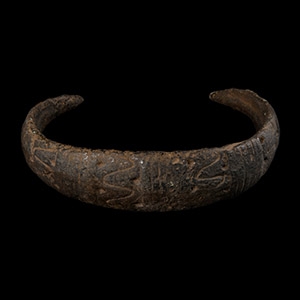
Viking Age Bronze Bracelet with Zig-Zag Design
9th-10th century A.D.Sold for (Inc. bp): £59
With raised ledge to the inner face, panels with interlocking teeth and vertical bars to the outer face. 56.4 grams, 70 mm
From the collection of a North American gentleman, formed in the 1990s.
A similar bracelet in bronze, with deep wavy furrows and stamped rows of circles, was found in grave 1081 of the Birka Necropolis. It was a female grave, and the diameter/length of the bracelet (73mm) corresponds to the 70mm of our specimen. These bracelets, as visible in the grave, were usually worn as a pair on both arms.
