
Loading, please wait...
LOT 1223
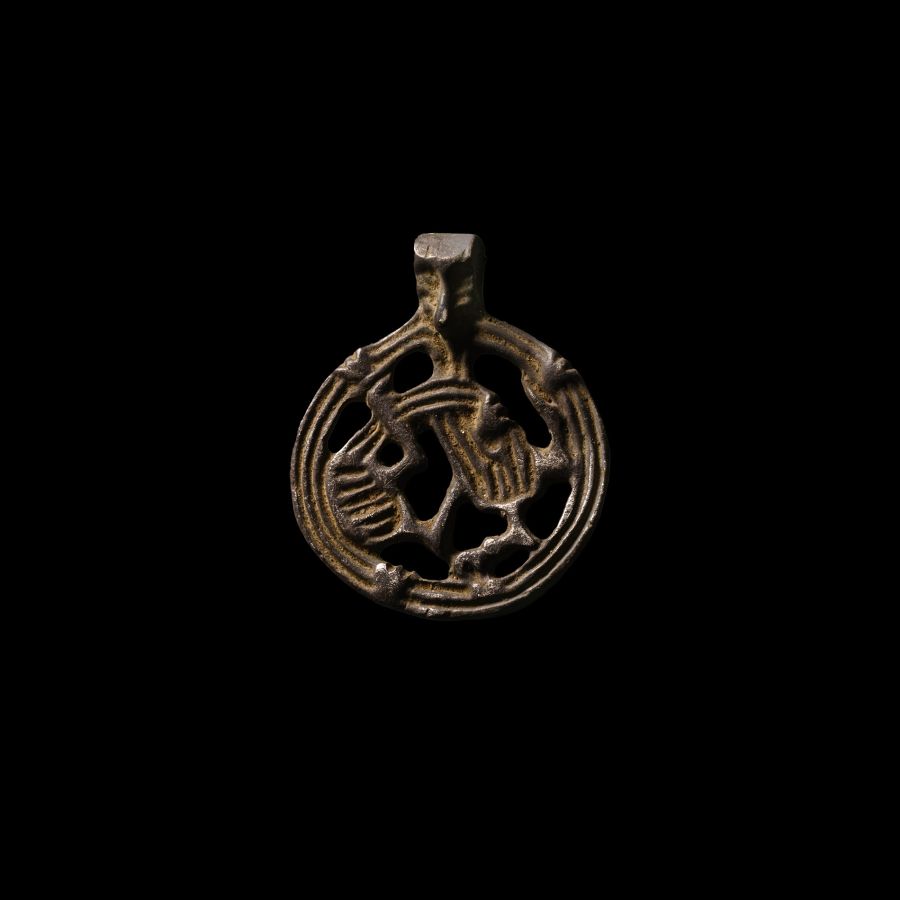
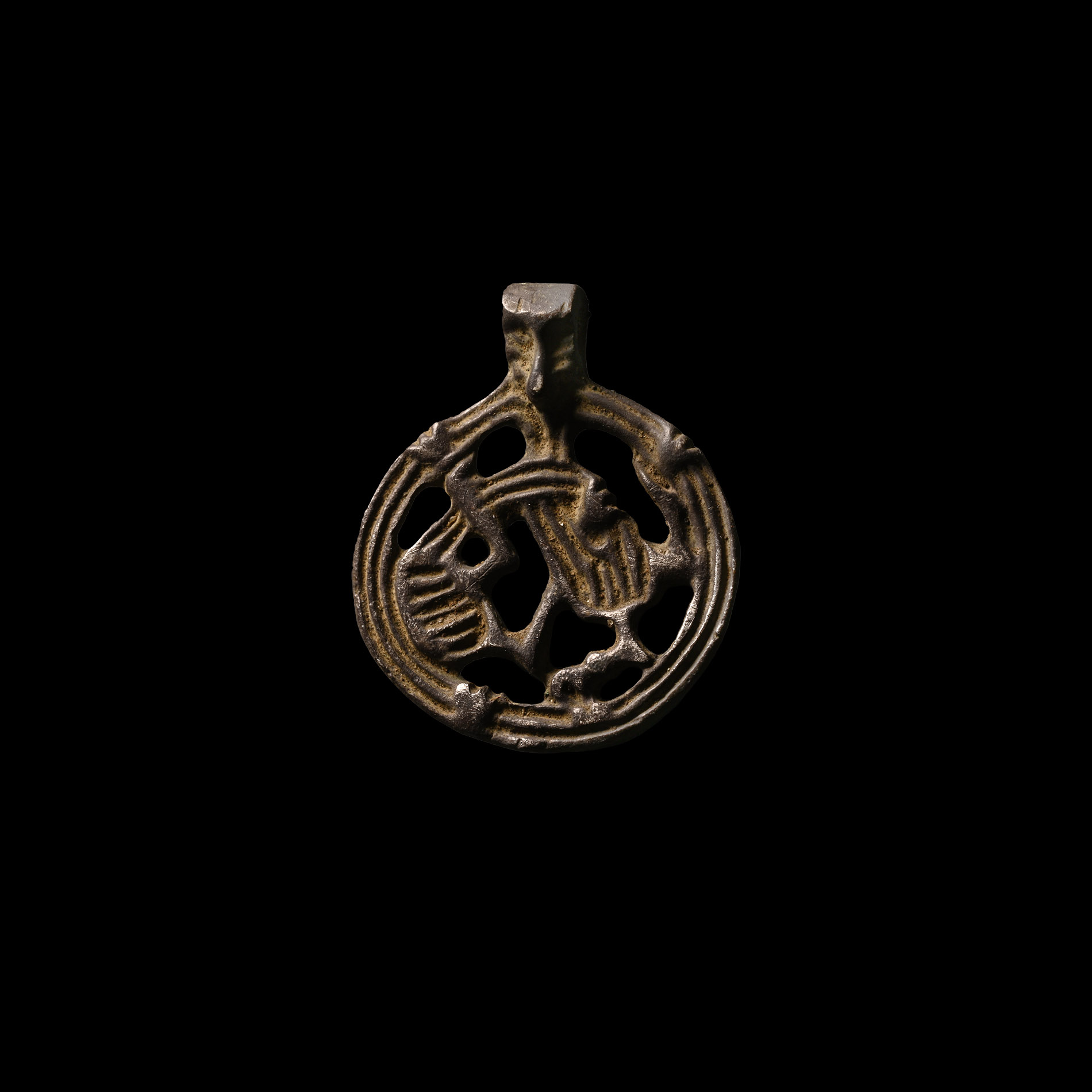
Viking Age Silver Gripping Beast Pendant
LATE 10TH-EARLY 11TH CENTURY A.D.
1 1/8 in. (4.51 grams, 29 mm).
A silver Scandinavian pendant of Riddarholmen type with integral loop; the openwork plaque with banded border and four panels, internal stylised zoomorph with hatched panel to the hip, gripping three-fingered hands to the body and border, two detailed feet, clearly visible facing mask below the loop with pellet eyes. [No Reserve]
ProvenancePrivate collection formed in Europe in the 1980s.
Westminster collection, central London, UK.
Cf. Korshyn, V.E., Yazicheskiye Priveski Drevniye Rusi X-XIV Vekov, Moscow, 2013, items K.2.01-03.
FootnotesThis type of pendant was also widespread in the historical Rus region, centred on Kiev.
CONDITIONTimeLine Auctions follows a vetting process to ensure the authenticity and legality of all items, reinforcing our commitment to integrity and responsible trading. Each antiquity, antique, and coin lot undergoes thorough examination by a vetting committee of at least ten external specialists, professional trade association members, scientists, and archaeologists: Our Vetting Process
AUCTIONS:
TimeLine is a leading auction house specialising in antiquities, ancient art, collectables, natural history, coins, medals, and books. Our auctions offer museums, collectors, historians, and enthusiasts the opportunity to acquire unique and historically significant pieces.
-
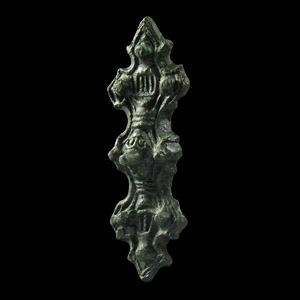
Scandinavian Viking Equal-Arm Brooch
9th century A.D.Sold for (Inc. bp): £64
A bronze equal-arm brooch of Aargård Type III A, with central segmented boss, symmetrical flanges with low-relief geometric ornament and trefoil finial, raised studs to the panels of the trefoils and the central boss, pin to the reverse with lugs and separate rivetted catch (ancient repair?), single link from a copper-alloy suspension chain attached beside the pin-lug. 32.7 grams, 73 mm
Fine condition.
Acquired before 1960. From the family collection of a UK gentleman, by descent in the early 1970s. -
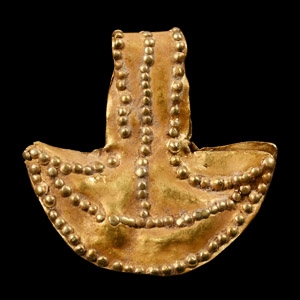
Viking Age Gold Hammer Amulet
9th-12th century A.D.Sold for (Inc. bp): £715
A sheet-gold hammer amulet formed by doubling a single gold sheet; bifacial pellet ornament tracing the perimeter of the hammer and a central motif mimicking the broad plan of the weapon; suspension loop formed within the fold at the neck. 1.57 grams, 20 mm
Acquired 1980-2015. Ex Abelita family collection.
The techniques used to manufacture this pendant (working sheet gold and granulation) had been in the repertoire of the Scandinavian goldsmith since the Iron Age and formed part of the manufacturing process for bracteate pendants and other jewellery items (Reynolds Brown, K. et al., From Attila to Charlemagne. Arts of the Early Medieval Period in the Metropolitan Museum of Art, New York, 2000, p.15-16, 310-1). -
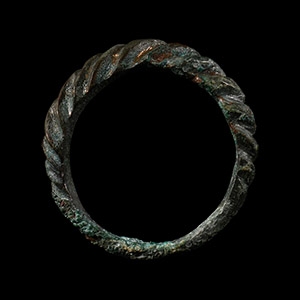
Viking Period Faux Twist Ring
Circa 10th century A.D.Sold for (Inc. bp): £46
A copper-alloy ring composed of a tapering hoop which is thickest at the bezel, decorated with a deep, faux-twist motif. 3.35 grams, 24.61 mm overall, 18.40 mm internal diameter (approximate size British P 1/2, USA 7 3/4, Europe 16.86, Japan 16)
Private collection formed since in the 1940s. UK art market. Property of an Essex gentleman.
