Loading, please wait...

Viking Age Silver-Gilt Pendant with Face Viking Age Silver-Gilt Pendant with Face Viking Age Silver-Gilt Pendant with Face
Use mousewheel to zoom in and out, click to enlarge
Details

LOT 1183

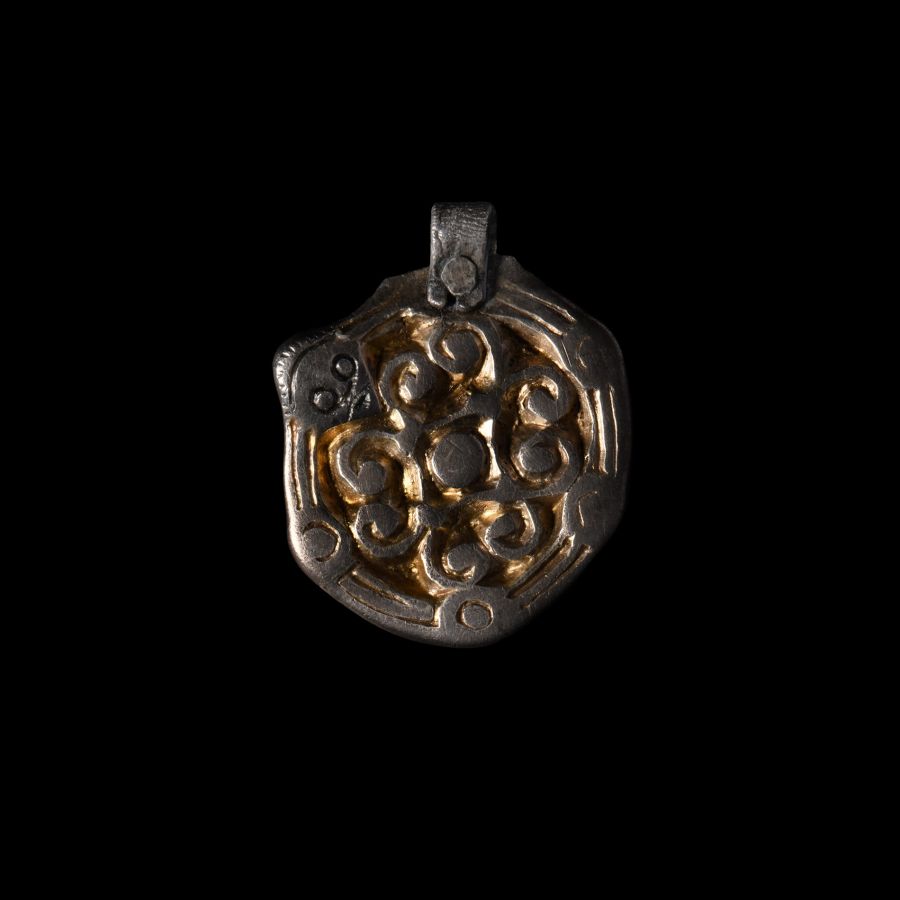
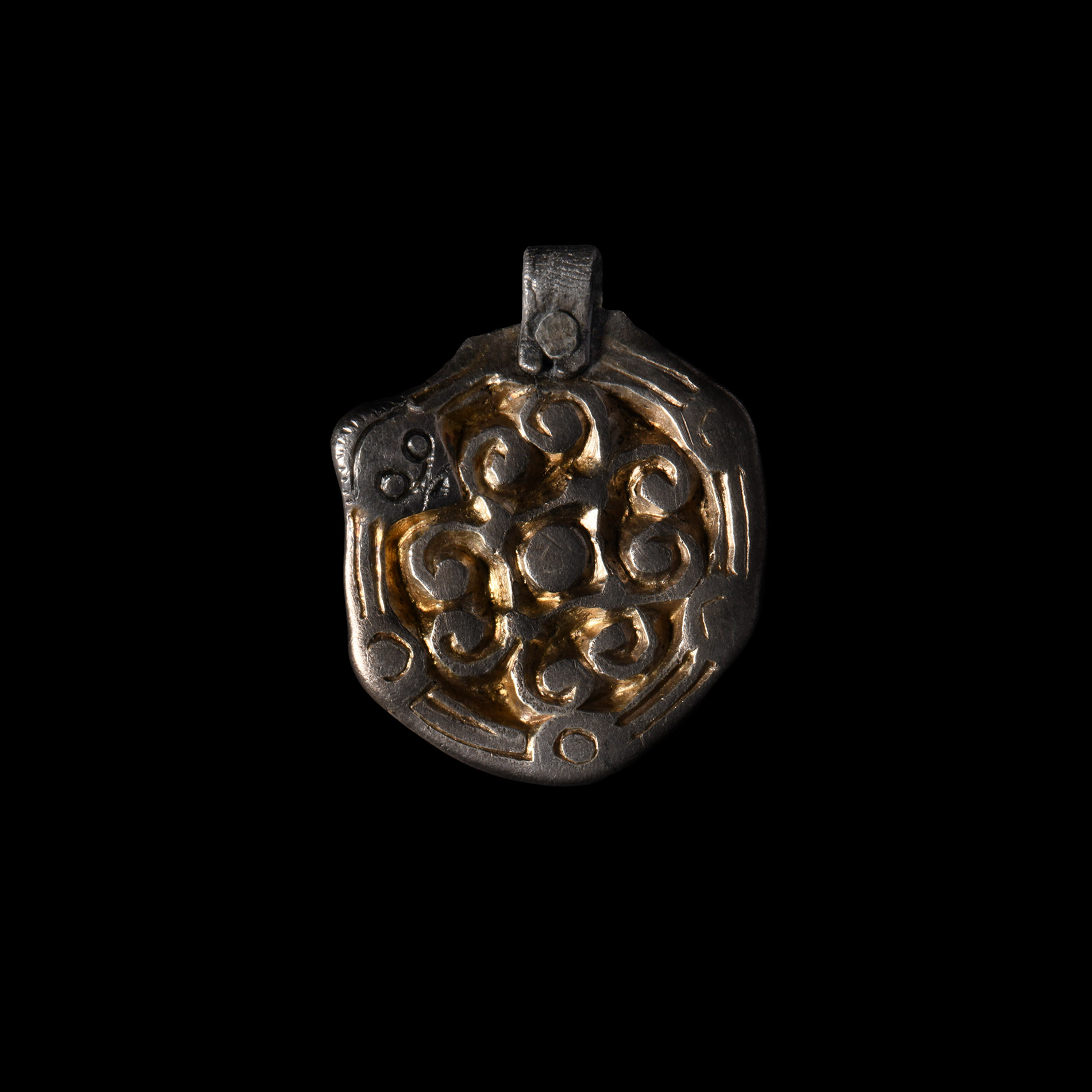
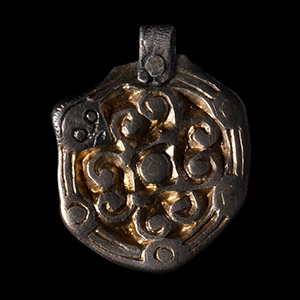
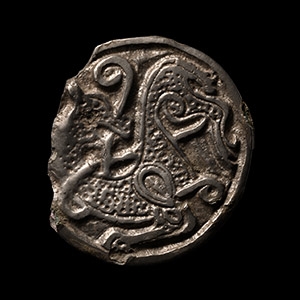
Viking Age Silver-Gilt Pendant with Face

9TH-10TH CENTURY A.D.

7/8 in. (3.2 grams, 21 mm).

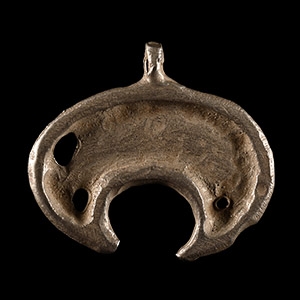
Displaying scroll decoration to the centre, a bearded male face to the rim, later silver attachment loop; remains of gilding to the centre. [No Reserve]

Provenance

From the family collection of a London gentleman; formed in the late 1940s-1950s; thence by descent.

Literature

Cf. Arbman, H., Birka I: Die Gräber, Uppsala, 1940, pl.96, item 13.

CONDITION
VETTING:

TimeLine Auctions follows a vetting process to ensure the authenticity and legality of all items, reinforcing our commitment to integrity and responsible trading. Each antiquity, antique, and coin lot undergoes thorough examination by a vetting committee of at least ten external specialists, professional trade association members, scientists, and archaeologists: Our Vetting Process


AUCTIONS:

TimeLine is a leading auction house specialising in antiquities, ancient art, collectables, natural history, coins, medals, and books. Our auctions offer museums, collectors, historians, and enthusiasts the opportunity to acquire unique and historically significant pieces.

LOT 1183

Viking Age Silver-Gilt Pendant with Face

Sold for (Inc. bp): £442

Print page

RELATED LOTS
  • Viking Age Bronze Strap End Collection
    Viking Age Bronze Strap End Collection
    9th-11th century A.D.

    Sold for (Inc. bp): £85

    Encompassing a variety of types, including openwork, zoomorphic and vegetal designs. 52.2 grams total, 28-55 mm


    From the collection of a North American gentleman, formed in the 1990s.

    Lot Details

  • Finno-Ugrian Socketted Axehead
    Finno-Ugrian Socketted Axehead
    10th-13th century A.D.

    Sold for (Inc. bp): £195

    Hand-forged with triangular-section narrow blade widening to a broad bevelled edge with square chin and spur to the rear, socket with flanges to the rear. 569 grams, 17.5 cm


    From the private collection of a London gentleman, from his grandfather's collection formed before the early 1970s.

    During the mid 13th century, the axes were favourite weapons among Baltic people. For instance, the Curonian army included lightly armed soldiers who fought with spears, shields, fighting knives and axes. A heavily armed soldier could also carry a sword, a helmet, a shield and a wide-bladed axe.

    Lot Details

  • Viking Age or Earlier Hacked Gold Trade Ingot
    Viking Age or Earlier Hacked Gold Trade Ingot
    Circa 10th century A.D. or earlier

    Sold for (Inc. bp): £3,120

    A slightly bent irregular bar of hacked gold with rectangular cross-section, showing evidence of compression and fracture to each end, some subtle transverse lines on both of the main surfaces. 14.43 grams, 51 mm


    Found whilst searching with a metal detector on 1st May 2022 on a Romano-British site in Cambridgeshire, UK, by Trevor Singleton. Accompanied by a handwritten letter from the finder. Accompanied by a copy of the British Museum's Portable Antiquities Scheme (PAS) report no.CAM-D819F0 and workflow review page where it states: 'There is evidence that the bar fragment has been cut from both ends, suggesting Early Medieval (Viking Period) parallels.'

    This ingot was declared under the Treasure Act and subsequently determined by the British Museum to be of 'undiagnostic' date and therefore returned to the finder. Trevor Singleton maintains that it was recovered from a known Romano-British site, while in neighbouring fields Early Medieval (Late Saxon & Viking) items have been recovered and logged with the Portable Antiquities Scheme. Ingots of gold and silver were regularly produced in the Early Medieval period when trade took place between monetised economies (Anglo-Saxon England, Francia, Frisia) and their non-monetised neighbours in southern Scandinavia (West, 1998; Blackburn, 2011). Ingots were a convenient means of storing wealth which could be converted into display items (weapon fittings, clothing fasteners, tableware) or used to gild silver and bronze items (Hårdh, 1996).

    Lot Details

Stay up-to-date with the latest from TimeLine Auctions by joining our mailing list