
Loading, please wait...
LOT 0352
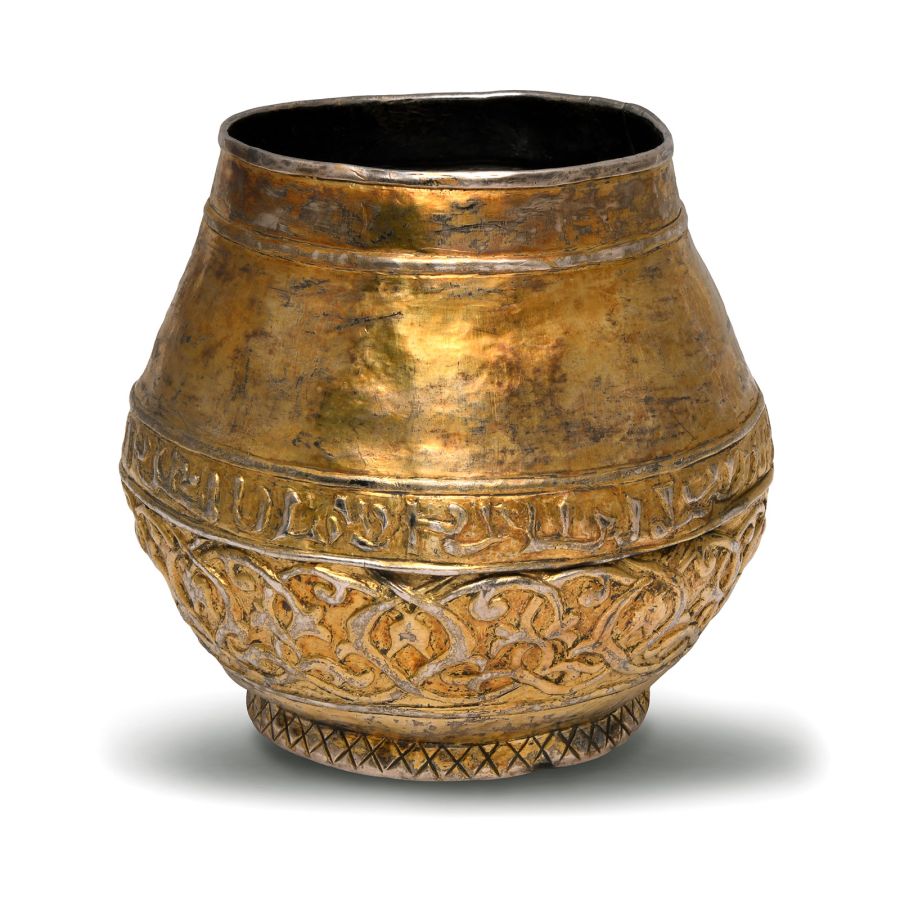
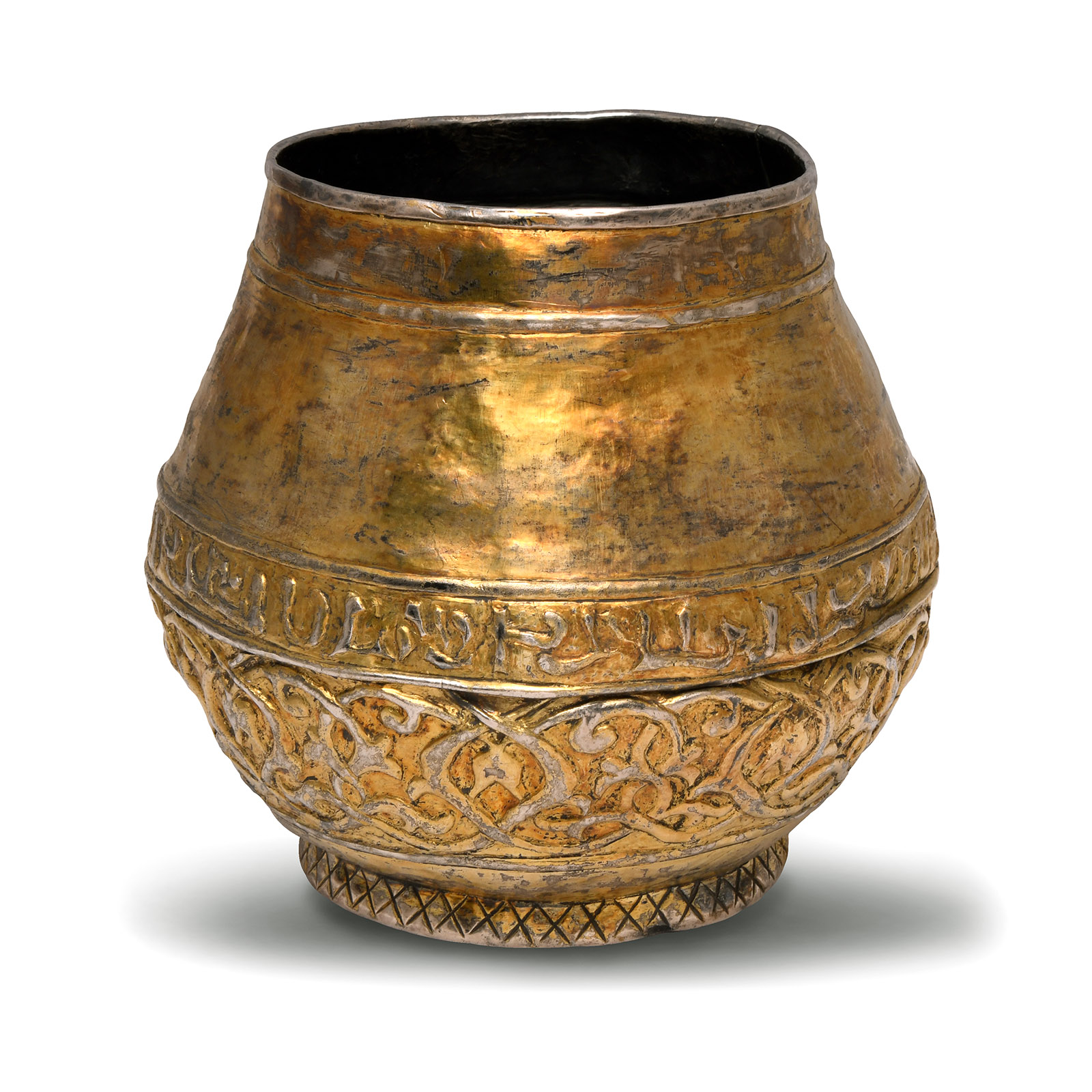
Viking Age Silver-Gilt Jar with Interlaced Design and Pseudo-Arabic Inscription
CIRCA 11TH CENTURY A.D.
4 1/4 in. (301 grams, 10.6 cm high).
With later gilded outer face, globular body on a low splayed foot-ring, rolled rim; repoussé ornament comprising a circumferential ring below the neck, two parallel rings to the equator above a band of looped and interlaced tendrils with leaves and ring below, hatching to the foot-ring; median band with legend in Pseudo-Arabic script.
ProvenanceIn a private German collection since the 1980s.
Property of a gentleman; acquired on the UK art market in 1998.
This lot has been checked against the Interpol Database of stolen works of art and is accompanied by search certificate no.11007-181733.
See Fehérvári, G., Islamic Metalwork of the Eighth to the Fifteenth Century in the Keir Collection, London, 1976, for discussion of proto-types.
CONDITIONTimeLine Auctions follows a vetting process to ensure the authenticity and legality of all items, reinforcing our commitment to integrity and responsible trading. Each antiquity, antique, and coin lot undergoes thorough examination by a vetting committee of at least ten external specialists, professional trade association members, scientists, and archaeologists: Our Vetting Process
AUCTIONS:
TimeLine is a leading auction house specialising in antiquities, ancient art, collectables, natural history, coins, medals, and books. Our auctions offer museums, collectors, historians, and enthusiasts the opportunity to acquire unique and historically significant pieces.
LOT 0352
Viking Age Silver-Gilt Jar with Interlaced Design and Pseudo-Arabic Inscription
Estimate £8,000 - 10,000€9,280 - 11,600 (for guidance only)$10,800 - 13,500 (for guidance only)
-
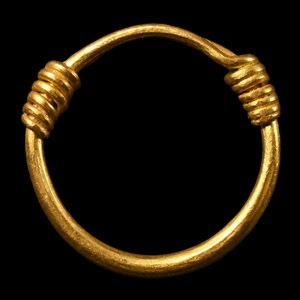
Viking Age Viking Age Gold Coiled Wire Ring
8th-10th century A.D. or earlierSold for (Inc. bp): £780
The single wire formed into a loop with the ends wound about the shank. 2.35 grams, 19.03 mm overall, 15.90 mm internal diameter (approximate size British H, USA 3 3/4, Europe 6.18, Japan 6)
Acquired 1980-2015. Ex Abelita family collection. -
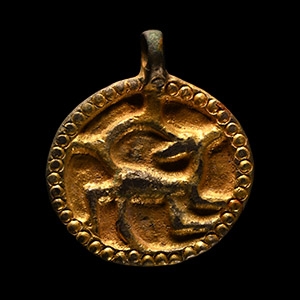
Viking Age Silver-Gilt Pendant with Beast Facing Back
Circa 9th-11th century A.D.Sold for (Inc. bp): £234
With beast facing right, head turned back left; tail curled above to meet the head; within an annulet border with suspension loop above. 5.59 grams, 28 mm high
Private collection formed in Europe in the 1980s. Westminster collection, central London, UK. -
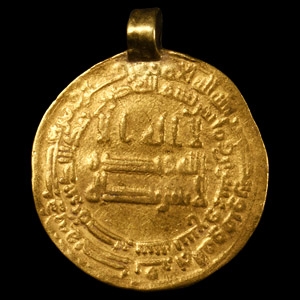
Viking Age Plundered Gold Abbasid Dinar Coin Pendant
9th-11th century A.D.Sold for (Inc. bp): £546
Formed from an Abbasid caliphate dinar coin with ribbed suspension loop above. 4.36 grams, 25 mm
Acquired 1970s. From a London, UK, collection.
