
Loading, please wait...
LOT 1262
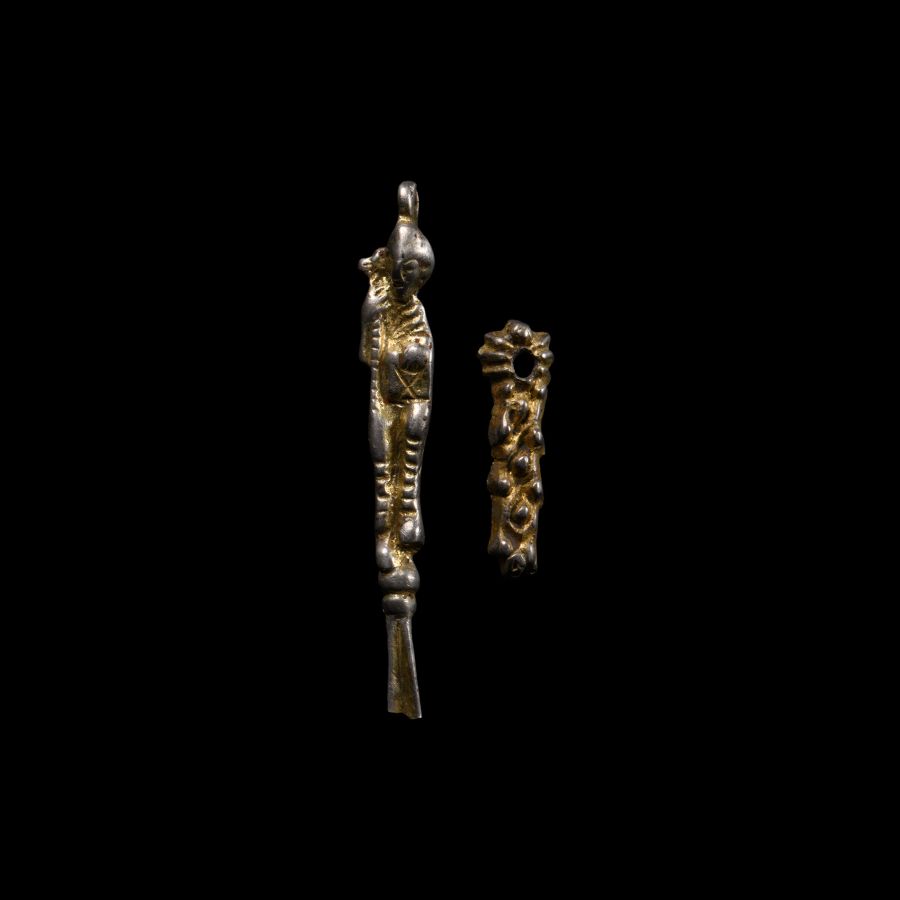
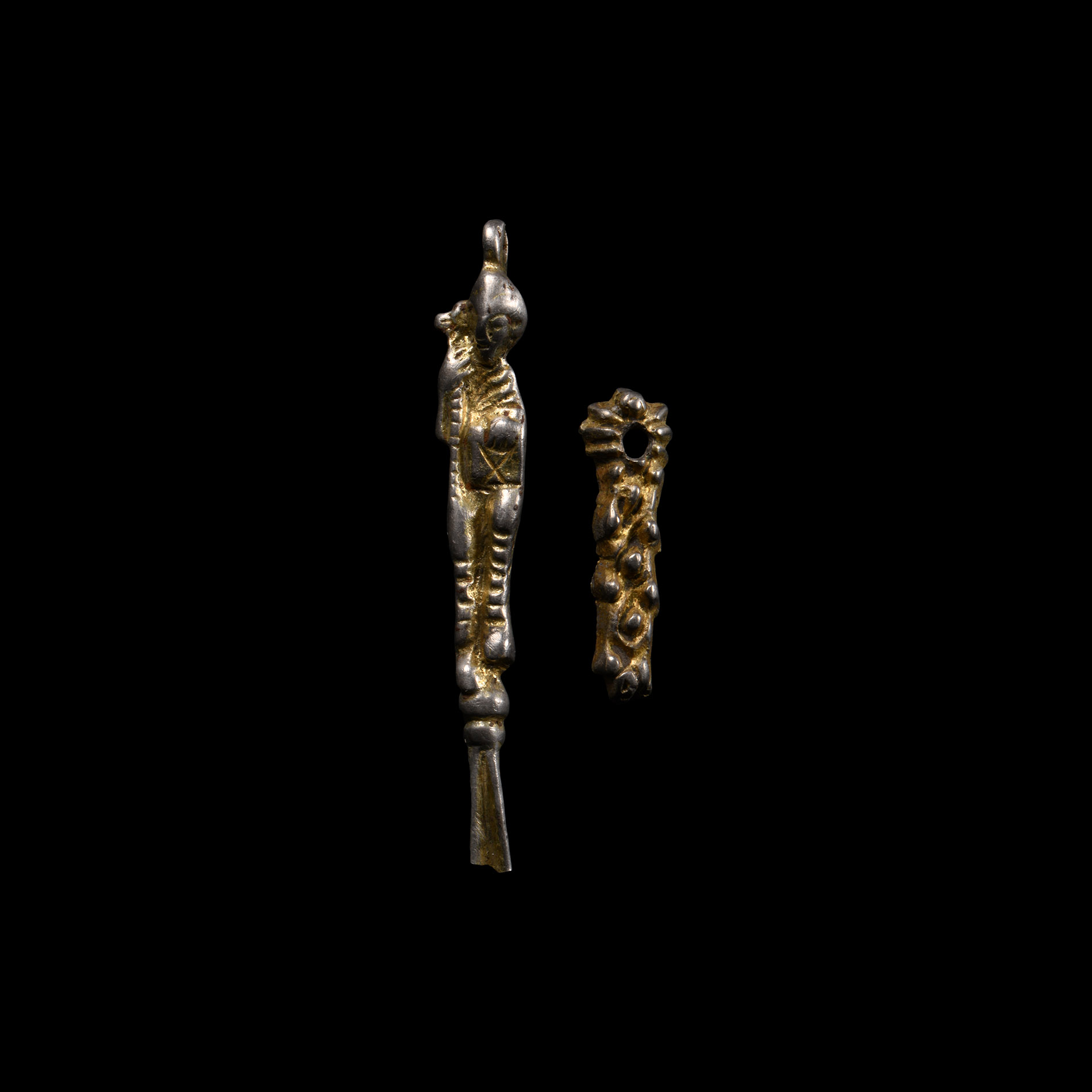
Viking Age Silver-Gilt Artefact Group
9TH-11TH CENTURY A.D.
1 - 2 in. (7.19 grams total, 25-52 mm).
Comprising: a slender mount with single piercing, possibly representing Hercules' club; implement finial with figure standing holding a book and staff, possibly Saint Peter, suspension loop to top of head. [2, No Reserve]
ProvenanceFrom the collection of a North American gentleman, formed in the 1990s.
CONDITIONTimeLine Auctions follows a vetting process to ensure the authenticity and legality of all items, reinforcing our commitment to integrity and responsible trading. Each antiquity, antique, and coin lot undergoes thorough examination by a vetting committee of at least ten external specialists, professional trade association members, scientists, and archaeologists: Our Vetting Process
AUCTIONS:
TimeLine is a leading auction house specialising in antiquities, ancient art, collectables, natural history, coins, medals, and books. Our auctions offer museums, collectors, historians, and enthusiasts the opportunity to acquire unique and historically significant pieces.
-
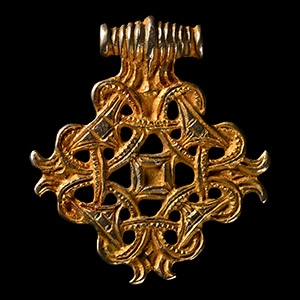
Large Viking Age Silver-Gilt Pendant with Interlace Design
Circa 9th-11th century A.D.Sold for (Inc. bp): £780
Cast openwork interlaced cross design with lozenge in centre, ribbed suspension loop. 12.06 grams, 46 mm high
Private collection formed in Europe in the 1980s. Westminster collection, central London, UK. -
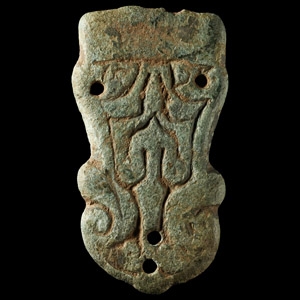
Baltic Viking Bronze Strap End
9th-11th century A.D.Sold for (Inc. bp): £52
Tongue-shaped plaque with fixing lug to the reverse and four rivet-holes; Byzantine-inspired design of fleshy vegetation within segmented border. 18.8 grams, 51 mm
UK private collection formed before 2000. Ex North London, UK, gallery. -
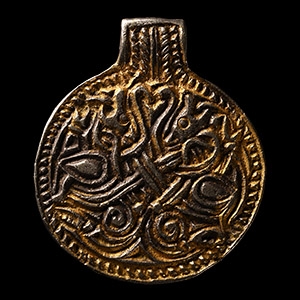
Large Viking Age Silver-Gilt Pendant with Entwined Beasts
Circa 9th-11th century A.D.Sold for (Inc. bp): £715
Cast with suspension loop, two beasts interlaced crossing in centre with heads with open mouths at 11 and 1 o'clock, with remains of gilding. 19.83 grams, 49 mm high
Private collection formed in Europe in the 1980s. Westminster collection, central London, UK.
