
Loading, please wait...
LOT 0328
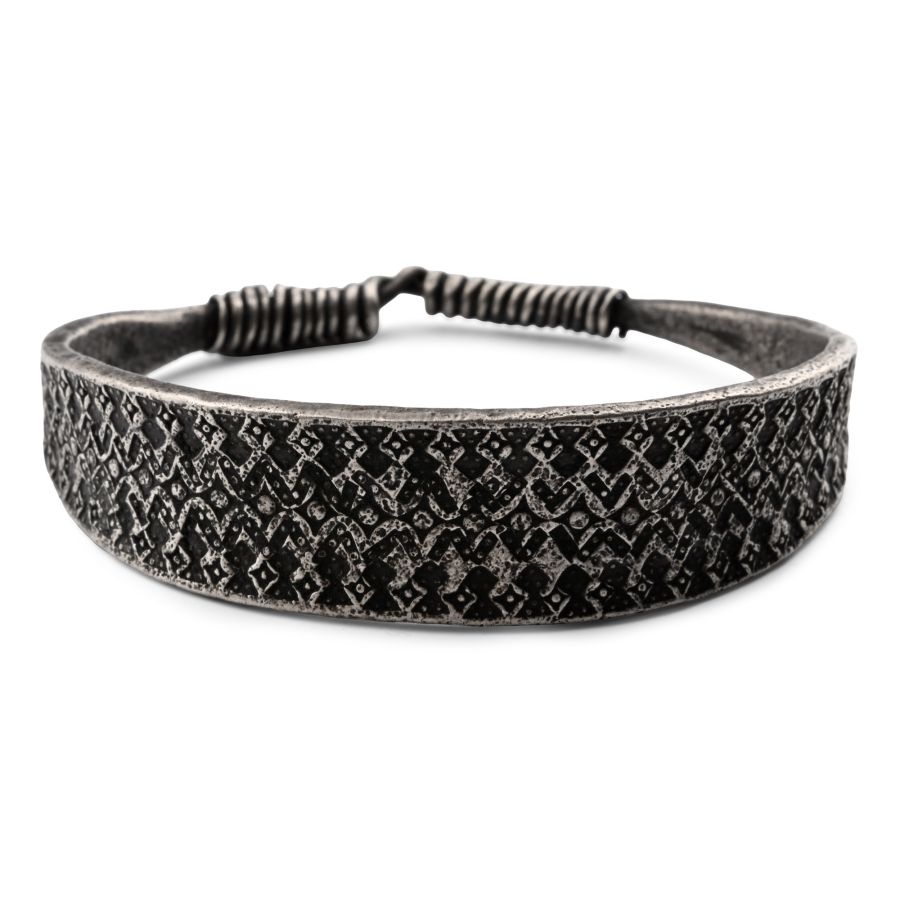
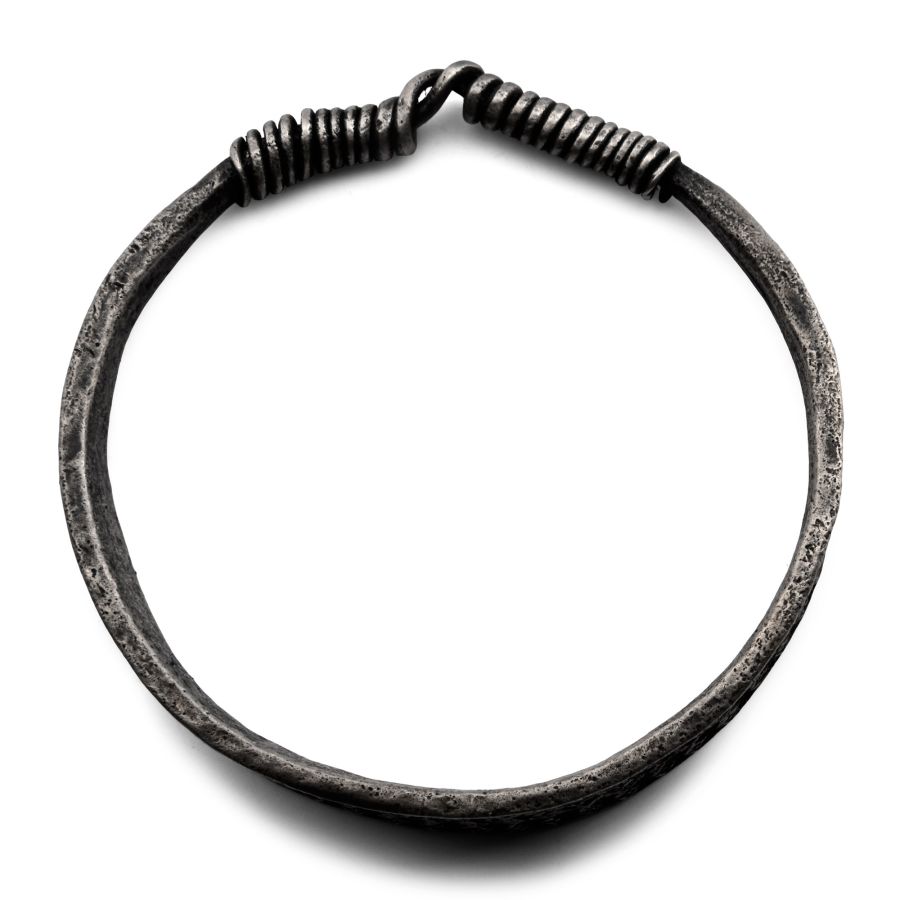
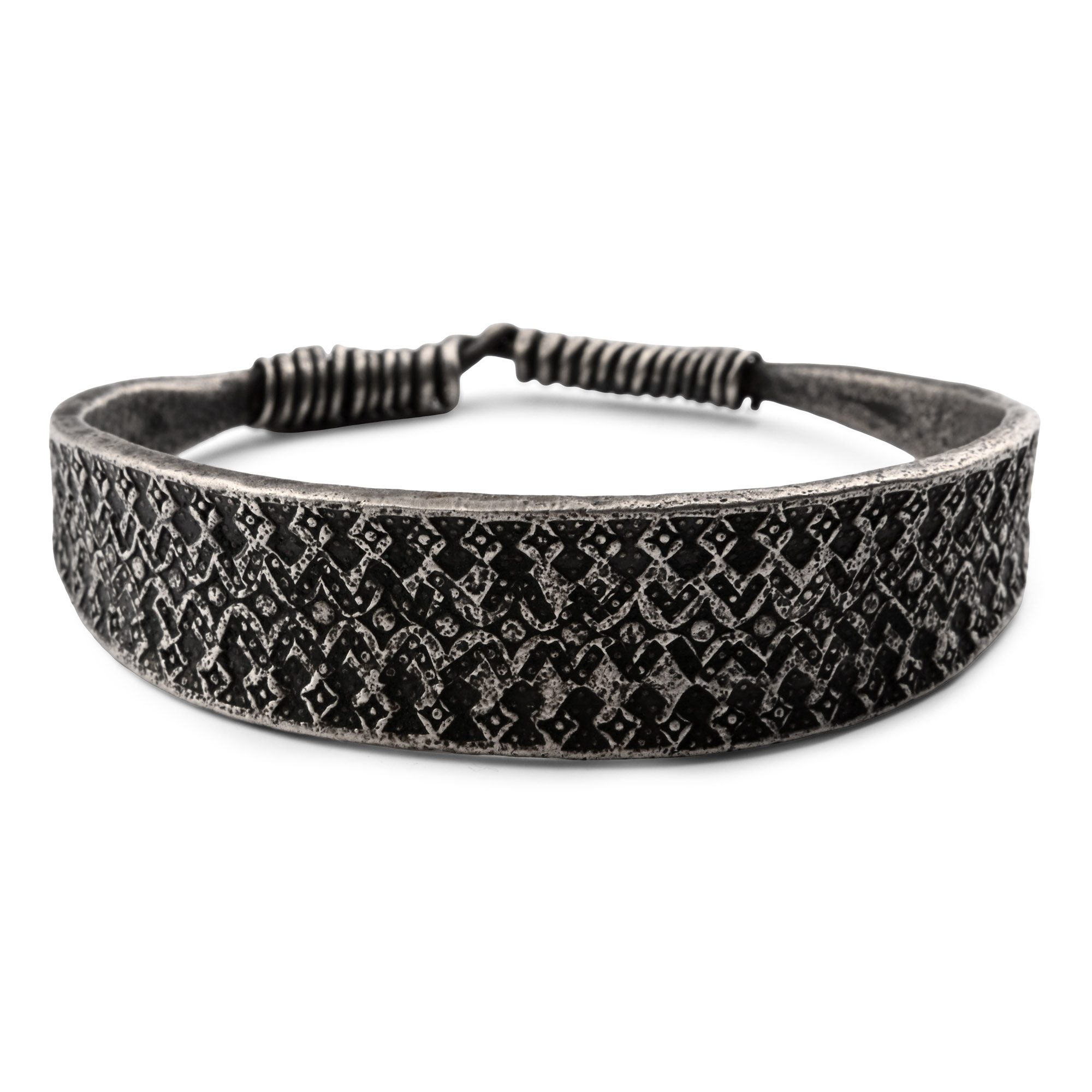
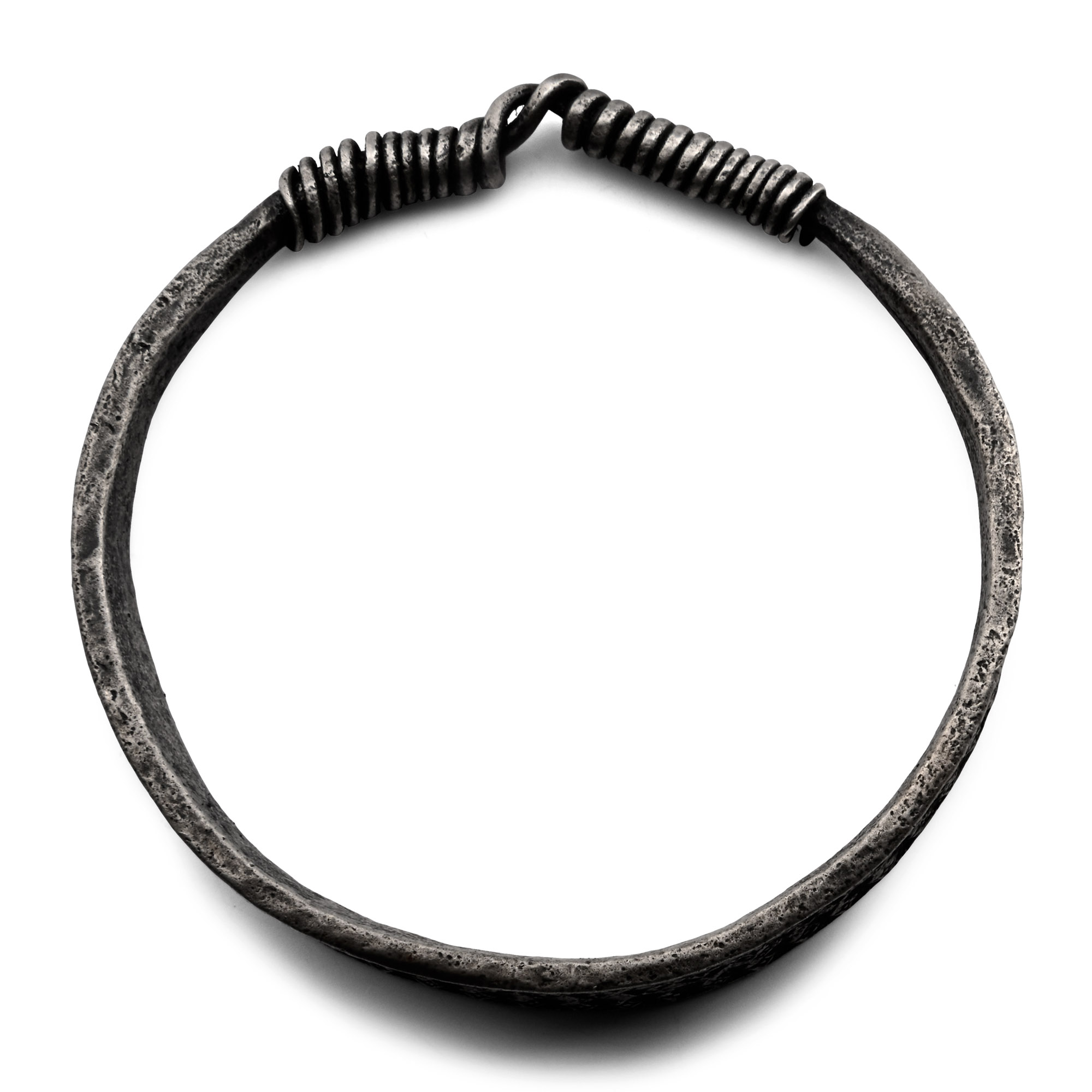
Viking Age Silver Decorated Bracelet
9TH-11TH CENTURY A.D.
2 5/8 in. (51 grams, 67 mm).
Penannular in form with thick rectangular panel and the ends thinned to wire and wound about the shank; dense pattern of punched lozenges and pellets.
ProvenanceFrom the private collection of a London gentleman, from his grandfather's collection formed before the early 1970s.
This lot is accompanied by an illustrated lot declaration signed by the Head of the Antiquities Department, Dr Raffaele D'Amato.
TimeLine Auctions follows a vetting process to ensure the authenticity and legality of all items, reinforcing our commitment to integrity and responsible trading. Each antiquity, antique, and coin lot undergoes thorough examination by a vetting committee of at least ten external specialists, professional trade association members, scientists, and archaeologists: Our Vetting Process
AUCTIONS:
TimeLine is a leading auction house specialising in antiquities, ancient art, collectables, natural history, coins, medals, and books. Our auctions offer museums, collectors, historians, and enthusiasts the opportunity to acquire unique and historically significant pieces.
-
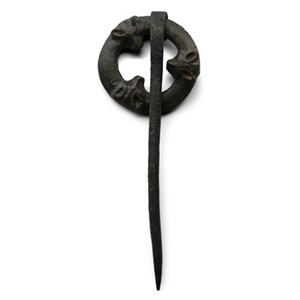
Viking Age Bronze Annular Brooch with Bear's Masks
10th century A.D.Sold for (Inc. bp): £234
Annular in form, D-shaped in section with three inward-facing bear-masks, sturdy pin with loop finial on the shank. 16.7 grams, 88 mm
From the private collection of a London gentleman, from his grandfather's collection formed before the early 1970s. This lot is accompanied by an illustrated lot declaration signed by the Head of the Antiquities Department, Dr Raffaele D'Amato. -
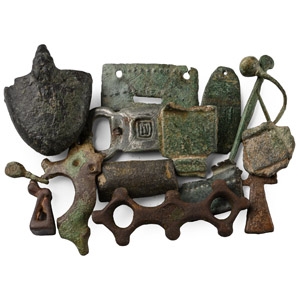
Anglo-Saxon and Viking Bronze Artefact Group
6th-11th century A.D.Sold for (Inc. bp): £46
Including scabbard chape with zoomorphic head decoration, coiled ring with engraved geometric design, a zoomorphic head mount, coiled pin with globular finial and others. 155 grams total, 23-62 mm
Found East Anglia, UK. This lot is accompanied by an illustrated lot declaration signed by the Head of the Antiquities Department, Dr Raffaele D'Amato. -
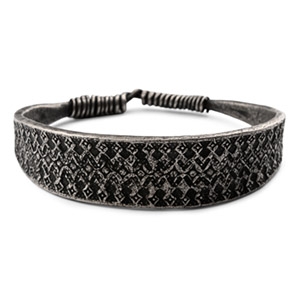
Viking Age Silver Decorated Bracelet
9th-11th century A.D.Sold for (Inc. bp): £1,170
Penannular in form with thick rectangular panel and the ends thinned to wire and wound about the shank; dense pattern of punched lozenges and pellets. 51 grams, 67 mm
From the private collection of a London gentleman, from his grandfather's collection formed before the early 1970s. This lot is accompanied by an illustrated lot declaration signed by the Head of the Antiquities Department, Dr Raffaele D'Amato.
