
Loading, please wait...
LOT 1776
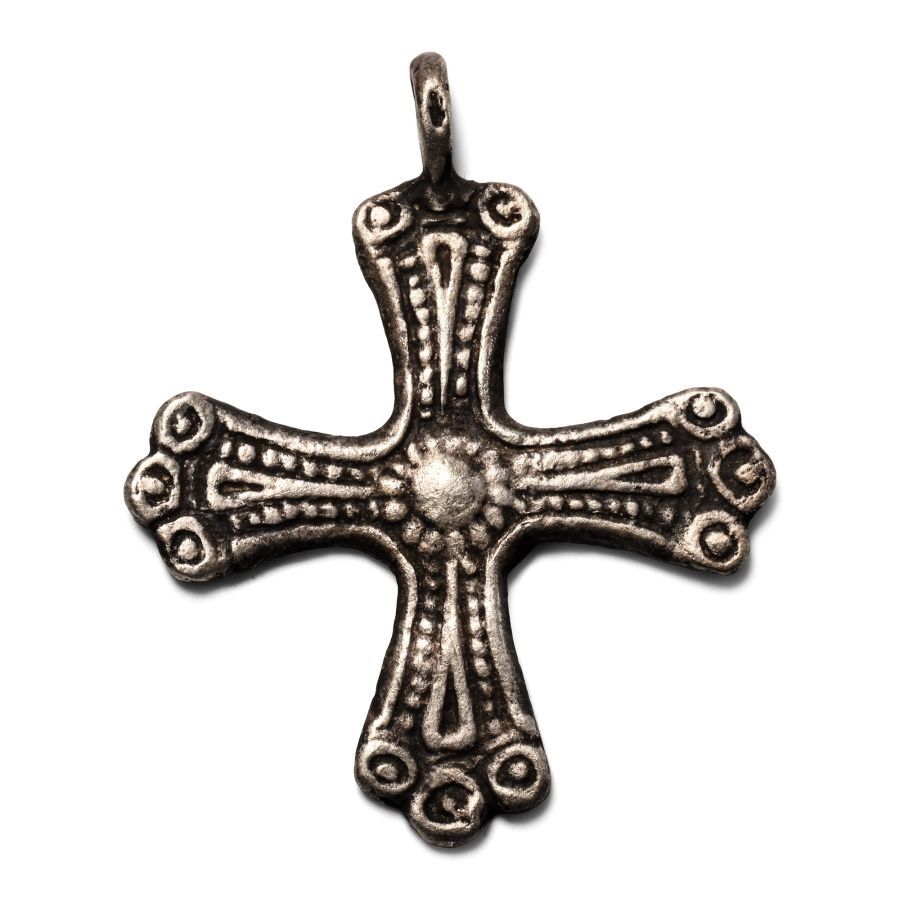
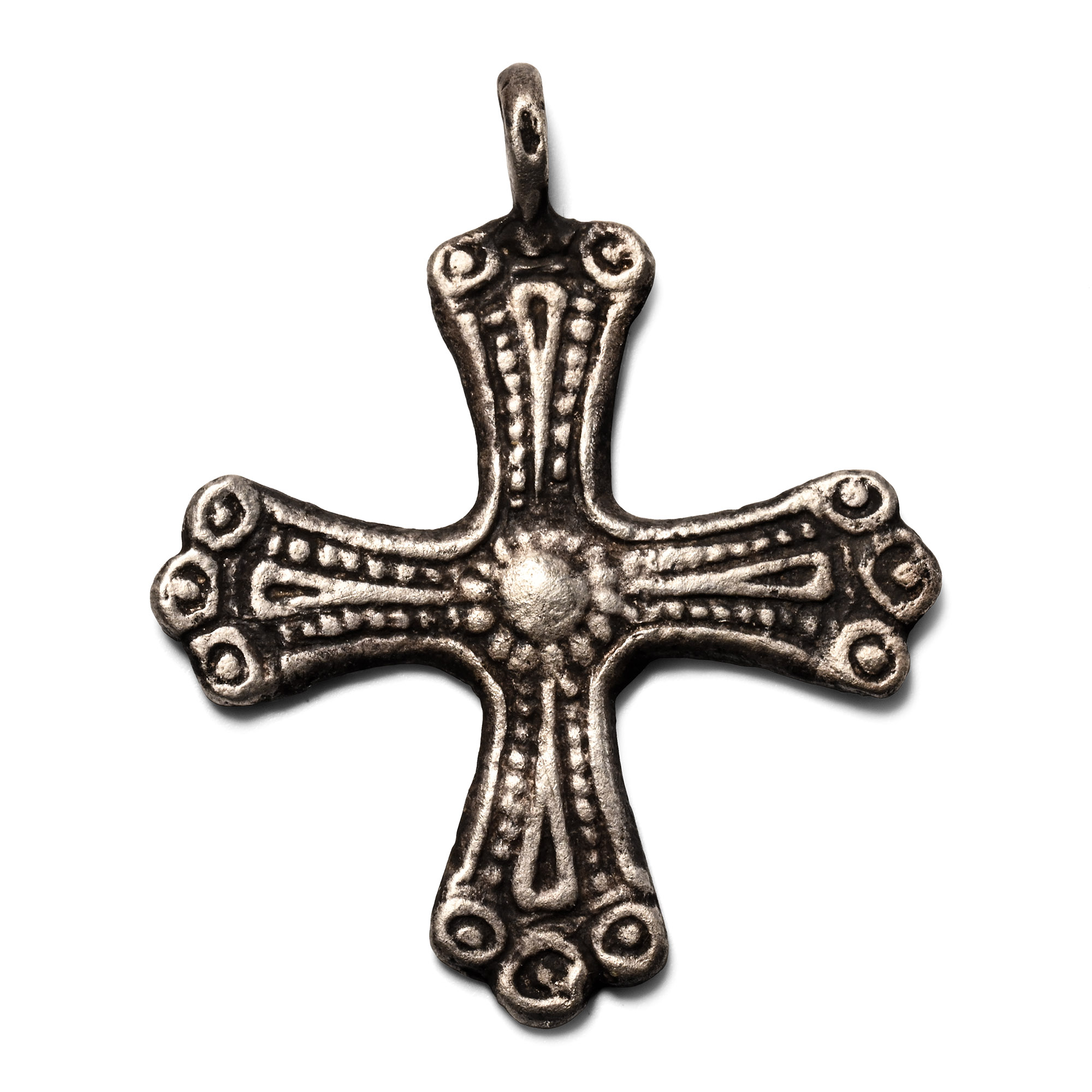
Viking Age Silver Cross Pendant
10TH-11TH CENTURY A.D.
1 1/2 in. (4.79 grams, 39 mm).
Cross pommee with three raised lobes to each finial, integral suspension ring. [No Reserve]
ProvenanceAcquired from a West Sussex collection formed in the 1970s-1990s.
Ex Buckinghamshire, UK, collection.
Cf. Hammond, B., British Artefacts vol.2 - Middle Saxon & Viking, Witham, 2010, item 1.1.6-e, for type.
CONDITIONTimeLine Auctions follows a vetting process to ensure the authenticity and legality of all items, reinforcing our commitment to integrity and responsible trading. Each antiquity, antique, and coin lot undergoes thorough examination by a vetting committee of at least ten external specialists, professional trade association members, scientists, and archaeologists: Our Vetting Process
AUCTIONS:
TimeLine is a leading auction house specialising in antiquities, ancient art, collectables, natural history, coins, medals, and books. Our auctions offer museums, collectors, historians, and enthusiasts the opportunity to acquire unique and historically significant pieces.
-

Viking Period Bronze Brooch with Pendant and Lozenge-Shaped Drops
Finno-Ugric, 8th-10th century A.D.Sold for (Inc. bp): £559
Triangular plaque with openwork decoration and stylised beast head finials, the lower six loops each with lozenge-shaped dangle, pennanular loop supporting cosmetic pin. 68 grams, 19 cm
From the private collection of a London gentleman, from his grandfather's collection formed before the early 1970s. -
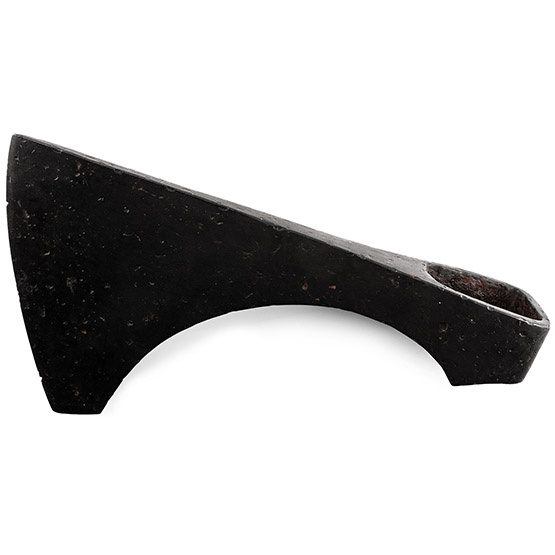
Viking Age Iron Socketted Bearded Axehead
Circa 10th-11th century A.D.Sold for (Inc. bp): £468
Finely curved, broad blade with a chin to the lower edge, a rounded socket with lateral triangular extensions; professionally cleaned, conserved, and restored. 411 grams, 18.5 cm
From the family collection of a South East London collector; formerly acquired in the late 1950s.
This type of bearded axe seems to correspond to the E2 category of the Viking axe classification, but also has affinity with the Slavic axes of type Y. Usually, these bearded axeheads (skeggöks) had a longer edge, designed to split tree trunks into planks and beams. Some of the bearded axes were known as halfÞynna öx; the neck on such a 'half thin axe' was thinly forged, to make it lighter. -

Viking Period Bronze Twisted Neck Torc
9th-11th century A.D. or earlierSold for (Inc. bp): £98
Round-section penannular body with decorative twist, coiled flattened finials. 46 grams, 13.6 cm
UK private collection before 2000. Acquired on the UK art market. Private collection, London, UK.
