
Loading, please wait...
LOT 1191
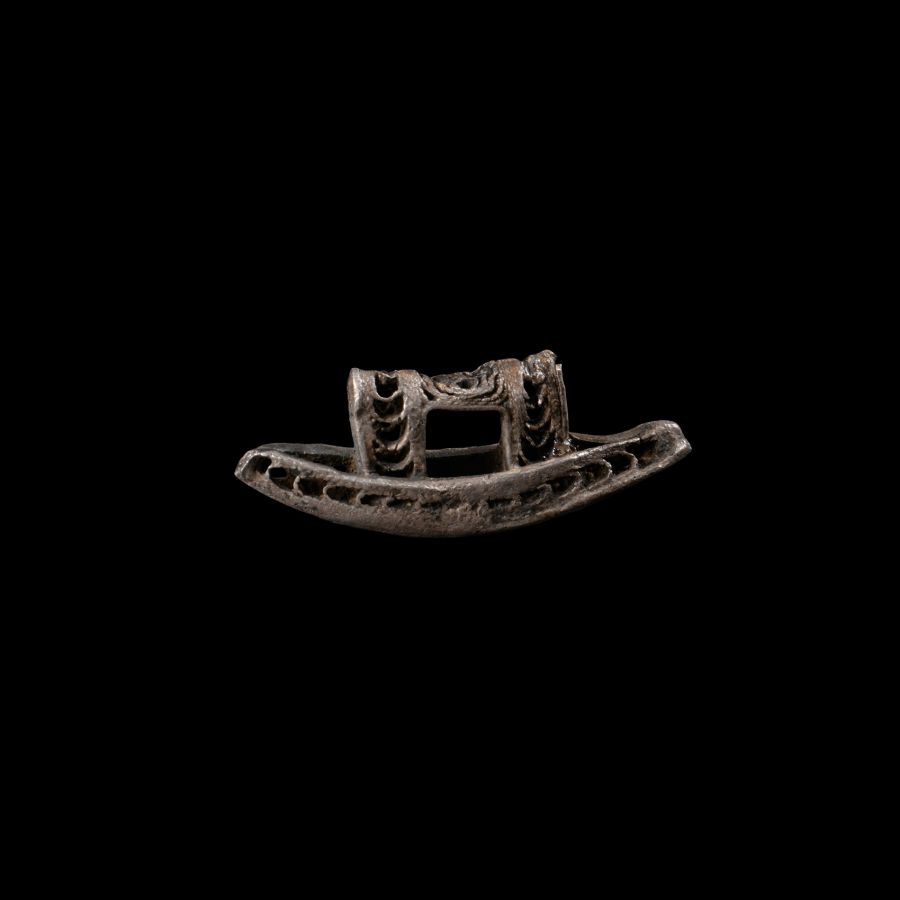
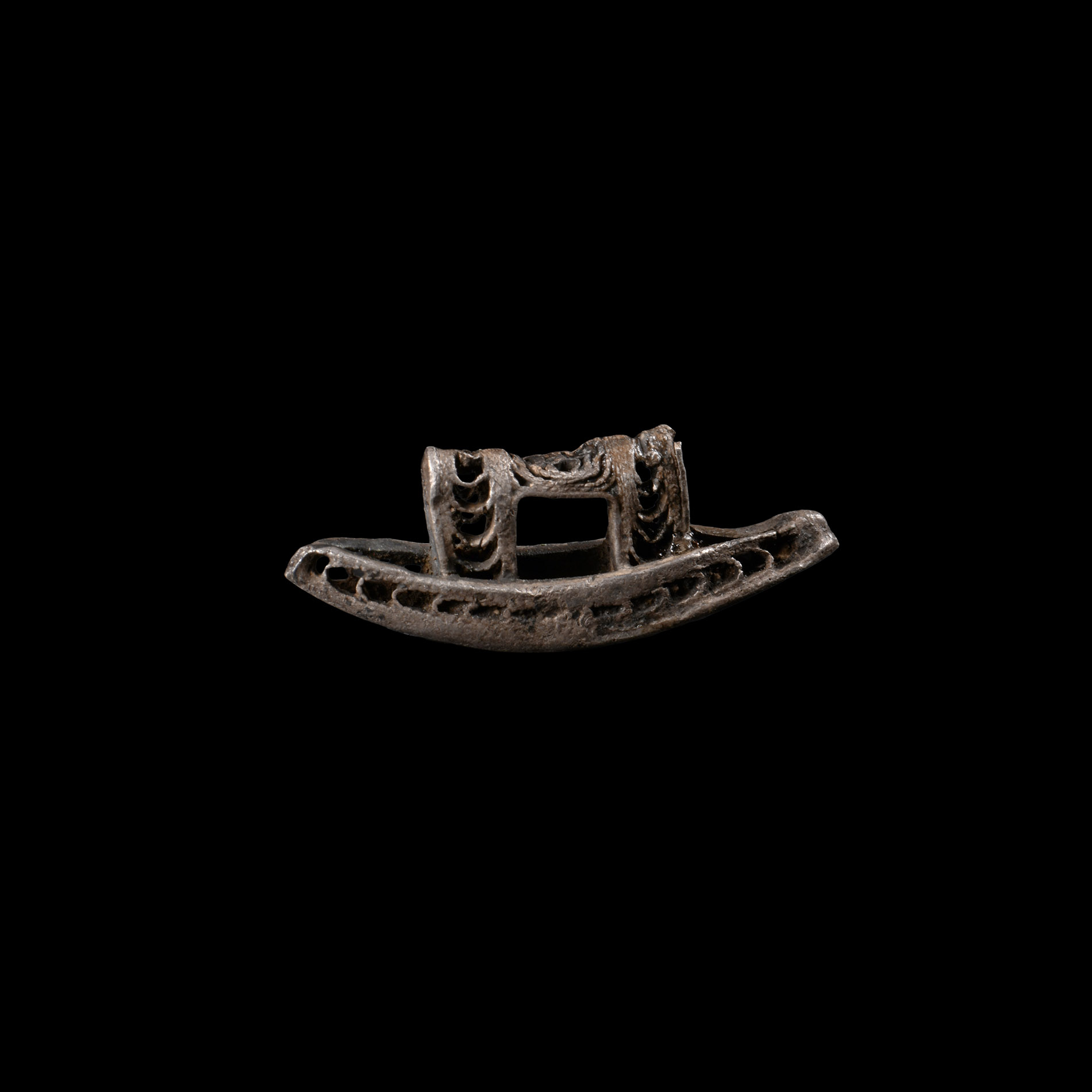
Viking Age Silver Boat-Shaped Pendant
9TH-11TH CENTURY A.D.
1 in. (1.47 grams, 24 mm).
Composed of a shallow crescentic body and openwork filigree loop. [No Reserve]
ProvenanceFrom the collection of a North American gentleman, formed in the 1990s.
CONDITIONTimeLine Auctions follows a vetting process to ensure the authenticity and legality of all items, reinforcing our commitment to integrity and responsible trading. Each antiquity, antique, and coin lot undergoes thorough examination by a vetting committee of at least ten external specialists, professional trade association members, scientists, and archaeologists: Our Vetting Process
AUCTIONS:
TimeLine is a leading auction house specialising in antiquities, ancient art, collectables, natural history, coins, medals, and books. Our auctions offer museums, collectors, historians, and enthusiasts the opportunity to acquire unique and historically significant pieces.
-
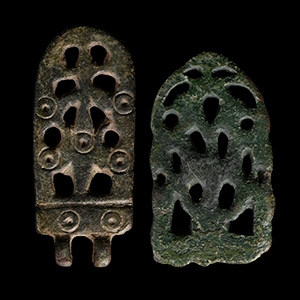
Viking Age Bronze Openwork Strap End Group
9th-11th century A.D.Sold for (Inc. bp): £46
One bifacial tongue-shaped strap end with openwork scheme and punched ring-and-dot motifs; one composed of an openwork interlaced vegetal design. 23 grams total, 39-44 mm
From the collection of a North American gentleman, formed in the 1990s. -
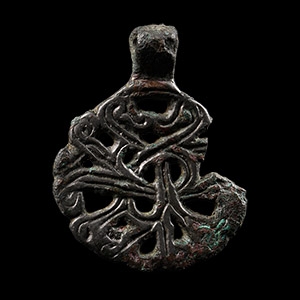
Viking Age Bronze Openwork Pendant
9th-11th century A.D.Sold for (Inc. bp): £46
Featuring a central trefoil knot and radiating bars forming an interlaced panel; suspension loop above; chipped. 7.335 grams, 38 mm
Ex property of a European gentleman living in Northamptonshire, before 2014. From the collection of a North American gentleman. -
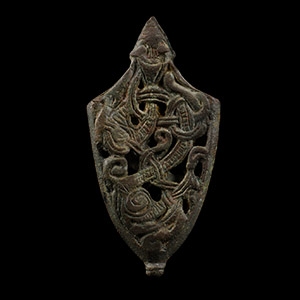
Viking Age Bronze Sword Scabbard Chape
9th-11th century A.D.Sold for (Inc. bp): £1,105
Displaying openwork interlaced zoomorphs to both faces. 34.9 grams, 80 mm
From the collection of a North American gentleman, formed in the 1990s.
The decoration of one side shows a composition of interwoven dragons, with their heads in a side view (Jellinge Style). The ornamentation belongs to a group of the first two styles in P. Paulsen's classification, i.e. the 'German four legged beast'.
