
Loading, please wait...
LOT 1780
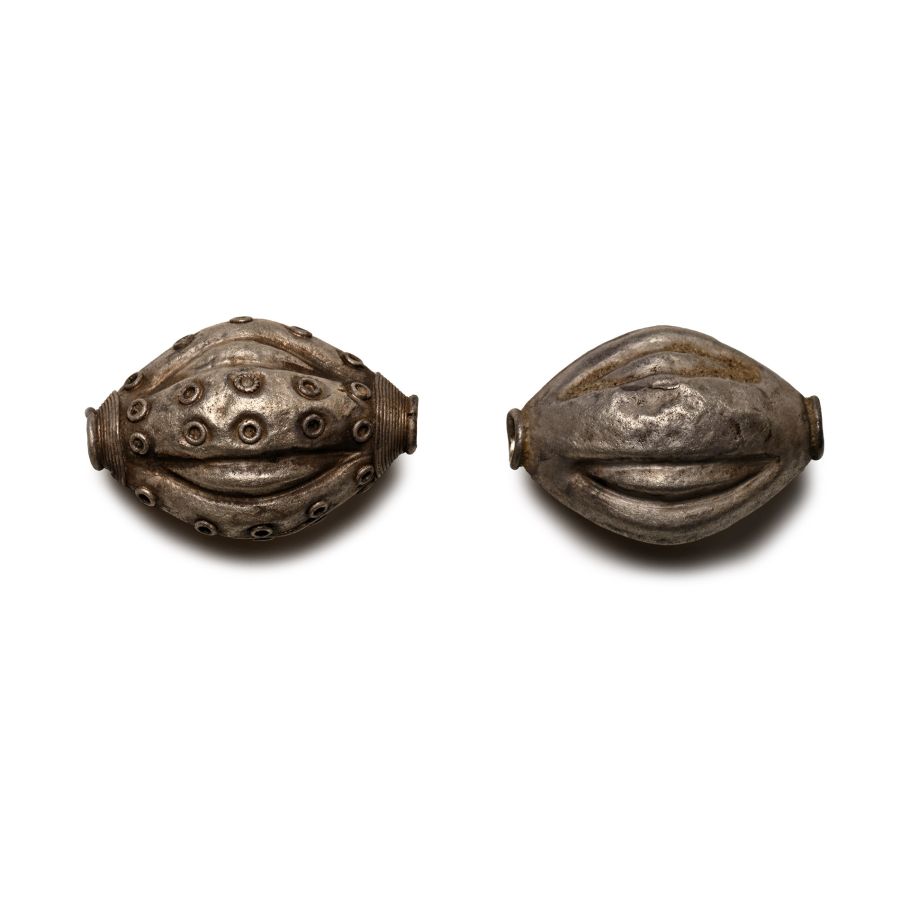
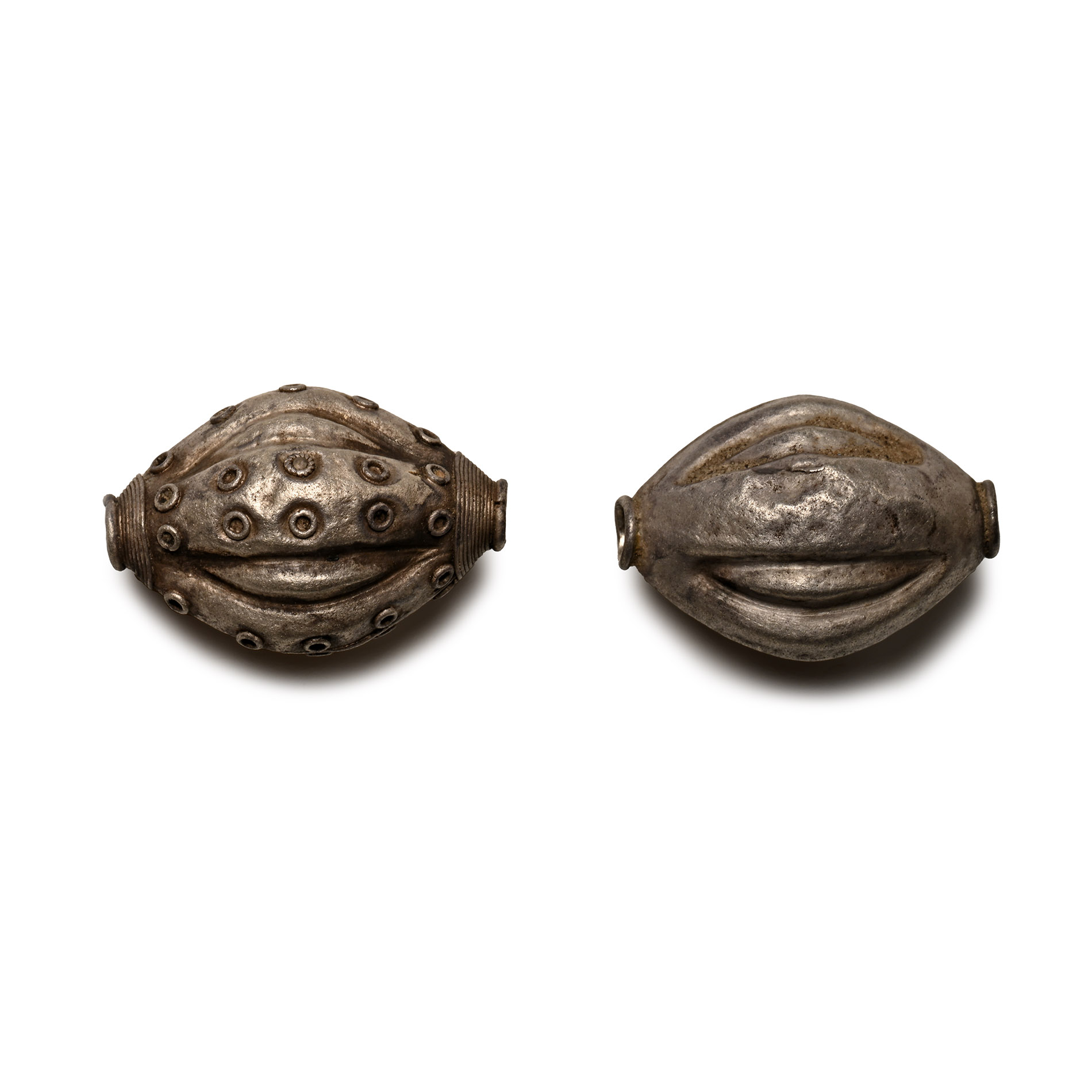
Viking Age Silver Bead Group
CIRCA 9TH-11TH CENTURY A.D.
7/8 in. (3.34 grams total, 23-24 mm).
Each a collared ribbed oval, one with applied hoops to the ends and circlets to the ribs. [2, No Reserve]
ProvenancePrivate collection formed in Europe in the 1980s.
Westminster collection, central London, UK.
TimeLine Auctions follows a vetting process to ensure the authenticity and legality of all items, reinforcing our commitment to integrity and responsible trading. Each antiquity, antique, and coin lot undergoes thorough examination by a vetting committee of at least ten external specialists, professional trade association members, scientists, and archaeologists: Our Vetting Process
AUCTIONS:
TimeLine is a leading auction house specialising in antiquities, ancient art, collectables, natural history, coins, medals, and books. Our auctions offer museums, collectors, historians, and enthusiasts the opportunity to acquire unique and historically significant pieces.
-
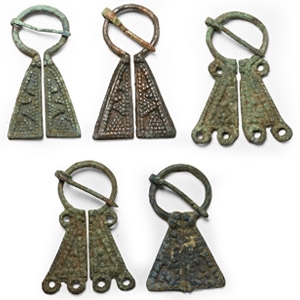
Viking Inspired Bronze Omega Penannular Brooch Collection
12th-14th century A.D.Sold for (Inc. bp): £247
A group of flat-section Mordvinian type brooches. 72.7 grams total, 55-59 mm
Acquired on the European art market since the early 2000s. From the private Northern Ireland collection of R.M.
This type of brooch belongs to the typologies of the omega brooches. It was probably used by Ugro-Finnic people to fasten the shirt at the neck or to attach other lighter garments. These brooches evolved to become very elaborate, with dangling springs from the edges, and were often worn in pairs, particularly on female garments. In this late Viking period their coins demonstrated Russian and Eastern Roman influences in their art and jewellery. -
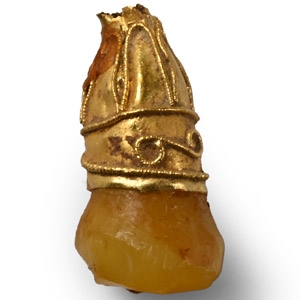
Viking Age Gold 'Elf Shot' Pendant
9th-11th century A.D. or earlierSold for (Inc. bp): £208
Decorated sheet gold sleeve, hoof-shaped stone mounted in the socket; loop absent. 0.18 grams, 10 mm
Acquired on the UK art market before 2000. Property of an Essex, UK, gentleman.
This amulet was believed to offer protection against 'Elfshot'. The attack of elves was believed responsible for mysterious suffering in men and livestock: sudden shooting pains localised to a particular area of the body, such as in rheumatism, arthritis or muscle stitches or cramps. Elves were thought to shoot darts or arrows where such pains had no obvious external cause. Belief in elfshot persisted into the 20th century in rural areas, and as proof country folk would sometimes find small arrowheads (the remains of Neolithic or Mesolithic flints, or naturally-occurring spear-shaped stones) that were believed to be the magical weapons that caused the afflictions. Belief in elfshot began in the Pagan Germanic period. -
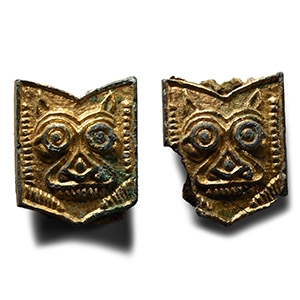
Viking Age Silver-Gilt Belt Mount Pair
Circa 9th-11th century A.D.Sold for (Inc. bp): £117
Each a heater-shaped plaque with indented upper edge, domed obverse with stylised animal-mask detailing in a beaded border; mounting pins to reverse, remains of leather; Avar workmanship. 5.37 grams total, 20-21 mm
Private collection formed in Europe in the 1980s. Westminster collection, central London, UK.
