
Loading, please wait...
LOT 2044
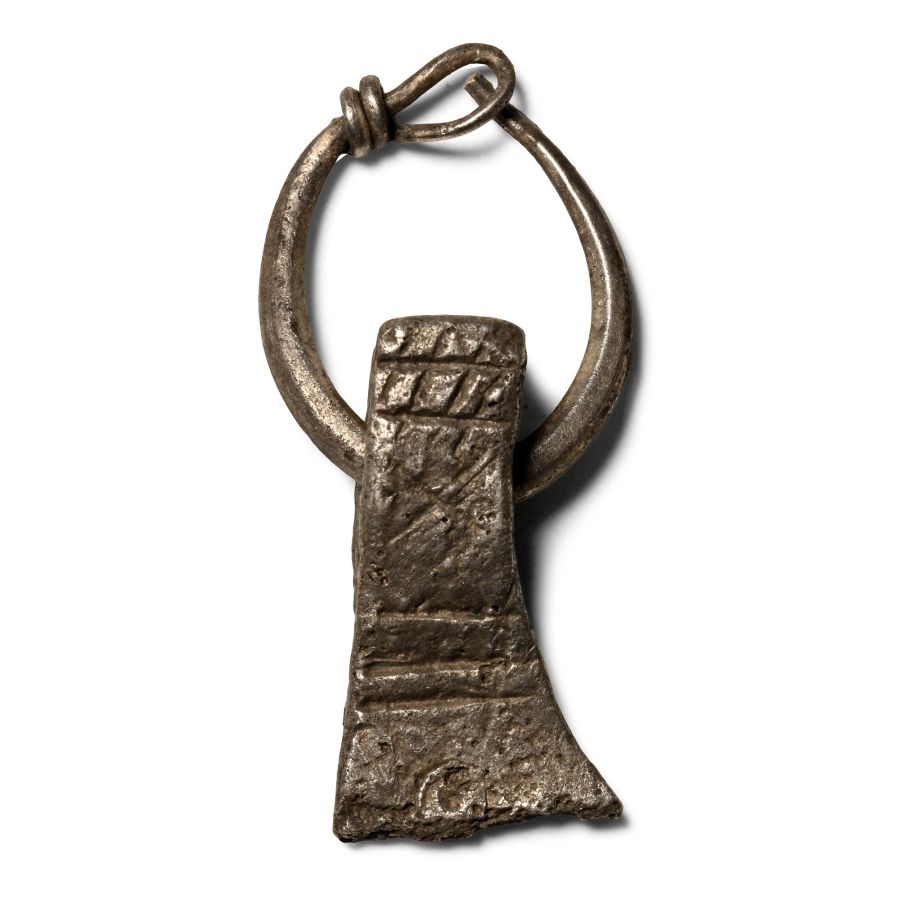
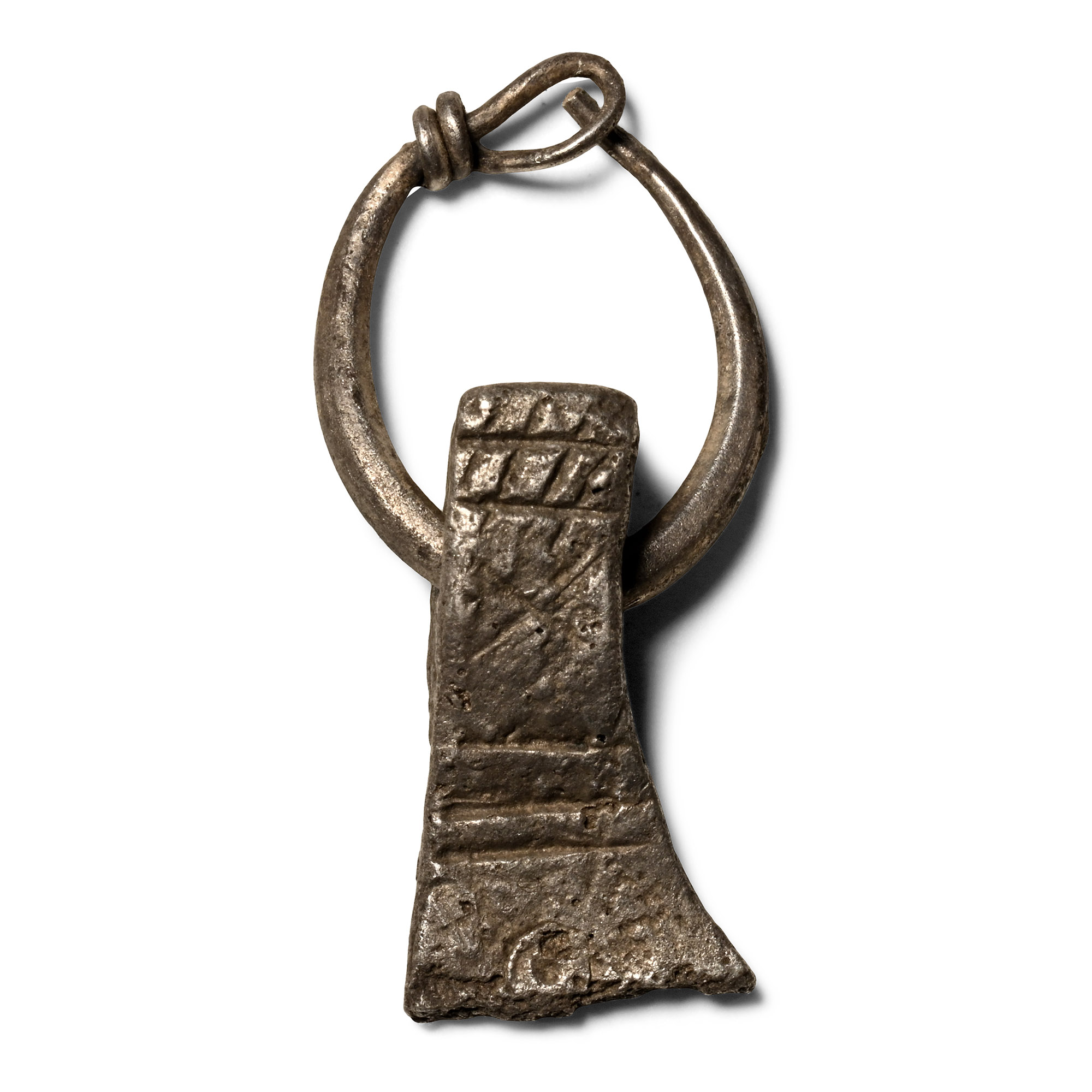
Viking Age Silver Axehead Pendant
CIRCA 9TH-11TH CENTURY A.D.
1 1/8 in. (4.34 grams, 30 mm).
Axe-shaped pendant with hammer extension and linear decoration, round-section suspension loop threaded through the socket. [No Reserve]
ProvenanceEx German art market, 2000s.
Acquired from an EU collector living in London.
From the collection of a Surrey, UK, gentleman.
TimeLine Auctions follows a vetting process to ensure the authenticity and legality of all items, reinforcing our commitment to integrity and responsible trading. Each antiquity, antique, and coin lot undergoes thorough examination by a vetting committee of at least ten external specialists, professional trade association members, scientists, and archaeologists: Our Vetting Process
AUCTIONS:
TimeLine is a leading auction house specialising in antiquities, ancient art, collectables, natural history, coins, medals, and books. Our auctions offer museums, collectors, historians, and enthusiasts the opportunity to acquire unique and historically significant pieces.
-
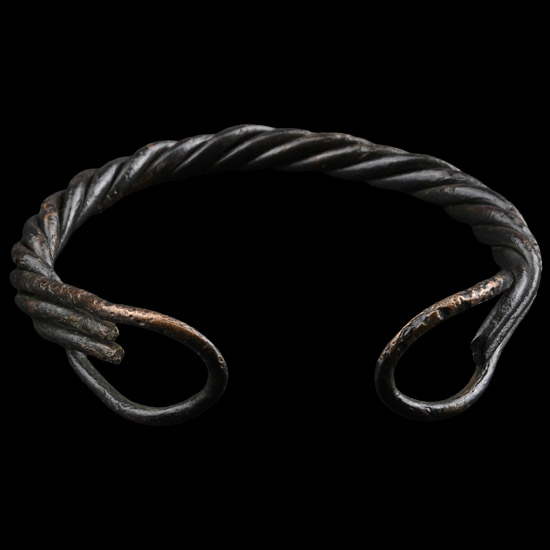
Viking Age Coiled Wire Bracelet
Circa 9th-11th century A.D.Sold for (Inc. bp): £143
Formed of twisted round-section bars with looped terminals. 17.3 grams, 58 mm
Ex German art market, 2000s. Acquired from an EU collector living in London. From the collection of a Surrey, UK, gentleman. -
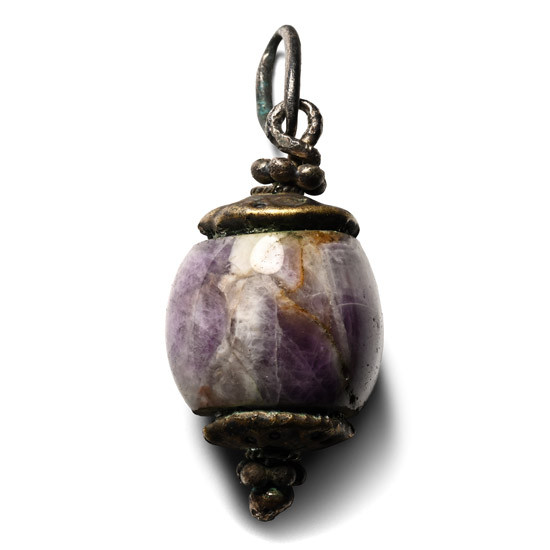
Viking Age Bronze Pendant with Polished Amethyst Bead
Circa 9th-11th century A.D.Sold for (Inc. bp): £1,105
Comprising an amethyst bead with stamped conical disc above and below, suspension pin through centre with ring and loop above. 18.93 grams, 55 mm including loop
Private collection formed in Europe in the 1980s. Westminster collection, central London, UK. -
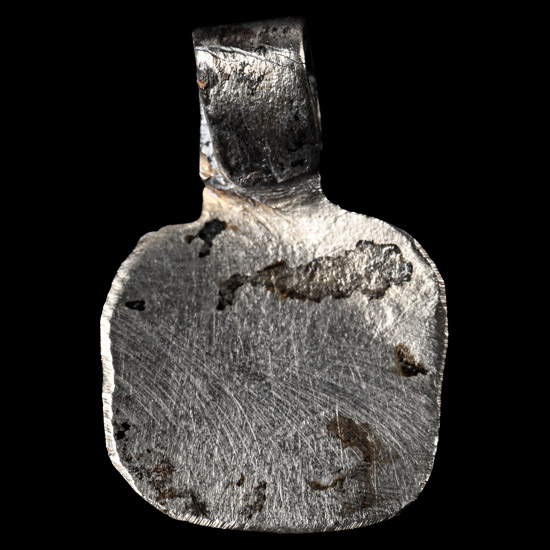
Viking Age Silver Amuletic Pendant
Circa 900-1100 A.D.Sold for (Inc. bp): £65
Flat-section rectangular disc with a large loop. 0.57 grams, 17 mm
From an ancient art collection, formerly acquired in the UK, European, and USA art markets, from pre-2000 collections. Property of a West Northamptonshire, UK, gentleman.
