
Loading, please wait...
LOT 1765
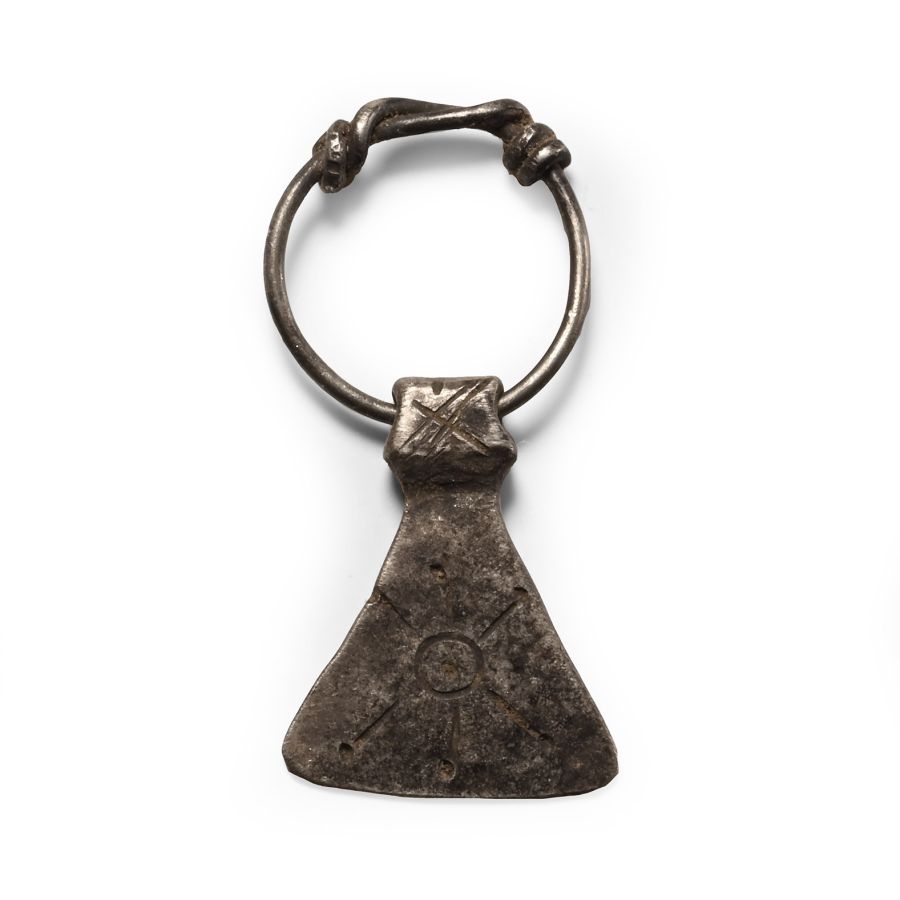
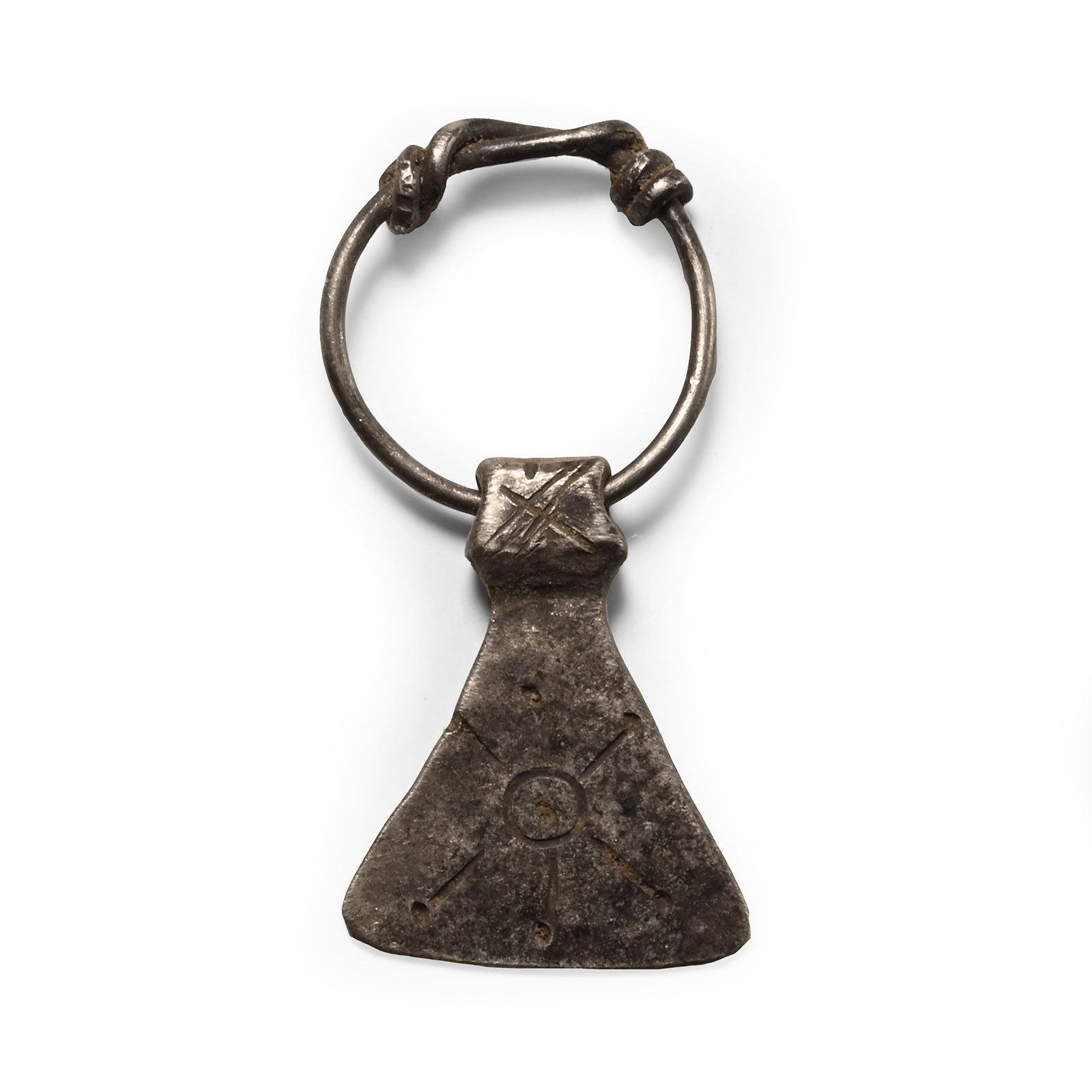
Viking Age Silver Axehead Pendant
9TH-11TH CENTURY A.D.
1 1/4 in. (1.7 grams, 30 mm).
Comprising an axe-shaped pendant with sunburst motif, cross hatching to the socket, wire loop. [No Reserve]
ProvenanceEx German art market, 2000s.
Acquired from an EU collector living in London.
From the collection of Surrey, UK, gentleman.
TimeLine Auctions follows a vetting process to ensure the authenticity and legality of all items, reinforcing our commitment to integrity and responsible trading. Each antiquity, antique, and coin lot undergoes thorough examination by a vetting committee of at least ten external specialists, professional trade association members, scientists, and archaeologists: Our Vetting Process
AUCTIONS:
TimeLine is a leading auction house specialising in antiquities, ancient art, collectables, natural history, coins, medals, and books. Our auctions offer museums, collectors, historians, and enthusiasts the opportunity to acquire unique and historically significant pieces.
-
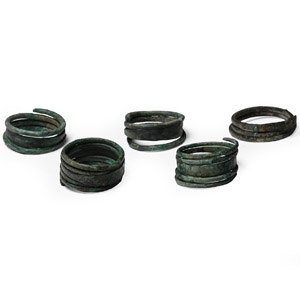
Viking Age Bronze Coiled Ring Group
11th-13th century A.D.Sold for (Inc. bp): £117
Comprising: plain rod coiled to form a finger ring; penannular hoop with coiled rod extensions; Baltic types. 22.56 grams total, 23-25 mm
Acquired on the European art market since the early 2000s. From the private Northern Ireland collection of R.M. -
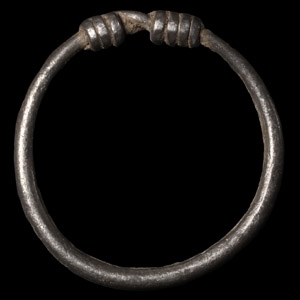
Viking Age Silver Ring with Coiled Bezel
Circa 9th-11th century A.D.Sold for (Inc. bp): £85
Formed as a tapering wire hoop with the ends bound round the shank. 0.55 grams, 21.62 mm overall, 17.16 mm internal diameter (approximate size British O, USA 7, Europe 14.98, Japan 14)
Private collection, Arundel, West Sussex, UK, 1980s. -
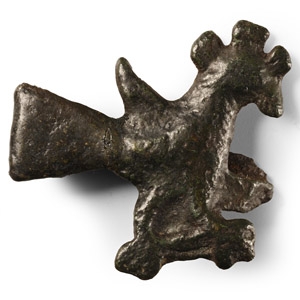
Viking Bronze Bird Brooch
10th-12th century A.D.Estimate: £150 - 200 (‡+bp*)
Opening Bid: £83
Modelled in profile with radiating tripartite crest, triangular stub wing, splayed feet, catch and pin-lugs to the reverse. 10.9 grams, 38 mm
From the collection of a North American gentleman, formed in the 1990s.
Bird brooches from the late Viking era have been found in Scandinavia as well in the English Danelaw, through to the early Norman era; such brooches can be dated to the 11th and even early 12th century.
