
Loading, please wait...
_900x900.jpg "Viking Age Silver Axe Pendant")
_200x200.jpg "Viking Age Silver Axe Pendant")
.jpg "Viking Age Silver Axe Pendant")
LOT 1718
Viking Age Silver Axe Pendant
9TH-11TH CENTURY A.D.
2 1/8 in. (6.1 grams, 53 mm).
With a hoop with overlapping terminals and coiled wire sleeves; free-running axehead pendant decorated with a single ring-and-dot motif from which radiate rows of pecked lines. [No Reserve]
ProvenanceDorset, UK, collection, 1990s.
Ex property of a Sussex, UK, teacher.
TimeLine Auctions follows a vetting process to ensure the authenticity and legality of all items, reinforcing our commitment to integrity and responsible trading. Each antiquity, antique, and coin lot undergoes thorough examination by a vetting committee of at least ten external specialists, professional trade association members, scientists, and archaeologists: Our Vetting Process
AUCTIONS:
TimeLine is a leading auction house specialising in antiquities, ancient art, collectables, natural history, coins, medals, and books. Our auctions offer museums, collectors, historians, and enthusiasts the opportunity to acquire unique and historically significant pieces.
-
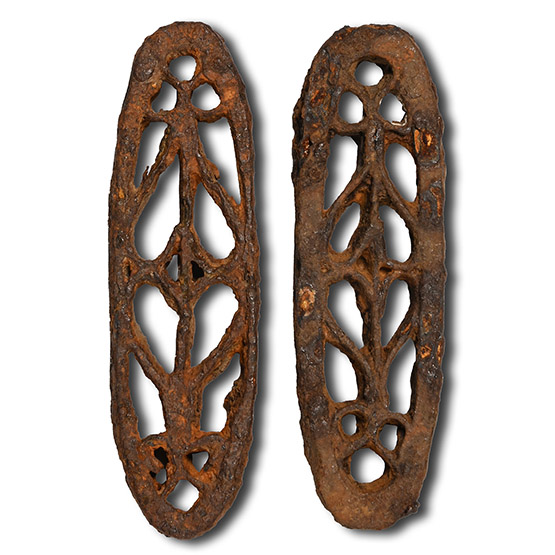
Viking Iron Fire Strikers
10th-12th century A.D.Sold for (Inc. bp): £169
Group of two openwork fire strikers, each with with scrolled vegetal ornament. 53 grams total, 66-68 mm
Private collection, Austria. -
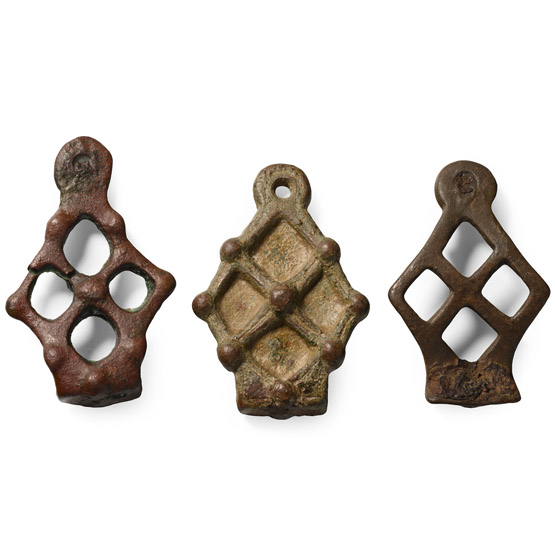
Anglo-Scandinavian Viking Bronze Stirrup Apex Mount Collection
11th century A.D.Sold for (Inc. bp): £78
Each of Williams's Class A Type 12 with lattice ornament to the body and bosses at the nodes; two openwork and one solid fill; narow base adnd ledge at the bottom. 48.2 grams total, 44-47 mm
Found Norfolk, UK. -
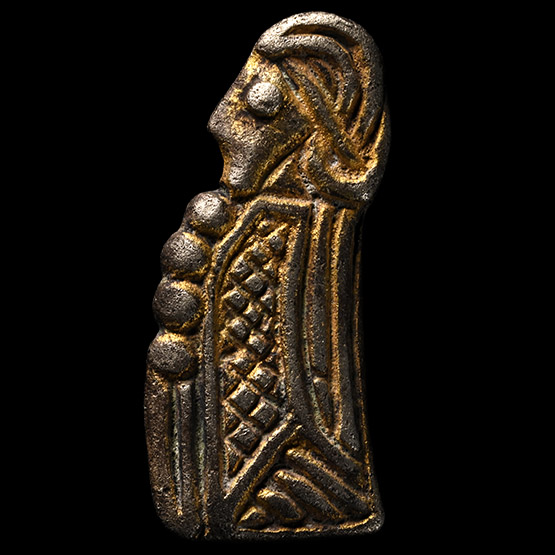
Viking Age Silver Maiden Pendant
Circa 10th century A.D.Sold for (Inc. bp): £2,210
Profile image of a female in floor-length robe with mantle to the shoulders, stylised headdress and long band of plaited hair to the rear edge; pierced lug to the reverse. 5.2 grams, 33 mm
Private collection formed in Europe in the 1980s. Westminster collection, central London, UK.
