
Loading, please wait...
LOT 1262
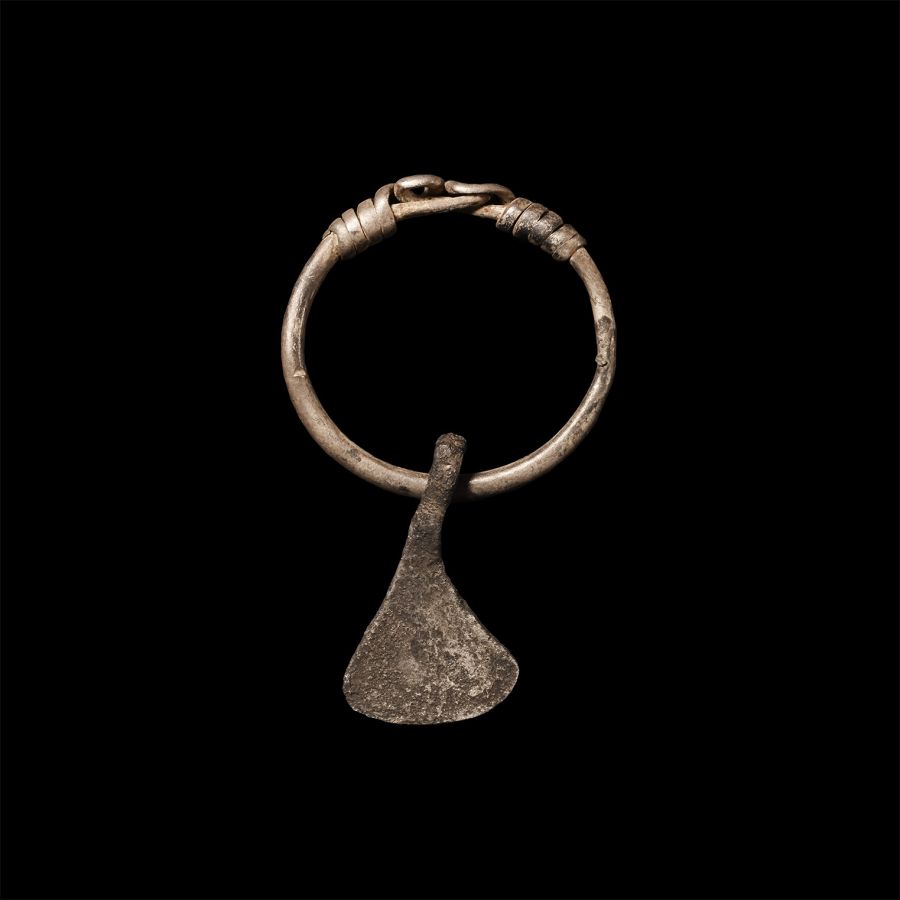
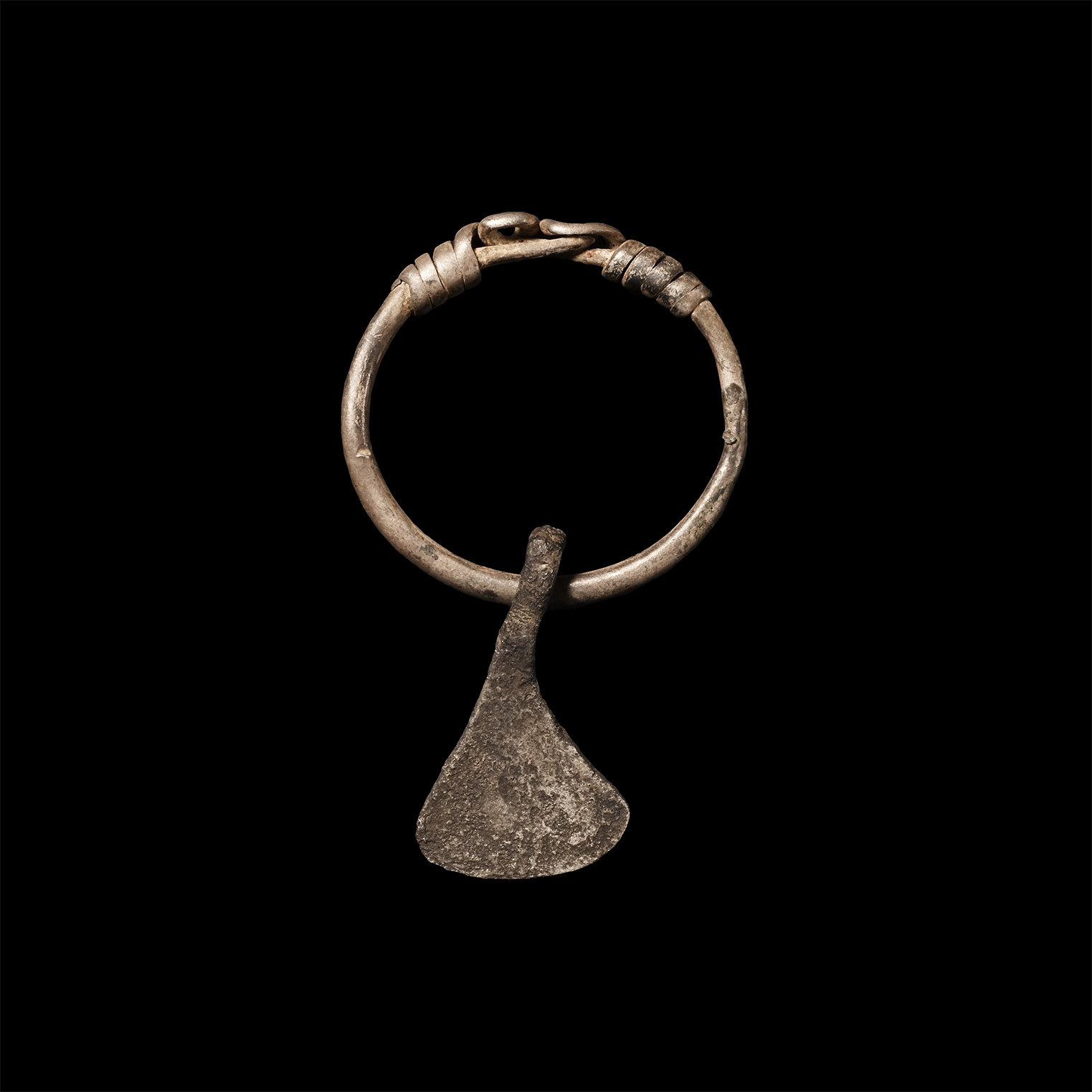
Viking Age Silver Axe Pendant
CIRCA 9TH-11TH CENTURY A.D.
2 1/4 in. (7.75 grams, 57 mm).
A silver pendant composed of a hoop with coiled terminals and a free-moving axehead pendant. [No Reserve]
ProvenanceAcquired in the 1990s.
UK private collection.
Property of a Sussex, UK, teacher.
TimeLine Auctions follows a vetting process to ensure the authenticity and legality of all items, reinforcing our commitment to integrity and responsible trading. Each antiquity, antique, and coin lot undergoes thorough examination by a vetting committee of at least ten external specialists, professional trade association members, scientists, and archaeologists: Our Vetting Process
AUCTIONS:
TimeLine is a leading auction house specialising in antiquities, ancient art, collectables, natural history, coins, medals, and books. Our auctions offer museums, collectors, historians, and enthusiasts the opportunity to acquire unique and historically significant pieces.
-

Viking Period Silver Pin
8th-10th century A.D.Sold for (Inc. bp): £33
A silver dress- or hair-pin comprising a tapering round-section stem and conical finial; stem tip absent. 6.3 grams, 12.5 cm
Acquired in the late 1990s-2000. Property of an East London gentleman. -

Viking Age Bronze Chain Necklace
Circa 8th-10th century A.D.Sold for (Inc. bp): £286
A bronze necklace composed of circular chain links and single larger hoop. 63 grams, 52 cm long
Early 1990s London collection. Acquired on the UK art market. From a private collection, Lancashire, UK. -

Anglo-Scandinavian Seax War Knife Pommel Cap with Interlaced Panels
10th century A.D.Estimate: £200 - 300 (+bp*)
Opening Bid: £111
A substantial bronze seax (battle-knife) pommel comprising a flat oval-shaped top, narrow rim and four vandykes to the edges; the upper face with an incuse cruciform knot design, the edge with reserved spirals and guilloche motifs in Ringerike Style. 27.5 grams, 31 mm
Fine condition.
UK gallery, acquired in the 2000s. Property of an English gentleman.
The style of the decoration suggests an Anglo-Scandinavian source for the pommel.
