
Loading, please wait...
LOT 1460
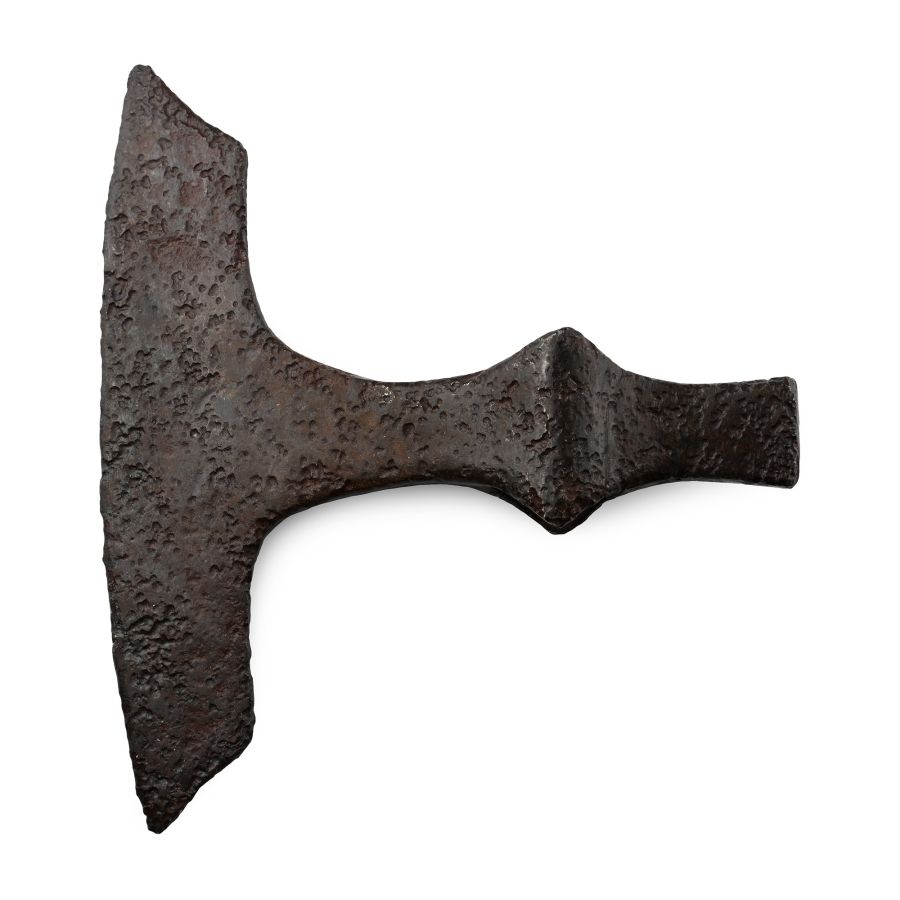
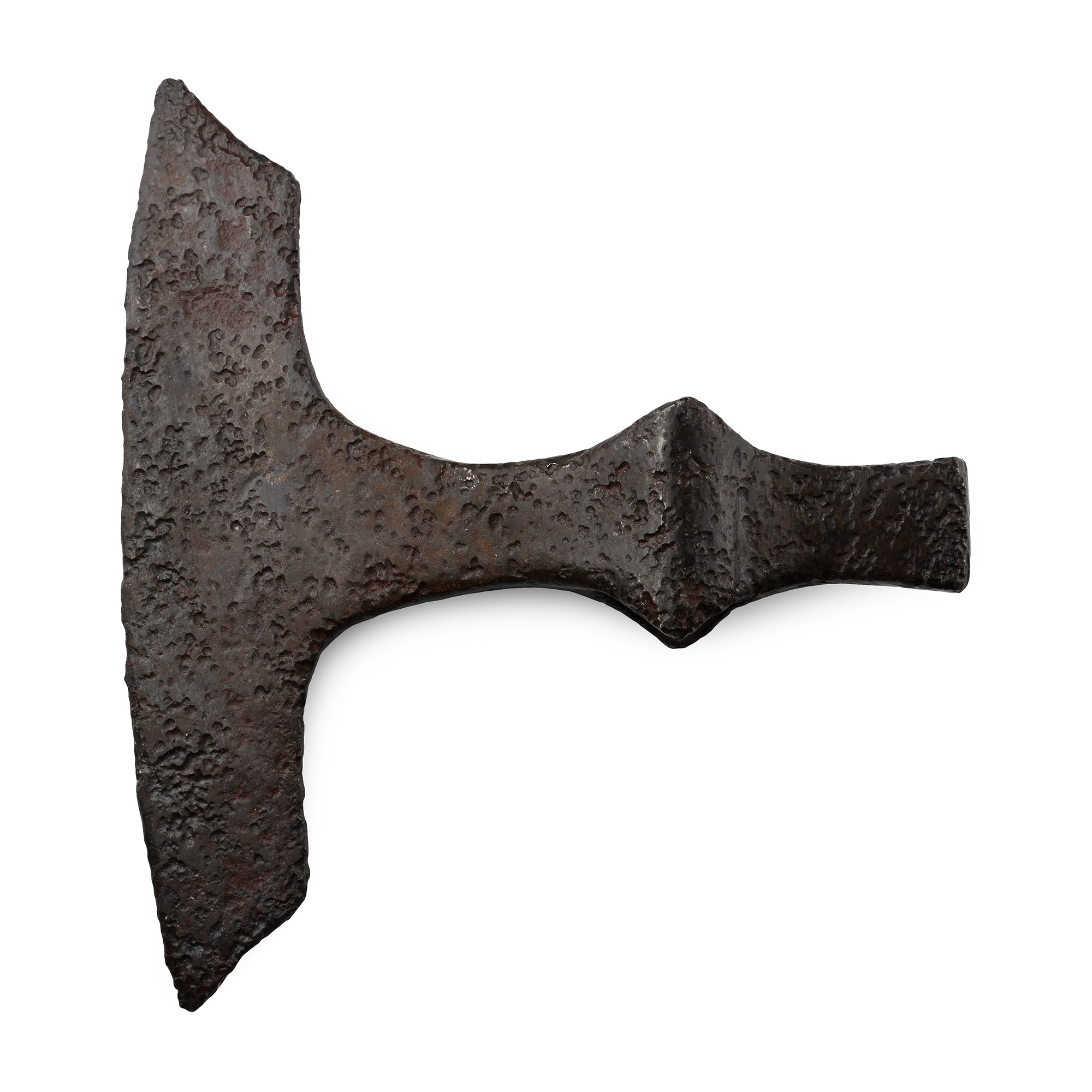
Viking Age Iron T-Shaped Axehead
CIRCA 9TH-11TH CENTURY A.D.
6 1/2 in. (378 grams, 16.5 cm).
With broad curved edge, narrow neck, round flared socket with triangular flanges to each face and rectangular hammer extension to the rear. [No Reserve]
ProvenanceEx North American private collection, 1970s.
This lot is accompanied by an illustrated lot declaration signed by the Head of the Antiquities Department, Dr Raffaele D'Amato.
TimeLine Auctions follows a vetting process to ensure the authenticity and legality of all items, reinforcing our commitment to integrity and responsible trading. Each antiquity, antique, and coin lot undergoes thorough examination by a vetting committee of at least ten external specialists, professional trade association members, scientists, and archaeologists: Our Vetting Process
AUCTIONS:
TimeLine is a leading auction house specialising in antiquities, ancient art, collectables, natural history, coins, medals, and books. Our auctions offer museums, collectors, historians, and enthusiasts the opportunity to acquire unique and historically significant pieces.
-
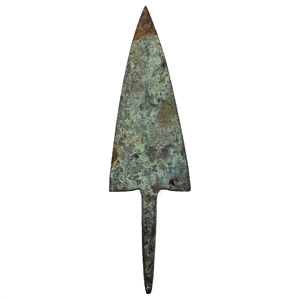
Large Luristan Bronze Arrowhead
2nd-1st millennium B.C.Sold for (Inc. bp): £85
Large triangular point with slightly raised midrib, long flat tang. 28.9 grams, 13.4 cm
Acquired on the UK art market before 2000. Property of an Essex, UK, gentleman. This lot is accompanied by an illustrated lot declaration signed by the Head of the Antiquities Department, Dr Raffaele D'Amato. -
.jpg)
Luristan Bronze Dagger
13th-7th century B.C.Sold for (Inc. bp): £260
Comprising a two-edged leaf-shaped lentoid-section blade, crescentic lower guard, ribbed hilt and domed finial. 93 grams, 20.1 cm
Acquired before 1983. Ex London gallery, 1990s. This lot is accompanied by an illustrated lot declaration signed by the Head of the Antiquities Department, Dr Raffaele D'Amato. -
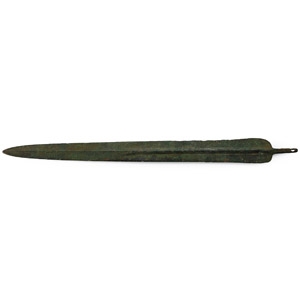
Luristan Bronze Sword Blade
2nd-1st millennium B.C.Sold for (Inc. bp): £312
Tapering leaf-shaped blade with a raised midrib developing to a short rectangular-section tang, pierced at the end. 412 grams, 50 cm
Acquired in the 1990s. Ex Abelita family collection. This lot is accompanied by an illustrated lot declaration signed by the Head of the Antiquities Department, Dr Raffaele D'Amato.
