
Loading, please wait...
LOT 0312
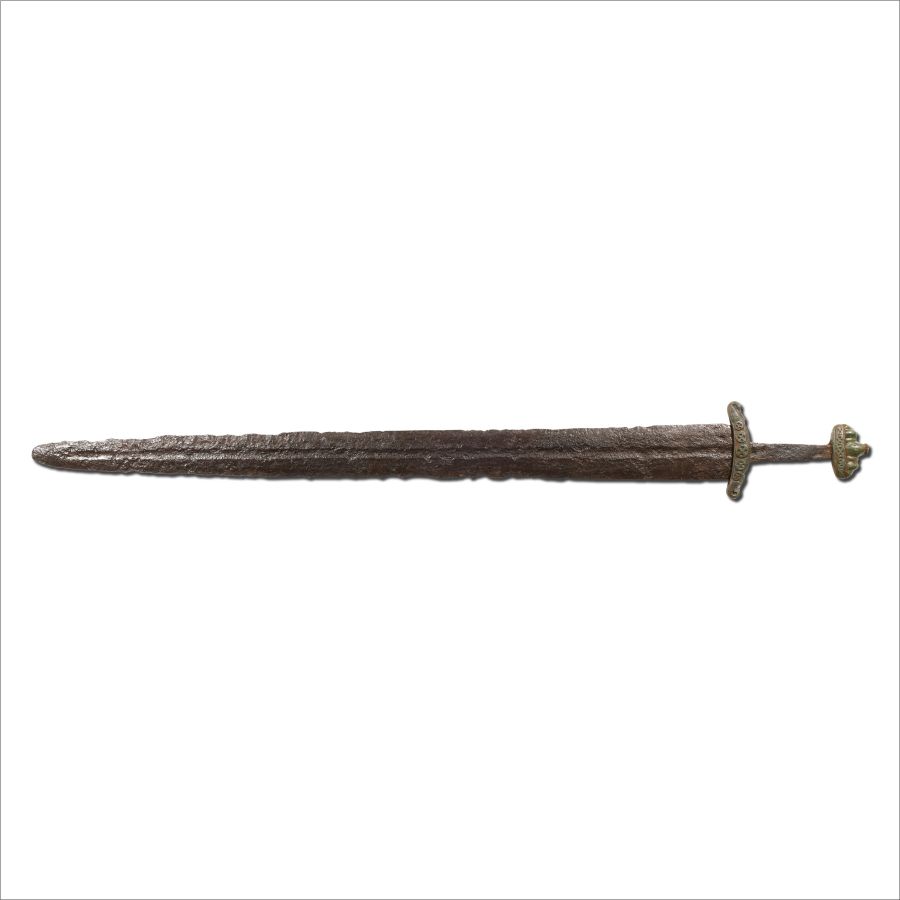
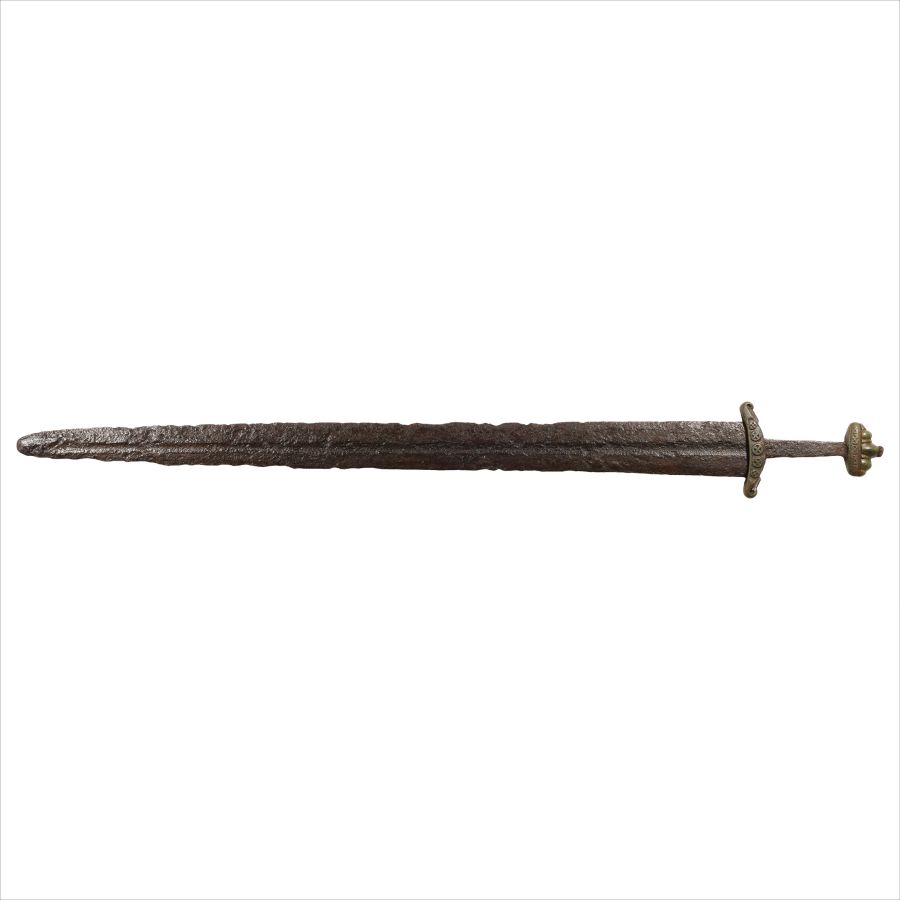
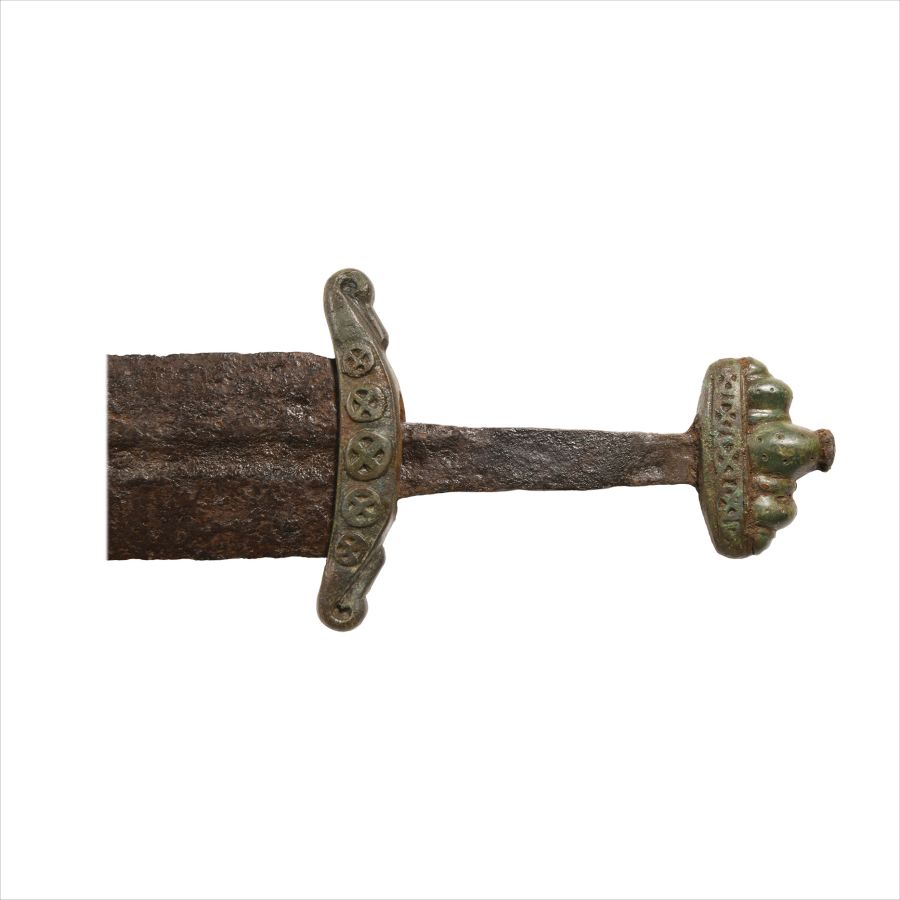
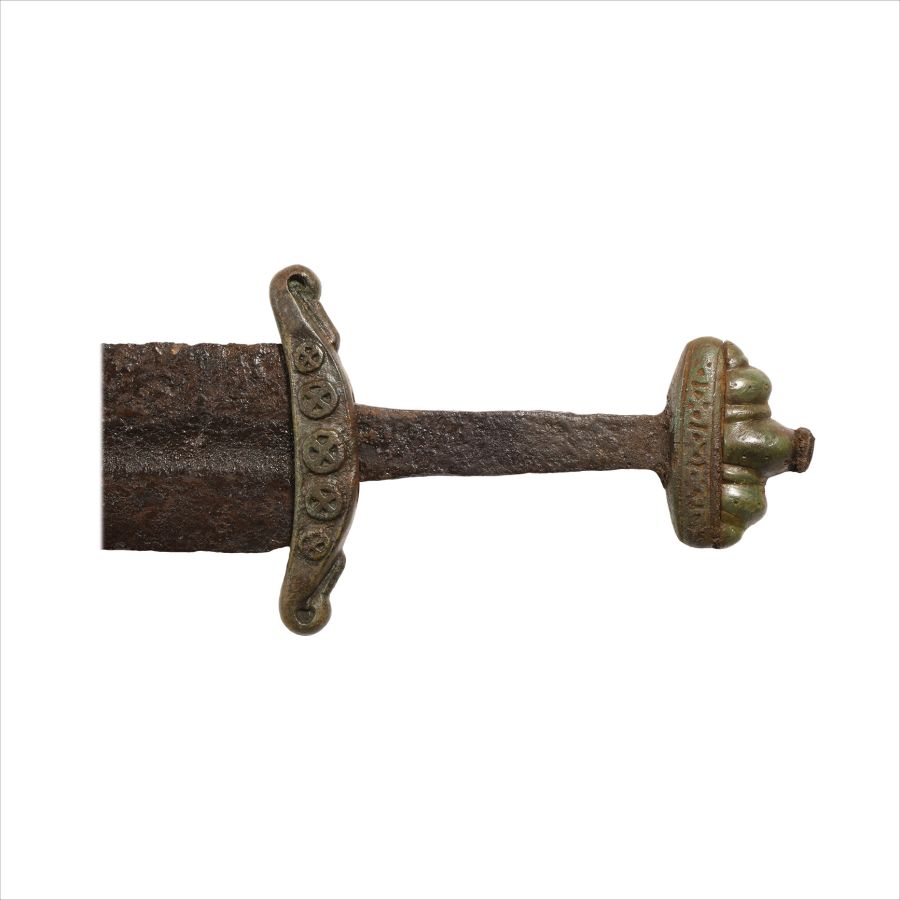
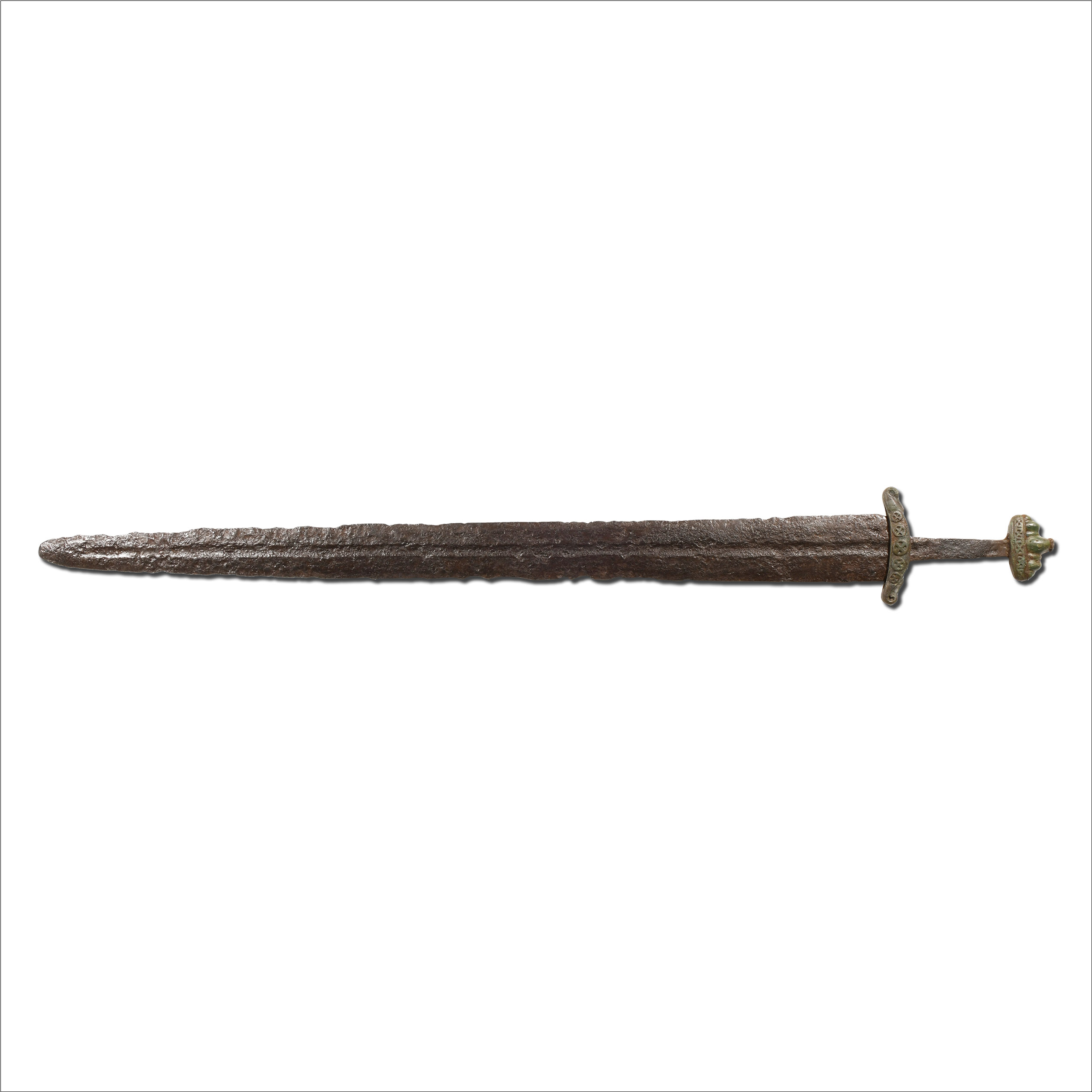
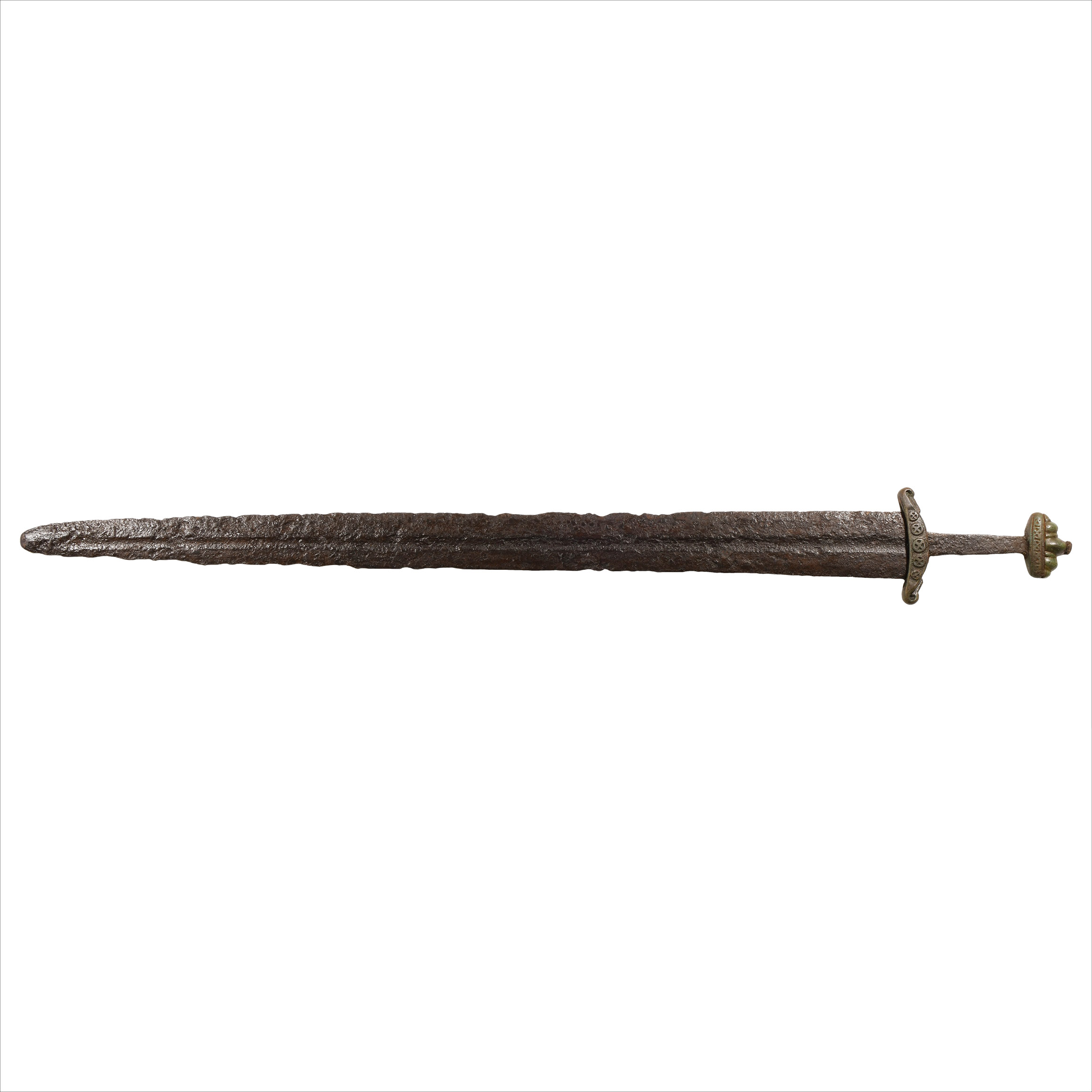
Viking Age Iron Sword with Seven-Lobed Pommel
11TH-13TH CENTURY A.D.
34 in. (1.02 kg, 86.5 cm).
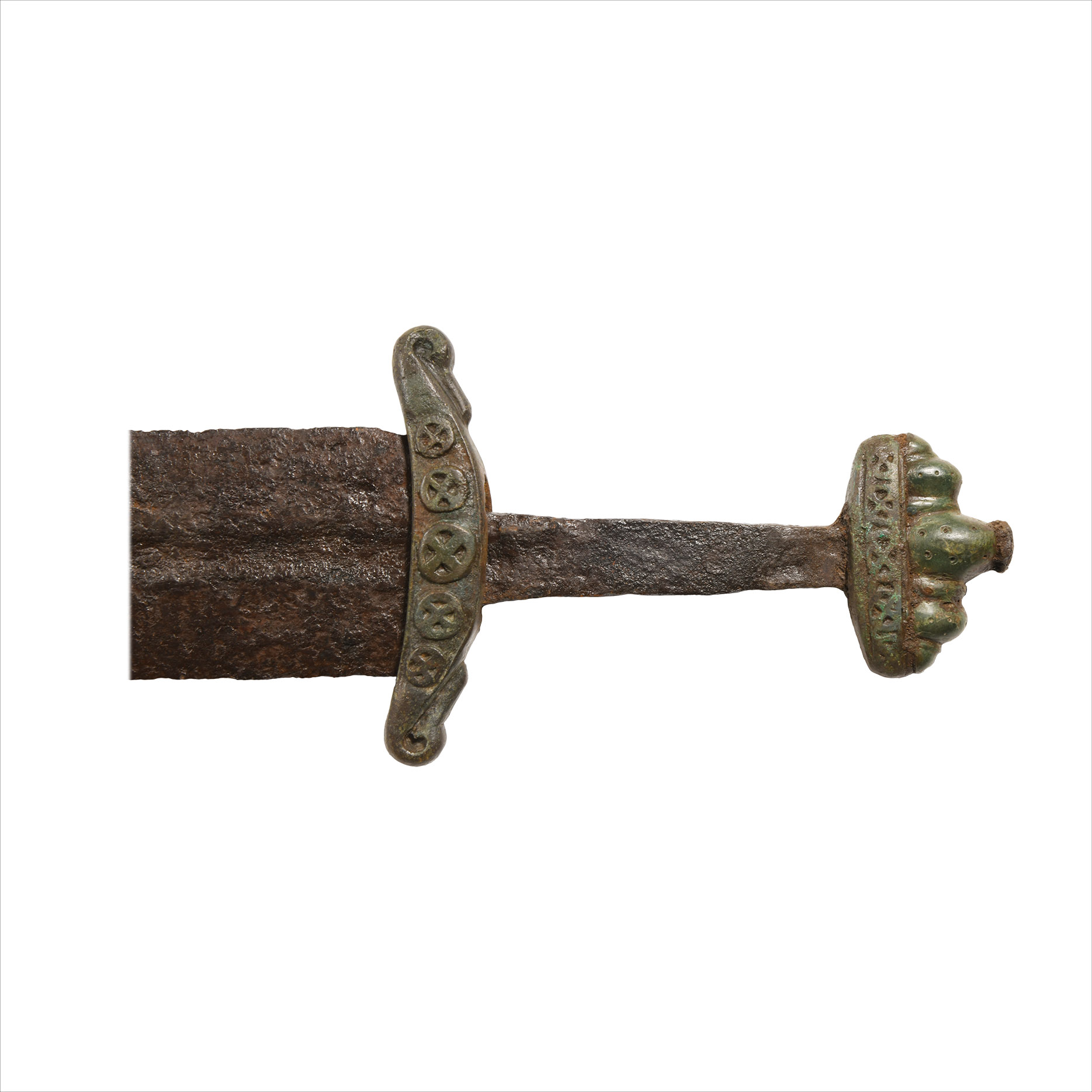
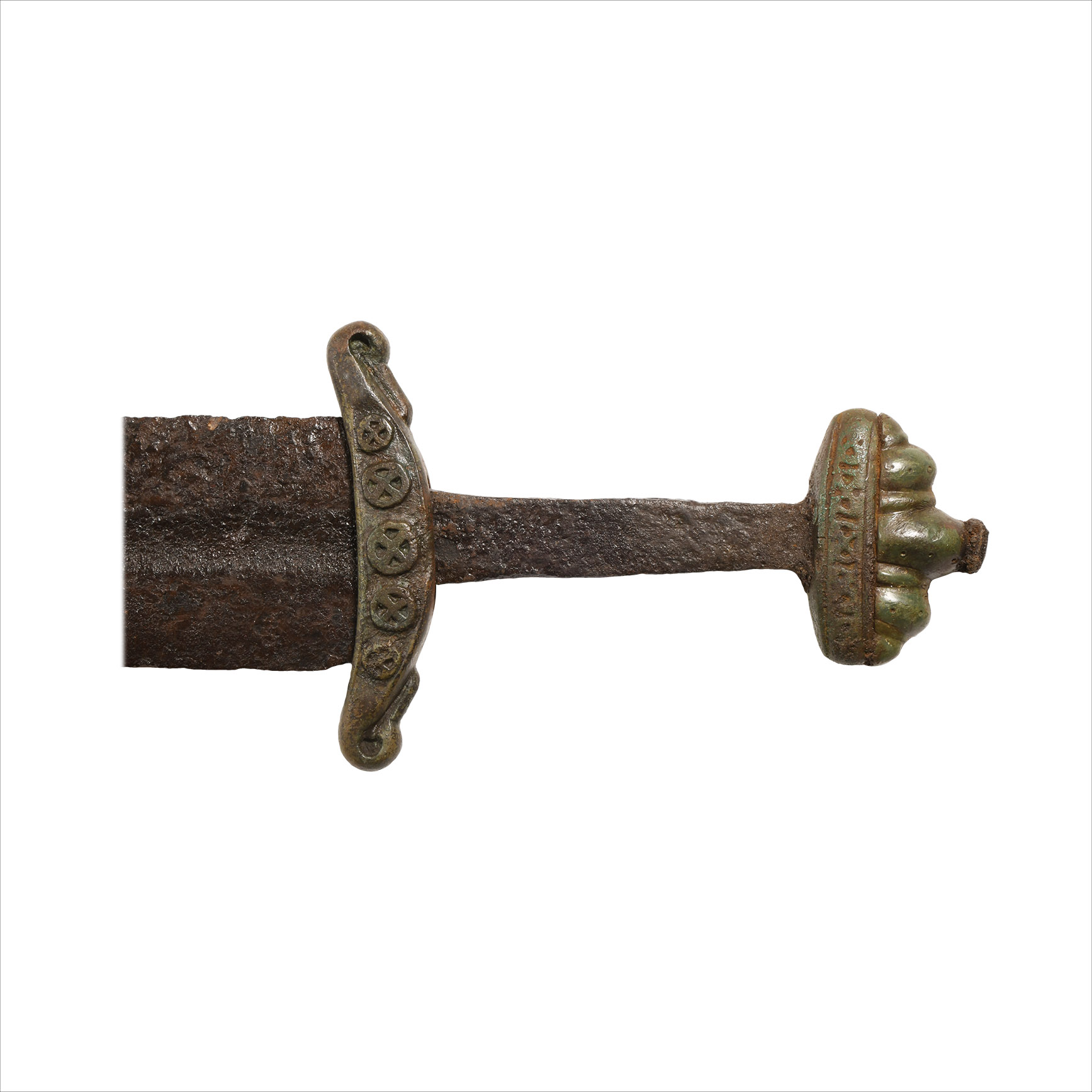
Couronian sword of Petersen Type K with double-edged tapering blade and tapering fullers; bronze cross-guard extending at each end to serpent- or horse-heads, wheeled ornament to both faces; the lower guard with similar motifs; seven-lobed pommel with annulets and pellets.
ProvenanceFrom the private collection of a London gentleman, from his grandfather's collection formed before the early 1970s.
Accompanied by an academic report by Dr Raffaele D’Amato.
This lot has been checked against the Interpol Database of stolen works of art and is accompanied by search certificate no.11925-209658.
Cf. Kazakevičius, Балтские мечи IX-XIII вв. (Baltic Swords, 9th-13th century AD), Vilnius, 1996; Peirce, I., Swords of the Viking Age, Suffolk, 2002; Tomsons, A., ‘Symbolism of Medieval Swords from the territory of Latvia during the 11th-13th centuries’ in Acta Universitatis Lodziensis. Folia Archaeologica 29, Łódź, 2012, pp.145-161.
FootnotesCouronian swords of this type, with animal-head decoration on the lower guard, were widespread and used in the Eastern Baltic lands from the 10th to 13th century. Such zoomorphic detailing was a clear influence from Germanic art. Regular geometric ornamentation, derived from
Romanesque art, was also widespread, with one of the most common ornaments being a cross-in-circle.
TimeLine Auctions follows a vetting process to ensure the authenticity and legality of all items, reinforcing our commitment to integrity and responsible trading. Each antiquity, antique, and coin lot undergoes thorough examination by a vetting committee of at least ten external specialists, professional trade association members, scientists, and archaeologists: Our Vetting Process
AUCTIONS:
TimeLine is a leading auction house specialising in antiquities, ancient art, collectables, natural history, coins, medals, and books. Our auctions offer museums, collectors, historians, and enthusiasts the opportunity to acquire unique and historically significant pieces.
LOT 0312
Viking Age Iron Sword with Seven-Lobed Pommel
Estimate £5,000 - 7,000€5,800 - 8,120 (for guidance only)$6,750 - 9,450 (for guidance only)
-
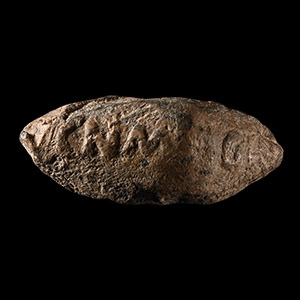
Roman 'Pompey the Great' Lead Slingshot
1st century B.C.Sold for (Inc. bp): £286
Biconical lead slingshot (glans) with inscription in Latin letters 'CN' (Cneius) 'MAG' (Magnus) on one side, and 'IMP' for 'IMPERATOR' (victorious general) to the other side, i.e Gnaeus Pompeius Magnus Imperator (Pompey the Great the victorious general). 47 grams, 39 mm
Ex M.Cummings, UK, 1990s.
The shot (Völling type 1C) is marked with the abbreviated name of Gnaeus Pompey; it was used in quantity at the Battle of Monda (or Munda) against Julius Caesar, 17th March 45 BC. The projectiles were made of different materials: lead (glandes) or in pottery or stone (lapides missiles). Sometimes they were signed with the name of the general, like our specimen. -
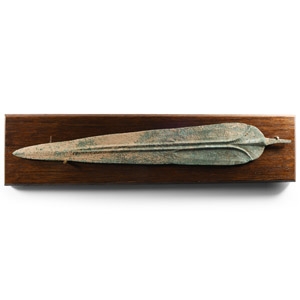
North West Persian Short Sword with Blood Channels
2nd-1st millennium B.C.Estimate: £300 - 400 (+bp*)
Opening Bid: £150
With short tang for an organic hilt, the blade showing multiple grooves forming a pronounced mid-rib spanning roughly more than three-quarters of the blade; accompanied by a custom-made display stand. 1.18 kg total, 45.5 cm (49 cm including stand)
Ex P.A., Hertfordshire, UK, specialist collection of Greek art, 1980-1990s.
Luristan was hardly an ethnic or political entity, but the people of Luri had relations through warfare and traded with Sumerians, Lullubi, Assyrians, Babylonians and Elamites over a long period of time, spanning from the 3rd to the 2nd millennium B.C. The ruling elites of warrior horsemen were buried with their weapons and horses. -
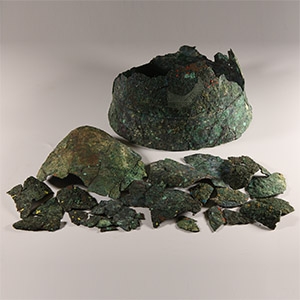
Greek Fragmentary Bronze Pilos Helmet
5th-4th century B.C.Sold for (Inc. bp): £2,015
Conical in shape, comprising a thick hammered bowl and broad rim with carination to the upper edge; remains of crest at brow and rear; a restoration project. 951 grams total, 1-24.5 cm
Ex Axel Guttmann Collection of Ancient Arms and Armour, Germany [1944-2001]. with Hermann Historica, 13 October 2010, lot 2169 [Part].
This type of helmet (called ‘bell-helmet’ by Connolly, 1981, p.70), named pilos after the Greek felt cap (in the Laconian shape, but distinguished from the cap by the noticeable point and the shape of the rim), had a conical shape and was pointed or rounded at the top. Its introduction was linked with the streamlining of Hoplite equipment, and it soon the replaced the closed Corinthian helmet. The helmet was widespread in the Greek and Mediterranean world from the last quarter of the 5th century B.C. and was widely used by continental Greeks, South Italian Greeks and Italic people, Etruscans, and even Romans.
