
Loading, please wait...
LOT 1555
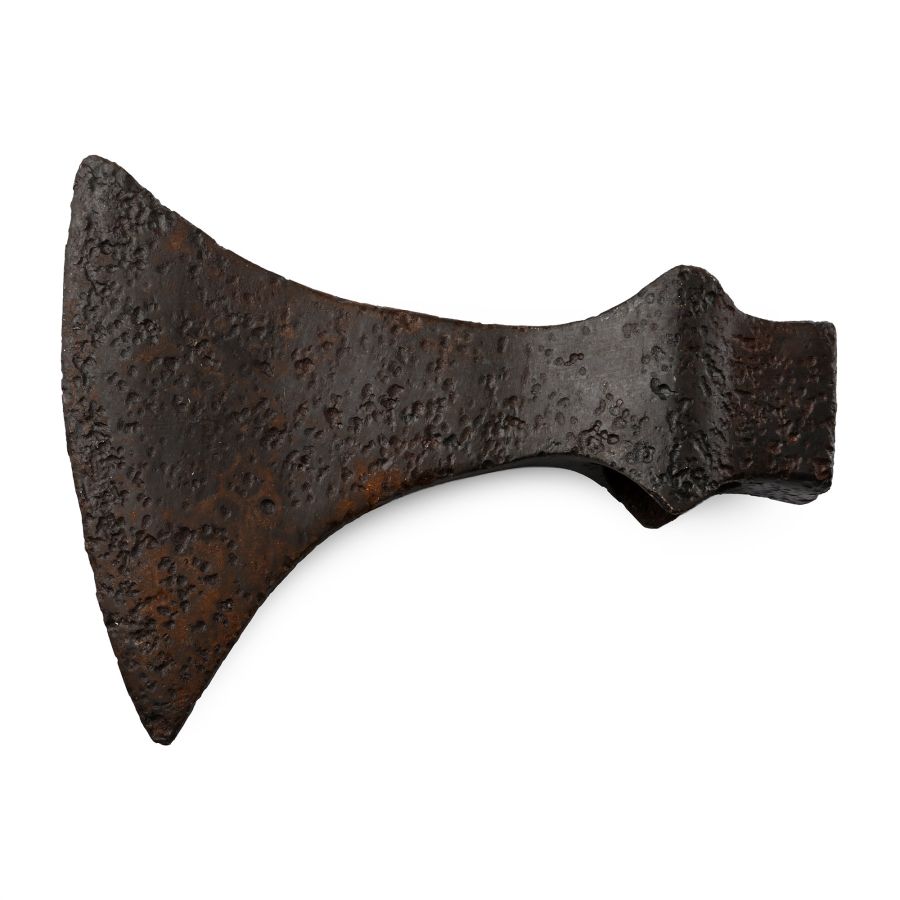
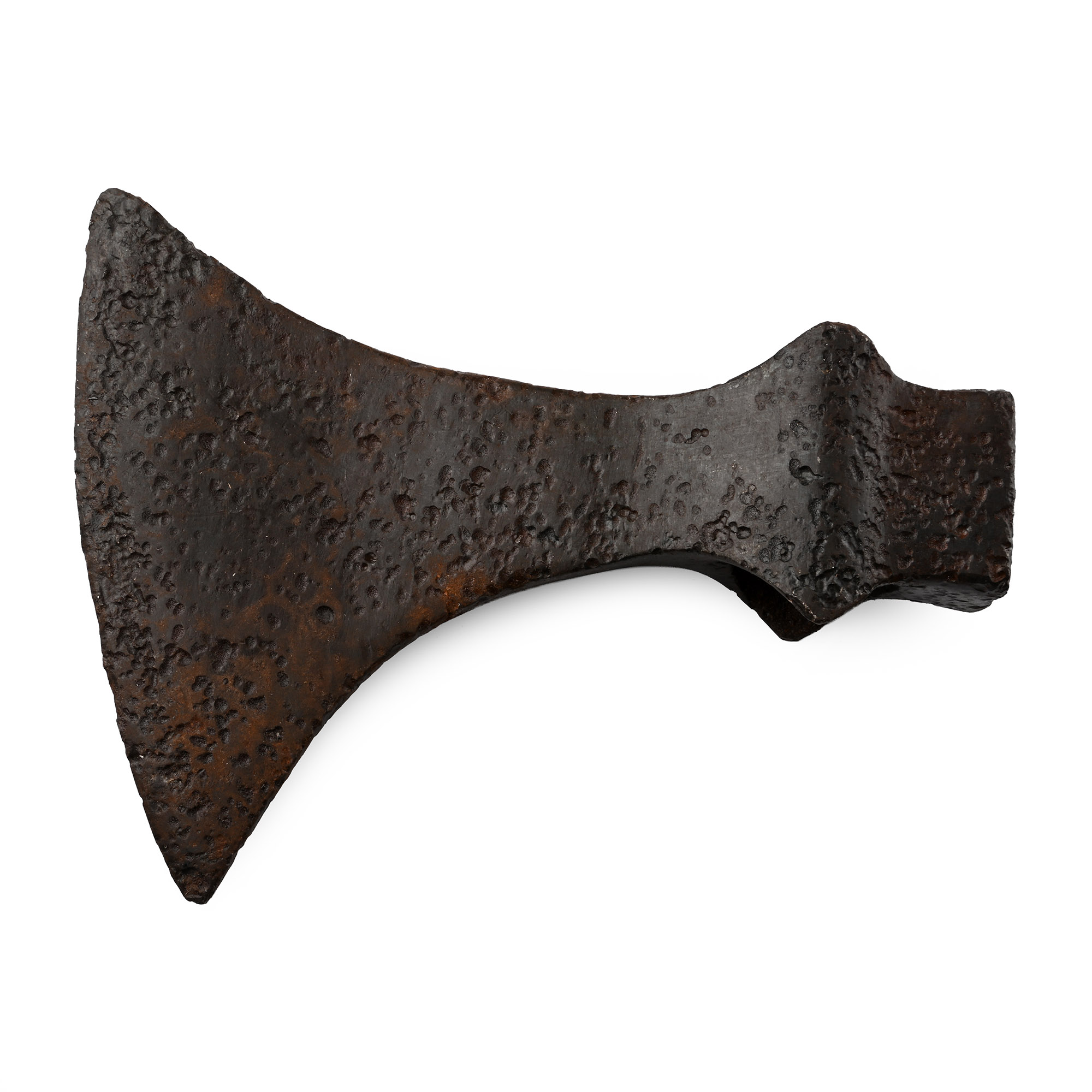
Viking Age Iron Broad Axehead with Hammerhead
CIRCA 9TH-11TH CENTURY A.D.
6 1/8 in. (518 grams, 15.6 cm).
With triangular section curved narrow blade, narrow neck, socket with triangular flanges, hammer extension to the rear. [No Reserve]
ProvenanceEx North American private collection, 1970s.
This lot is accompanied by an illustrated lot declaration signed by the Head of the Antiquities Department, Dr Raffaele D'Amato.
TimeLine Auctions follows a vetting process to ensure the authenticity and legality of all items, reinforcing our commitment to integrity and responsible trading. Each antiquity, antique, and coin lot undergoes thorough examination by a vetting committee of at least ten external specialists, professional trade association members, scientists, and archaeologists: Our Vetting Process
AUCTIONS:
TimeLine is a leading auction house specialising in antiquities, ancient art, collectables, natural history, coins, medals, and books. Our auctions offer museums, collectors, historians, and enthusiasts the opportunity to acquire unique and historically significant pieces.
-
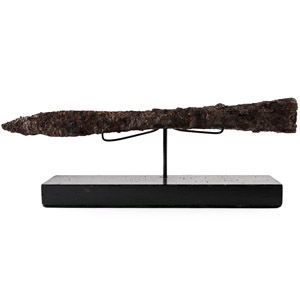
Viking Socketted Iron Spearhead
9th-11th century A.D.Sold for (Inc. bp): £98
Leaf-shaped blade and tapering, round-section socket, pierced for attachment to a shaft; accompanied by a custom-made display stand. 162 grams, 22 cm long (229 grams total including stand)
Fair condition.
UK gallery, acquired in the 2000s. Property of an English gentleman. This lot is accompanied by an illustrated lot declaration signed by the Head of the Antiquities Department, Dr Raffaele D'Amato. -
.jpg)
Roman Imperial Bronze Legionary Helmet
Late 1st century B.C.-early 1st century A.D.Sold for (Inc. bp): £39,000
A relatively heavy legionary helmet (cassis) of ‘Imperial Gallic Type’ with deep rounded bowl, simple C-shaped cut-outs for the ears, integral flared horizontal neck-guard extending some way along the sides, two corrugated ribs to the occipital area at the rear, intermitted by two bronze rivets, and four corrugated embossed 'wings' or prominent curved eyebrows flanking three riveted bosses arranged vertically; three studs on the rear of the neck-guard for attaching suspension loops to the preserved clasps of the cheek-guards (bucculae); hinged bracket at each temple once attaching the cheek-guard; embossed beaded brow band running from one ear opening to the other; mounted on a custom-made stand. 1.03 kg, 26.5 cm front to back
Ex John Moore, York, UK, 1997. Property of a North London, UK, gentleman. Accompanied by an academic report by Dr Raffaele D'Amato. This lot has been checked against the Interpol Database of stolen works of art and is accompanied by search certificate number no. 12789-240372. This lot has been cleared against the Art Loss Register database, and is accompanied by an illustrated lot declaration signed by the Head of the Antiquities Department, Dr Raffaele D'Amato.
This early category of helmets was characterised by a hemispherical calotte and a slightly sloping neck guard. They were fitted with a pair of prominent curved eyebrows (symbolising the wings of Jupiter's thunderbolts) flanking rivetted bosses. -
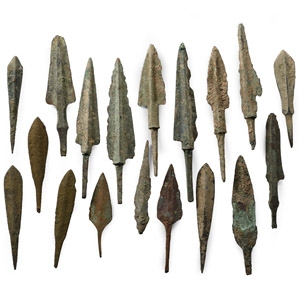
Luristan Bronze Arrowhead Collection
2nd-1st millennium B.C.Sold for (Inc. bp): £98
A group of eighteen tanged mainly triangular and leaf-shaped arrowheads. 246 grams total, 6.1-11.8 cm
From the London art market, 1990s. This lot is accompanied by an illustrated lot declaration signed by the Head of the Antiquities Department, Dr Raffaele D'Amato.
