
Loading, please wait...
LOT 1511
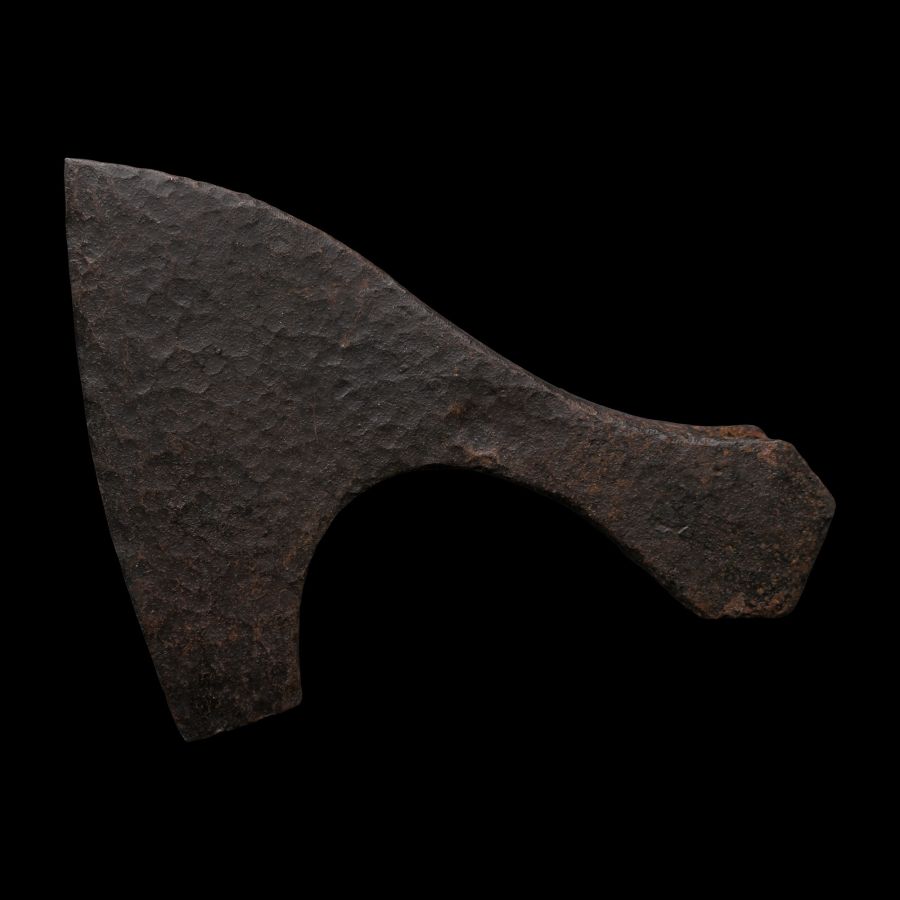
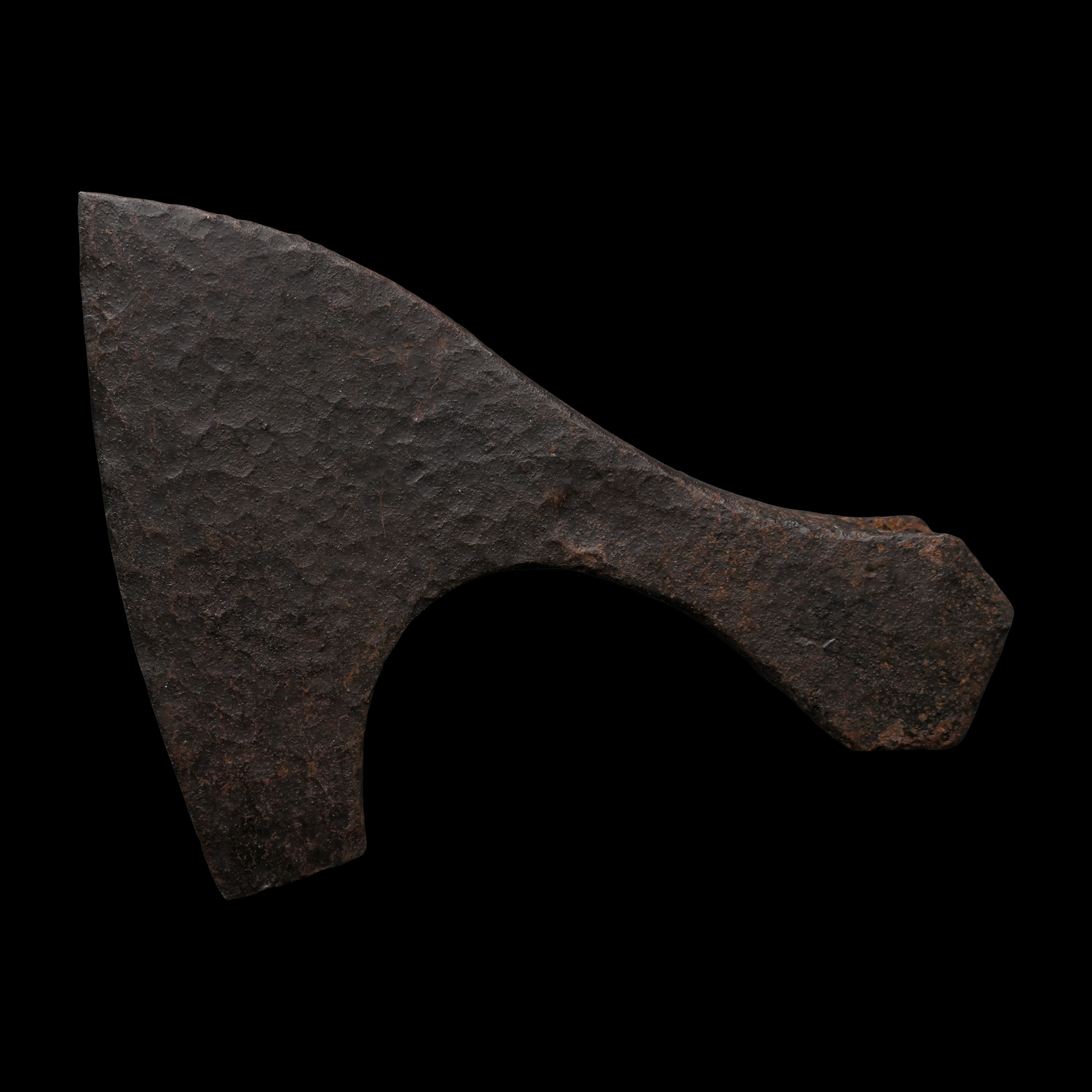
Viking Age Iron Bearded Axehead
CIRCA 9TH-11TH CENTURY A.D.
5 3/8 in. (269 grams, 13.5 cm).
Broad blade with thickened edge, rounded socket with lateral triangular extensions. [No Reserve]
ProvenanceEx North American collection, 1970s.
CONDITIONTimeLine Auctions follows a vetting process to ensure the authenticity and legality of all items, reinforcing our commitment to integrity and responsible trading. Each antiquity, antique, and coin lot undergoes thorough examination by a vetting committee of at least ten external specialists, professional trade association members, scientists, and archaeologists: Our Vetting Process
AUCTIONS:
TimeLine is a leading auction house specialising in antiquities, ancient art, collectables, natural history, coins, medals, and books. Our auctions offer museums, collectors, historians, and enthusiasts the opportunity to acquire unique and historically significant pieces.
-
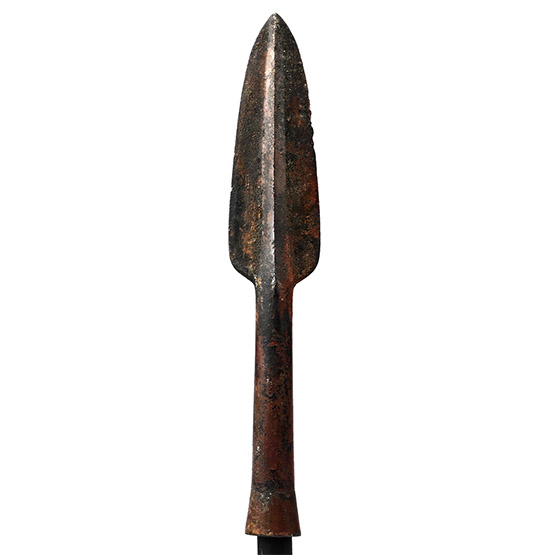
Luristan Bronze Socketted Spearhead
13th-6th century B.C.Sold for (Inc. bp): £169
With a broad leaf-shaped blade, a triangular mid-rib and a tapering tubular socket; accompanied by a display stand. 382 grams total, spearhead: 23.1 cm (31.2 cm including stand)
Ex Abelita family collection, 1980s-2000s.
The spear belongs to the type VIII classified by Khorasani (spearheads with well-projecting midribs and long folded sockets) and more specifically to subtype C (with leaf-shaped blade and short hollow socket). Usually, the willow-leaf blade has an almost straight shoulder base and a wide, flat midrib tapering towards the point. -
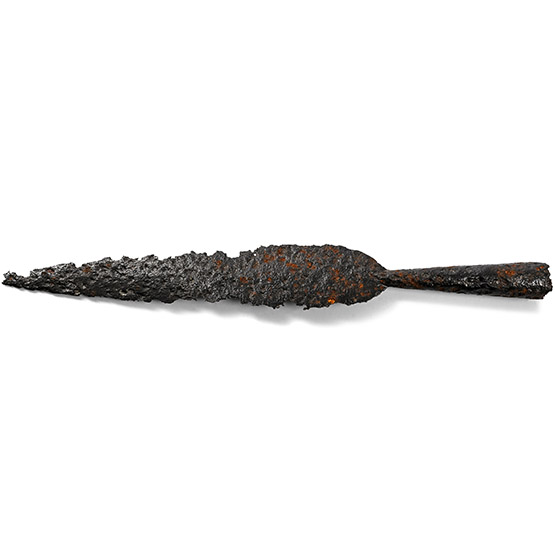
Greek Iron Lancehead
Magna Graecia, 6th century B.C.Sold for (Inc. bp): £234
Blade widened at the base, ribbed, conical socket with wooden remains. 277 grams total, 43 cm including stand (lance 25.8 cm)
From the famous arms and armour collection of Axel Guttmann (1944-2001), Berlin, Germany. Ex Hermann Historica, Munich, Germany, 4 May 2011, no.1783 (lot). From a private specialist collection, London, UK. Accompanied by copies of the relevant Hermann Historica catalogue pages.
The spear finds an almost identical parallel in two spearheads from Lavello, found associated with a Corinthian helmet and a sword, as part of Burial objects, dating back to around the middle of the 6th century BC. This type of hoplite weaponry was used by individual warriors, who, in Daunia (South Italic Apulia), while adopting Greek models, fought on horseback, according to a fighting style centred on the heroic duel between leaders. -
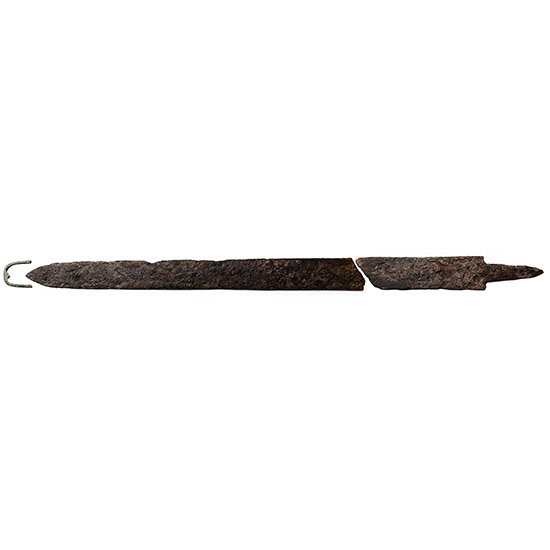
Saxon Sacrificed Iron Spatha with Bronze Chape
5th-6th century A.D.Sold for (Inc. bp): £1,300
Double-edged long sword (spatha) of type Osterburken-Kemathen; the blade with squared shoulders, broken into two parts for sacrificial reasons, tapering towards the point; sturdy tang partially preserved; wooden traces of the scabbard and hilt still visible; accompanied by a bronze outer rim of a scabbard; restored. 630 grams total, 78 cm long
From the private collection of a London gentleman, from his grandfather's collection formed before the early 1970s.
The deliberate fragmentation of a sword, often into three pieces, was a symbolic act of ‘killing’ the weapon, which was then placed as a grave good or offered in a ceremonial context. This was a Germanic custom already visible in the Vandal Przeworsk culture around the 3rd or 4th century A.D., which continued in Northern European areas until the 5th and the 6th centuries A.D.
