
Loading, please wait...
LOT 1422
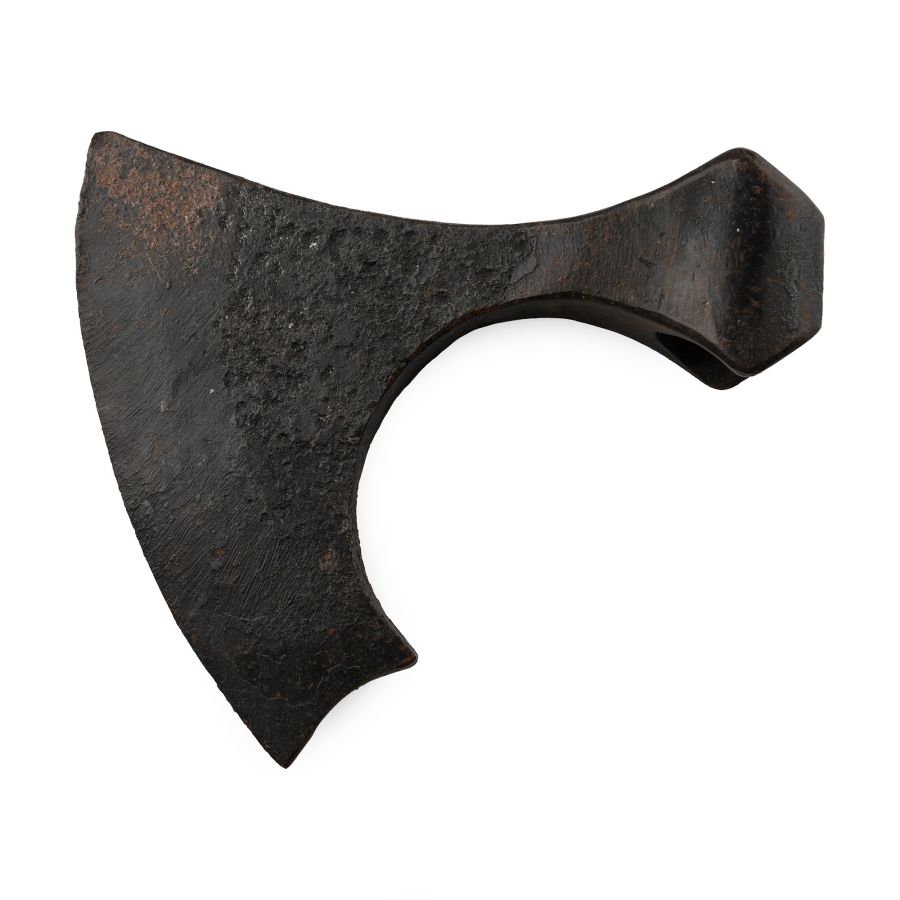
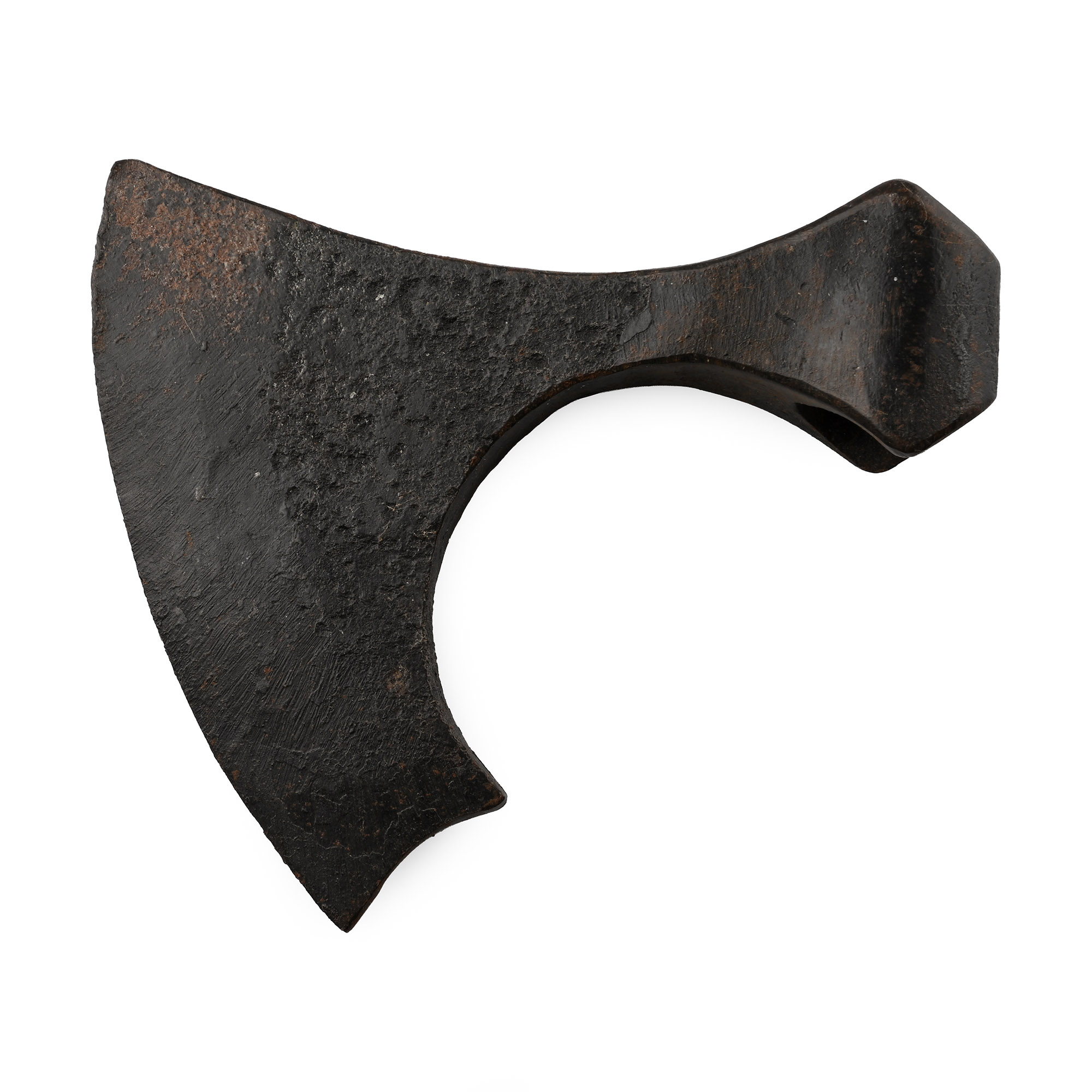
Viking Age Iron Bearded Axehead
9TH-11TH CENTURY A.D.
4 3/8 in. (252 grams, 11.2 cm).
With curved blade and chin to the lower edge, round socket with lateral triangular flanges and flattened rear-edge. [No Reserve]
ProvenancePrivate collection, 1990s.
Property of a Sussex, UK, teacher.
This lot is accompanied by an illustrated lot declaration signed by the Head of the Antiquities Department, Dr Raffaele D'Amato.
Cf. Sedov, B.B., Finno-Ugri i Balti v Epokhi Srednevekovija (Ugro-Finnian and Baltics in the Middle Ages, in Russian), Moscow, 1987, pl.CXXIV, items 3-4.
FootnotesThis type of bearded axe seems to correspond to the E2 category of the Viking axe classification. Usually these bearded axeheads (skeggöks) had a longer edge, designed to split tree trunks into planks and beams. Some of the bearded axes were known as halfÞynna öx; the neck on such 'half thin axe' was thinly forged, to make it lighter. Bearded axes of this type appear also in the weaponry of people from the Baltic.
CONDITIONTimeLine Auctions follows a vetting process to ensure the authenticity and legality of all items, reinforcing our commitment to integrity and responsible trading. Each antiquity, antique, and coin lot undergoes thorough examination by a vetting committee of at least ten external specialists, professional trade association members, scientists, and archaeologists: Our Vetting Process
AUCTIONS:
TimeLine is a leading auction house specialising in antiquities, ancient art, collectables, natural history, coins, medals, and books. Our auctions offer museums, collectors, historians, and enthusiasts the opportunity to acquire unique and historically significant pieces.
-
.jpg)
Luristan Bronze Arrowhead Group
13th-6th century B.C.Sold for (Inc. bp): £182
Including barbed-and tanged, leaf-shaped, lozengiform and other types. 232 grams total, 41-91 mm
Acquired 1980-2015. Ex Abelita family collection. This lot is accompanied by an illustrated lot declaration signed by the Head of the Antiquities Department, Dr Raffaele D’Amato. This lot is accompanied by an illustrated lot declaration signed by the Head of the Antiquities Department, Dr Raffaele D'Amato. -
.jpg)
Luristan Bronze Arrowhead Group
13th-6th century B.C.Sold for (Inc. bp): £234
Comprising triangular types with thick midrib, leaf-shaped and other types. 400 grams total, 9.7-16.2 cm
Acquired 1980-2015. Ex Abelita family collection. This lot is accompanied by an illustrated lot declaration signed by the Head of the Antiquities Department, Dr Raffaele D’Amato. This lot is accompanied by an illustrated lot declaration signed by the Head of the Antiquities Department, Dr Raffaele D'Amato. -
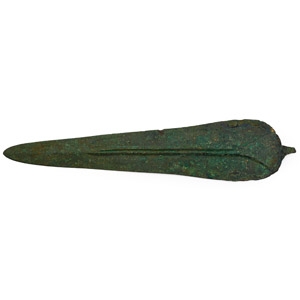
Luristan Bronze Sword Blade with Corrugation
2nd-1st millennium B.C.Sold for (Inc. bp): £98
A two-edged blade, leaf-shaped with short rectangular tang, corrugated midrib extending almost to the tip and flared at the shoulder. 296 grams, 35 cm
Fine condition.
Property of an East Sussex, UK, teacher; formerly with a London gallery; previously acquired on the London art market in the 1990s. From the private collection of John Meredith, acquired since the 1990s; thence by descent. This lot is accompanied by an illustrated lot declaration signed by the Head of the Antiquities Department, Dr Raffaele D'Amato.
The metalworking techniques used in making bronze weapons in Luristan were very complex. Surfaces were often finished in repoussé work, and some of the weapons were chased, others engraved. The ruling elites of warrior horsemen were buried in the graves with their weapons and horses which are the main sources of the Luristan bronze weapons.
