
Loading, please wait...
LOT 1194
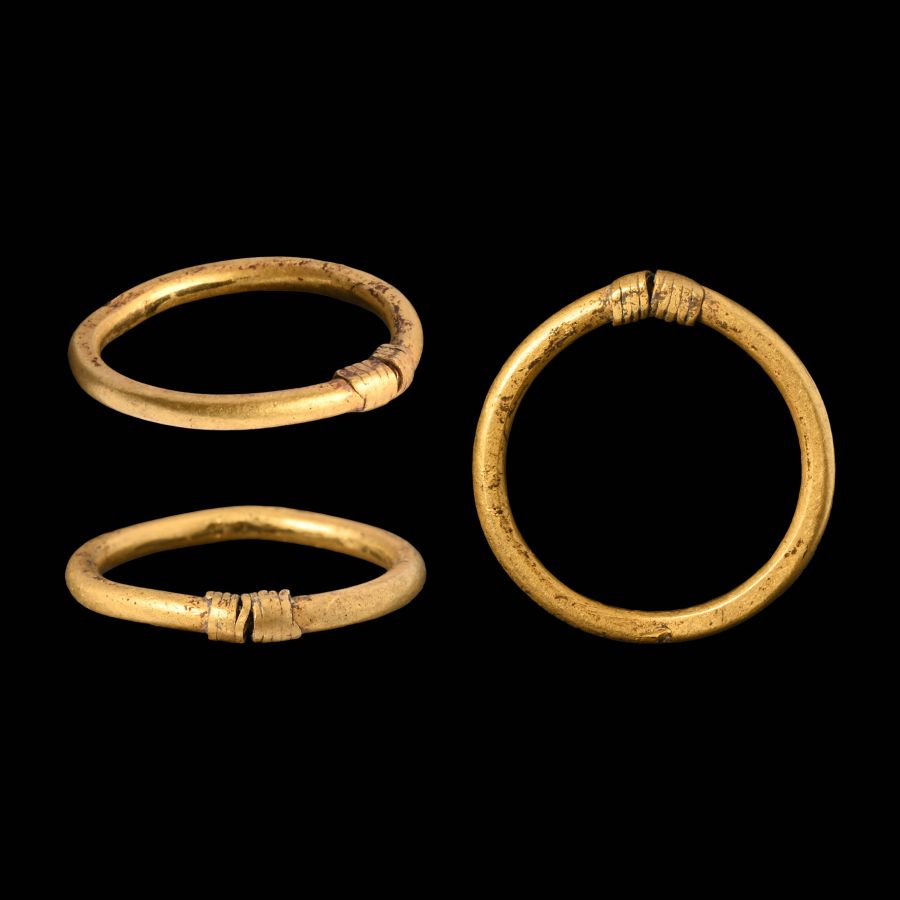
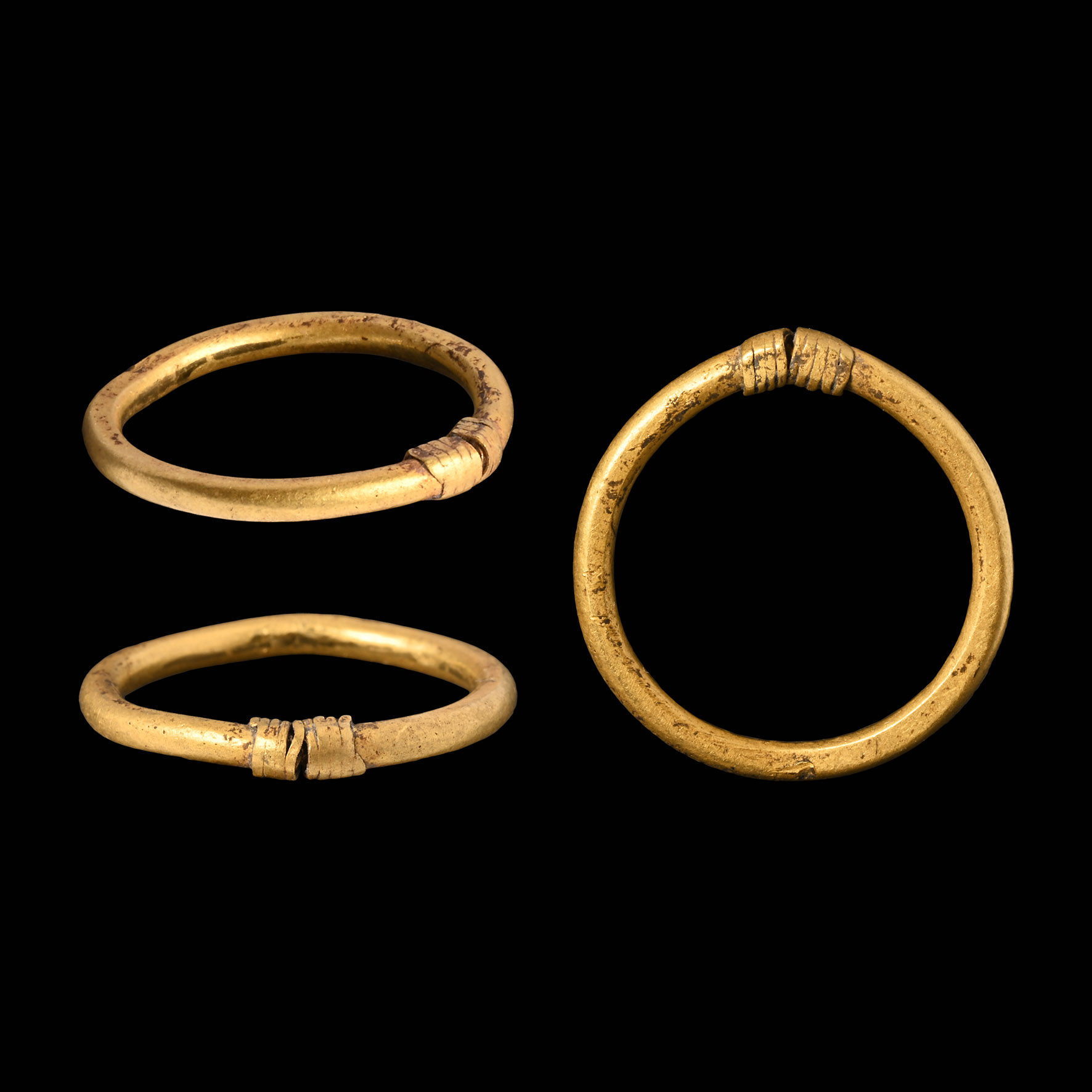
Viking Age Gold Ring with Wire
8TH-10TH CENTURY A.D. OR EARLIER
3/4 in. (308 grams, 20.72 mm overall, 16.11 mm internal diameter (approximate size UK K 1/2, USA 5 1/2, Europe 10.58, Japan 10)).
Round-section shank with butted joint and tightly-coiled wire sleeve.
ProvenanceAcquired 1980-2015.
Ex Abelita family collection.
Cf. Arbman, H., Birka I: Die Gräber, Uppsala, 1940, pl.112(3), for type.
CONDITIONTimeLine Auctions follows a vetting process to ensure the authenticity and legality of all items, reinforcing our commitment to integrity and responsible trading. Each antiquity, antique, and coin lot undergoes thorough examination by a vetting committee of at least ten external specialists, professional trade association members, scientists, and archaeologists: Our Vetting Process
AUCTIONS:
TimeLine is a leading auction house specialising in antiquities, ancient art, collectables, natural history, coins, medals, and books. Our auctions offer museums, collectors, historians, and enthusiasts the opportunity to acquire unique and historically significant pieces.
-
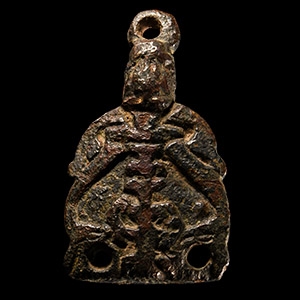
Anglo-Scandinavian Viking Bronze Skeletal Stirrup Apex Mount
11th century A.D.Sold for (Inc. bp): £481
A well defined Williams's Class A Type 6 mount comprising a D-shaped plaque with high-relief central tree or skeleton, a serpent to each lateral edge with divided tail coiled over the 'tree's' trefoil finial, head at the tree's base; beast-head finial with loop above; shallow ledge to the reverse, two circular piercings above. 25 grams, 50 mm
Found Lincolnshire, UK. -
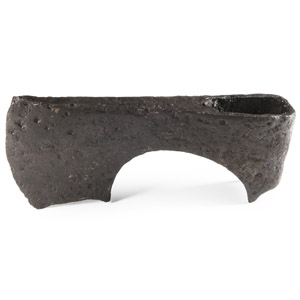
Finno-Ugrian Iron Bearded Axehead
11th-13th century A.D.Sold for (Inc. bp): £78
Triangular in plan with D-shaped socket, square butt, scooped lower profile and curved edge. 616 grams, 16.3 cm
From the private collection of a London gentleman, from his grandfather's collection formed before the early 1970s.
The more commonly used weapons of the Finno-Ugrian people were axes, commonly found in all Finnic areas, as well as spears. Iron axeheads of this typology show a sub-trapezoidal asymmetrical blade, often perforated through the centre. -
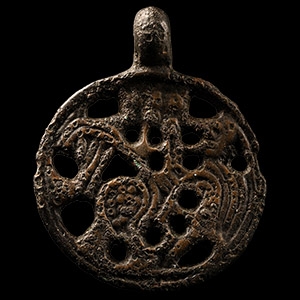
Viking Age Bronze Beast Pendant
10th-11th century A.D.Sold for (Inc. bp): £156
Composed of an discoid body with integral suspension loop; openwork design of a zoomorph enmeshed in tendrils, pellet detailing. 6.48 grams, 38 mm
From the collection of a North American gentleman, formed in the 1990s.
