
Loading, please wait...
LOT 0342
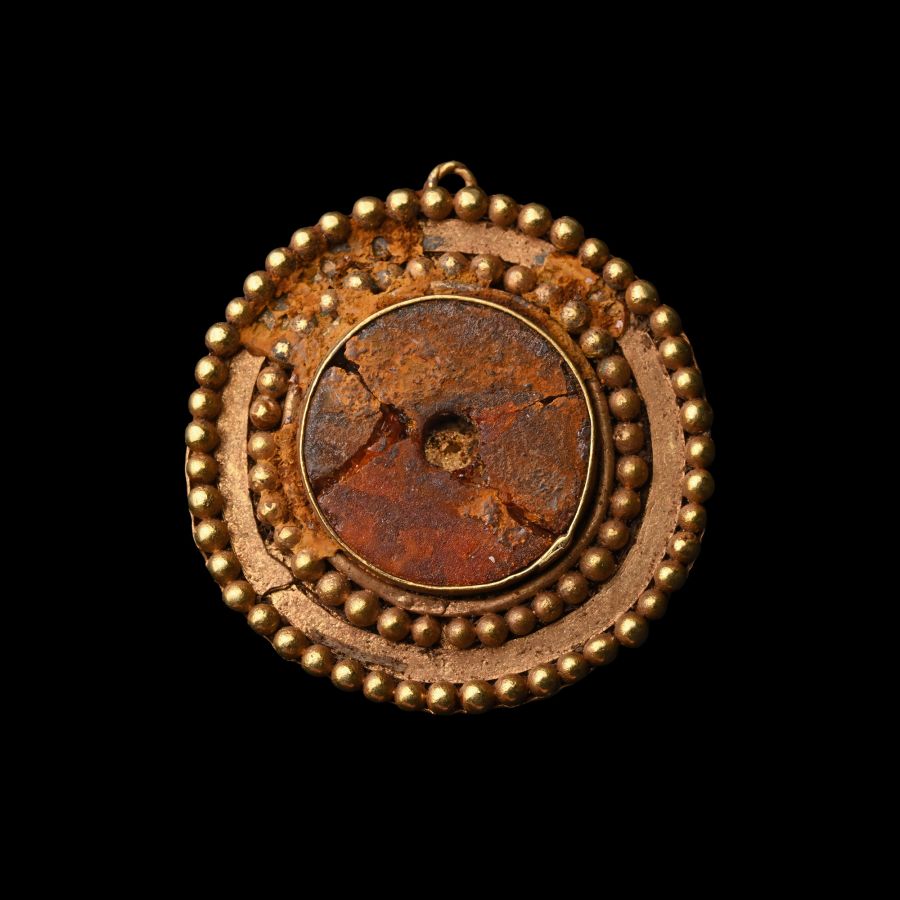
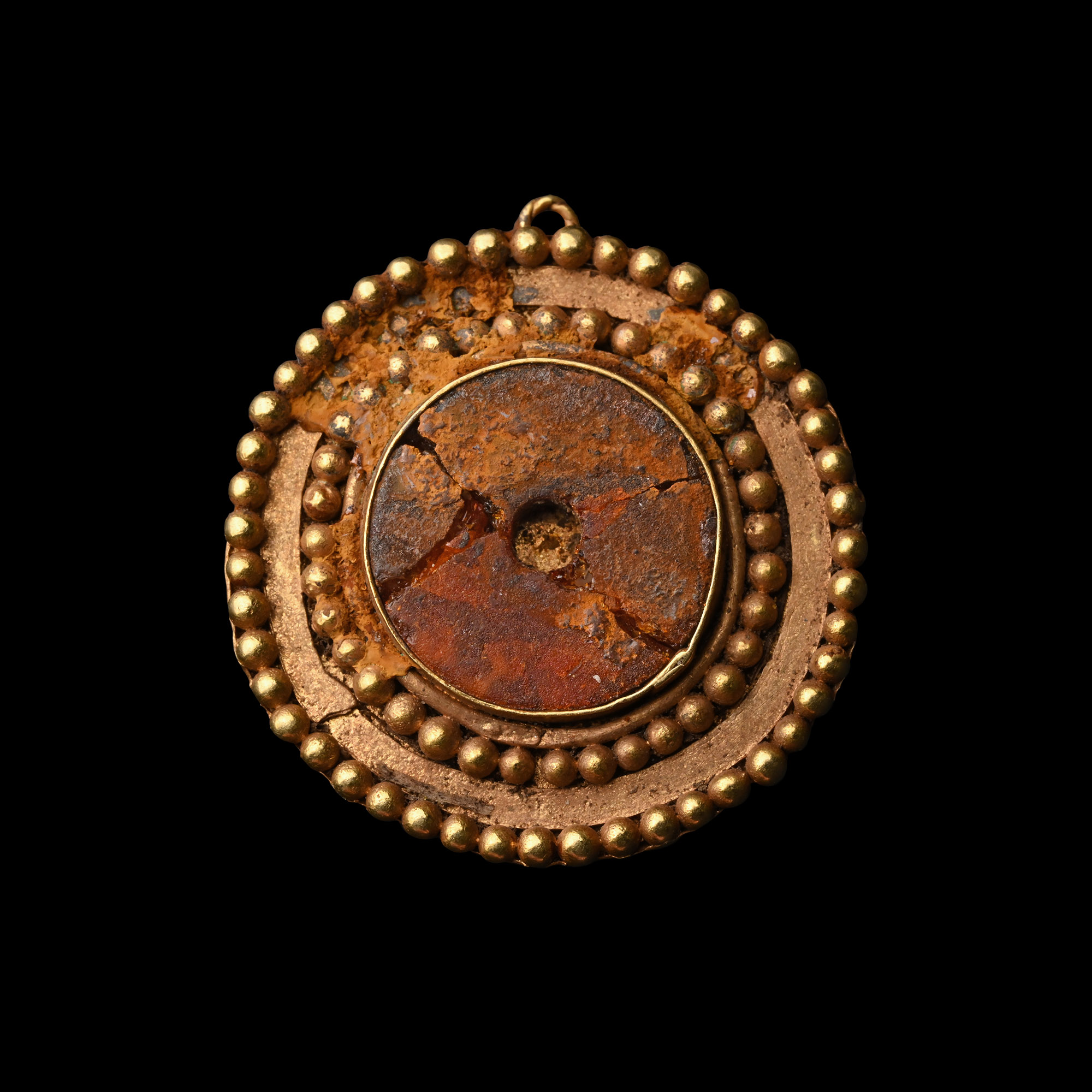
Viking Age Gold Pendant with Amber
9TH-11TH CENTURY A.D.
1 in. (4 grams, 24 mm).
A flat discoid pendant with pelletted border, raised bezel to the centre with a pelletted border and an amber insert; applied attachment loop to the top, some repairs.
ProvenanceAcquired on the UK art market before 2000.
Property of an Essex, UK, gentleman.
TimeLine Auctions follows a vetting process to ensure the authenticity and legality of all items, reinforcing our commitment to integrity and responsible trading. Each antiquity, antique, and coin lot undergoes thorough examination by a vetting committee of at least ten external specialists, professional trade association members, scientists, and archaeologists: Our Vetting Process
AUCTIONS:
TimeLine is a leading auction house specialising in antiquities, ancient art, collectables, natural history, coins, medals, and books. Our auctions offer museums, collectors, historians, and enthusiasts the opportunity to acquire unique and historically significant pieces.
LOT 0342
Viking Age Gold Pendant with Amber
Estimate £800 - 1,000€930 - 1,160 (for guidance only)$1,080 - 1,350 (for guidance only)
-
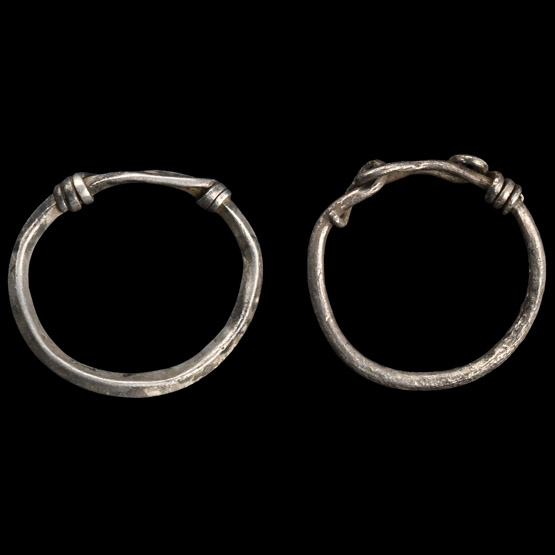
Viking Age Silver Earring Group
Circa 8th-11th century A.D.Sold for (Inc. bp): £98
Each a wire hoop with hook-and-eye fastening, ends wrapped round the shank. 2.14 grams total, 19-20 mm
Ex German art market, 2000s. Acquired from an EU collector living in London. From the collection of a Surrey, UK, gentleman. -
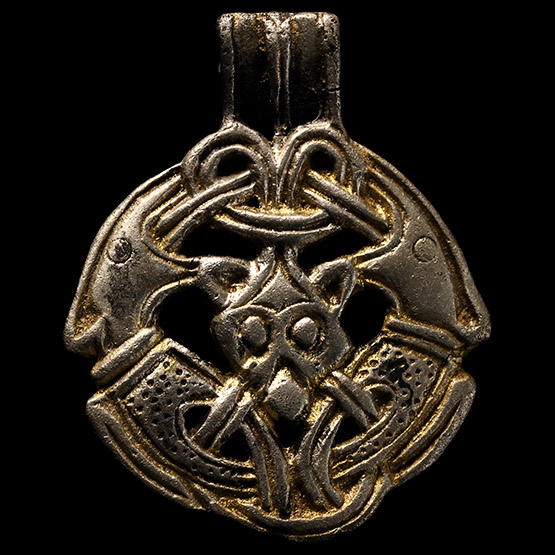
Viking Age Silver Beast Pendant
Circa 9th-11th century A.D.Sold for (Inc. bp): £975
Openwork panel in the form of two opposed beasts with their open jaws interlaced to form a loop; central facing mask; ribbed suspension tube above. 7.09 grams, 39 mm
Private collection formed in Europe in the 1980s. Westminster collection, central London, UK. -
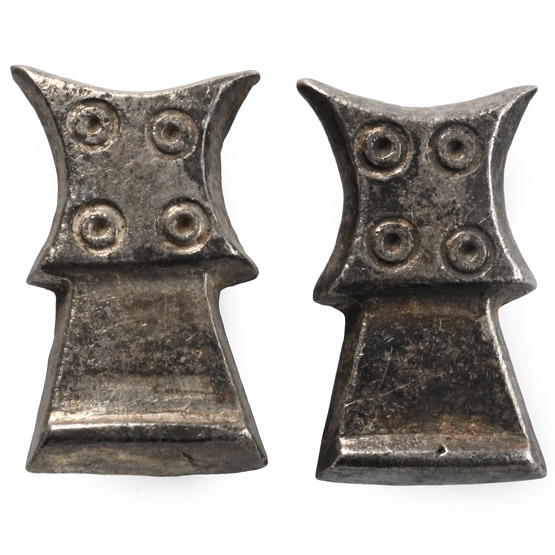
Viking Period Silver Mount Pair
Circa 9th-11th century A.D.Sold for (Inc. bp): £91
Each a square block with concave sides and for ring-and-dot motifs, with trapezoidal extension and ledge at the base; two mounting posts to reverse. 6 grams total, 18.5 mm
From an old English collection, 1980s.
