
Loading, please wait...
LOT 1175
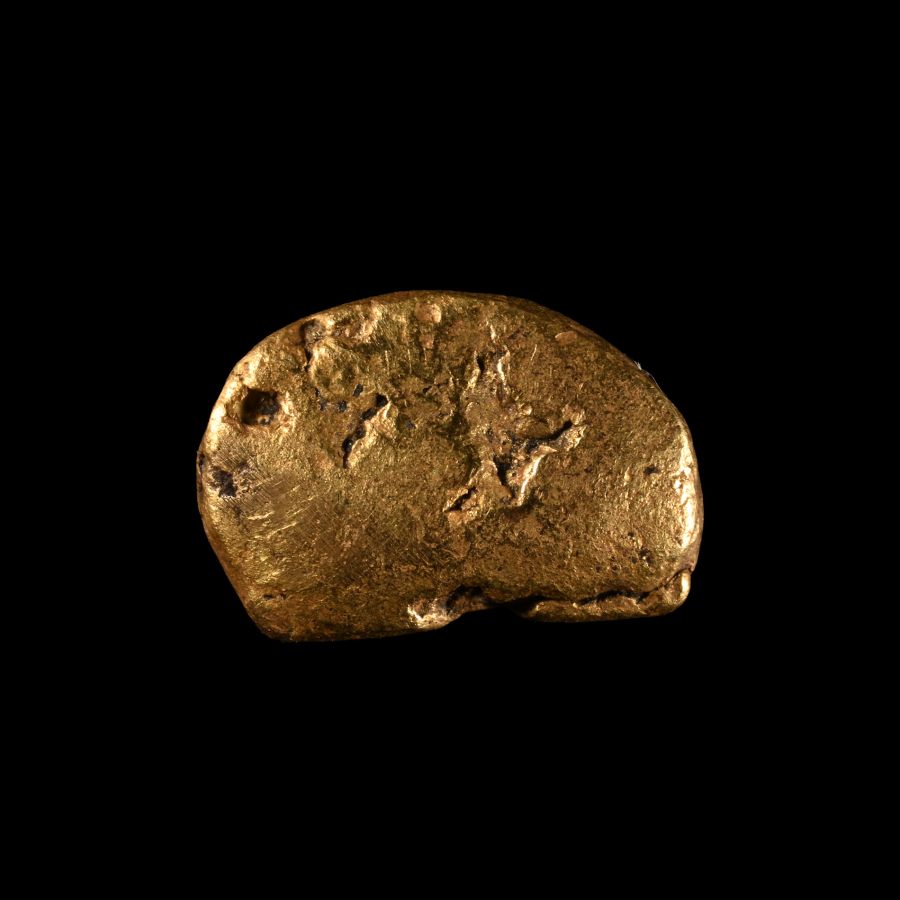
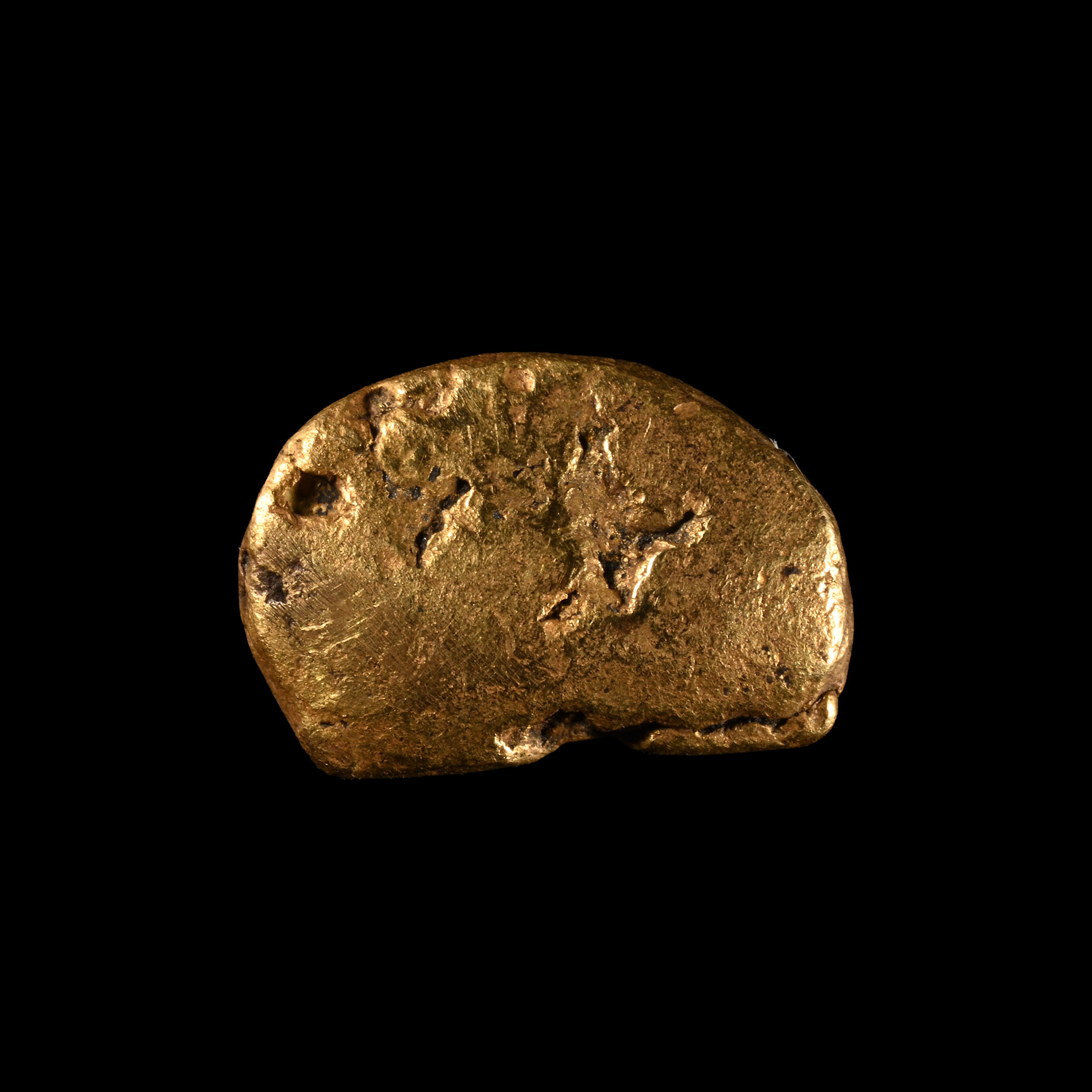
Viking Age Gold Ingot 'Hack' Money
9TH-11TH CENTURY A.D. OR EARLIER
3/4 in. (8.21 grams, 18 mm).
Kidney-shaped with uneven surfaces.
ProvenanceFound near Sleaford, Lincolnshire, UK.
Recorded with Lincolnshire Finds Liason Officer (FLO) for the Portable Antiquities Scheme and returned to the finder.
Believed to be of a Dark Age date or older, but undiagnostic, however XRF analysis suggests an ancient date is probable: Au 72.5, Ag 15.0, Cu 7.8, Fe 4.6, Zn 0.1.
CONDITIONTimeLine Auctions follows a vetting process to ensure the authenticity and legality of all items, reinforcing our commitment to integrity and responsible trading. Each antiquity, antique, and coin lot undergoes thorough examination by a vetting committee of at least ten external specialists, professional trade association members, scientists, and archaeologists: Our Vetting Process
AUCTIONS:
TimeLine is a leading auction house specialising in antiquities, ancient art, collectables, natural history, coins, medals, and books. Our auctions offer museums, collectors, historians, and enthusiasts the opportunity to acquire unique and historically significant pieces.
-
Viking Age Decorated Bronze Bracelet
Circa 11th-12th century A.D. or laterSold for (Inc. bp): £117
Penannular in form with expanding fluted shoulders and transverse ribbing to the curved finials. 21 grams, 54 mm
Ex old English collection. London art market, pre 2000. Property of a London, UK, gentleman. -
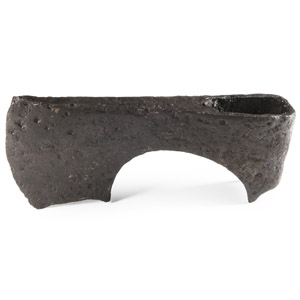
Finno-Ugrian Iron Bearded Axehead
11th-13th century A.D.Sold for (Inc. bp): £78
Triangular in plan with D-shaped socket, square butt, scooped lower profile and curved edge. 616 grams, 16.3 cm
From the private collection of a London gentleman, from his grandfather's collection formed before the early 1970s.
The more commonly used weapons of the Finno-Ugrian people were axes, commonly found in all Finnic areas, as well as spears. Iron axeheads of this typology show a sub-trapezoidal asymmetrical blade, often perforated through the centre. -
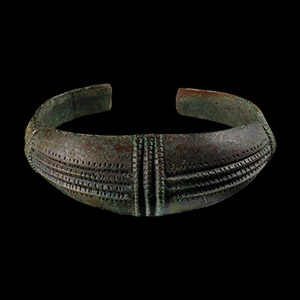
Viking Age Bronze Decorated Bracelet
9th-11th century A.D.Sold for (Inc. bp): £520
With penannular hoop with tapering arms, cross motif composed of three horizontal and three vertical notched ribs, carinated arms. 63.8 grams, 71 mm
From the collection of a North American gentleman, formed in the 1990s.
Similar bracelets were found in pair on the remains of the left forearm bones of a female, in grave 83 of Hemlanden cemetery in Birka. These bracelets, as visible in this grave, were usually worn in pairs on both arms.
