
Loading, please wait...
LOT 1203
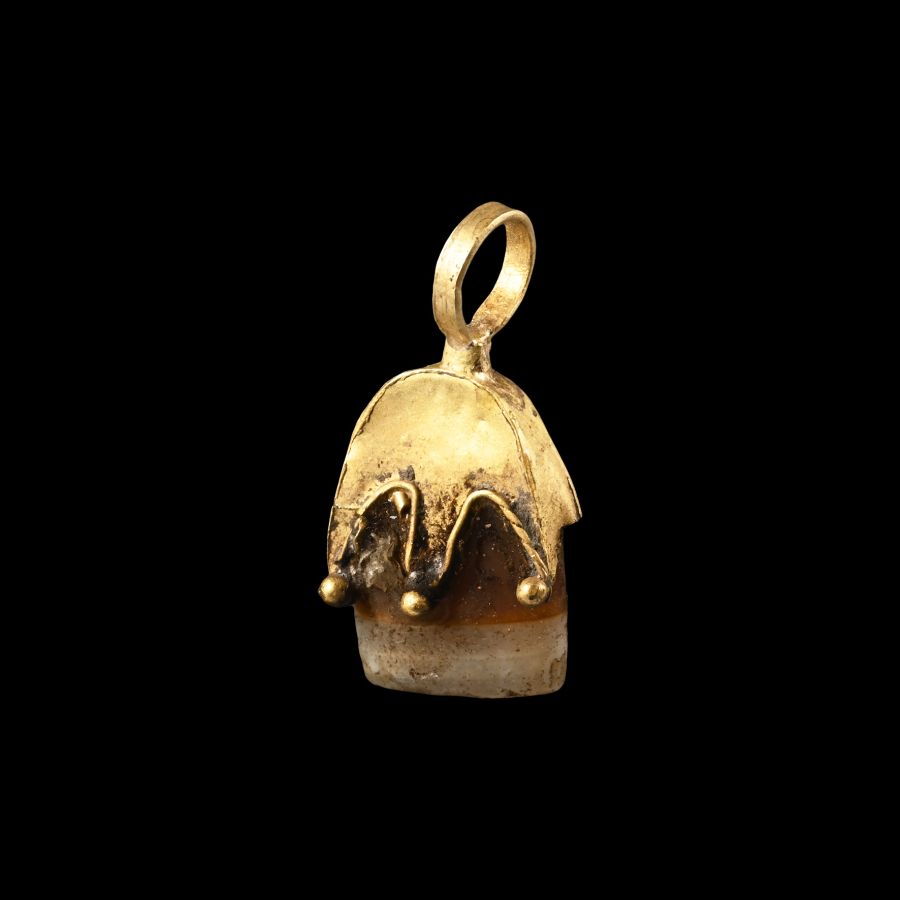
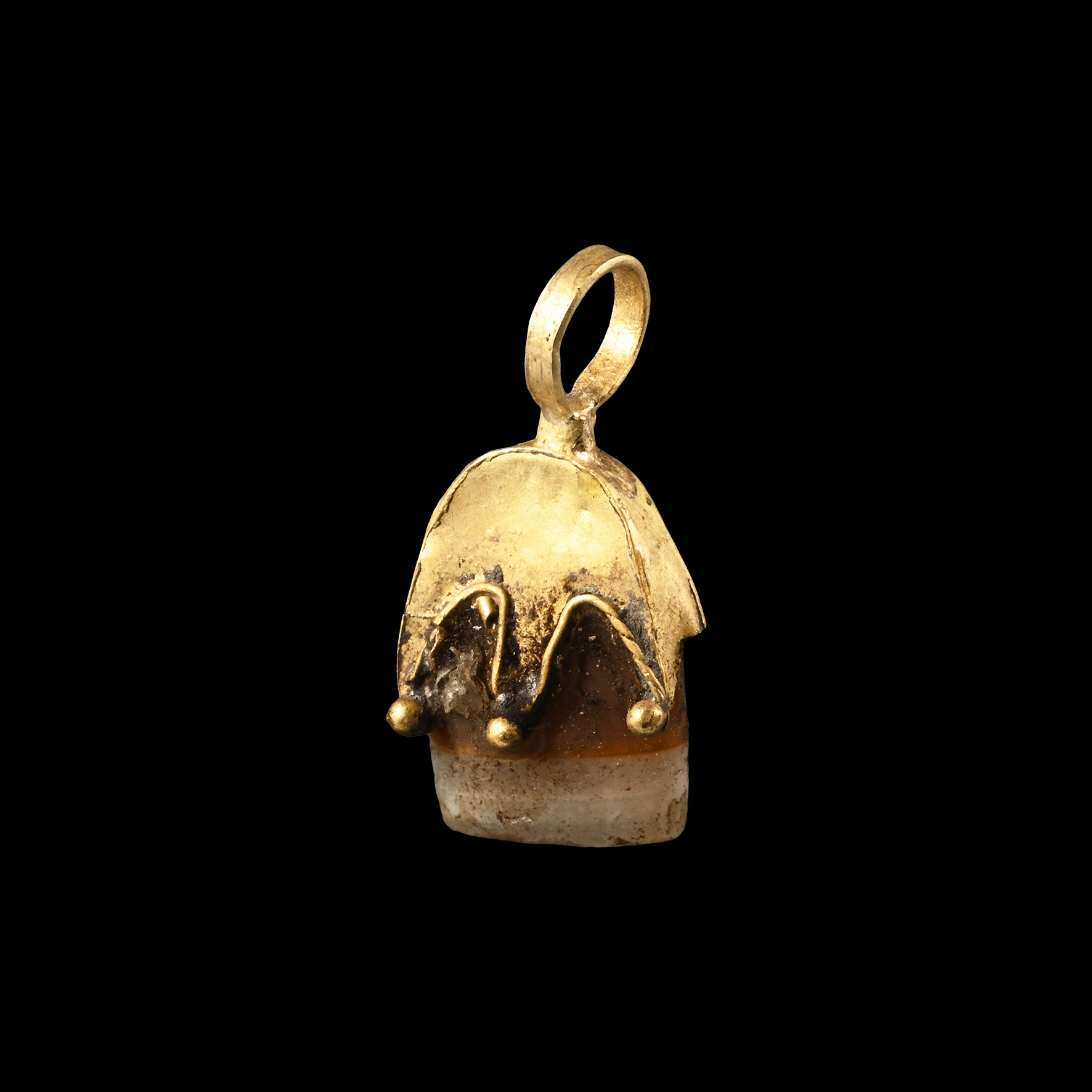
Viking Age Gold Elf Shot Pendant
9TH-10TH CENTURY A.D. OR EARLIER
3/4 in. (0.93 grams, 18 mm).
Formed as a gold cap set with polished agate gem; suspension loop above.
ProvenanceAcquired 1980-2015.
Ex Abelita family collection.
This amulet was believed to offer protection against 'Elfshot'. The attack of elves was believed responsible for mysterious suffering in men and livestock. 'Elfshot' described sudden shooting pains localised to a particular area of the body, such as in rheumatism, arthritis or muscle stitches or cramps. Elves were thought to shoot darts or arrows where such pains had no obvious external cause. Belief in elfshot persisted into the 20th century in rural areas, and as proof country folk would sometimes find small arrowheads (the remains of Neolithic or Mesolithic flints, or naturally-occurring spear-shaped stones) that were believed to be the magical weapons that caused the afflictions. Belief in elfshot began in the Pagan Germanic period.
CONDITIONTimeLine Auctions follows a vetting process to ensure the authenticity and legality of all items, reinforcing our commitment to integrity and responsible trading. Each antiquity, antique, and coin lot undergoes thorough examination by a vetting committee of at least ten external specialists, professional trade association members, scientists, and archaeologists: Our Vetting Process
AUCTIONS:
TimeLine is a leading auction house specialising in antiquities, ancient art, collectables, natural history, coins, medals, and books. Our auctions offer museums, collectors, historians, and enthusiasts the opportunity to acquire unique and historically significant pieces.
-
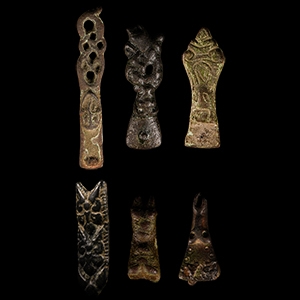
Viking Age Bronze Strap End Collection
9th-11th century A.D.Sold for (Inc. bp): £85
Encompassing a variety of types, including openwork, zoomorphic and vegetal designs. 52.2 grams total, 28-55 mm
From the collection of a North American gentleman, formed in the 1990s. -
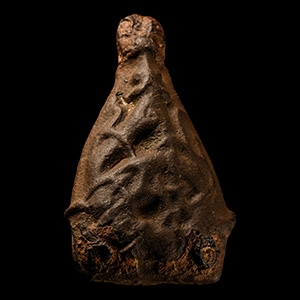
Anglo-Scandinavian Viking Bronze Urnes Style Entwined Beast Stirrup Mount
11th century A.D.Sold for (Inc. bp): £494
Of Williams's Class A Type 10b, a heater-shaped plaque with pierced lug at the apex, two piercings below, low-relief openwork Urnes style design with standing beast and entwined tendrils, narrow ledge to the reverse. 28.3 grams, 53 mm
Found Berkshire, UK.
The mount has the decorative scheme of Williams's Class A Type 10b but its proportions are closer to his Class A Type 11 with a narrow and elongated upper knop. -
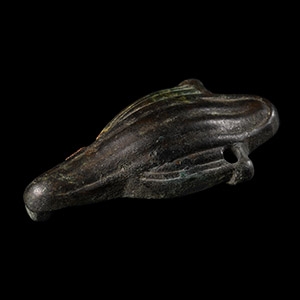
Viking Age Bronze Boar's Head Brooch
8th-10th century A.D.Sold for (Inc. bp): £117
With domed central body and raised ridges; single piercing; remains of pin lug and catchplate to reverse. 17.4 grams, 56 mm
From the collection of a North American gentleman, formed in the 1990s.
