
Loading, please wait...
LOT 1525
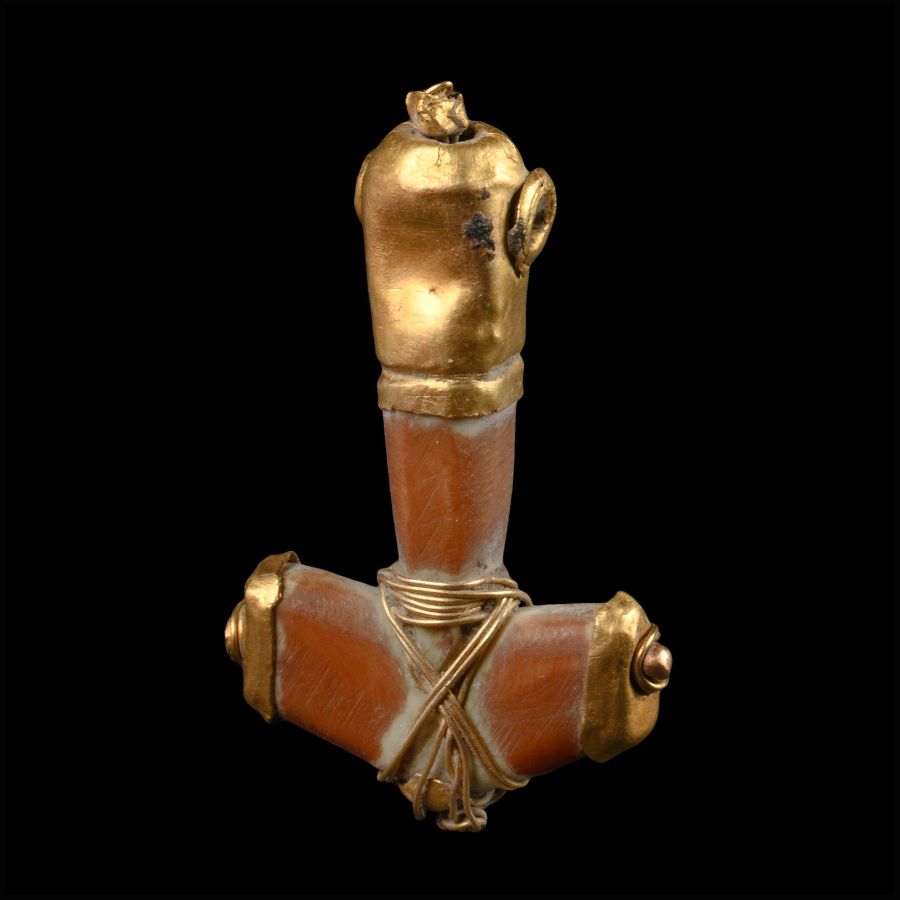
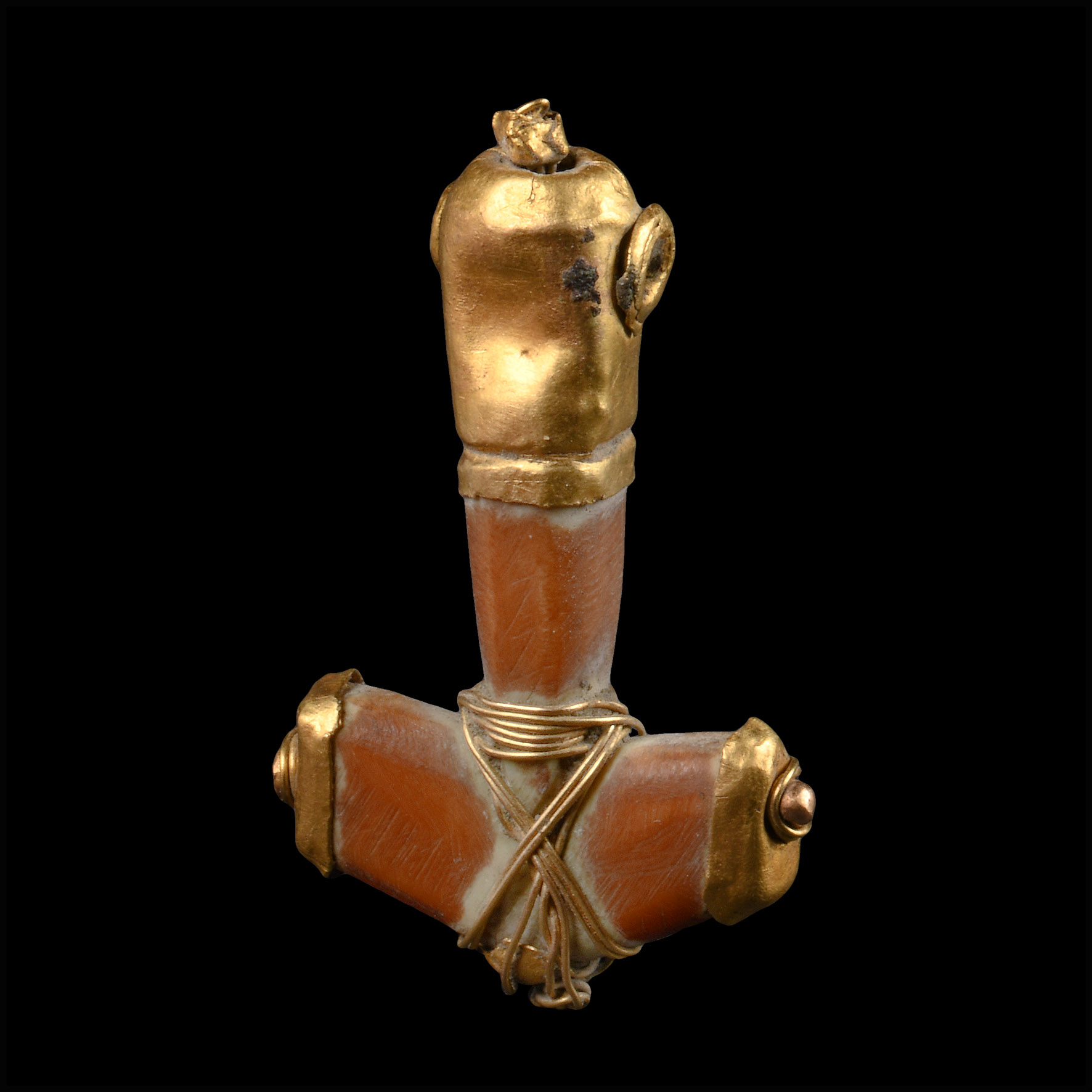
Viking Age Gold-Capped Bone Hammer Pendant
CIRCA 10TH-12TH CENTURY A.D.
1 3/8 in. (4.71 grams, 36 mm).
With sheet gold fittings and wire, knop finial. [No Reserve]
ProvenanceFrom the collection of a North American gentleman, formed in the 1990s.
CONDITIONTimeLine Auctions follows a vetting process to ensure the authenticity and legality of all items, reinforcing our commitment to integrity and responsible trading. Each antiquity, antique, and coin lot undergoes thorough examination by a vetting committee of at least ten external specialists, professional trade association members, scientists, and archaeologists: Our Vetting Process
AUCTIONS:
TimeLine is a leading auction house specialising in antiquities, ancient art, collectables, natural history, coins, medals, and books. Our auctions offer museums, collectors, historians, and enthusiasts the opportunity to acquire unique and historically significant pieces.
-

Anglo-Scandinavian Viking Bronze Apex Stirrup Mount
11th century A.D.Estimate: £100 - 140 (+bp*)
Opening Bid: £50
With pentagonal body bearing zoomorphic designs, pierced close to the apex for attachment to a stirrup-strap, with two holes close to the lower edge and ledge to the reverse; Williams's Class A Type 16. 22.39 grams, 47 mm
Found Hampshire, UK.
This mount is not typical of the Class but the trilobe 'topknot' at the apex is clearly based on the design of Type 16 with a facing animal-head. -
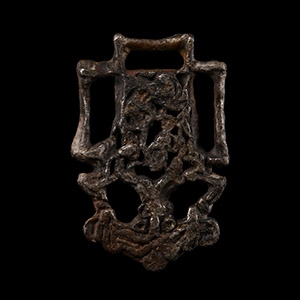
Viking Age Silver Openwork Strap End
9th-11th century A.D.Sold for (Inc. bp): £52
With stylised hammer motif and three surrounding brackets to accept straps. 16.4 grams, 43 mm
From the collection of a North American gentleman, formed in the 1990s. -

Viking Age Bronze Pendant with Interlace
11th century A.D.Sold for (Inc. bp): £46
With pierced lug above, pelletted border with geometric design of four pelletted loops and central boss. 2.32 grams, 25 mm
Acquired in the 1990s. Ex property of a German collector.
In terms of material culture, it is impossible not to note the influence that the Scandinavians had on Rus at that time. Evidence of this, in particular, is a number of pendants from the main centres of Rus. It is curious that the composition of volute-shaped scrolls was widely popular among the Slavic environment of the 11th-mid-12th century. A similar pendant made of tin-lead alloy was found in Gochevo, Kursk region.
