
Loading, please wait...
LOT 1227
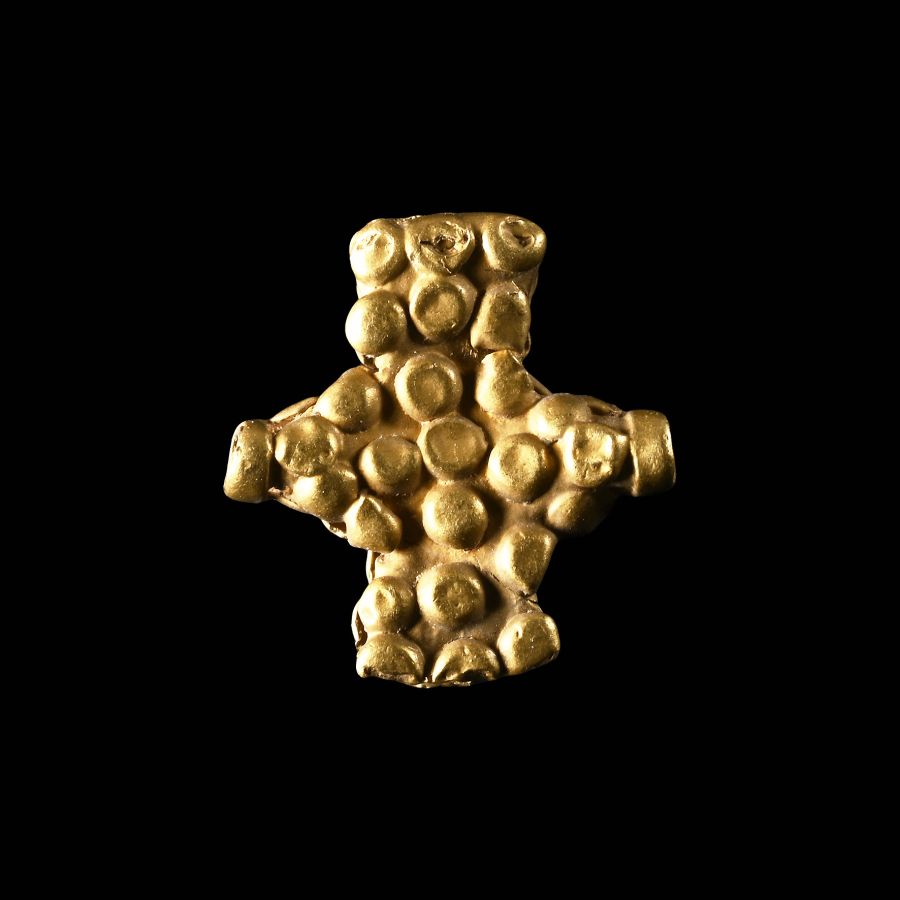
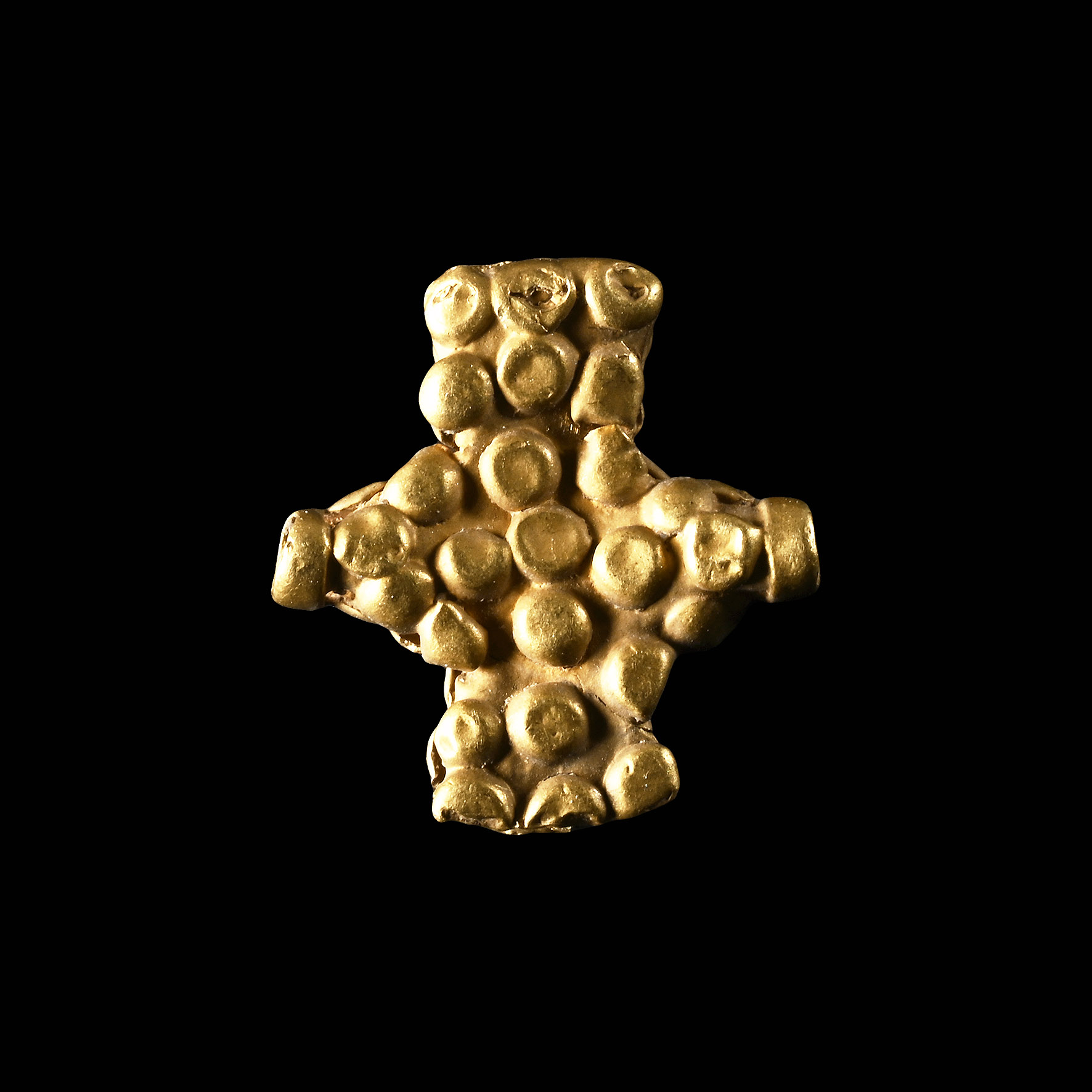
Viking Age Gold Axe-Shaped Bead
CIRCA 9TH-11TH CENTURY A.D. OR EARLIER
1/4 in. (0.34 grams, 10.34 mm).
Sheet-gold bead with applied granules to both flat faces. [No Reserve]
ProvenanceFrom a late Japanese specialist collector, 1970-2000s.
LiteratureCf. Adamsen, C. et al., Sorte Muld, Rønne, 2008, p.85, item 3, for similar.
CONDITIONTimeLine Auctions follows a vetting process to ensure the authenticity and legality of all items, reinforcing our commitment to integrity and responsible trading. Each antiquity, antique, and coin lot undergoes thorough examination by a vetting committee of at least ten external specialists, professional trade association members, scientists, and archaeologists: Our Vetting Process
AUCTIONS:
TimeLine is a leading auction house specialising in antiquities, ancient art, collectables, natural history, coins, medals, and books. Our auctions offer museums, collectors, historians, and enthusiasts the opportunity to acquire unique and historically significant pieces.
-
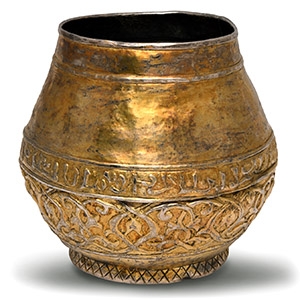
Viking Age Silver-Gilt Jar with Interlaced Design and Pseudo-Arabic Inscription
Circa 11th century A.D.Estimate: £8,000 - 10,000 (+bp*)
Opening Bid: £4,444
With later gilded outer face, globular body on a low splayed foot-ring, rolled rim; repoussé ornament comprising a circumferential ring below the neck, two parallel rings to the equator above a band of looped and interlaced tendrils with leaves and ring below, hatching to the foot-ring; median band with legend in Pseudo-Arabic script. 301 grams, 10.6 cm high
Fair condition.
In a private German collection since the 1980s. Property of a gentleman; acquired on the UK art market in 1998. This lot has been checked against the Interpol Database of stolen works of art and is accompanied by search certificate no.11007-181733. -
.jpg)
Viking Age Bronze Decorated Bracelet
9th-11th century A.D.Sold for (Inc. bp): £169
With a reversed C-shaped body tapering towards the terminals, geometric ornament in relief including lozenges and pecking; terminals absent. 66 grams, 38 mm
From the collection of a North American gentleman, formed in the 1990s.
Similar bracelets were found usually in female graves in the Hemlanden cemetery in Birka. Sometimes they were found in pairs, sometimes worn only on the right arm. Their main characteristic was the geometric decoration engraved on the surface. -
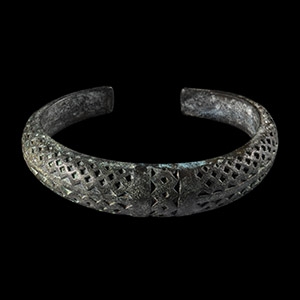
Viking Age Bronze Decorated Bracelet
9th-11th century A.D.Sold for (Inc. bp): £169
With convex outer face and tapering arms, stamp decorated with triangles and lozenges. 105 grams, 75 mm
From the collection of a North American gentleman, formed in the 1990s.
Similar bracelets were found usually in female graves in the Hemlanden cemetery in Birka. Sometimes they were found in pairs, sometimes worn only on the right arm. Their main characteristic was the geometric decoration engraved on the surface
