
Loading, please wait...
LOT 0342
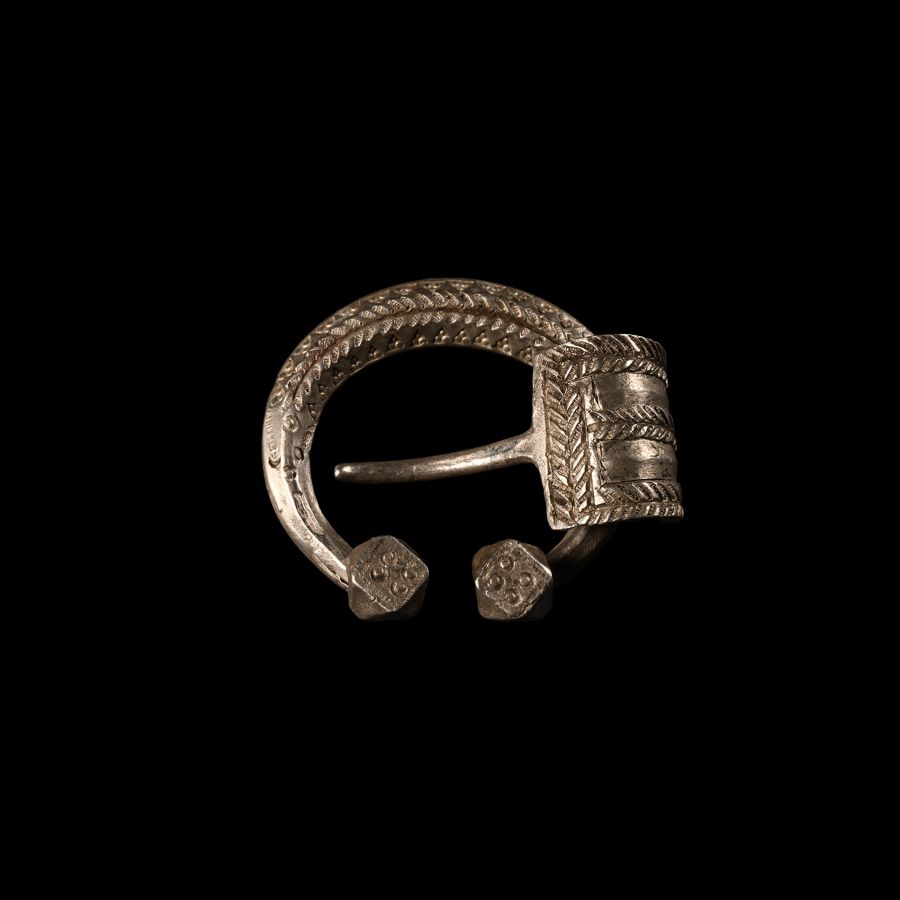
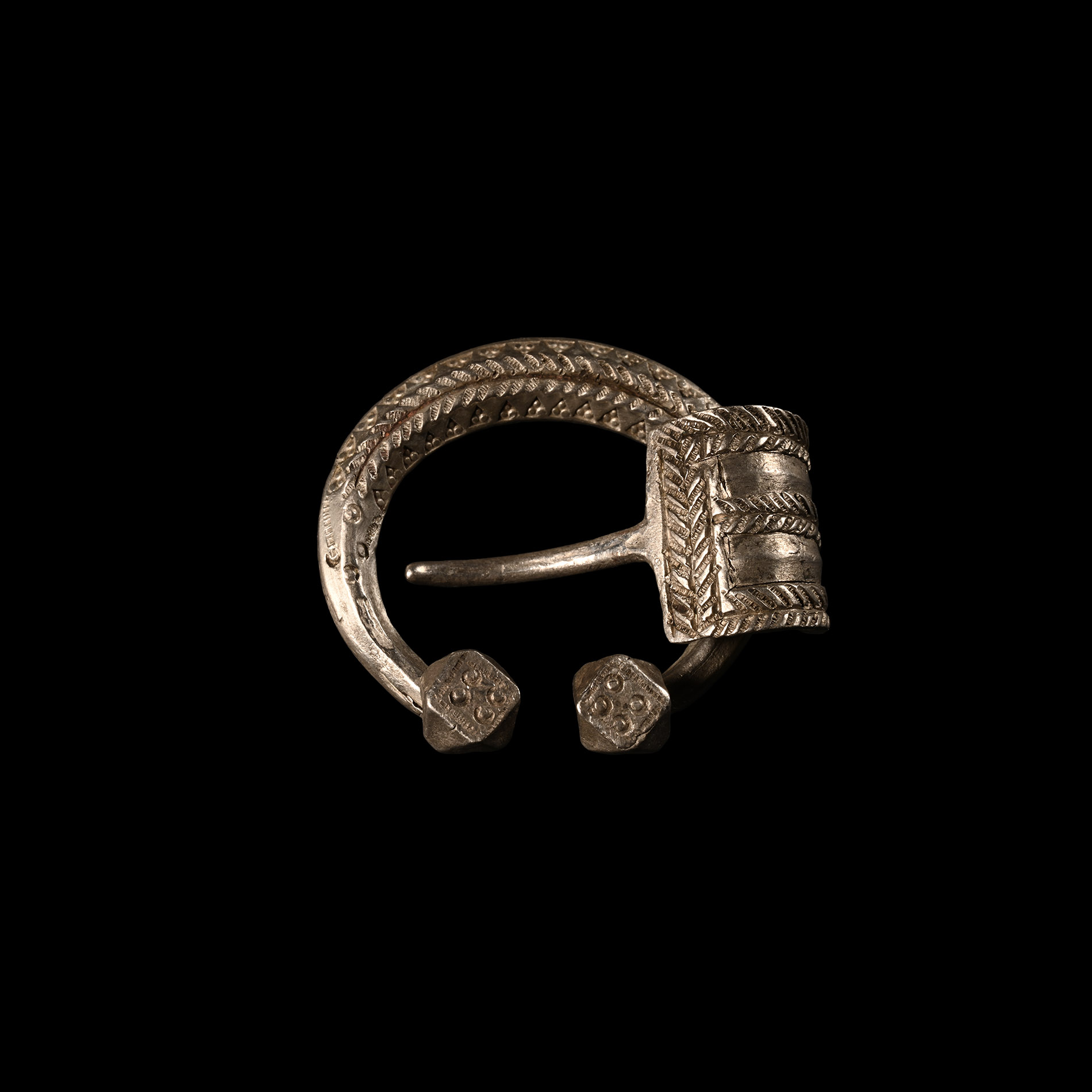
Viking Age Decorated Silver Penannular Brooch
12TH CENTURY A.D.
1 1/2 in. (21.9 grams, 39 mm wide).
Displaying facetted terminals displaying punched circlets, pelletted triangles and faux ropework to the body and faux ropework to the articulate pin head.
ProvenanceFrom the collection of a North American gentleman, formed in the 1990s.
LiteratureCf. Roesdahl, E., Wilson D.M., From Viking to Crusader: The Scandinavians and Europe 800 to 1200 (22nd Council of Europe Exhibition), Copenhagen, 1992, p.81, fig.8, for a similar specimen.
FootnotesPenannular brooches with facetted terminals were part of the famous Kostivere hoard, found in Estonia, deposited in around 1220-1230 during the wars of Estonians against the Germans and Danes. The annular brooches with animal ornaments in Urnes style were considered by the archaeologists definitely Scandinavian, more specifically from Gotland.
CONDITIONTimeLine Auctions follows a vetting process to ensure the authenticity and legality of all items, reinforcing our commitment to integrity and responsible trading. Each antiquity, antique, and coin lot undergoes thorough examination by a vetting committee of at least ten external specialists, professional trade association members, scientists, and archaeologists: Our Vetting Process
AUCTIONS:
TimeLine is a leading auction house specialising in antiquities, ancient art, collectables, natural history, coins, medals, and books. Our auctions offer museums, collectors, historians, and enthusiasts the opportunity to acquire unique and historically significant pieces.
-
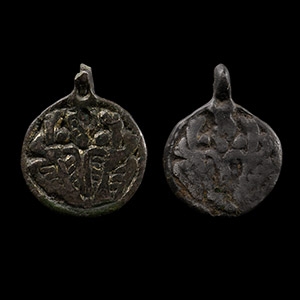
Viking Age Bronze Pendant Group
9th-11th century A.D.Sold for (Inc. bp): £98
Comprising two discoid pendants displaying Odin gripping two ravens; one with suspension loop. 3.51 grams total, 21 mm each
From the collection of a North American gentleman, formed in the 1990s. -
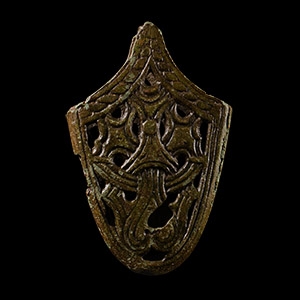
Viking Age Bronze Sword Scabbard Chape
9th century A.D.Sold for (Inc. bp): £267
With tongue-shaped body and scalloped upper edges, bifacial Oseberg Style openwork design, faux-ropework upper borders and carinated lower rim. 24.1 grams, 66 mm
From the collection of a North American gentleman, formed in the 1990s.
Chapes (ferrules) of 10th-11th century A.D. have been found in all territories reached by the Vikings in Europe and Asia, mostly in the Baltic regions. Ornamental ferrules were cast in copper-alloy, or occasionally silver or tin or gilded. In proportion to the large number of swords from the Viking Age a very few metal ferrules have been found. -

Viking Age Bronze Comb
10th-12th century A.D.Sold for (Inc. bp): £208
Featuring a scalloped handle with openwork scrolling tendrils, complete set of teeth below. 16.5 grams, 44 mm
Acquired 1980-2000. Ex property of an American collector.
Norsemen were particularly fastidious about their appearance. The hair and beard were important to the men, for making a statement and to intimidate their opponents. Early combs were made from antler or bone and carried in a small pouch; high status combs were later made from metal (mainly bronze) and have been found as grave goods.
