
Loading, please wait...
LOT 1230
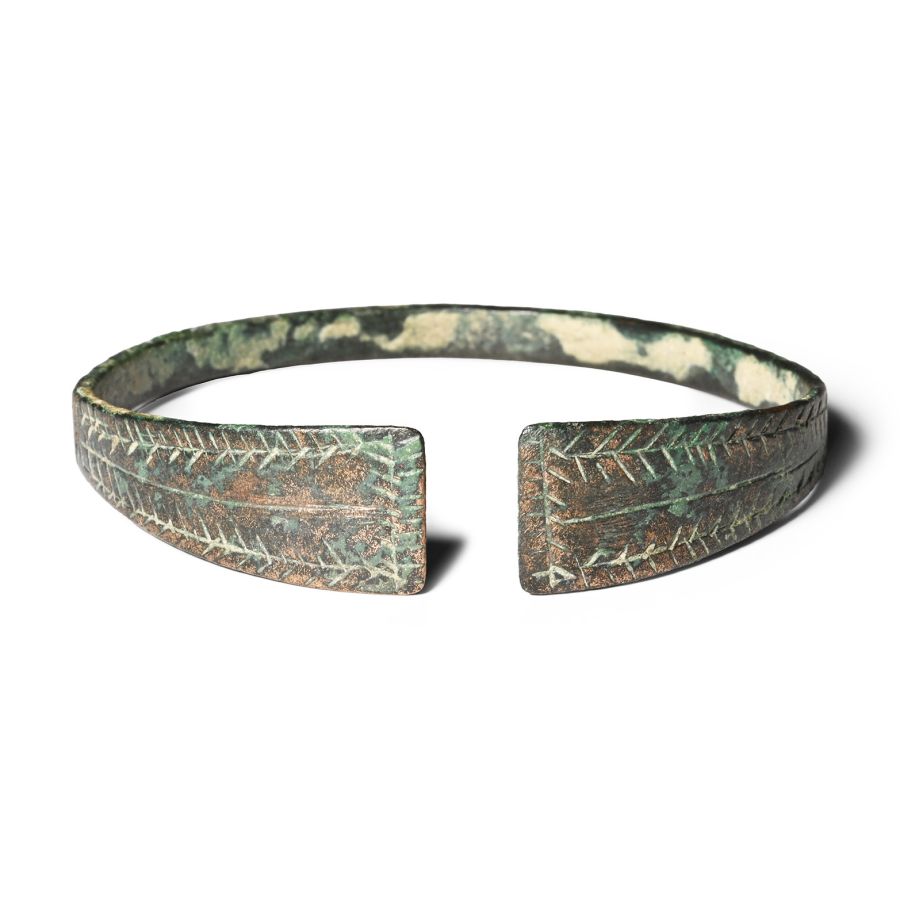
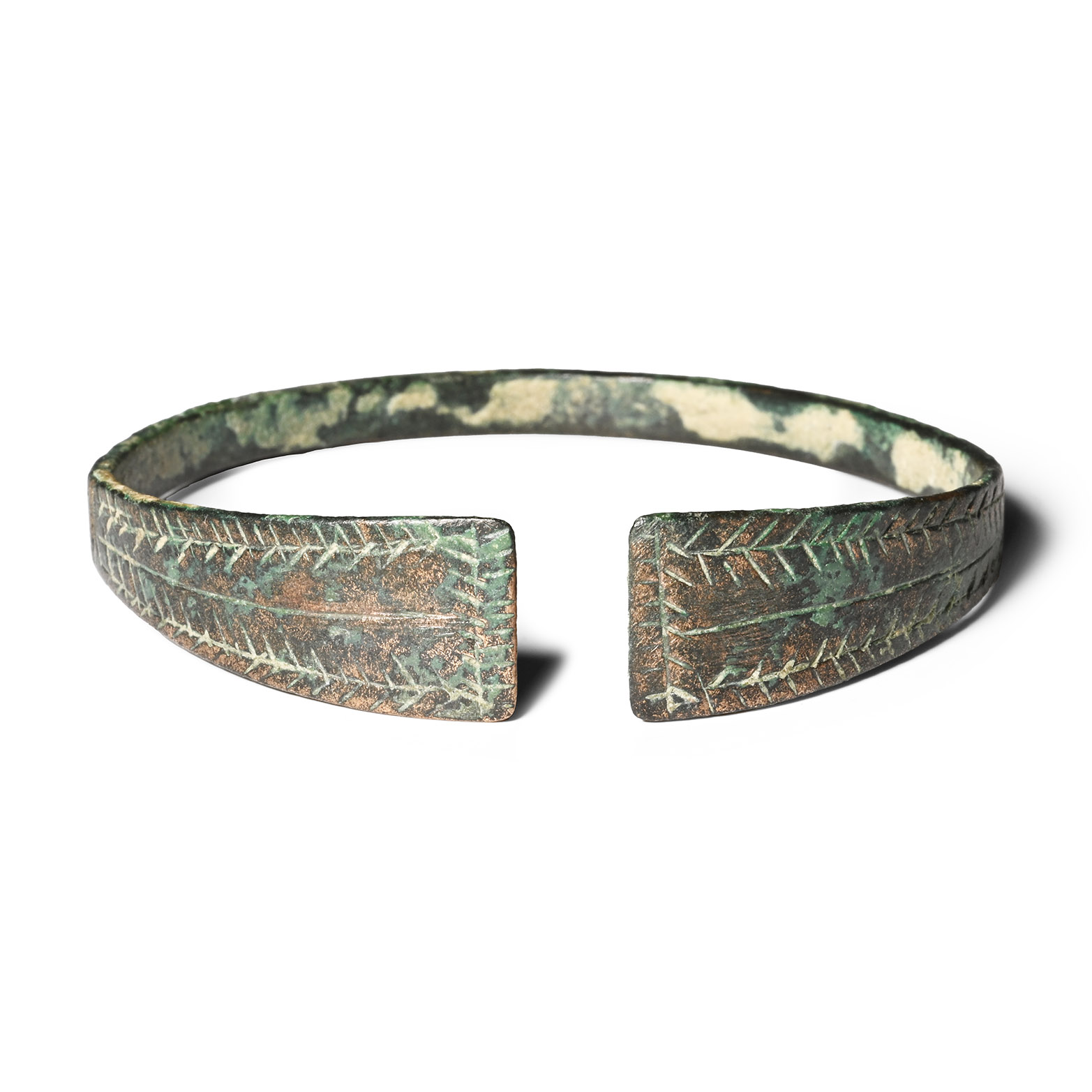
Viking Age Decorated Bronze Bracelet
CIRCA 9TH-11TH CENTURY A.D.
2 3/8 in. (15.5 grams, 61 mm).
With a flat-section penannular body with expanding terminals; the upper face with incised X-motifs and herringbone pattern to the flaring terminals. [No Reserve]
ProvenanceEx old English collection.
London art market, pre 2000.
Property of a London, UK, gentleman.
TimeLine Auctions follows a vetting process to ensure the authenticity and legality of all items, reinforcing our commitment to integrity and responsible trading. Each antiquity, antique, and coin lot undergoes thorough examination by a vetting committee of at least ten external specialists, professional trade association members, scientists, and archaeologists: Our Vetting Process
AUCTIONS:
TimeLine is a leading auction house specialising in antiquities, ancient art, collectables, natural history, coins, medals, and books. Our auctions offer museums, collectors, historians, and enthusiasts the opportunity to acquire unique and historically significant pieces.
-
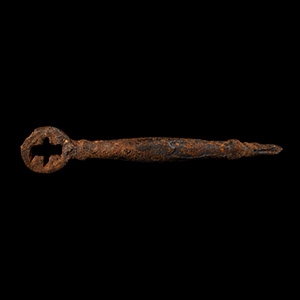
Viking Age Iron Key
8th-10th century A.D.Sold for (Inc. bp): £20
With expanded stem and openwork circular bit, pierced pentagonal lug to top. 24 grams, 97 mm
From the collection of a North American gentleman, formed in the 1990s. -
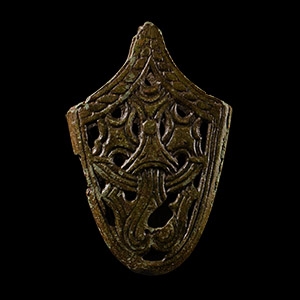
Viking Age Bronze Sword Scabbard Chape
9th century A.D.Sold for (Inc. bp): £267
With tongue-shaped body and scalloped upper edges, bifacial Oseberg Style openwork design, faux-ropework upper borders and carinated lower rim. 24.1 grams, 66 mm
From the collection of a North American gentleman, formed in the 1990s.
Chapes (ferrules) of 10th-11th century A.D. have been found in all territories reached by the Vikings in Europe and Asia, mostly in the Baltic regions. Ornamental ferrules were cast in copper-alloy, or occasionally silver or tin or gilded. In proportion to the large number of swords from the Viking Age a very few metal ferrules have been found. -
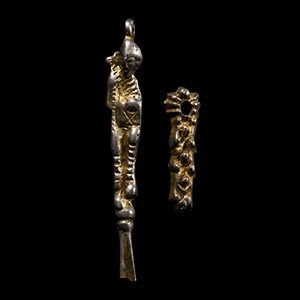
Viking Age Silver-Gilt Artefact Group
9th-11th century A.D.Sold for (Inc. bp): £91
Comprising: a slender mount with single piercing, possibly representing Hercules' club; implement finial with figure standing holding a book and staff, possibly Saint Peter, suspension loop to top of head. 7.19 grams total, 25-52 mm
From the collection of a North American gentleman, formed in the 1990s.
