Loading, please wait...

Use mousewheel to zoom in and out, click to enlarge

Details

LOT 2059

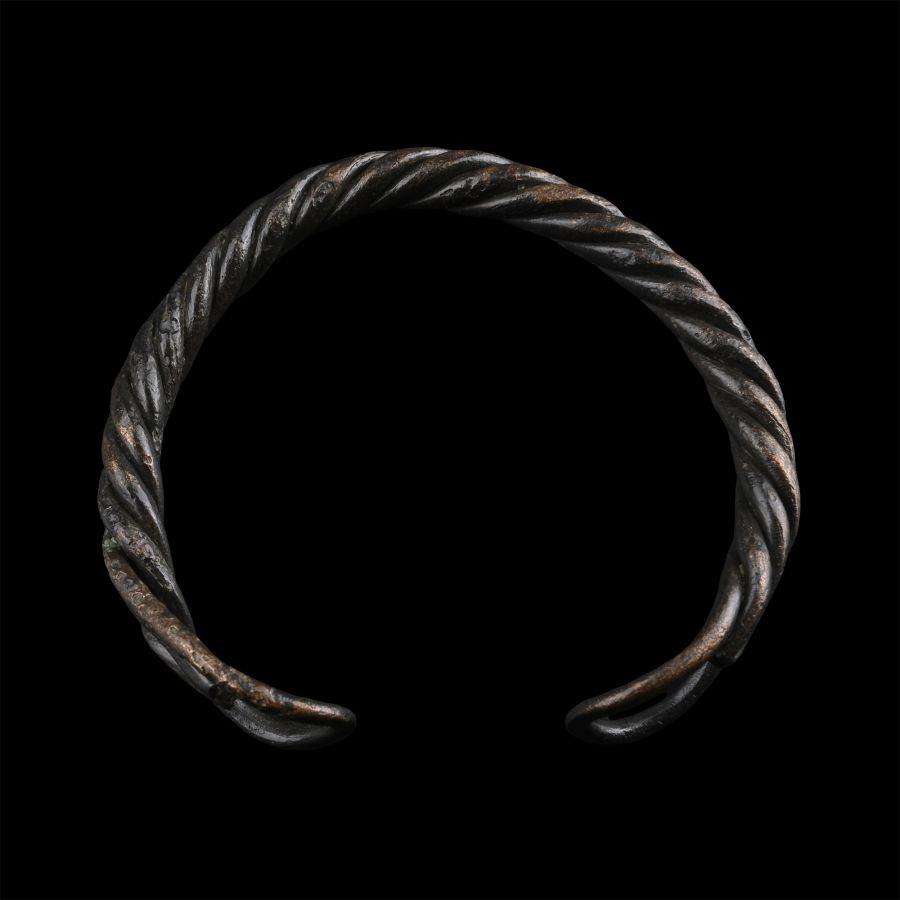
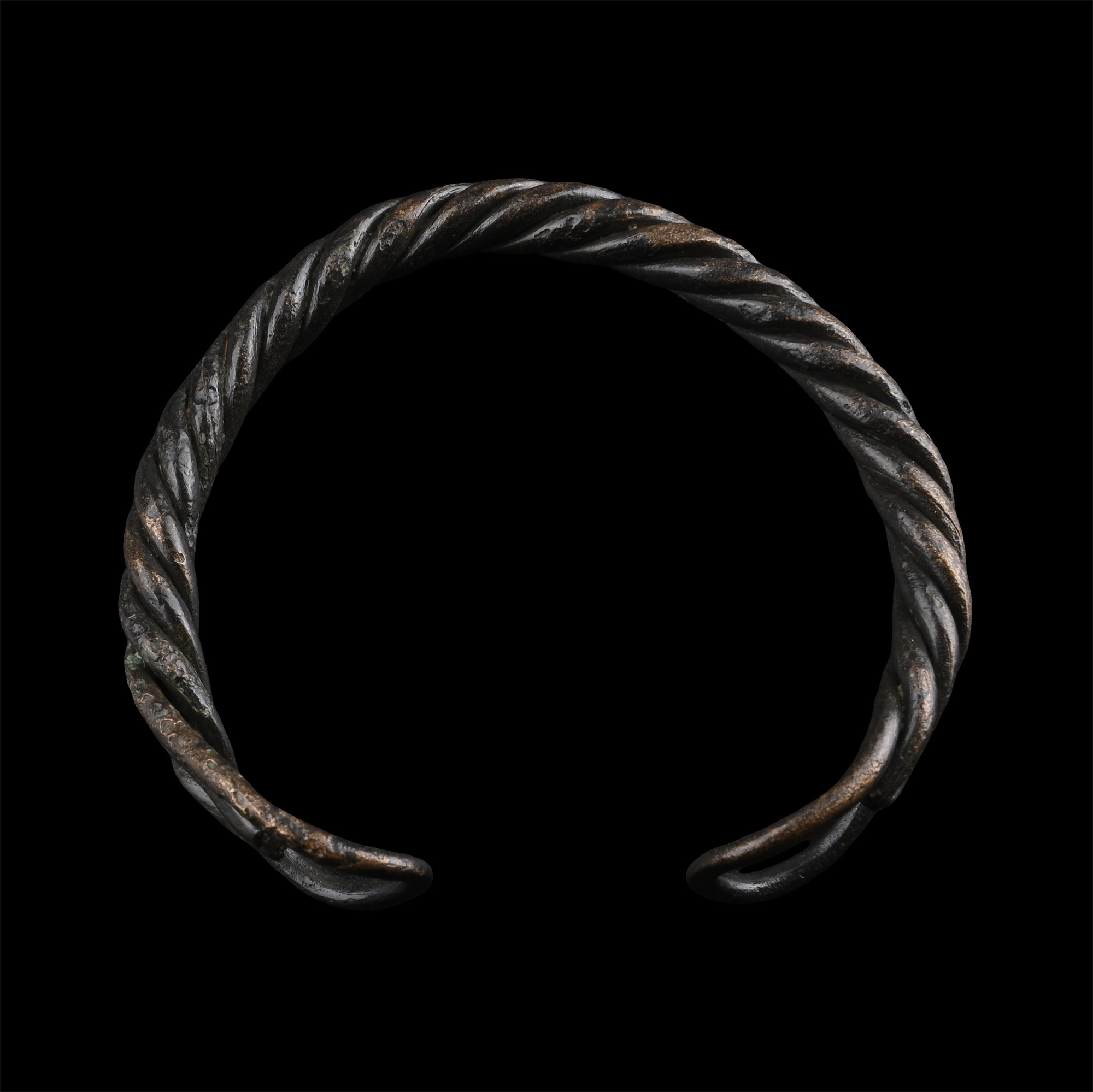
Viking Age Coiled Wire Bracelet

CIRCA 9TH-11TH CENTURY A.D.

2 1/4 in. (21.2 grams, 58 mm).

Formed of twisted round-section bars with looped terminals. [No Reserve]

Provenance

Ex German art market, 2000s.
Acquired from an EU collector living in London.
From the collection of a Surrey, UK, gentleman.

CONDITION

VETTING:

TimeLine Auctions follows a vetting process to ensure the authenticity and legality of all items, reinforcing our commitment to integrity and responsible trading. Each antiquity, antique, and coin lot undergoes thorough examination by a vetting committee of at least ten external specialists, professional trade association members, scientists, and archaeologists: Our Vetting Process


AUCTIONS:

TimeLine is a leading auction house specialising in antiquities, ancient art, collectables, natural history, coins, medals, and books. Our auctions offer museums, collectors, historians, and enthusiasts the opportunity to acquire unique and historically significant pieces.

LOT 2059

Viking Age Coiled Wire Bracelet

Sold for (Inc. bp): £91

Print page

RELATED LOTS

  • Viking Age Leather Belt Fragments with Tinned Bronze Heart-Shaped Mounts
    Viking Age Leather Belt Fragments with Tinned Bronze Heart-Shaped Mounts
    Circa 9th-11th century A.D.

    Sold for (Inc. bp): £111

    Comprising five heart-shaped mounts with a grooved edge. 10.2 grams total, 39-74.6 mm


    From the private collection of a European gentleman (1942-2024), formed since the 1970s.

    Lot Details

  • Viking Bronze Wayland the Smith Mount
    Viking Bronze 'Wayland the Smith' Mount
    Circa 10th century A.D.

    Sold for (Inc. bp): £1,170

    Depicting a male figure with almond-shaped eye, pointed curved chin, small nose, long hair with a curl above the forehead; dressed in a loose short-sleeve tunic(?), with hands and neck tied together; facing a bird with large almond-shaped eye, curved beak and prominent crest or feather(?) on the top of its head, finely incised feather decoration; a pin to the reverse. 8.66 grams, 43.14 mm


    From the private collection of a London gentleman, from his grandfather's collection formed before the early 1970s.

    The design on this mount is inspired by Scandinavian and British Isles Viking art, but the style of execution points towards foreign workmanship, possibly continental European. Some features are very distinctive for Viking art, such as a curl on the top of the head and almond-shaped eyes, which can be found also on small mounts of female figures holding a shield, found both in Scandinavia (Vrejlev, Denmark) and England (Ipswich, Suffolk). The face style, with distinctive curved chin, is typical of those on picture stones from Gotland, Sweden, especially the ones from Stora Hammar and Sanda. The style of bird is unusual, but the closest parallel can be found on the Franks Casket, which could have served as an inspiration for the style of the mount. The story is most likely that of Wayland (also known as Volundr or Weland), the most famous blacksmith from Germanic mythology, attested both in Viking and Anglo-Saxon mythology. The poem Volundarkviða from the Poetic Edda tells how Volundr and his two brothers married swan maidens (valkyries) and lived with them for eight winters, after which their wives abandoned them. Unlike his brothers, Volundr decided to stay at home waiting for his wife to return, but was captured by King Niðuðr and imprisoned on an island. A ring, which was given to Volundr by his wife, was taken from him and Niðuðr gave it to his daughter, Boðvildr. In revenge, Wayland killed the king's sons when they visited him in secret, and fashioned goblets from their skulls, jewels from their eyes, and a brooch from their teeth. He sent the goblets to the king, the jewels to the queen and the brooch to the king's daughter. To humiliate the king even more, he raped princess Boðvild when she visited him to mend the ring given to her. He then escaped with artificial wings he created from birds' feathers. The suffering of a blacksmith is attested also in the Old English poem Deor, in which there is also a mention of his imprisonment by King Niðhad. His story can be also found on artefacts, notably the Franks Casket and the Ardre picture stone. Some of the most famous swords and armour was said to have been forged by this legendary blacksmith. The other interpretation of a bound figure might imply it to be Loki, imprisoned after his betrayal of the Æsir gods and bound with the entrails of his own son. The bird, in this case most likely a raven, can represent a messenger of Odin. We know from the Norse poem Baldrs draumar that Odin visited a volva (seeress or wise woman) in the realm of the dead, Helheim. After an exchange of words, in the end he accuses her not to be a wise woman, but rather the mother of three giants to which she responds that no one will visit her until Loki will be free. Some scholars' (e.g. Ursula Dronke) interpretation is that the volva was Loki disguised, imprisoned in Helheim, who fathered three world monsters with giantess Angrboda (Fenrir, Jormungandr, Hel) and the mount can point to the scene of conversation between bound Loki and the raven, the messenger of Odin.

    Lot Details

  • Viking Gilt Bronze Horse Harness Pendant with Birds
    Viking Gilt Bronze Horse Harness Pendant with Birds
    Circa 10th century A.D.

    Sold for (Inc. bp): £910

    Square in plan with hollow body, repoussé motif of a tree with flanking birds at the sides and serpents below; integral suspension loop. 19.42 grams, 44.78 mm


    From the private collection of a London gentleman, from his grandfather's collection formed before the early 1970s.

    Lot Details

Stay up-to-date with the latest from TimeLine Auctions by joining our mailing list