
Loading, please wait...
LOT 1430
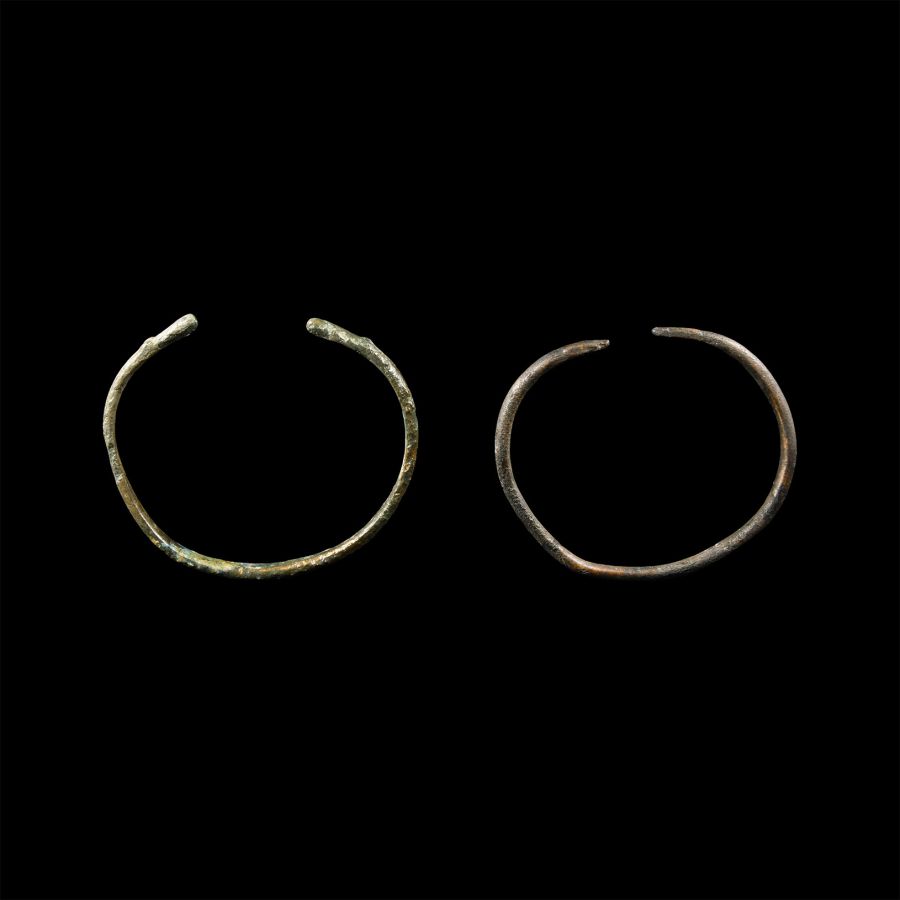
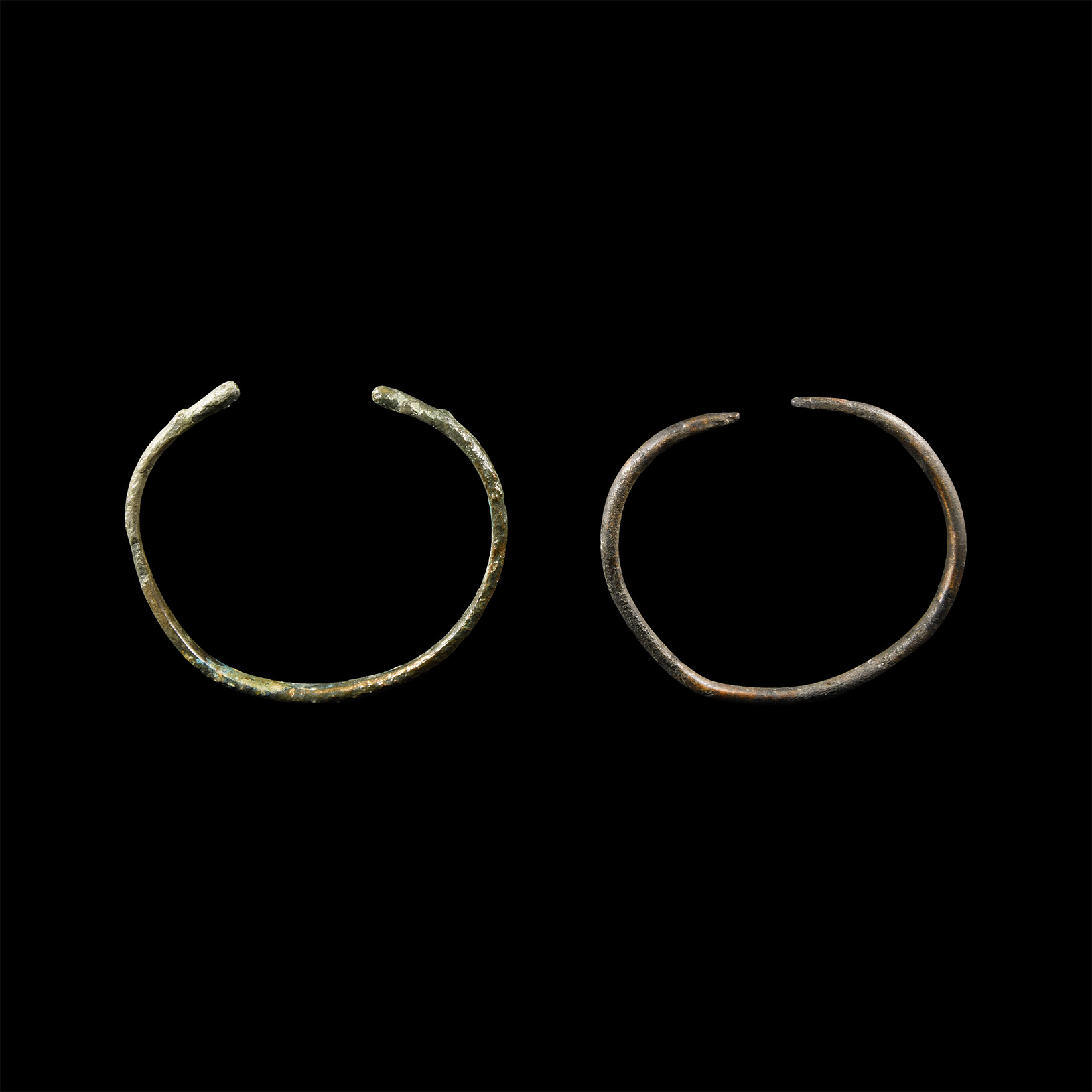
Viking Age Bronze Zoomorphic Bracelet Pair
CIRCA 9TH-11TH CENTURY A.D.
2 5/8 - 2 3/4 in. (32.1 grams total, 66-69 mm).
Comprising two slender penannular bracelets with stylised snake head terminals executed in different styles. [2, No Reserve]
ProvenanceAcquired 1970s.
From the private collection of a Northern Ireland gentleman.
Ex private Merseyside, UK, collection.
TimeLine Auctions follows a vetting process to ensure the authenticity and legality of all items, reinforcing our commitment to integrity and responsible trading. Each antiquity, antique, and coin lot undergoes thorough examination by a vetting committee of at least ten external specialists, professional trade association members, scientists, and archaeologists: Our Vetting Process
AUCTIONS:
TimeLine is a leading auction house specialising in antiquities, ancient art, collectables, natural history, coins, medals, and books. Our auctions offer museums, collectors, historians, and enthusiasts the opportunity to acquire unique and historically significant pieces.
-
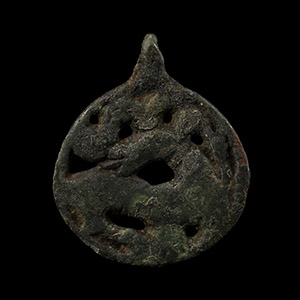
Viking Age Jellinge Style Bronze Regardant Beast Pendant
11th-12th century A.D.Estimate: £100 - 140 (‡+bp*)
Opening Bid: £50
A Scandinavian pendant of Kipplingeberg type (also widespread in the historical Rus region), with regardant beast and foliage. 3.13 grams, 28 mm
Acquired on the German art market before 2000. From an old Munich collection. -
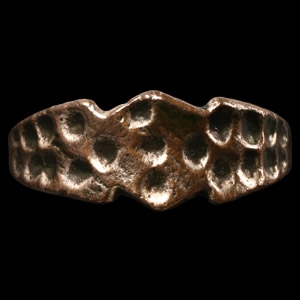
Viking Age Bronze Ring with Stamped Design
Circa 9th-10th century A.D.Sold for (Inc. bp): £65
With lozengiform plaque, pointillé detailing. 2.78 grams, 21.79 mm overall, 19.15 mm internal diameter (approximate size British R, USA 8 1/2, Europe 18 3/4, Japan 18)
Acquired 1970s-1980s. From the collection of a German gentleman living in London. Ex private Merseyside, UK, collection, since 2015. -
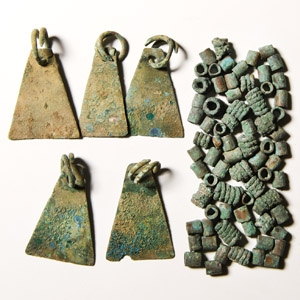
Viking Age Bronze Necklace Bead and Pendant Group
Circa 9th-11th century A.D.Sold for (Inc. bp): £59
A number of trapezoidal pendants suspended on coiled hoops; together with plain tubular and coiled beads. 39 grams total, 4-35 mm
UK gallery, early 2000s.
