Loading, please wait...
LOT 1500
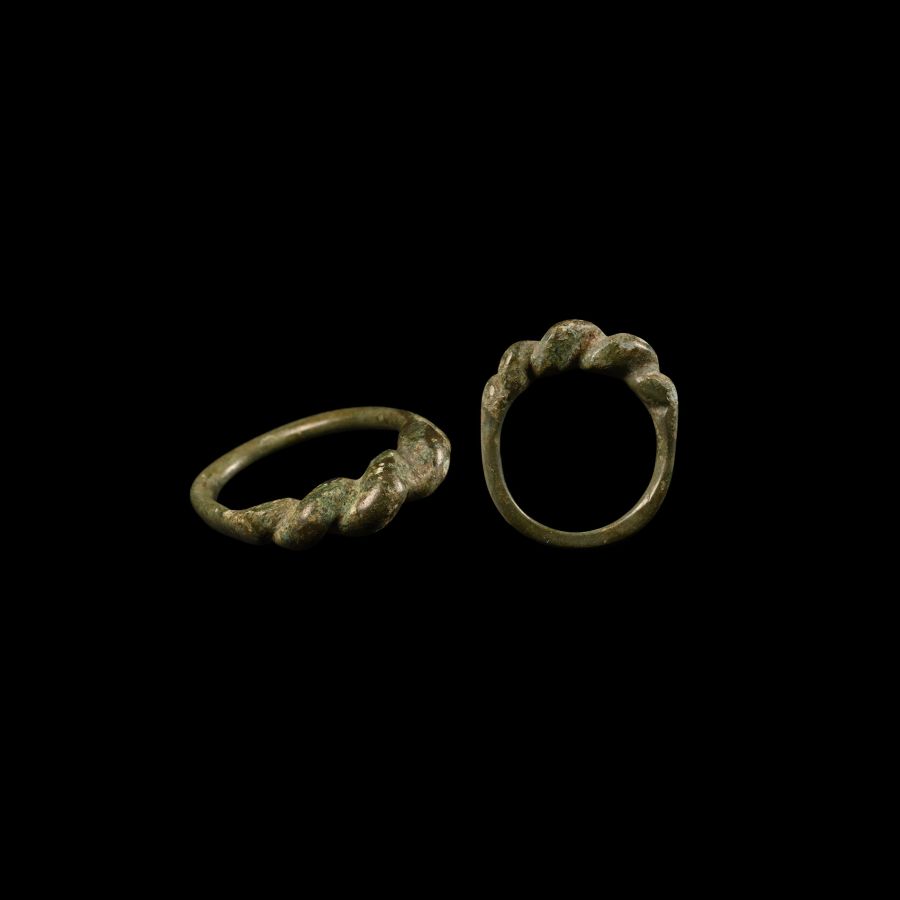
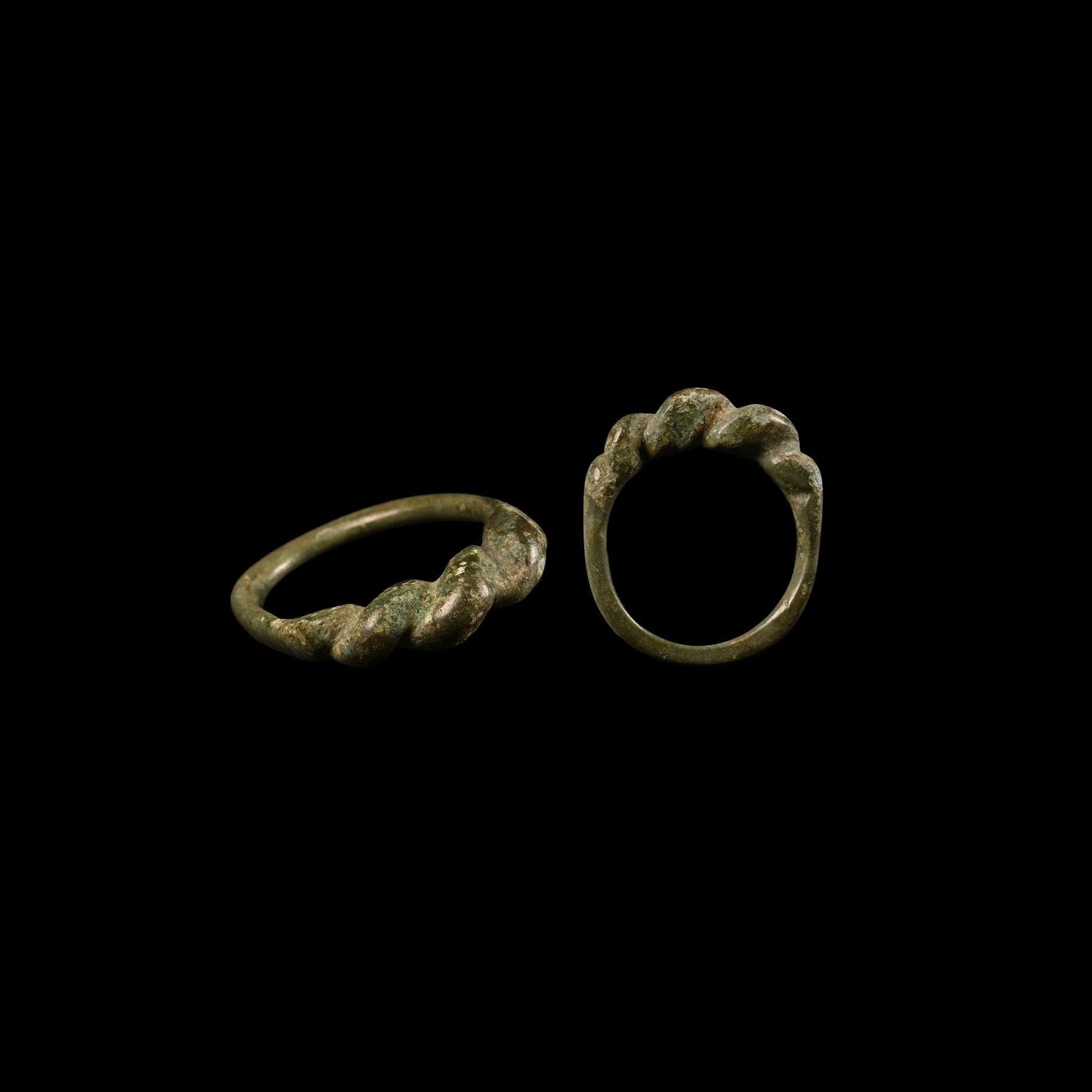
Viking Age Bronze Twisted Ring
9TH-11TH CENTURY A.D.
1 1/8 in. (6.67 grams, 29.86 mm overall, 19.74 mm internal diameter (approximate size British V, USA 10 1/2, Europe 23.77, Japan 22)).
The hoop expanding at the shoulders to a faux-twisted bezel. [No Reserve]
ProvenanceFrom the collection of a North American gentleman, formed in the 1990s.
CONDITIONTimeLine Auctions follows a vetting process to ensure the authenticity and legality of all items, reinforcing our commitment to integrity and responsible trading. Each antiquity, antique, and coin lot undergoes thorough examination by a vetting committee of at least ten external specialists, professional trade association members, scientists, and archaeologists: Our Vetting Process
AUCTIONS:
TimeLine is a leading auction house specialising in antiquities, ancient art, collectables, natural history, coins, medals, and books. Our auctions offer museums, collectors, historians, and enthusiasts the opportunity to acquire unique and historically significant pieces.
-
Large Viking Age Bronze Stamped Penannular Brooch
9th-11th century A.D.Sold for (Inc. bp): £195
Featuring coiled terminals, raised medial rib and free-running pin; the coiled pin head and the body with stamped and incised geometric motifs. 70 grams, 77 mm wide
From the collection of a North American gentleman, formed in the 1990s. -
Viking Age Bronze Sword Scabbard Chape Collection
10th-12th century A.D.Estimate: £700 - 900 (‡+bp*)
Opening Bid: £350
Comprising: a small and narrow type (Paulsen's Gruppe I 2, Untergruppe d) with an openwork panel to each face filled by a cross-shaped motif with curved cross-bar, and a dentilled upper edge to the mouth; a tongue-shaped type (Paulsen's Gruppe I 1) with an openwork centre and Ringerike style bird formed with looped bands, pellets to the pinions, a triangular in plan head joined to the inner faces of the ropework border forming the upper edge of the chape, with a wolf's head at the apex and stepped knop finial (apex and lower end of the chape damaged); two of the same type (Gruppe I 1) with a pair of scrolls in the central void and a 'knot' to the apex', one with ropework detailing and a wolf's head; a broad D-shaped plaque with a plain reverse plate riveted in place, guilloche band to the outer edge and interlaced vines to the centre. 118 grams total, 46-75 mm
From the collection of a North American gentleman, formed in the 1990s.
The chape with the dentilled upper edge bears a cross motif on which only the curvature of the cross-piece indicates its origin in the raven/eagle figure found more commonly on this type; as its ornament has developed a long way from its original form, it should be dated to the 11 or 12th century. The D-shaped plaque with the plain reverse is not in Paulsen's typology but appears to be derived from the smaller types in his Gruppe VII. -
Viking Age Bronze Sword Scabbard Chape Collection
10th-11th century A.D.Estimate: £700 - 900 (‡+bp*)
Opening Bid: £350
Comprising: a long and narrow tongue-shaped type (Paulsen's Gruppe V 2A, Untergruppe C) with scooped upper edge and palmette motif to the centre, spurs to the a vertical band of reserved stylised ring-chain decoration on a pounced field, long lateral straps and a knop finial; a heater-shaped type (Paulsen's Gruppe I 2, Untergruppe C) with central openwork panel displaying a bird in flight with the fan-shaped tail marked with radiating lines, guilloche bands to the outer sides, upper edges angled and with lobe at the apex; an elongated type (Gruppe V 1) with low-relief pointillé bands to each face and a palmette at the apex of the central spur; a long tongue-shaped type (Paulsen's Gruppe I 1) with an openwork centre and Ringerike Style bird formed with looped bands, pellets to the pinions, a triangular in plan head joined to the inner faces of the ropework border forming the upper edge of the chape, with a wolf's head at the apex and stepped knop finial; a single plaque (Gruppe V 1) from a two-part chape, long and rounded with palemete detailing to the upper edge, tendrils and scrolls to the body, pierced in two places to accept rivets. 178 grams total, 51-70 mm
From the collection of a North American gentleman, formed in the 1990s.
Most of these chapes originate in Sweden or the western Baltic according to Paulsen's classification.