
Loading, please wait...
LOT 1780
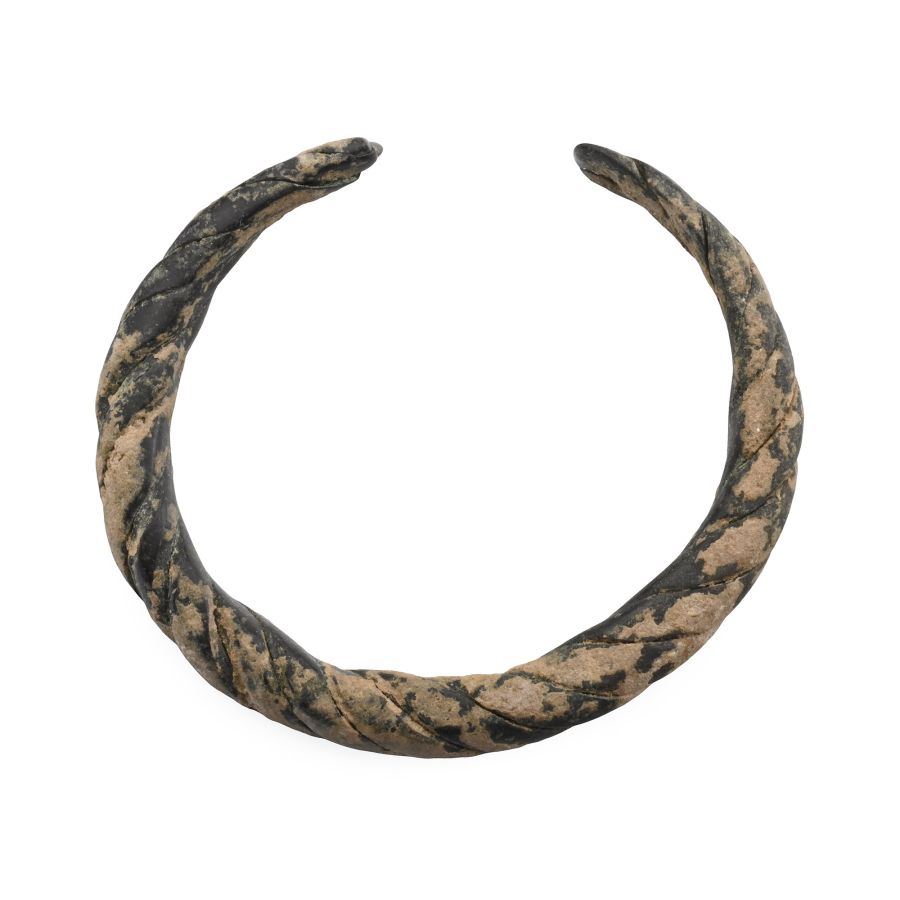
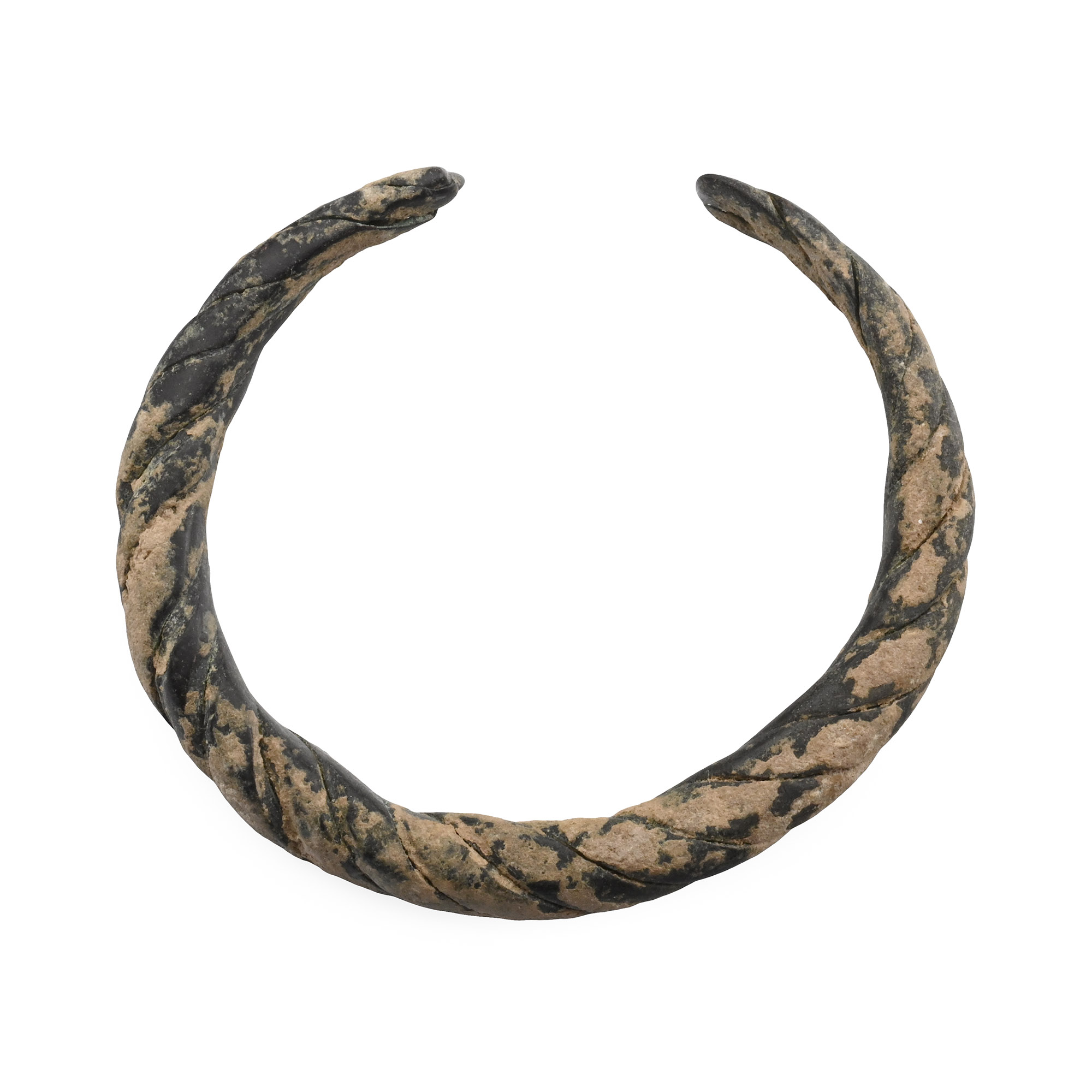
Viking Age Bronze Twisted Bar Bracelet
CIRCA 9TH-11TH CENTURY A.D.
2 1/4 in. (31.6 grams, 57 mm).
Penannular in form with square ends, braided rods of tapering profile. [No Reserve]
ProvenanceEx East Sussex private collection, 1970s-1980s.
LiteratureCf. Arbman, H., Birka I: Die Gräber, Uppsala, 1940, pl.109, item 9a-c.
CONDITIONTimeLine Auctions follows a vetting process to ensure the authenticity and legality of all items, reinforcing our commitment to integrity and responsible trading. Each antiquity, antique, and coin lot undergoes thorough examination by a vetting committee of at least ten external specialists, professional trade association members, scientists, and archaeologists: Our Vetting Process
AUCTIONS:
TimeLine is a leading auction house specialising in antiquities, ancient art, collectables, natural history, coins, medals, and books. Our auctions offer museums, collectors, historians, and enthusiasts the opportunity to acquire unique and historically significant pieces.
-
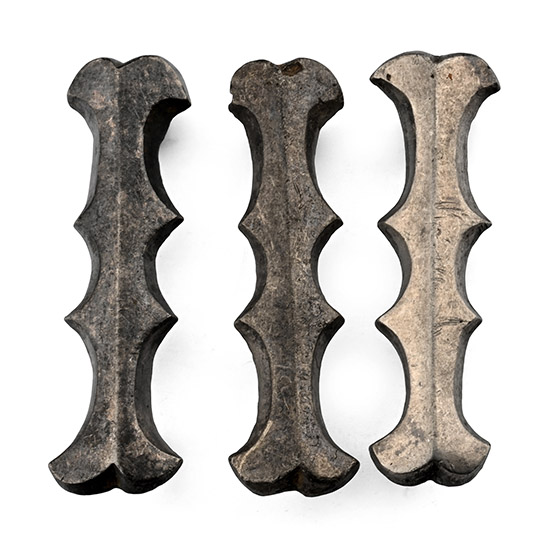
Viking Period Silver Belt Mount Group
Circa 9th-11th century A.D.Sold for (Inc. bp): £91
Each a rectangular bar with median carination, splayed ends, scooped edges; mounting pins to reverse. 27.7 grams total, 43.8-44.5mm
From an old English collection, 1980s. -

Anglo-Scandinavian Viking Bronze Stirrup Apex Mount with Diagonal Cross
11th century A.D.Sold for (Inc. bp): £78
Lozenge-shaped with gusseted lattice and raised pellets to the body, pierced lobe above to accept a ferrous rivet, ledge to reverse. 22.6 grams, 43.2 mm
Found whilst searching with a metal detector near Willingham, South Cambridgeshire, UK, on Sunday 1st September 2024. Accompanied by a copy of the British Museum's Portable Antiquities Scheme (PAS) report no.SF-0A3B9D. -
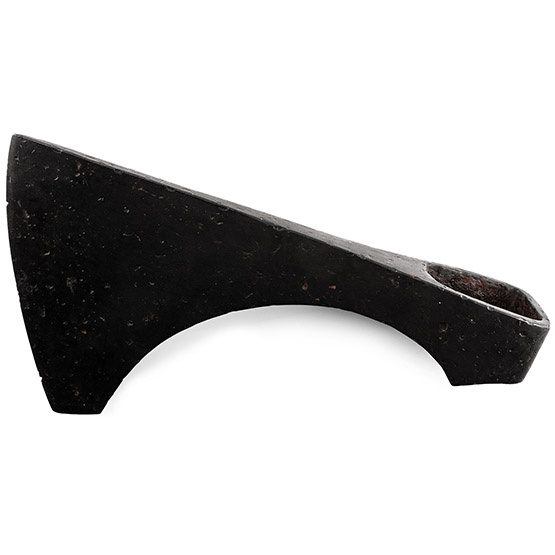
Viking Age Iron Socketted Bearded Axehead
Circa 10th-11th century A.D.Sold for (Inc. bp): £468
Finely curved, broad blade with a chin to the lower edge, a rounded socket with lateral triangular extensions; professionally cleaned, conserved, and restored. 411 grams, 18.5 cm
From the family collection of a South East London collector; formerly acquired in the late 1950s.
This type of bearded axe seems to correspond to the E2 category of the Viking axe classification, but also has affinity with the Slavic axes of type Y. Usually, these bearded axeheads (skeggöks) had a longer edge, designed to split tree trunks into planks and beams. Some of the bearded axes were known as halfÞynna öx; the neck on such a 'half thin axe' was thinly forged, to make it lighter.
