
Loading, please wait...
LOT 1762
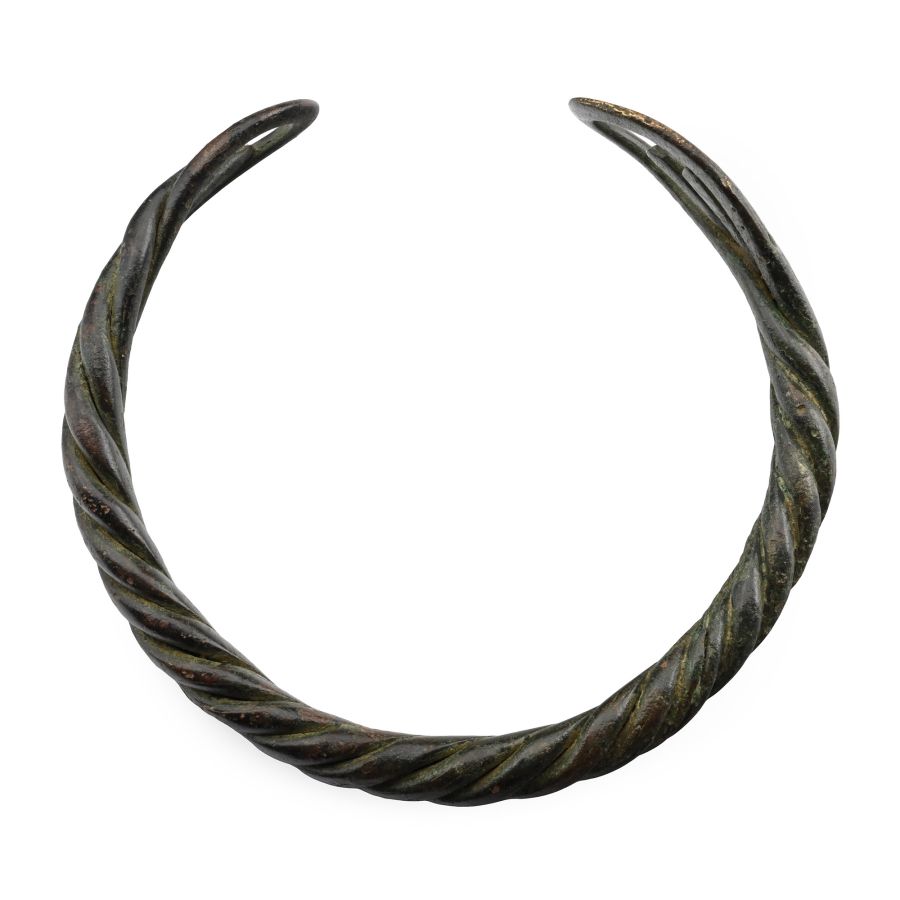
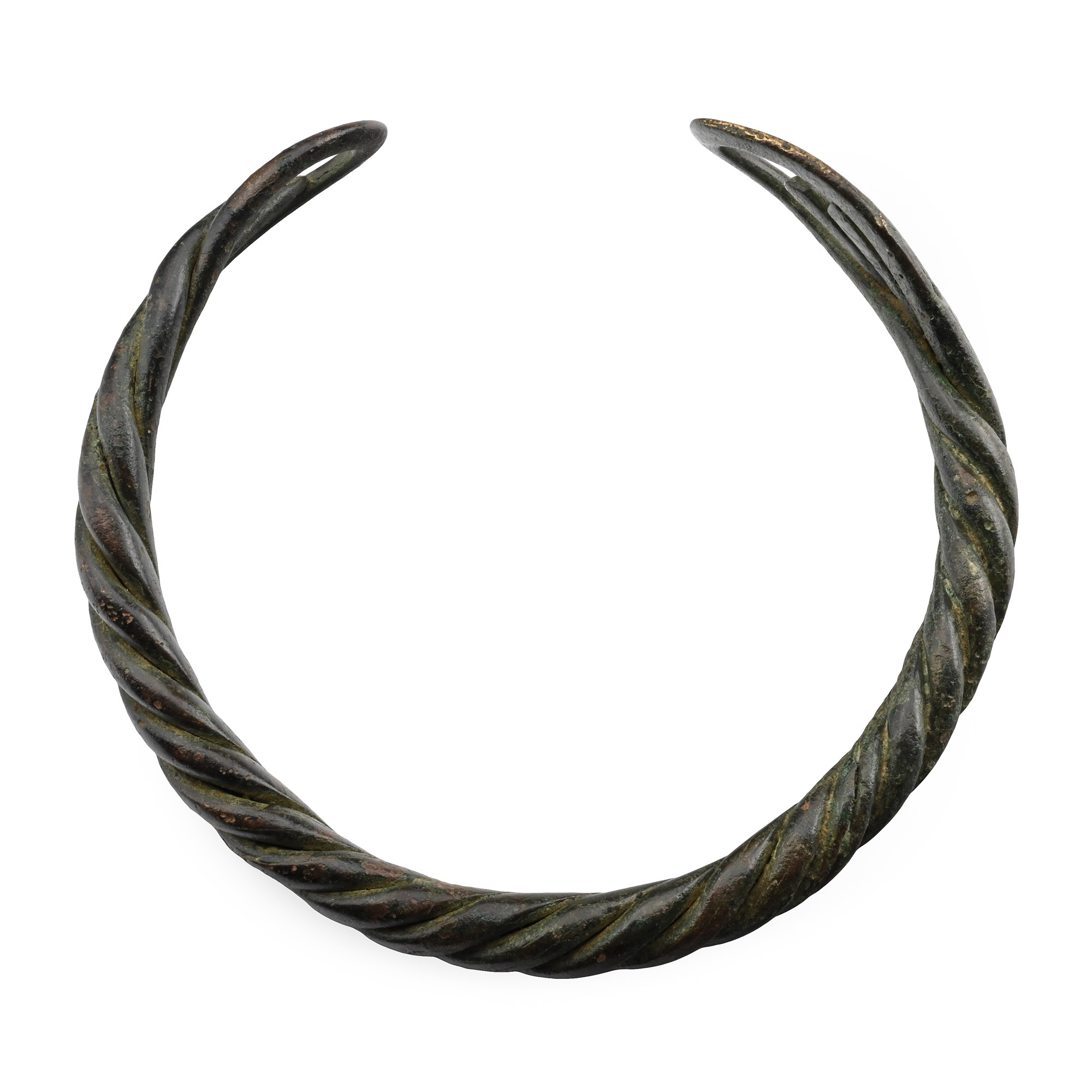
Viking Age Bronze Twisted Bar Bracelet
9TH-11TH CENTURY A.D.
2 1/2 in. (25.25 grams, 63 mm).
Comprising a braided band of wire; each end splayed and enclosed by the shank. [No Reserve]
ProvenanceEx German art market, 2000s.
Acquired from an EU collector living in London.
From the collection of a Surrey, UK, gentleman.
TimeLine Auctions follows a vetting process to ensure the authenticity and legality of all items, reinforcing our commitment to integrity and responsible trading. Each antiquity, antique, and coin lot undergoes thorough examination by a vetting committee of at least ten external specialists, professional trade association members, scientists, and archaeologists: Our Vetting Process
AUCTIONS:
TimeLine is a leading auction house specialising in antiquities, ancient art, collectables, natural history, coins, medals, and books. Our auctions offer museums, collectors, historians, and enthusiasts the opportunity to acquire unique and historically significant pieces.
-
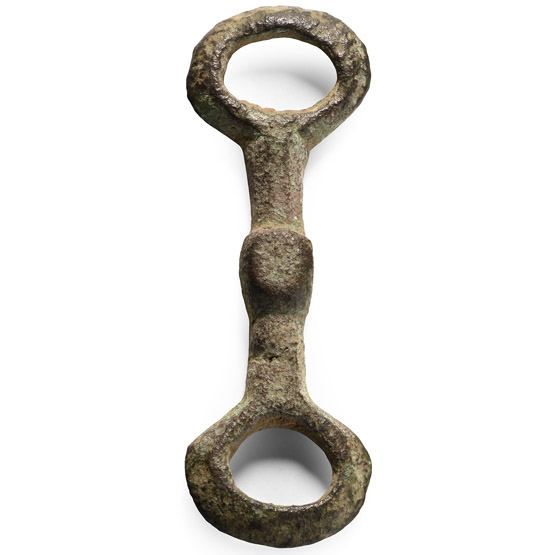
Anglo-Scandinavian Viking Bronze Strap Junction
11th century A.D.Sold for (Inc. bp): £65
Comprising a narrow shank with thick ellipsoid loop at each end. 18.52 grams, 64 mm
Found Norfolk, UK. -
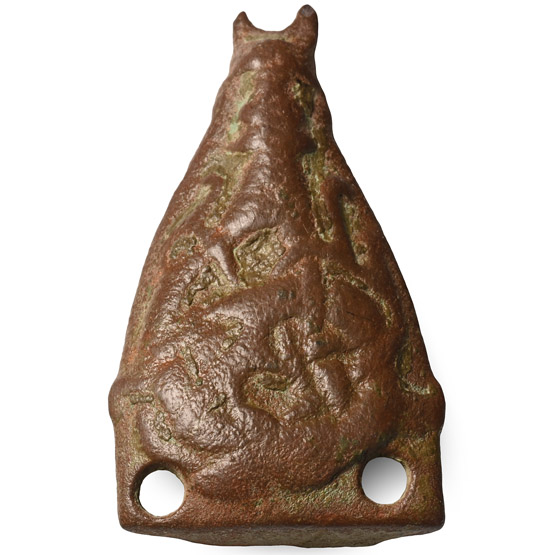
Anglo-Scandinavian Urnes Style Stirrup Mount
11th century A.D.Sold for (Inc. bp): £195
Of Williams's Class A Type 10a, a heater-shaped plaque with pierced lug at the apex (broken), two piercings above the base, low-relief openwork Urnes style design with standing beast and entwined tendrils, narrow ledge to the reverse. 19.28 grams, 49 mm
Acquied on the UK art market. Private collection, Kent, UK. -
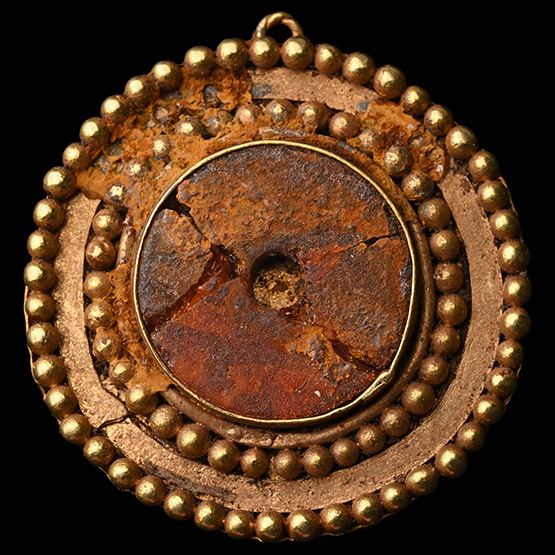
Viking Age Gold Pendant with Amber
9th-11th century A.D.Estimate: £800 - 1,000 (+bp*)
Opening Bid: £400
A flat discoid pendant with pelletted border, raised bezel to the centre with a pelletted border and an amber insert; applied attachment loop to the top, some repairs. 4 grams, 24 mm
Acquired on the UK art market before 2000. Property of an Essex, UK, gentleman.
