
Loading, please wait...
LOT 1226
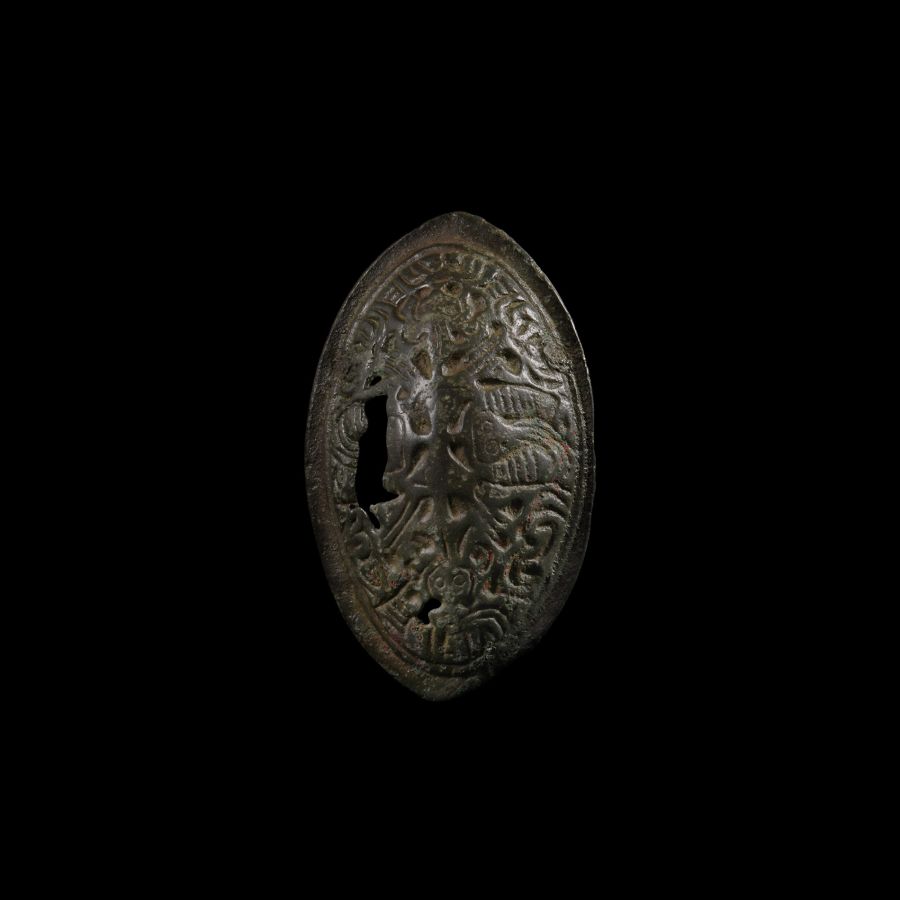
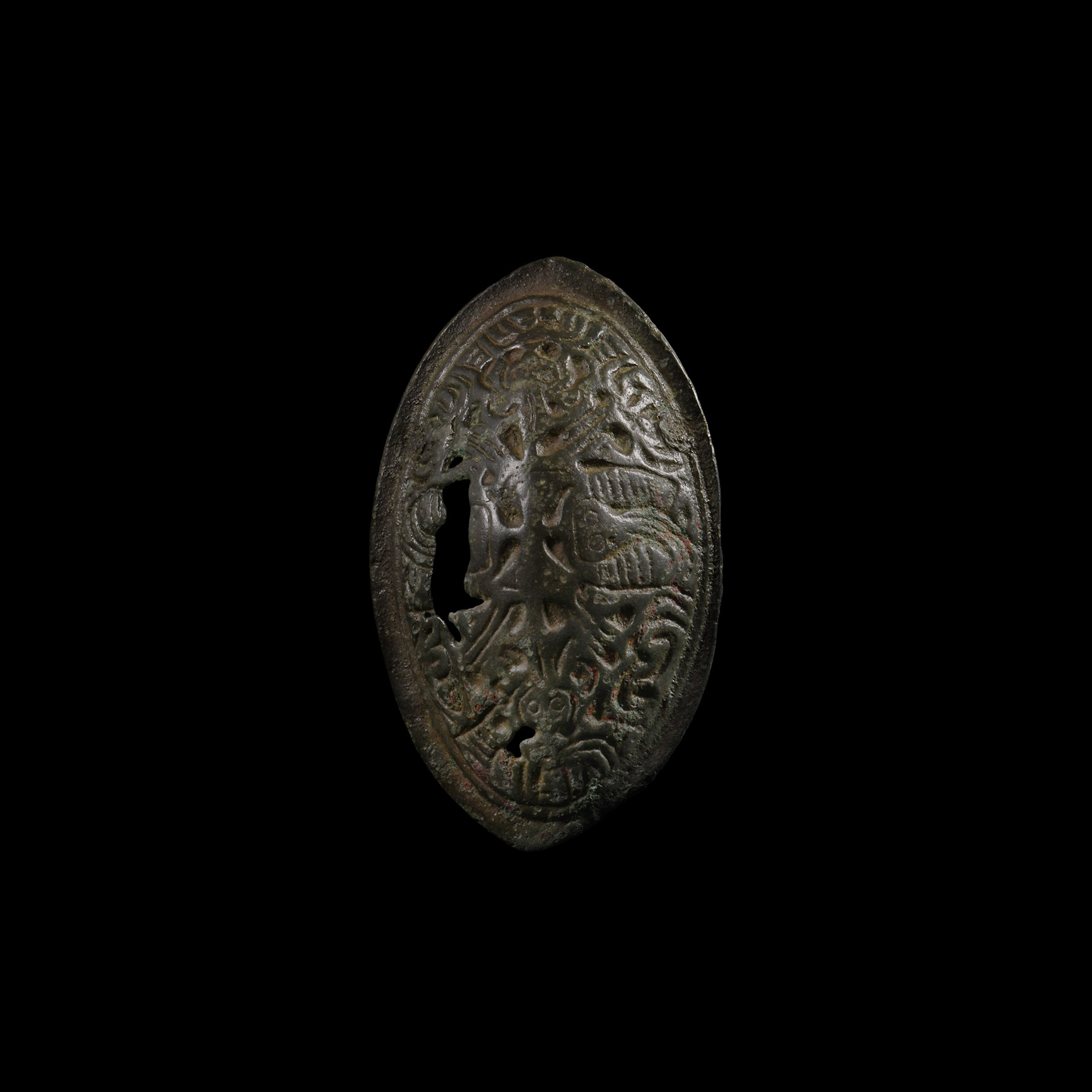
Viking Age Bronze Tortoise Brooch
9TH-11TH CENTURY A.D.
3 5/8 in. (70 grams, 92 mm).
Of domed elliptical form with plain flange, decorated with a central cross and dense pattern of low-relief moulded detail including facing figures with pellet eyes; transverse mounting bar to reverse. [No Reserve]
ProvenanceFrom the collection of a North American gentleman, formed in the 1990s.
LiteratureCf. Sedov, B.B., Finno-Ugri i Balti v Epokhi Srednevekovija, Moscow, 1987, pl.ZII (33).
CONDITIONTimeLine Auctions follows a vetting process to ensure the authenticity and legality of all items, reinforcing our commitment to integrity and responsible trading. Each antiquity, antique, and coin lot undergoes thorough examination by a vetting committee of at least ten external specialists, professional trade association members, scientists, and archaeologists: Our Vetting Process
AUCTIONS:
TimeLine is a leading auction house specialising in antiquities, ancient art, collectables, natural history, coins, medals, and books. Our auctions offer museums, collectors, historians, and enthusiasts the opportunity to acquire unique and historically significant pieces.
-
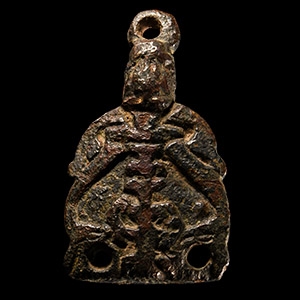
Anglo-Scandinavian Viking Bronze Skeletal Stirrup Apex Mount
11th century A.D.Sold for (Inc. bp): £481
A well defined Williams's Class A Type 6 mount comprising a D-shaped plaque with high-relief central tree or skeleton, a serpent to each lateral edge with divided tail coiled over the 'tree's' trefoil finial, head at the tree's base; beast-head finial with loop above; shallow ledge to the reverse, two circular piercings above. 25 grams, 50 mm
Found Lincolnshire, UK. -
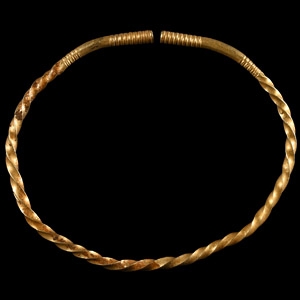
Viking Age Gold Twisted Bracelet
9th-11th century A.D. or earlierSold for (Inc. bp): £1,235
Composed of a slender, decoratively twisted penannular hoop with expanded collared terminals. 9.51 grams, 61 mm
From the collection of a North American gentleman, formed in the 1990s. -
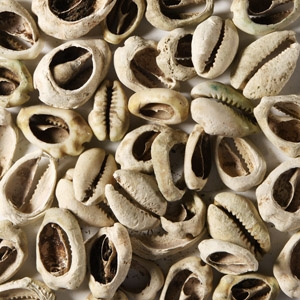
Viking Age Cowrie Shell Pendant Collection
Circa 9th-11th century A.D.Sold for (Inc. bp): £46
Comprising over thirty natural shell pendants. 46 grams total, 15-24 mm
UK gallery, early 2000s.
