
Loading, please wait...
LOT 1225
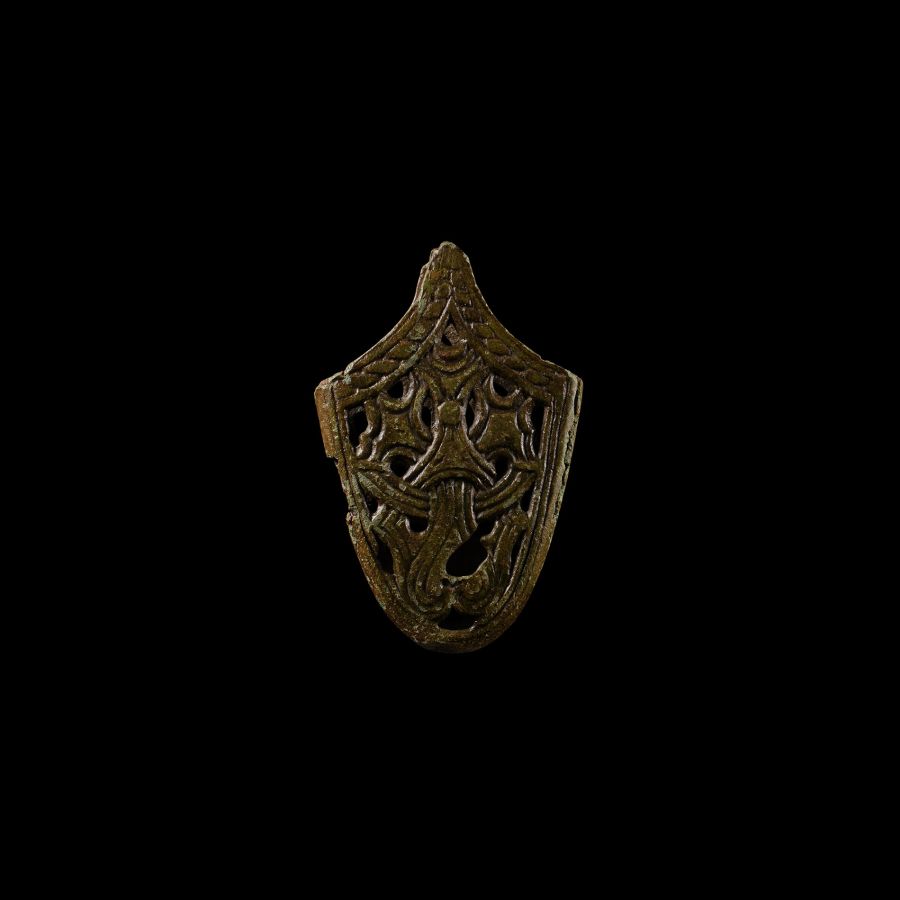
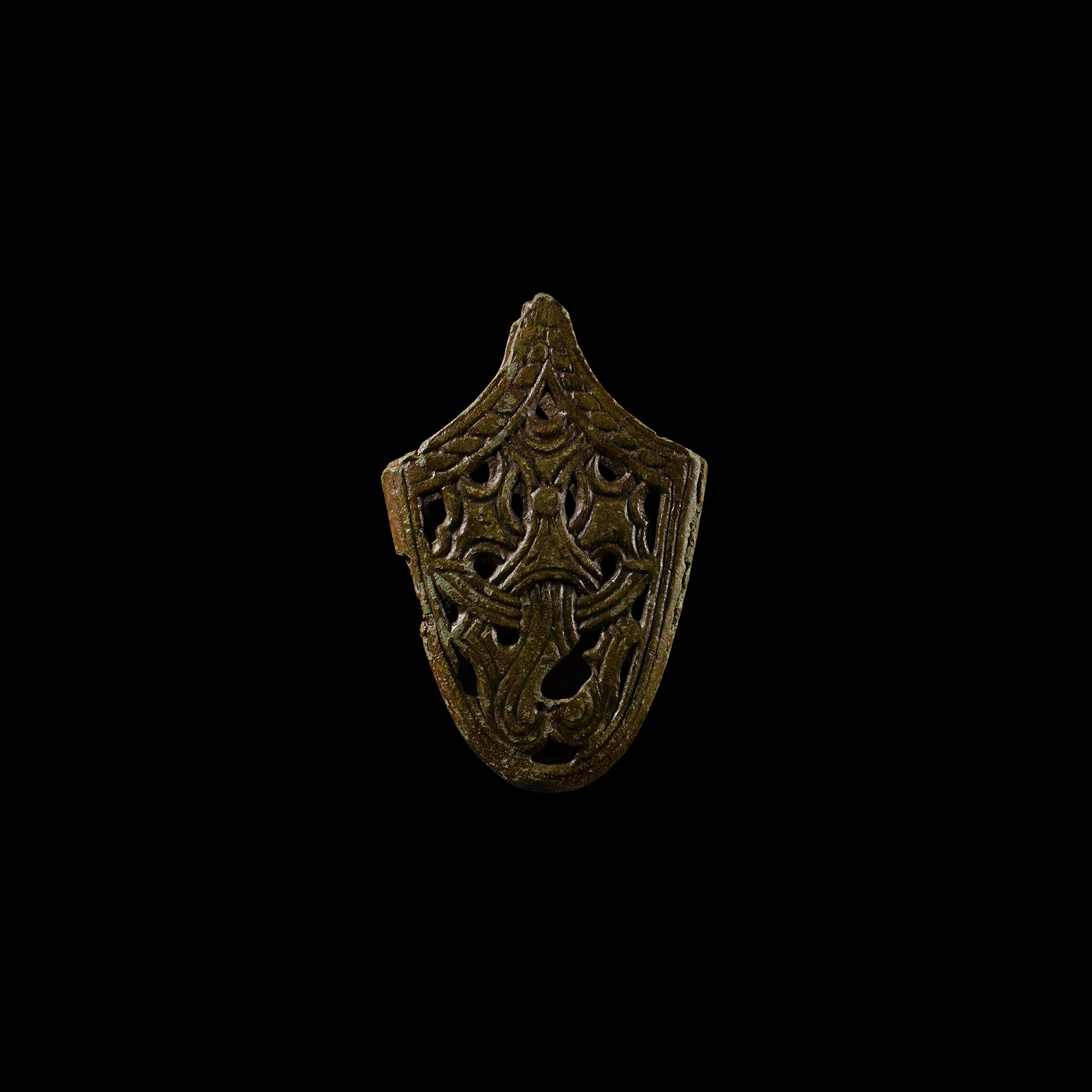
Viking Age Bronze Sword Scabbard Chape
9TH CENTURY A.D.
2 5/8 in. (24.1 grams, 66 mm).
With tongue-shaped body and scalloped upper edges, bifacial Oseberg Style openwork design, faux-ropework upper borders and carinated lower rim. [No Reserve]
ProvenanceFrom the collection of a North American gentleman, formed in the 1990s.
LiteratureCf. Paulsen, P., Schwertortbänder der Wikingerzeit, Stuttgart, 1953, items 53, 58, 61 (Ortbänder im Tierstil des Ostseekreises).
FootnotesChapes (ferrules) of 10th-11th century A.D. have been found in all territories reached by the Vikings in Europe and Asia, mostly in the Baltic regions. Ornamental ferrules were cast in copper-alloy, or occasionally silver or tin or gilded. In proportion to the large number of swords from the Viking Age a very few metal ferrules have been found.
CONDITIONTimeLine Auctions follows a vetting process to ensure the authenticity and legality of all items, reinforcing our commitment to integrity and responsible trading. Each antiquity, antique, and coin lot undergoes thorough examination by a vetting committee of at least ten external specialists, professional trade association members, scientists, and archaeologists: Our Vetting Process
AUCTIONS:
TimeLine is a leading auction house specialising in antiquities, ancient art, collectables, natural history, coins, medals, and books. Our auctions offer museums, collectors, historians, and enthusiasts the opportunity to acquire unique and historically significant pieces.
-
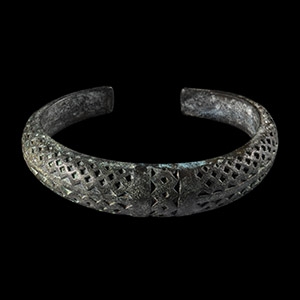
Viking Age Bronze Decorated Bracelet
9th-11th century A.D.Sold for (Inc. bp): £169
With convex outer face and tapering arms, stamp decorated with triangles and lozenges. 105 grams, 75 mm
From the collection of a North American gentleman, formed in the 1990s.
Similar bracelets were found usually in female graves in the Hemlanden cemetery in Birka. Sometimes they were found in pairs, sometimes worn only on the right arm. Their main characteristic was the geometric decoration engraved on the surface -
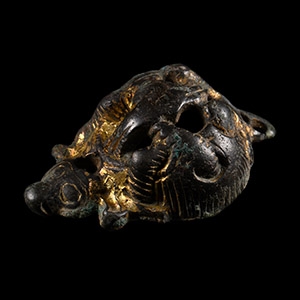
Viking Age Gilt Bronze Openwork Beast Mount
9th-11th century A.D.Sold for (Inc. bp): £650
Composed of an openwork domed body with knops and head to base, suspension lug above; trace remains of gilding; possibly representing a tortoise. 4.45 grams, 26 mm
From the collection of a North American gentleman, formed in the 1990s. -
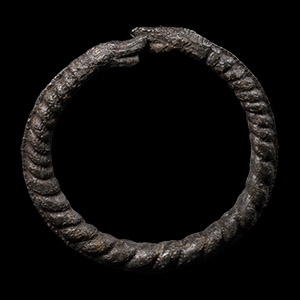
Viking Age Bronze Faux Twisted Beast Bracelet
9th-11th century A.D.Sold for (Inc. bp): £182
Of penannular form with lentoid-section body and opposed beast head terminals. 61 grams, 66 mm
From the collection of a North American gentleman, formed in the 1990s.
